
Ceramic & porcelain floor tile in Utah County
Ceramic and porcelain floor tile is the hard-wearing choice for kitchens, entries, mudrooms, laundries, and basement slabs where grit and water would wear out wood or vinyl. Grandview Contractors installs both across Utah County and Salt Lake County under a Utah DOPL B100 license, with the substrate prep and movement joints that keep a floor flat and bonded.
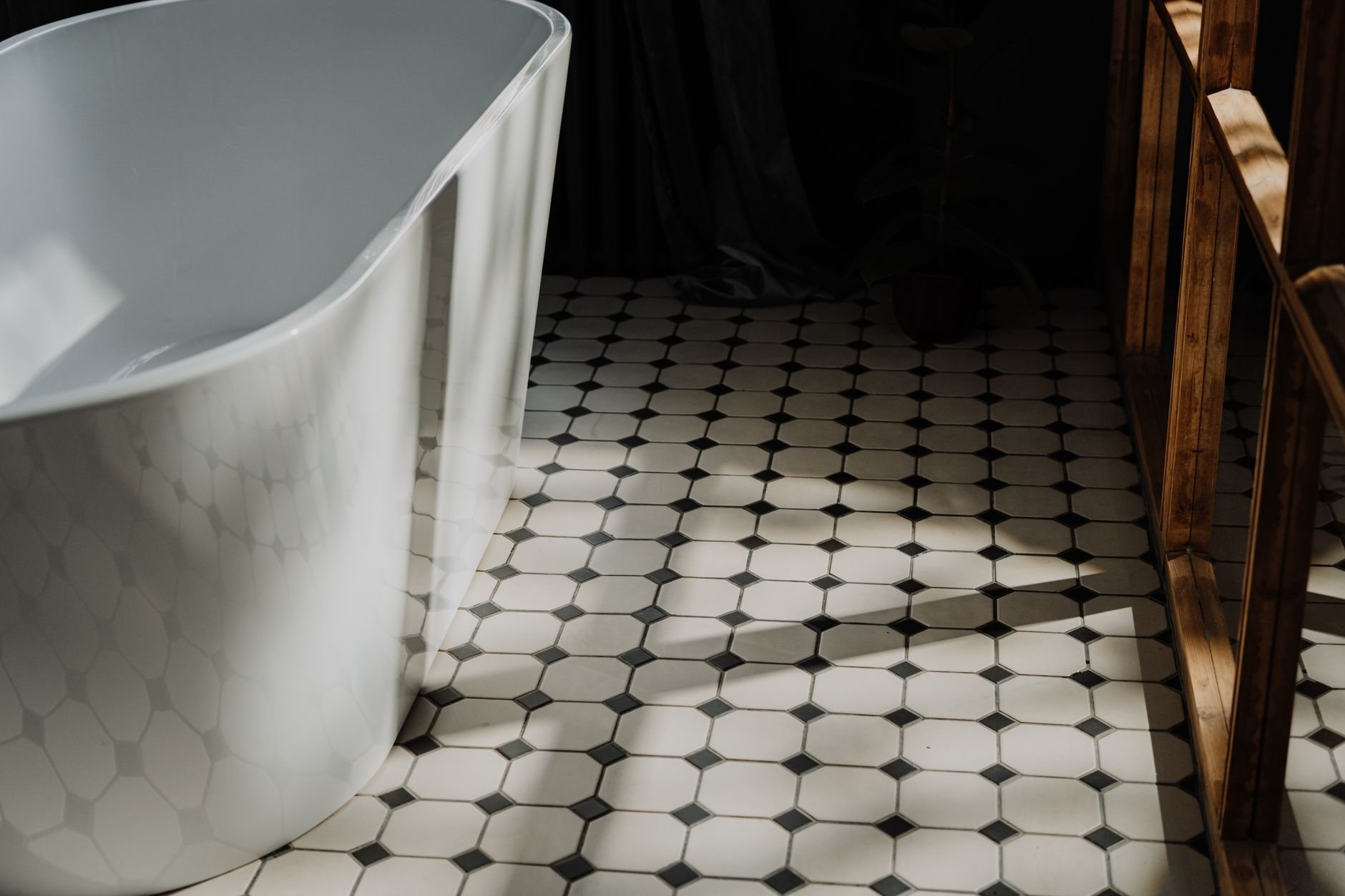
Ceramic or porcelain: which one belongs on your floor
Both are fired clay and both are set the same way. The difference is density. Porcelain is pressed harder and fired hotter, which drops its water absorption to 0.5% or less under the ANSI A137.1 standard published by the Tile Council of North America. Ceramic absorbs more, chips more easily, and shows a different-colored body when it does.
Ceramic is the sensible floor for a laundry room, powder bath, or rental where traffic is light. Porcelain is the floor for a kitchen, entry, mudroom, or basement, anywhere sand and ice-melt tracked in from a Utah driveway would scratch through a ceramic glaze. Covered porches get frost-rated porcelain, because the Wasatch Front’s hundred-plus freeze-thaw days a year will pop a ceramic glaze in a couple of winters.
Two labels on the box decide most of it: a PEI wear rating of Class 4 or 5, and a DCOF slip rating of 0.42 or higher on any floor that gets wet. A tile that fails either number can still be beautiful; it just belongs on a wall.
When this is the right scope, and when a neighbor page fits better
This page covers standard-format ceramic and porcelain on floors: 12×12 through 12×24, hex, and plank tile under roughly 24 inches on the long side. Bigger than that, flatness tolerance tightens from 1/4 inch in 10 feet to 1/8 inch and lippage control takes over, so you want large-format tile. A full bath with a shower draining across the floor is a waterproofing job first, under bathroom floor tile. A warm basement slab means a mat before the tile, under heated tile floors. Marble or travertine needs sealing and a stiffer floor, under natural stone tile. All of it is one scope inside Grandview’s tile and stone work and broader renovation services.
What goes into a porcelain tile floor that stays flat and bonded
The tile is the last hour of a job that is mostly about what sits under it. Porcelain’s low absorption is what makes it hard to bond: it will not pull water out of the mortar, so we set it in a polymer-modified thinset rated to ANSI A118.4 or A118.15, never an unmodified mix meant for ceramic. We lift an early tile to confirm 80% mortar contact. Hollow corners today are chipped corners in three years.
- Substrate check. Over a slab, we map cracks, test flatness with a 10-foot straightedge, and check moisture in basements. Over wood framing, joists must meet L/360 deflection and the subfloor needs a second layer or backer board.
- Prep. Self-leveling or patch to tolerance. On Utah County and Salt Lake County slabs, where expansive clay and bench soils keep concrete moving, a crack-isolation membrane bridges existing cracks and an uncoupling membrane across the whole floor keeps slab movement from telegraphing into the tile.
- Layout. Control lines snapped from the room’s center, cuts balanced to the walls, planks offset no more than a third so bowed tiles don’t lip. Finished height is confirmed against thresholds and adjacent hardwood or vinyl before mortar is mixed.
- Set and grout. Porcelain cuts on a wet saw with a continuous-rim diamond blade. Rectified tile takes a 1/8-inch joint, pressed-edge tile 3/16. Soft joints go at the perimeter, every doorway, and every 20 to 25 feet of open floor, the detail most cracked tile floors skipped.
- Cure and walk-through. Foot traffic after 24 hours, appliances after 72, then you inspect lippage and transitions with us.

Where a floor pulls in another trade, such as resetting a toilet flange to the new height, Grandview holds the contract and manages the licensed plumbers who do that work. We coordinate, sequence, and quality-check it within your project.
What does porcelain tile flooring cost in Utah?
As ballpark planning numbers, not a quote, a ceramic or porcelain tile floor in Utah County typically runs $10 to $25 per square foot installed. Ceramic tile itself is usually $1 to $5 per square foot; porcelain $3 to $10 and up. The rest is labor, prep, and membranes, which is where one floor differs from the next.
- Substrate prep. Self-leveling a slab or adding a subfloor layer can add $2 to $6 per square foot. It is also the line most quotes leave off, which is why cheap tile floors crack.
- Membranes. An uncoupling membrane adds material and a day; on a moving Utah slab it is cheap insurance.
- Layout. Diagonal, herringbone, and third-offset plank patterns add cutting time and 10 to 15% waste over a straight lay.
- Demolition. Pulling old tile off a slab is slow, dusty work; overlays skip it but raise doors and hide why the old floor failed.
Questions we actually get
Is porcelain really better than ceramic for a kitchen floor?
For a kitchen, yes. Porcelain’s dense body resists chipping from dropped pans and tracked-in grit, and a color-body porcelain hides a chip where glazed ceramic shows white clay. Ceramic is fine in low-traffic rooms and saves money there.
Can you tile directly over my basement slab?
Usually, after prep. We check moisture, since older Utah basement slabs often lack a vapor retarder, then flatten and bridge cracks with a crack-isolation or uncoupling membrane. Tile set straight onto a raw slab on expansive clay is the floor we get called to replace.
How thick will the finished floor be, and will it match my hardwood?
Porcelain over an uncoupling membrane and thinset adds roughly 1/2 to 5/8 inch over the subfloor, close to 3/4-inch hardwood. We measure every transition before layout and use a flush or reducer strip where heights differ.
How long does a ceramic or porcelain floor take to install?
A typical 200-square-foot kitchen floor runs three to five working days: demo and prep, membrane and any self-leveling with its cure, setting, grout a day later, and a day of cure before traffic. Appliances return after about 72 hours.
Grandview’s B100 general contractor license is verifiable at dopl.utah.gov. The plans may change. The standard does not.
Tell us what you’re working on
We reply within a couple of hours during business hours — a day at most. You’ll get a straight read on scope, sequence, and budget before anyone commits to anything.