
Rooftop Solar, Coordinated With Your Build
A rooftop solar installation fastens a photovoltaic array to your roof structure, ties it through an inverter to your panel, and interconnects it with your utility so the house runs on sunlight first. Grandview Contractors coordinates rooftop solar across Utah County and Salt Lake County under a Utah DOPL B100 general contractor license, managing licensed solar and electrical trade partners and owning the roof, permit, and inspection side of the job.
When rooftop solar is the right call, and when it isn’t
The roof is the right host when it faces the sun and has years left. A south- or west-facing plane pitched between about 4:12 and 8:12, little shade after mid-morning, and shingles with ten or more years of life is the textbook case; most two-story homes in Orem, Lehi, and Saratoga Springs have one.
It stops being the right call in three situations. If the roof has five years left, panels go on now and come off for the re-roof later, which costs twice; we price the roof first through solar-ready roof prep or a full roof replacement. If the usable planes face north, sit under a neighbor’s cottonwoods, or are chopped up by dormers, a ground-mount solar array on a larger Mapleton or Alpine lot often out-produces the roof. And if outage protection is the goal, the array should be designed around storage from day one as a solar and battery storage system.
Attachments, racking, and wiring: what the installation involves
Grandview holds the contract and manages licensed solar installers and electricians; we coordinate, sequence, and quality-check their work within your project, and every license involved is verifiable at dopl.utah.gov. What we check hardest is the part you never see again: the attachment.
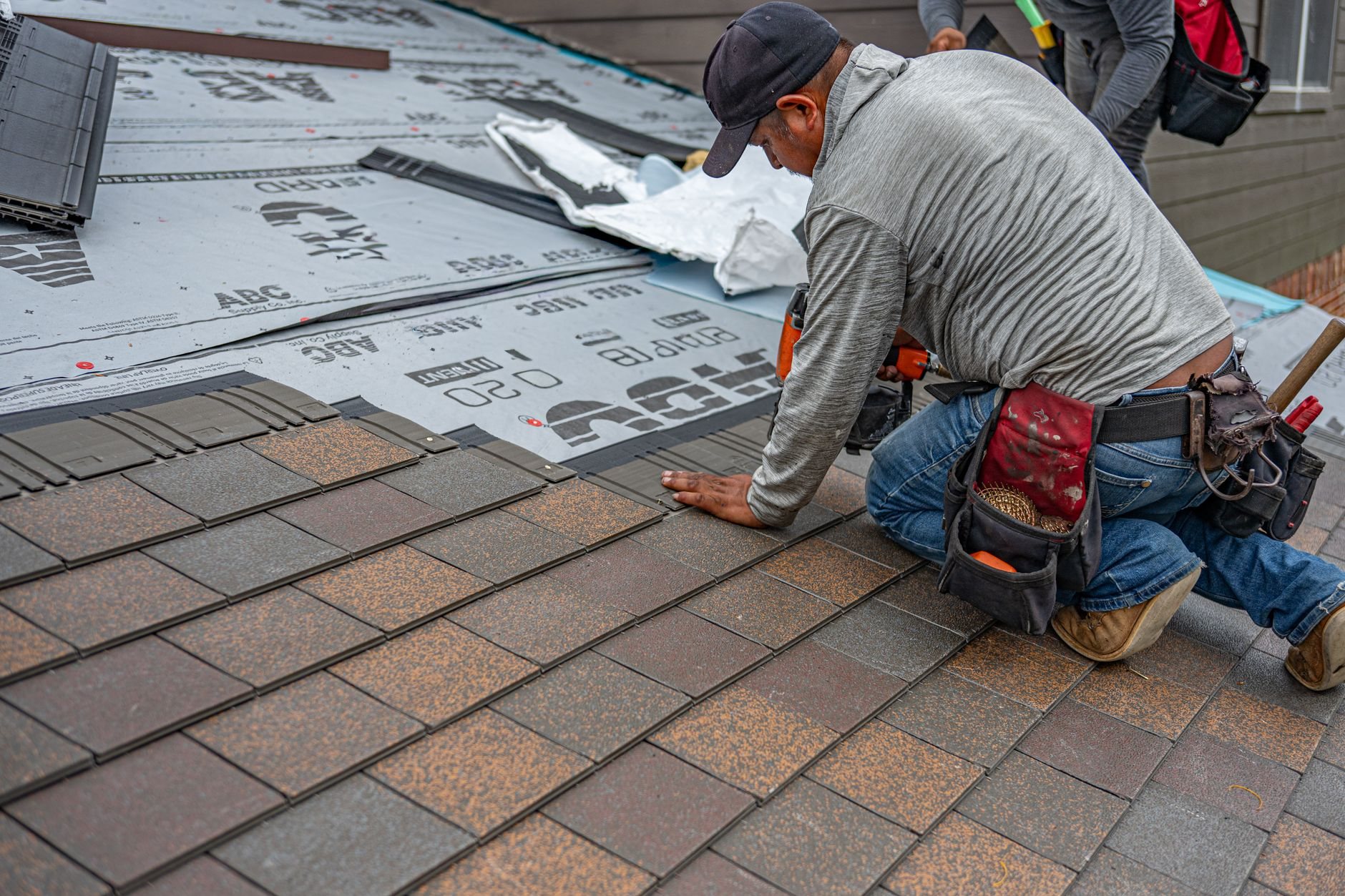
On asphalt shingle roofs, each mount is lag-bolted into a rafter, never into decking alone, with a flashing slipped under the course above so water runs over it like any other shingle. Rail spans the mounts and the modules clamp to the rail. Spacing is set by rafter spacing, roof zone, and wind exposure, which matters on the Wasatch Front, where canyon-wind events in Centerville, Farmington, and the mouth of Provo Canyon drive uplift at roof edges and corners, so mounts tighten up in those zones and the array stays off the perimeter.
Standing-seam metal takes clamp-on mounts with no penetrations, one reason we steer new builds toward standing-seam metal roofing when solar is in the plan. Concrete tile needs tile hooks or flashing tiles, and cracked tiles around a hook are the usual leak two winters later, so each one is inspected before rail goes on.
Current Utah-adopted fire code requires clear pathways along the ridge and from eave to ridge for firefighter access, and the city reviewer measures them on the plan. Conduit runs from the array through the attic to the inverter, with rapid-shutdown electronics at each module so rooftop wiring goes safe within seconds of shutoff. Microinverters or DC optimizers handle that and keep one shaded panel from dragging down the string.
From roof survey to permission to operate
- Roof and structure survey. Rafter spacing, decking, shingle age, and shade mapped on site. Bench lots in Draper, Highland, and Alpine carry a higher design snow load than the valley floor, so a structural check is part of the survey.
- Array and electrical design. Layout drawn around setbacks and vents, inverter selected, busbar checked. When a 100-amp panel can’t take the backfeed, an electrical panel upgrade is scoped up front, not discovered at inspection.
- Permit and interconnection. City building and electrical permits, plus the utility application. Rocky Mountain Power customers go through its export-credit program; Provo Power and Lehi Power run their own municipal rules.
- Install. Flashed mounts, rail, modules, conduit, inverter, AC disconnect, and labeling, usually one to three days on the roof.
- Inspection and permission to operate. We check flashings, torque, and terminations before the city inspector arrives; the utility swaps the meter and the system goes live.
Queues set the calendar more than roof days: Provo and Orem permit review is predictable, fast-growth cities run longer, and HOA-governed developments in Vineyard and Eagle Mountain often need sign-off on array placement before the permit. We see dependencies before they become delays.

What rooftop solar installation costs in Utah County
As ballpark planning numbers rather than a quote: a six-to-ten-kilowatt array on an asphalt shingle roof typically lands in the high teens to high twenties of thousands along the Wasatch Front before incentives, and price tracks system size in watts. Incentives have changed several times recently, so we tell you what applies on the day we quote. The U.S. Department of Energy’s homeowner guide to solar is a fair primer on how production and payback get estimated.
- Roof material. Shingle is the baseline; standing seam is similar or lower; concrete tile adds labor and flashing tiles.
- Panel upgrade. If the busbar can’t take the backfeed, the upgrade is a separate line, never buried in the solar price.
- Electronics. Microinverters cost more than a string inverter but earn it on shaded or multi-orientation roofs.
The high elevation and dry air that make the Wasatch Front a strong solar climate also mean harder UV on panels and racking, so we specify hardware rated for it. January inversions and snow cover flatten production for a few weeks each winter, and an honest estimate already accounts for that.
Questions we actually get
Will the mounts make my roof leak?
Not when each one is lagged into a rafter and flashed under the shingle course above it, which is the standard we check before rail goes on. Leaks come from lags that miss the rafter or flashing laid on top of shingles. We inspect every attachment before the city inspector does.
Should I replace my roof before adding solar?
If the shingles have fewer than ten years left, yes. Removing and reinstalling an array for a later re-roof costs thousands and interrupts production. We price the roof and the solar together so you can compare one combined project against two a few years apart.
Does my electrical panel need upgrading for solar?
Sometimes. The array backfeeds the panel through a breaker, and current Utah-adopted code limits that backfeed to a share of the busbar rating. A 200-amp panel usually carries a residential array; a 100-amp panel often doesn’t. We run that check during design.
Tell us what you’re working on
Rooftop solar runs inside our MEP and systems coordination, part of our renovation and build-out work. We reply within a couple of hours during business hours, a day at most, with a straight read on the roof, the array size, and the budget.