
Ground-Mount Solar Installation
A ground-mount solar array stands on its own racking and footings in your yard, field, or side lot instead of on your roof. Grandview Contractors builds ground-mount systems across Utah County and Salt Lake County under a B100 general contractor license — we hold the contract, manage licensed solar and electrical trade partners, and run the footings, trenching, racking, and interconnection as one scope.
When ground-mount beats a rooftop array
The roof is usually the cheaper host. Ground-mount wins when the roof is the wrong one: it faces east-west, a bench ridge or mature trees shade it, it has eight years of shingle life left, or it isn’t big enough for the system you want. It also wins when you have the land — a half-acre lot in Mapleton, a horse property in Eagle Mountain — and past roughly 12–15 kW, where a roof runs out of clear area and a field does not.
If your roof is sound and south-facing, start with rooftop solar installation. If the roof is close but needs reinforcement or a re-roof first, solar-ready roof prep is the honest middle step. If outage protection is the real goal, a ground array pairs well with solar plus battery storage, since inverter and batteries can share one equipment wall in a garage or shop.
What a ground-mount solar installation involves
Footings. Racking stands on driven steel piles or drilled concrete piers. Piles are faster where soils allow, but expansive clay and collapsible bench soils along the Wasatch Front often push us to piers set below frost depth and sized from the racking manufacturer’s load tables. Where Utah Geological Survey mapping flags problem soils, we get a soils read before choosing — one heaved pier racks the whole array. Piers get an air-entrained mix, because 100-plus freeze-thaw days a year will spall anything else.
Racking and tilt. Galvanized steel or aluminum, fixed-tilt, typically 25°–35° here. Steeper tilt sheds snow faster and gives up little in summer. Bench lots with heavier snow load and canyon-wind exposure get racking anchored to the stamped loads, not the catalog minimum, and the bottom module edge sits high enough that drifts don’t bury the lower row.
Trenching and conduit. The array’s output has to reach your service panel, and that run is the hidden cost. We trench to the depth current Utah-adopted code requires for the wiring method, bed and backfill the conduit, and upsize conductors for the distance so voltage drop stays acceptable. Trench backfill is graded so a summer cloudburst doesn’t turn the array line into a drainage channel.
Inverter, disconnects, interconnection. String inverters or microinverters are chosen with the trade partner from shading and string length; the AC disconnect, rapid shutdown, labeling, and the utility interconnection application are part of the package. Most of the two counties are Rocky Mountain Power territory, but Provo, Lehi, Springville, and Spanish Fork, among others, run municipal power with their own interconnection rules. We confirm which applies before the design is final.
How a ground-mount project runs
- Site and shade study. We walk the lot, log shading across the year, check setbacks and any HOA or zoning limits, and confirm panel capacity — or plan the panel upgrade alongside it.
- Design and permit. The licensed solar partner produces the single-line and racking engineering; we assemble building, electrical, and utility submittals into one package. Lehi and Saratoga Springs review on a different clock than Provo or Orem, and the schedule reflects it.
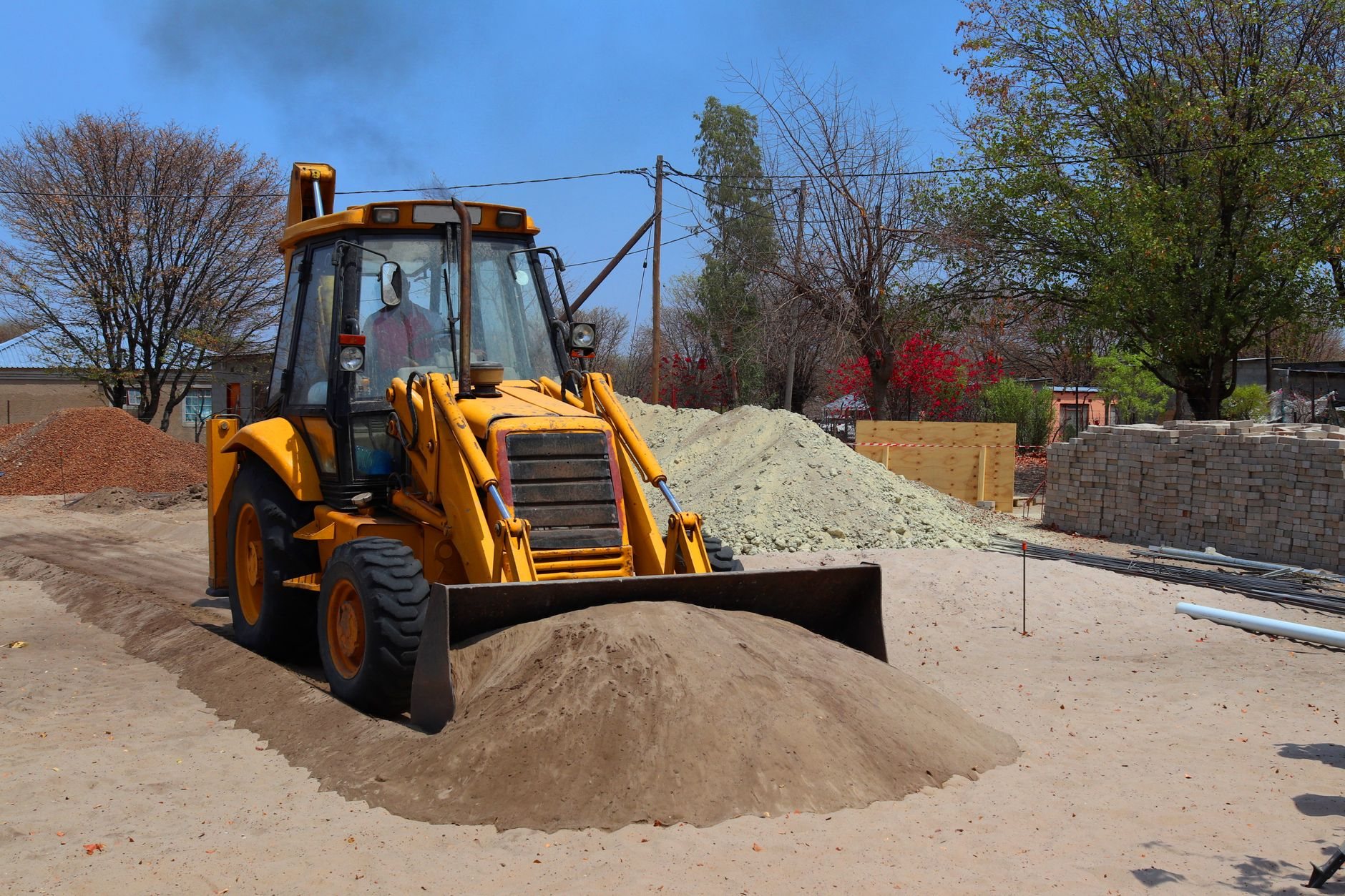
- Footings and trench. Utility locates first, always. Then piers or piles, then the conduit trench, inspected open before backfill. Our excavation and grading runs under the same contract, so nobody argues about who owns the spoils pile.
- Racking and modules. Racking plumbed and torqued to spec, modules set and bonded, DC side terminated by the electrical partner.
- Tie-in, inspection, PTO. Inverter, disconnects, and panel tie-in installed and inspected; utility permission-to-operate requested; system commissioned and monitoring handed to you.
It all runs inside our MEP and systems coordination practice, part of the broader renovation and build-out family. Our license and our trade partners’ are verifiable at dopl.utah.gov.
What does ground-mount solar cost in Utah?
As a ballpark planning number, a ground-mount array usually costs more than the same wattage on a roof — commonly on the order of 10–30% more — and nearly all of that premium is the structure and the trench, not the panels. It’s a budgeting range, not a quote. The drivers:
- Distance to the panel. Every foot of trench and conductor costs; an array 200 feet from the house costs noticeably more than one at 60.
- Soils and footing type. Driven piles are cheapest; drilled piers in clay or cobble, or extra depth for frost and heave, add cost.
- Snow and wind loading. Bench and canyon-mouth lots need heavier racking and more anchorage than a valley-floor site.
- Incentives. Federal, state, and utility programs change year to year; check current rules at energy.gov and don’t build the budget around a credit until it’s confirmed.
You get a budget range after the site walk, a written estimate after the design, and a fixed price before anyone digs.
Questions we actually get
Do you install the solar electrical work yourselves?
No. The array wiring and the tie-in to your service are performed by licensed electrical and solar contractors we bring in under our contract. Grandview owns the site work, footings, trench, schedule, and inspections, and quality-checks the partners’ work before the city or the utility sees it.
How much space does a ground-mount solar array need?
Plan on roughly 100 square feet of unshaded ground per kilowatt for a fixed-tilt array, plus setbacks and service access around it. A 10 kW residential system is often a single row 60–70 feet long, or two shorter rows. Setbacks are set by each city’s zoning code, so we confirm them before the layout is drawn.
Does a ground-mount array need a permit in Utah?
Yes — typically a building permit for the structure and footings, an electrical permit for the wiring and interconnection, and a utility interconnection agreement before the system may export. Some cities add a zoning or site-plan review. We pull all of it as part of the scope and verify specifics with your building department.
Can the array go over a septic field or utility easement?
Generally no. Drain fields can’t take footings or a trench, and easements usually prohibit permanent structures. We check both on the site walk, along with buried gas, water, and power lines, so the array goes where it can legally and physically stay.
Tell us what you’re working on
We reply within a couple of hours during business hours — a day at most. You’ll get a straight read on scope, sequence, and budget before anyone commits to anything.