
Recessed & LED Lighting Installation
Recessed and LED lighting installation means planning a fixture layout, running circuits and dimmer controls, and setting housings or wafer lights before the ceiling closes up. Grandview Contractors runs this work across Utah County and Salt Lake County under a Utah DOPL B100 general contractor license, managing licensed electricians and coordinating the layout with the ceiling, insulation, and patching around it.
When lighting is the project, and when it belongs inside a bigger one
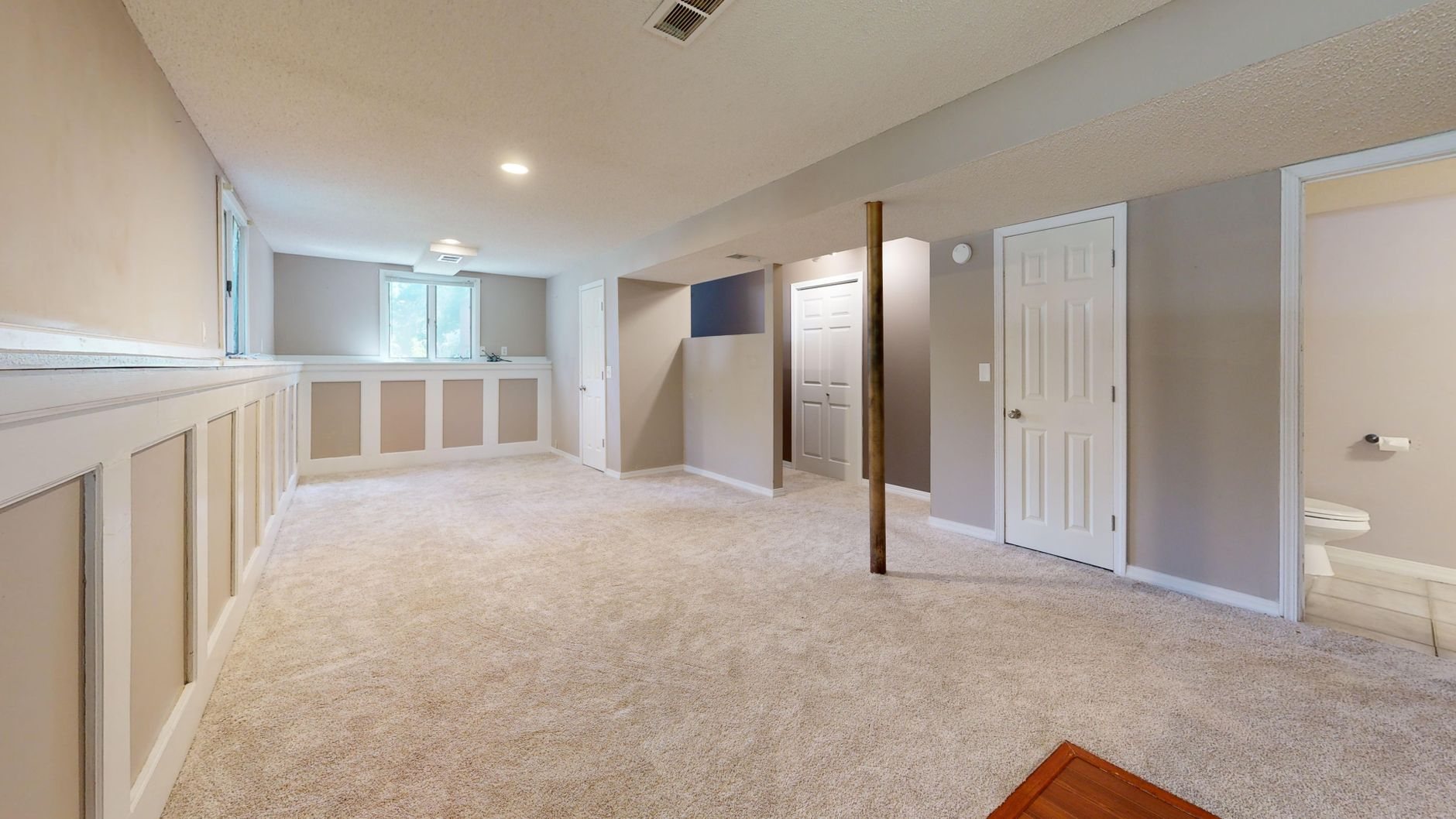
This is the right scope when the ceiling is the problem: a 1990s family room with one center fixture and dark corners, a basement lit by a few surface-mount domes, or a commercial suite swapping fluorescent troffers for LED panels. The circuits may be fine. The lighting is not. A layout, the right fixtures, and matched dimmers fix that without touching the rest of the system.
It belongs inside a bigger scope when the walls are already coming open. Lighting during a kitchen or bath renovation is priced inside remodel and addition electrical; in a new build, the housings go in with the electrical rough-in. If the ceiling boxes are fed by cloth or knob-and-tube wiring, the honest conversation is a whole-home rewire first. And when the goal is scenes and app control on one keypad, this layout becomes the backbone of a smart home automation install.
Cans, wafers, and the choices that decide how the room feels
Two fixture families cover most of the work. Recessed housings (cans) mount to the joists and take a separate LED trim; new-construction housings hang from bar hangers before drywall, remodel housings clip into a hole cut in an existing ceiling. Canless wafer lights are about half an inch thick, wire to a small junction box, and fit where a can won’t, including under ductwork and in low basement ceilings. Both come IC-rated for insulation contact and airtight-rated.
The airtight rating matters along the Wasatch Front. A top-floor ceiling with a dozen leaky cans pushes heated air into the attic all winter, warms the roof deck, melts the snowpack from underneath, and feeds ice dams at the eaves. We specify airtight IC housings in any insulated ceiling, and the insulation goes back over them, not around them.
- Color temperature. 2700K reads warm and residential, 3000K is cleaner for kitchens and baths, 3500K to 4000K suits offices. One temperature per sightline.
- Spacing. Downlights sit roughly half the ceiling height apart and half that from the wall, then shift to line up with cabinets, islands, and beams.
- Dimmer compatibility. LED fixtures and dimmers have to be matched; the wrong pairing flickers, buzzes, or won’t go low. We confirm the listed dimmer for every fixture.
- Efficacy. Current Utah-adopted energy code requires high-efficacy lighting in new construction, and ENERGY STAR certified fixtures clear that bar with a tested lifespan behind them.
What a recessed lighting installation involves
Grandview holds the contract and manages licensed electricians for this work; we coordinate, sequence, and quality-check it within your project. Their license and ours are verifiable at dopl.utah.gov. On a finished ceiling, the sequence looks like this.
- Layout on the ceiling, not just on paper. Fixture centers are marked and checked against joists, ducts, and the furniture plan. A joist under a center is a two-inch shift now or a patched hole later.
- Circuit and control plan. General, task, and accent lighting go on separate switch legs so each dims independently, on the existing circuit or a new one.
- Permit. A new lighting circuit takes an electrical permit; adding fixtures to an existing circuit may not, depending on the city. We confirm with the building department before scheduling.
- Cut, fish, and set. Holes are cut to the fixture, cable is fished through joist bays with as few access holes as possible, and housings or wafer boxes are secured.
- Trims, dimmers, and aiming. Dimmers are set to the fixture’s low-end trim so nothing flickers at 5 percent, and gimbals get aimed at the wall they were placed for.
- Inspection and patching. The city inspects the circuit work; access holes are patched, textured, and painted inside the same scope.
With the ceiling open, the same steps are cheaper and cleaner, which is why the lighting layout is settled before the drywall order on every basement finish and kitchen remodel we run.
What recessed LED lighting costs in Utah County
As ballpark planning numbers rather than a quote: in an existing finished ceiling, recessed and wafer LED fixtures in Utah County and Salt Lake County typically run in the low hundreds per fixture including wiring and patching, so a room of eight to twelve lights usually lands in the low-to-mid thousands. The same count installed while the ceiling is open costs noticeably less per fixture.
- Open or closed ceiling. Fishing cable through finished drywall and insulation is most of the labor on a retrofit.
- Fixture grade. Builder-grade wafers and specification-grade housings with high-CRI trims differ several-fold in price; the difference shows on skin tones and wood.
- Controls. Standard dimmers are inexpensive; multi-location and scene keypads add equipment and programming.
Lighting is one of the MEP and systems scopes we coordinate within renovation and build-outs; it runs standalone just as often.
Questions we actually get
Can recessed lights go in a ceiling with insulation above it?
Yes, with IC-rated fixtures. IC stands for insulation contact; the housing or wafer is listed to be buried in insulation without overheating. We pair that with an airtight rating in any top-floor ceiling, because leaky cans warm the attic and contribute to ice dams during Wasatch Front winters.
How many recessed lights does a room need?
Most living rooms and bedrooms land between six and ten fixtures, spaced at roughly half the ceiling height. A kitchen often needs more, because downlights over counters do task work that pendants and under-cabinet strips share. We draw the layout against the furniture plan, not square footage alone.
Why do my LED lights flicker on the dimmer?
Usually a mismatch. Older incandescent dimmers and many LED drivers do not cooperate, and a dimmer loaded below its minimum wattage can also flicker. The fix is a dimmer from the fixture’s compatibility sheet, with the low-end trim set during commissioning.
Do I need a permit to add recessed lighting in Utah?
A new lighting circuit does; it is electrical work the city inspects. Adding fixtures to an existing switched circuit may or may not, depending on the city. We confirm with the building department and pull the permit as part of the scope when one is required.
Tell us what you’re working on
We reply within a couple of hours during business hours — a day at most. You’ll get a straight read on scope, sequence, and budget before anyone commits to anything.