
Generator Transfer Switch Installation
A transfer switch is the device that disconnects your home or building from the utility before it connects to a generator, so backup power never feeds back into the grid. Grandview Contractors coordinates manual and automatic transfer switch installation across Utah County and Salt Lake County under our B100 general contractor license, with licensed electricians doing the wiring.
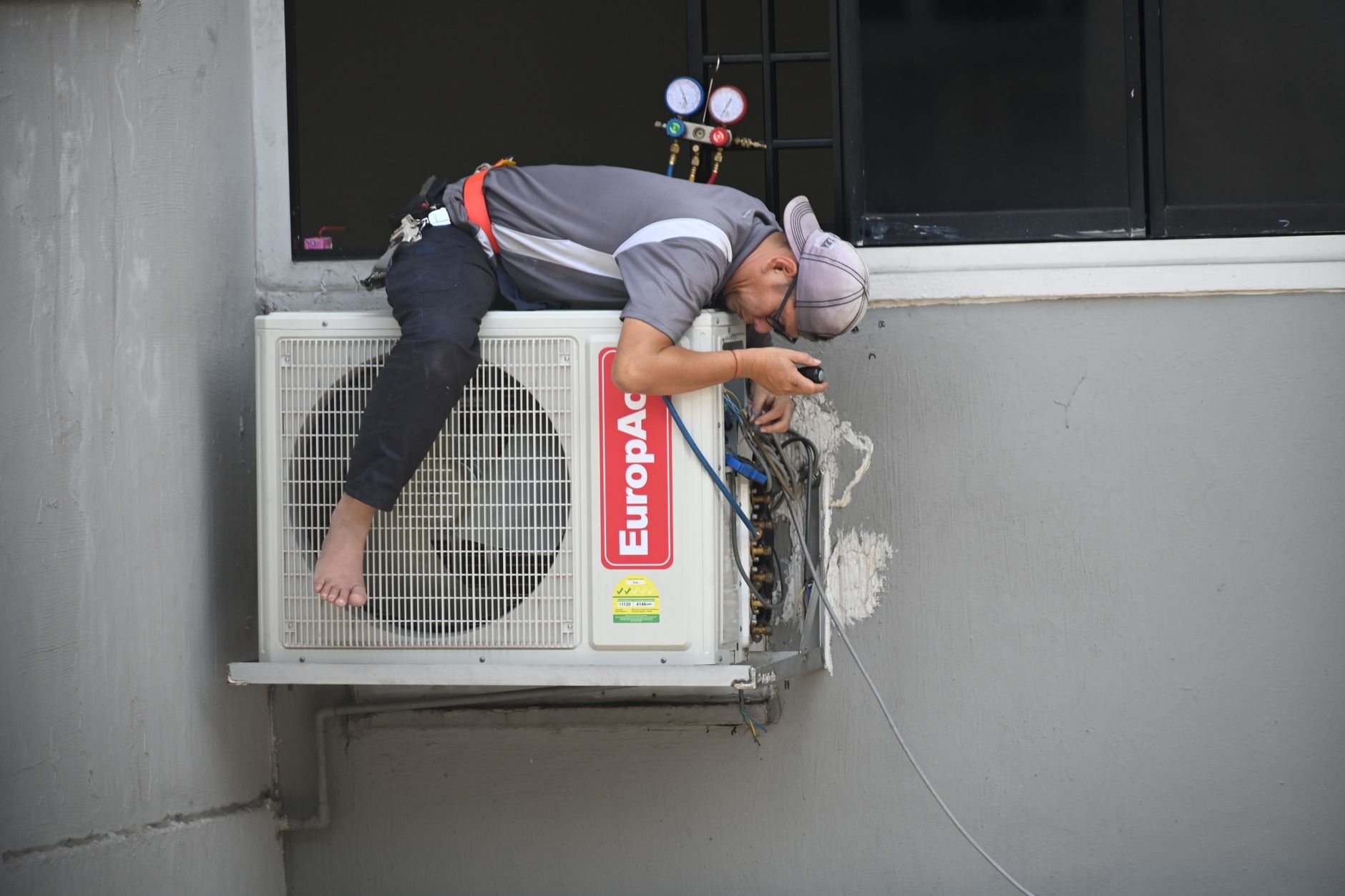
Manual, automatic, or interlock: which transfer switch fits
This page is for the switching hardware itself: you already own a generator, are buying one on your own, or are replacing a transfer switch that no longer passes inspection. For the whole package — unit, pad, gas line, and switch — start at standby generator installation instead.
Three ways connect backup power legally, and they aren’t interchangeable:
- Interlock kit with an inlet box. The least expensive option for a portable unit — a mechanical slide on the main panel cover, not a separate switch. Covered on our portable generator hookup page.
- Manual transfer switch (MTS). A dedicated enclosure, usually a six- to twelve-circuit panel, that moves selected circuits between utility and generator when you throw the lever. Right for portable generators where you’re home to start them and only need a handful of circuits.
- Automatic transfer switch (ATS). Senses utility loss, signals the generator to start, transfers the load, and transfers back when the grid returns — with no one home. Required for any standby generator.
If the real problem is panel capacity rather than switching, an electrical panel upgrade or sub-panel may come first. Home battery backup uses its own transfer equipment and is a different conversation.
How a transfer switch gets specified and installed
Utah requires this wiring to be done by a licensed electrical contractor. Grandview holds the contract and manages that electrician; we specify the switch, sequence any trenching or patching, pull the permit, and quality-check the work before the inspector arrives. Our license and theirs are verifiable at dopl.utah.gov.
- Decide what stays on. Whole-house transfer or essential circuits only. On the Wasatch Front the essential list almost always includes the furnace, sump pump, and refrigerator — a January outage is a frozen-pipe problem before it’s a comfort problem.
- Match the switch to the generator and the service. A 200-amp service with a 22-kW standby unit calls for a 200-amp ATS; a 7,500-watt portable wants a 30-amp manual switch. Undersizing trips breakers the first cold night.
- Choose the location and enclosure. An ATS typically mounts beside the meter and main disconnect, outdoors in a NEMA 3R rain-tight enclosure or indoors in a NEMA 1. Required working clearance in front of the switch decides more locations than owners expect.
- Sort out the neutral. This is the detail that fails inspections. Depending on whether the generator’s neutral is bonded to ground at the unit, the electrician specifies a switched-neutral or solid-neutral transfer switch so the system has exactly one bonding point. We confirm the generator’s bonding before the switch is ordered, not after.
- Service-entrance rating if needed. When the switch sits ahead of the main breaker, it must be service-entrance rated with its own disconnect and overcurrent protection. That changes the hardware and the price, so it’s settled on paper first.
- Run power and control wiring. Feeders from utility, generator, and load, plus the low-voltage start circuit for an automatic unit. Outdoor runs go in buried conduit. Equipment is anchored to current Utah-adopted code, which matters in a seismic zone where a switch mounted next to a gas meter needs to stay put.
- Test under load. We simulate an outage, time the transfer, confirm the return to utility, and label every circuit. For an ATS, the weekly exercise cycle is set before handover.
What does a generator transfer switch cost in Utah?
As a ballpark planning range, a manual transfer switch for a portable generator typically installs for $900 to $2,000 along the Wasatch Front, and a residential automatic transfer switch for a standby unit for $2,000 to $5,000, including the permit. These are planning numbers, not quotes; the exact figure comes from an on-site estimate.
What moves the number:
- Amperage and rating. A 100-amp ATS costs far less than a 200-amp service-entrance-rated unit that becomes your new main disconnect.
- Distance and routing. A switch beside the panel with the generator twenty feet away is one job; 80 feet of conduit trenched through frozen ground is another, and winter installs on bench lots can push trenching into spring.
- Load management. Load-shedding modules let a smaller generator serve a whole panel by cycling the air conditioner or range.
- Panel condition. An older panel with no spare breaker space or a corroded main may need work before a switch can land on it.
Questions we actually get
Can I just plug my generator into a dryer outlet instead?
No. That backfeeds the panel through a cord with exposed live prongs and, with the main breaker on, pushes power out to utility lines where crews are working. It’s illegal and genuinely dangerous. A transfer switch or listed interlock exists to make it physically impossible.
Does a transfer switch need a permit and inspection?
Yes. It modifies the service equipment, so cities across Utah County and Salt Lake County require an electrical permit and inspection; we pull it as part of the scope. The inspector looks at neutral bonding, grounding, working clearance, and labeling, which is why those are settled before anything is mounted.
Can an automatic transfer switch be added to a portable generator?
Only if the generator has an electric start and a compatible two-wire start input, which most consumer portables don’t. For a true portable, a manual transfer switch or interlock is the honest answer. If unattended operation is the goal, that’s the point where a standby generator starts to pay for itself.
How long does the install take?
Most manual transfer switch installs are one working day, with power off for a few hours while the electrician ties in. An automatic switch is one to two days of on-site work plus the inspection visit. Trenching or a panel repair ahead of it adds time, and we’ll say so in the estimate.
Transfer switches run inside our MEP and systems coordination, part of the renovation and build-out family. For facilities rather than homes, see commercial backup power systems.
Tell us what you’re working on
We reply within a couple of hours during business hours — a day at most. You’ll get a straight read on scope, sequence, and budget before anyone commits to anything.