
Rockwool & mineral wool insulation in Utah County
Rockwool is stone wool spun from molten basalt and slag — a batt that will not burn, will not hold water, and is dense enough to quiet a wall. Grandview Contractors installs it in garage separations, mechanical-room ceilings, party walls, and wet-prone basements across Utah and Salt Lake County under a Utah DOPL B100 general contractor license.
When mineral wool beats the other batts — and when it doesn’t
Mineral wool earns its premium in three places: where fire matters, where sound matters, and where the cavity might get wet. A garage-to-house wall, a ceiling over a furnace room, a media-room partition, a rim joist that has flooded once already. There, a batt that stays stable past roughly 2,000°F, sheds liquid water, and weighs two to three times what fiberglass does is doing real work.
Everywhere else it’s often paying for properties you won’t use. A standard exterior wall in a dry Lehi subdivision performs the same with a well-fitted fiberglass batt, for less. If the goal is an air barrier at a vaulted ceiling or rim joist, spray foam does something mineral wool cannot. On a basement wall against concrete, rigid board goes against the foundation first; mineral wool can fill the stud bay in front of it, but it is not the moisture control layer on its own.
What a mineral wool install actually involves
- Match the batt to the cavity. Mineral wool comes sized for 2×4 bays at about R-15 and 2×6 bays at about R-23 — more per inch than standard fiberglass — plus acoustic batts for partitions and semi-rigid boards for exterior continuous insulation.
- Air-seal first. Density makes mineral wool slow air better than fiberglass, but it is not an air barrier. Top plates, boxes, and the gap behind the tub get sealed first.
- Cut and friction-fit. Stone wool is cut with a serrated blade, not torn, and holds its shape without staples or facing. Each batt is cut a hair oversize, pressed in corner to corner, and split cleanly around wiring rather than stuffed behind it.
- Add the vapor retarder. Mineral wool is unfaced. In Utah’s climate zone, exterior walls need a vapor retarder on the warm side under current Utah-adopted energy code, so that layer goes on separately before drywall.
- Pair it with the right gypsum. Where a wall or ceiling carries a fire rating, the rating belongs to the whole tested assembly, not the insulation. We detail drywall type, thickness, and fastening to match and coordinate it with our drywall crew.
Where mineral wool makes sense in a Utah house
Garage-to-house walls and ceilings. The most common place we spec it. The wall between an attached garage and the living space is a fire-separation assembly; mineral wool adds a noncombustible layer and quiets the garage door at 6 a.m. The same logic applies to a garage conversion, where that wall becomes someone’s bedroom wall.
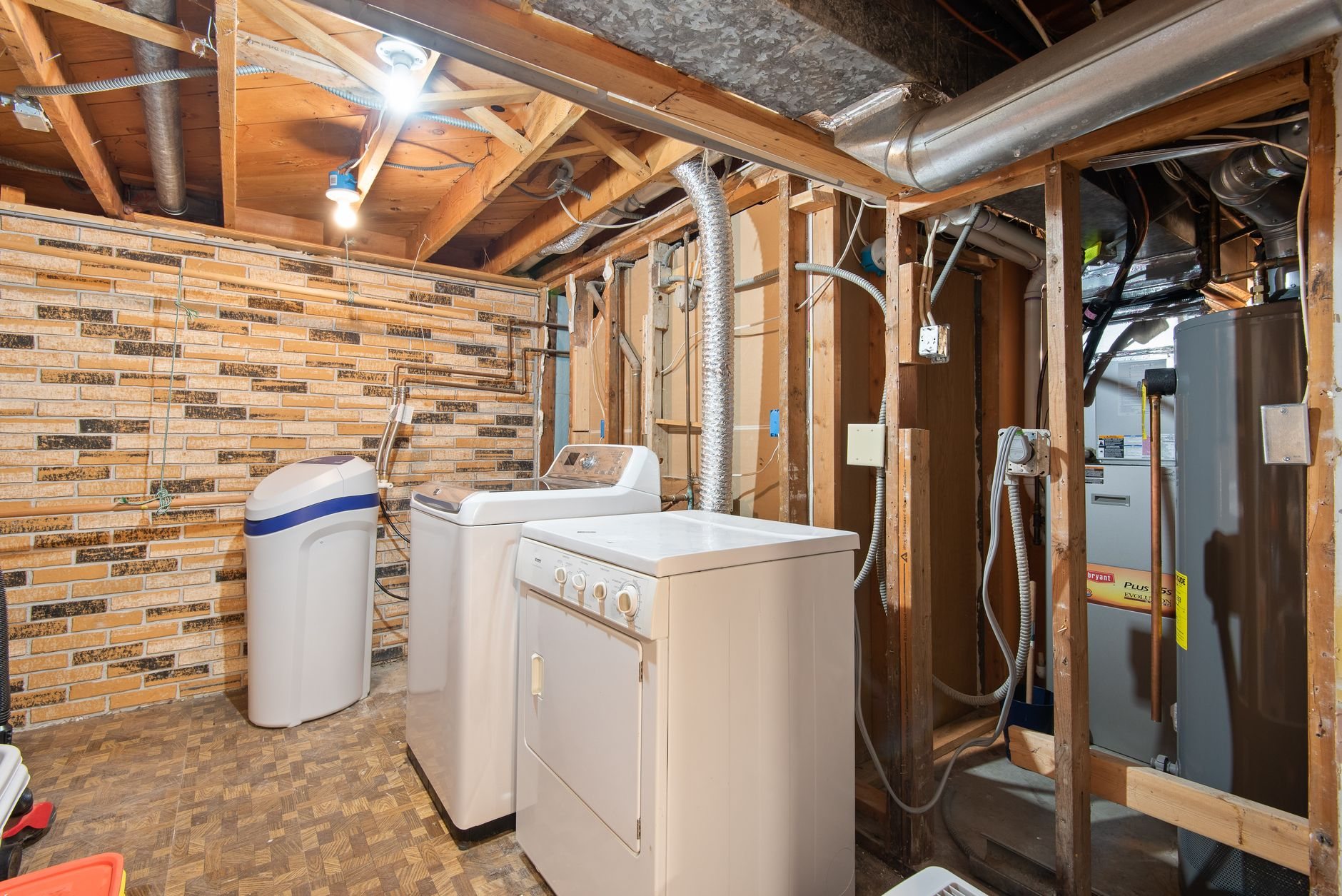
Rim joists and basements on wet lots. High groundwater, spring runoff, and summer cloudbursts put Wasatch Front basements at risk. Mineral wool that gets wet drains and dries instead of slumping into a mat the way fiberglass does — a real advantage in a basement finish below a lot that drains poorly. It doesn’t replace fixing the drainage, and in our high-radon geology, tightening a basement still means we recommend a radon test.
Foothill and bench lots. Homes on the east bench from Draper to Alpine sit against open hillside where wildfire exposure is a genuine design question. Mineral wool adds noncombustible mass to the envelope, and its density resists the wind-washing that canyon gusts push through lighter batts at the eaves.
Party walls between units. In townhomes, duplexes, and small apartment buildings, tested sound and fire assemblies between units typically call for mineral wool by name. Our soundproofing insulation page covers the channel, decoupling, and sealant that make the batt perform.
What rockwool insulation costs in Utah
As ballpark planning numbers, not quotes: mineral wool batts in open wall or floor cavities usually land around one-and-a-half to two times the cost of fiberglass for the same area — on the order of $1.50 to $3.50 per square foot installed, depending on cavity depth and access. The U.S. Department of Energy’s material comparison is a fair plain-language reference, and the manufacturer’s product data gives the per-product R-values and fire ratings we spec from.
What moves the number: whether the walls are already open, how many bays get cut around wiring and plumbing, whether a rated gypsum assembly is in scope, and whether it’s a few partitions or a whole envelope.
Questions we actually get
Is rockwool better than fiberglass insulation?
For fire resistance, sound, and moisture tolerance, yes. For R-value per dollar in a dry exterior wall, no — fiberglass does the same thermal job for less. We spec mineral wool where its properties matter and fiberglass where they don’t, and we’ll show the math either way.
Does mineral wool need a vapor barrier in Utah?
In exterior walls, yes. Mineral wool is unfaced and vapor-permeable, so the assembly needs a separate interior-side vapor retarder under current Utah-adopted energy code. Interior partitions and party walls don’t. In basements, the moisture control layer is the rigid board or foam against the concrete, with mineral wool in the stud bay in front of it.
Can rockwool replace fire-rated drywall in a garage wall?
No. A fire separation rating belongs to the whole tested assembly — framing, gypsum type and thickness, fastening, and insulation together. Mineral wool is a noncombustible component that strengthens that assembly, but the drywall layer still has to meet code. We detail both as one scope and verify requirements with your city building department on older houses.
Why does a mineral wool job cost more than it looks like it should?
Labor, mostly. Stone wool batts are heavier, are cut with a blade rather than torn, and have to be split cleanly around every wire and pipe to avoid voids. A rushed install loses most of the benefit, so we don’t rush it. On an open-wall remodel, the difference against fiberglass is usually a few hundred dollars per room, not thousands.
Mineral wool is one material inside our insulation scope and the wider renovation work we run across the Wasatch Front.
Tell us what you’re working on
We reply within a couple of hours during business hours — a day at most. You’ll get a straight read on scope, sequence, and budget before anyone commits to anything.