
Crawl space insulation in Utah County
Crawl space insulation is the fix for cold floors, frozen pipes, and musty air drifting up from under the house. Grandview Contractors insulates crawl spaces across Utah County and Salt Lake County under a Utah DOPL B100 license — at the floor above a vented crawl, or at the walls of a sealed, conditioned one.
When the crawl space is the problem, not the furnace
A crawl space is a short, dirt- or gravel-floored cavity under part or all of the house — common under pre-1980s Wasatch Front ranches, additions built without a basement, and the low wing of a split-level. If the floor over it is cold in January, a supply line has frozen, or the house smells faintly of soil after a rainy week, the crawl is the place to look.
A cold room over an attached garage is a floor-assembly job under fiberglass batt insulation. A full basement with a cold rim joist is better served by a rim-joist pass under spray foam insulation. And if drafts are the complaint but the floor temperature is fine, start with air sealing and weatherization and insulate the crawl second.
Vented crawl or sealed crawl — decide before buying material
Every crawl space insulation job starts with one question: does the crawl stay outside the thermal envelope, or come inside? That decides where the insulation goes and what it’s made of.
Vented crawl, insulated floor. Vents stay open, and insulation goes between the floor joists overhead, tight to the subfloor, held with wire rods or netting so it can’t sag. It’s the cheaper route and the only sensible one when the crawl floods or can’t be drained. The trade-off: plumbing and ducts under the floor stay in a space that drops below freezing on a clear January night.
Sealed and conditioned crawl. Vents get blocked, a 10- to 15-mil polyethylene vapor barrier (not the 6-mil sheeting that tears when you crawl across it) covers the floor and runs up the walls, and rigid board insulation or closed-cell spray foam goes on the foundation walls and rim joist. The crawl becomes a small, dry room with a little supply air or a dehumidifier, and the pipes and ducts under the house live near room temperature. On most dry Utah County crawls, this is what we recommend.
The deciding factor is almost always water. Many bench and valley lots sit on clay that swells when wet, and a monsoon cloudburst can push water through a wall that was dry in June. Standing water, a stain line, or efflorescence means drainage comes first — that’s waterproofing work, and we’ll say so before quoting insulation.
What a sealed crawl space job involves
- Inspect and clear. We crawl the whole space with a light and a moisture meter, note water history, check joists for rot, and check how combustion appliances breathe. Scrap and fallen batts come out.
- Fix water first. Downspout extensions, grading, or an interior drain and sump go in before any plastic. Burying a water problem under a vapor barrier is how crawl spaces end up growing things.
- Seal vents and penetrations. Vents get blocked with rigid foam and sealant; plumbing, duct, and wire penetrations through the rim joist get foamed or caulked.
- Lay the vapor barrier. Heavy poly over the floor, seams taped, run 12 inches up the wall and fastened to the concrete. Piers get wrapped.
- Insulate walls and rim. Rigid board fastened and sealed to the foundation walls, or closed-cell foam on walls and rim in one pass. Exposed foam gets the ignition barrier current Utah-adopted code requires.
- Condition and document. A supply register or dehumidifier keeps air moving; you get photos and the material spec.
What crawl space insulation costs in Utah
As ballpark planning numbers, not quotes: batts in the floor of a vented crawl on a typical single-story footprint usually land in the low thousands. A full seal-and-condition job with heavy vapor barrier, wall insulation, and dehumidification generally runs mid-to-upper four figures, sometimes beyond on a large or difficult crawl. The U.S. Department of Energy’s insulation guidance covers why sealed-crawl wall insulation earns its premium in cold climates.
What moves the number: clearance (an 18-inch crawl takes roughly twice the labor of a 36-inch one), old material removal, drainage fixes, the count of piers and penetrations, and rigid board versus spray foam on the walls. Two regional notes. Utah sits on high-radon geology, and sealing a crawl changes how soil gas moves under the house — we recommend a radon test per EPA guidance and can rough in a mitigation pipe under the barrier while the space is open. And a closed crawl keeps under-floor water lines well above freezing on valley-floor nights that drop into the teens, which is often why the job pays for itself.
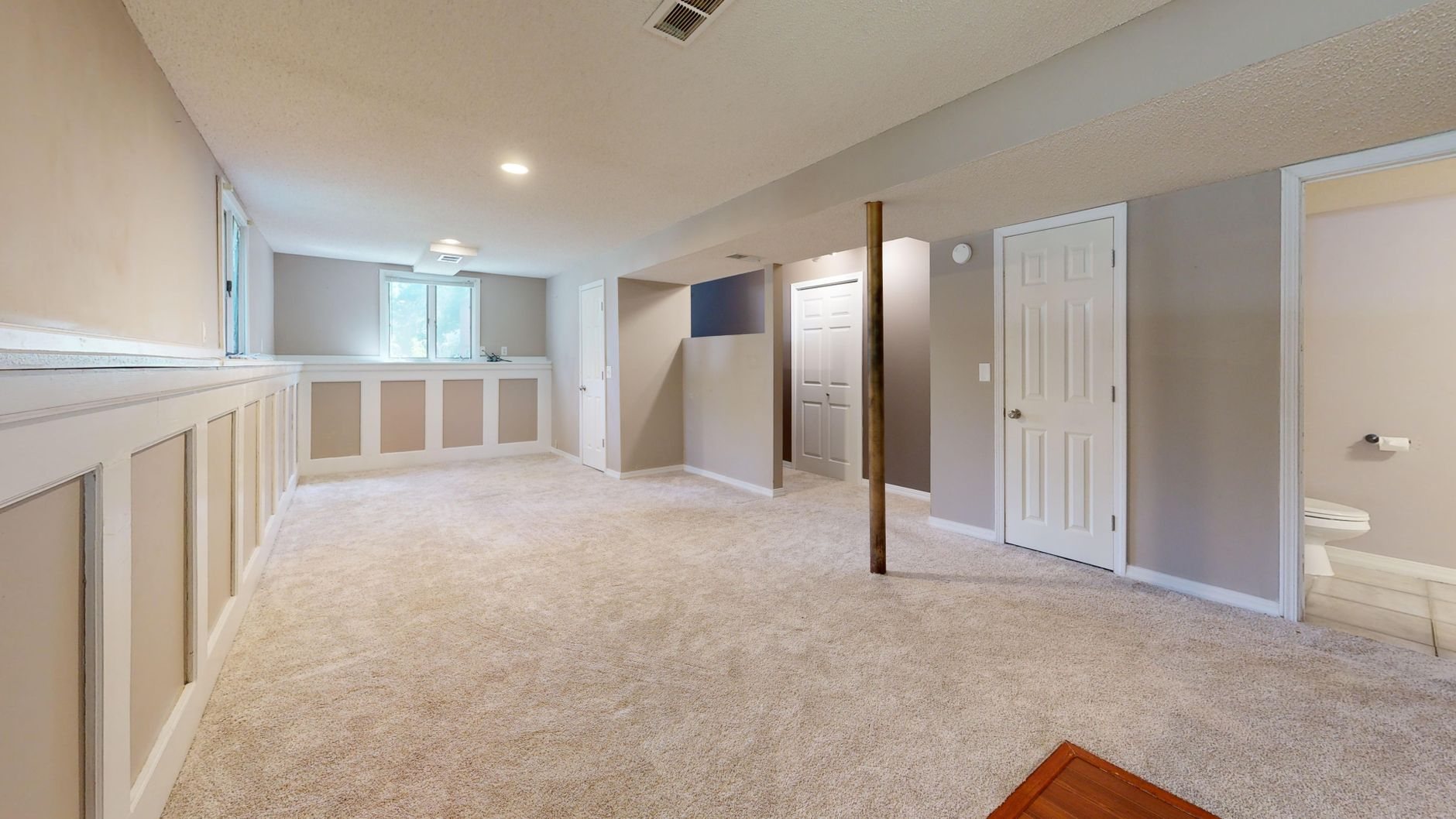
This is one focused piece of our insulation work within renovation projects, and it often rides along with basement finishing.
Questions we actually get
Should I seal my crawl space or leave it vented?
Seal it, if the crawl can be kept dry. A sealed, conditioned crawl keeps floors warmer, protects pipes and ducts, and stops humid summer air condensing on cold joists. Leave it vented only when it floods or can’t be drained. We decide after inspecting, not from the curb.
Can you insulate the floor joists instead of the walls?
Yes. On a vented crawl, batts or netted fiberglass go between the joists, tight to the subfloor. It costs less than sealing the crawl and is the right call when moisture rules out encapsulation. The drawback: pipes and ducts under the floor stay in a cold space all winter.
Will sealing the crawl space raise my radon level?
It can move either direction, which is why we recommend testing. Utah County and Salt Lake County both sit on radon-producing geology. A sealed vapor barrier reduces soil gas entry, but a tighter house can concentrate what does get in. Test before and after; we can rough in a mitigation pipe during the work.
What drives the cost of a crawl space insulation job?
Clearance height, old material removal, water problems that need fixing first, the number of piers and penetrations to seal, and rigid board versus spray foam on the walls. A clean, dry, 3-foot crawl is straightforward. An 18-inch crawl with standing water is a drainage job before it’s an insulation job.
Tell us what you’re working on
We reply within a couple of hours during business hours — a day at most. You’ll get a straight read on scope, sequence, and budget before anyone commits to anything.