
Quartz countertops in Utah County
Quartz is engineered stone — roughly 90% ground natural quartz bound in resin — and it is the counter most Utah kitchens end up with because it never needs sealing and ignores the spills that stain granite and etch marble. Grandview Contractors templates, fabricates, and installs quartz countertops across Utah County and Salt Lake County under a B100 general contractor license.
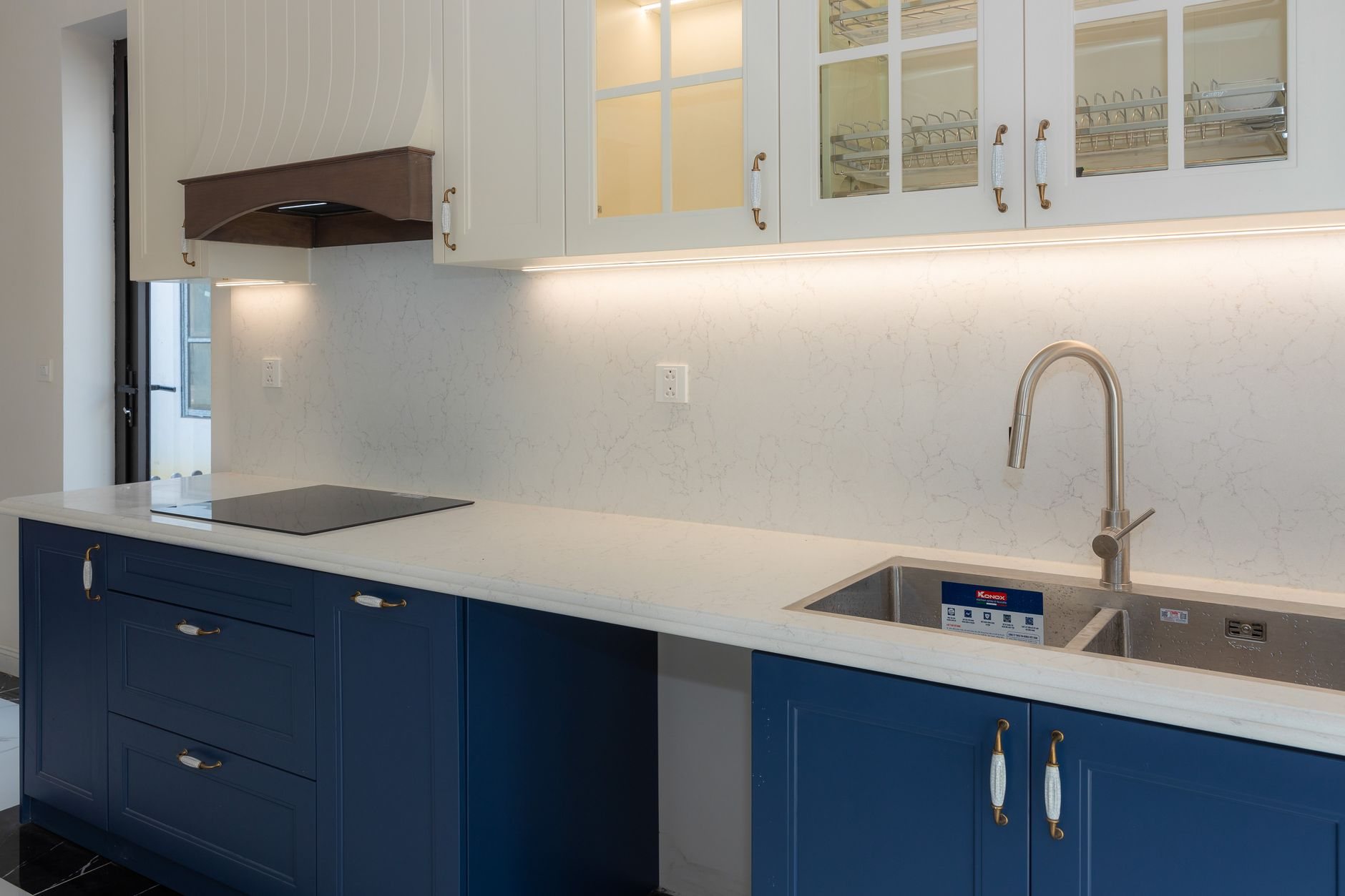
Quartz versus the slabs it gets compared to
Quartz wins when the household wants a counter it can forget about. It’s non-porous, so red wine, turmeric, and lemon juice wipe up without a mark, and there’s no annual sealing to miss. Pattern is consistent slab to slab, which matters when three slabs have to read as one surface.
Quartz loses on heat. The resin that binds it starts to discolor around 300°F, so a cast-iron pan straight off the burner can leave a permanent ring. If your cooking involves a lot of hot steel on the counter, granite handles that abuse better. If you want veining that only geology produces and you’re willing to seal and live with patina, marble or quartzite is the honest answer — quartzite is natural stone, not the same material, despite the name. For outdoor kitchens or a counter in direct sun through a south-facing window all afternoon, porcelain slab is the better pick: at Utah’s elevation the UV load exceeds what most quartz warranties cover, and resin can yellow over years of exposure. If repairability outranks hardness — rentals, clinics, break rooms — solid surface sands out scratches that quartz cannot.
Thickness, seams, overhangs, and cutouts
The decisions that determine how a quartz counter looks and lasts get made before the slab is cut.
- Thickness. 3cm (about 1¼”) is the standard for kitchens and carries its own weight across a cabinet run with no plywood sub-top. 2cm costs less but usually needs a mitered edge build-up to look like a full slab, and wants support under long spans.
- Slab yield. Standard slabs run about 55″ by 120″; jumbo slabs reach roughly 65″ by 130″. An L-shaped kitchen with a 9′ island often fits two jumbo slabs but needs three standard ones — so we lay out the cuts before we quote.
- Seams. Quartz seams are tight and color-matched but visible up close. We put them where the eye doesn’t rest — behind a cooktop, at an inside corner — and never across a sink cutout, the weak point in any slab.
- Overhangs. 3cm quartz can cantilever about 10–12″ on its own for a seating ledge. Beyond that, we set flat steel brackets or corbels into the cabinet before the top goes on. An unsupported 15″ overhang is a crack waiting for a Thanksgiving.
- Cutouts and edges. Undermount sink, cooktop, faucet, soap dispenser, and any filtration tap get cut at the shop, not on your counter. Eased edges are standard; mitered waterfall ends on an island roughly double the edge work.
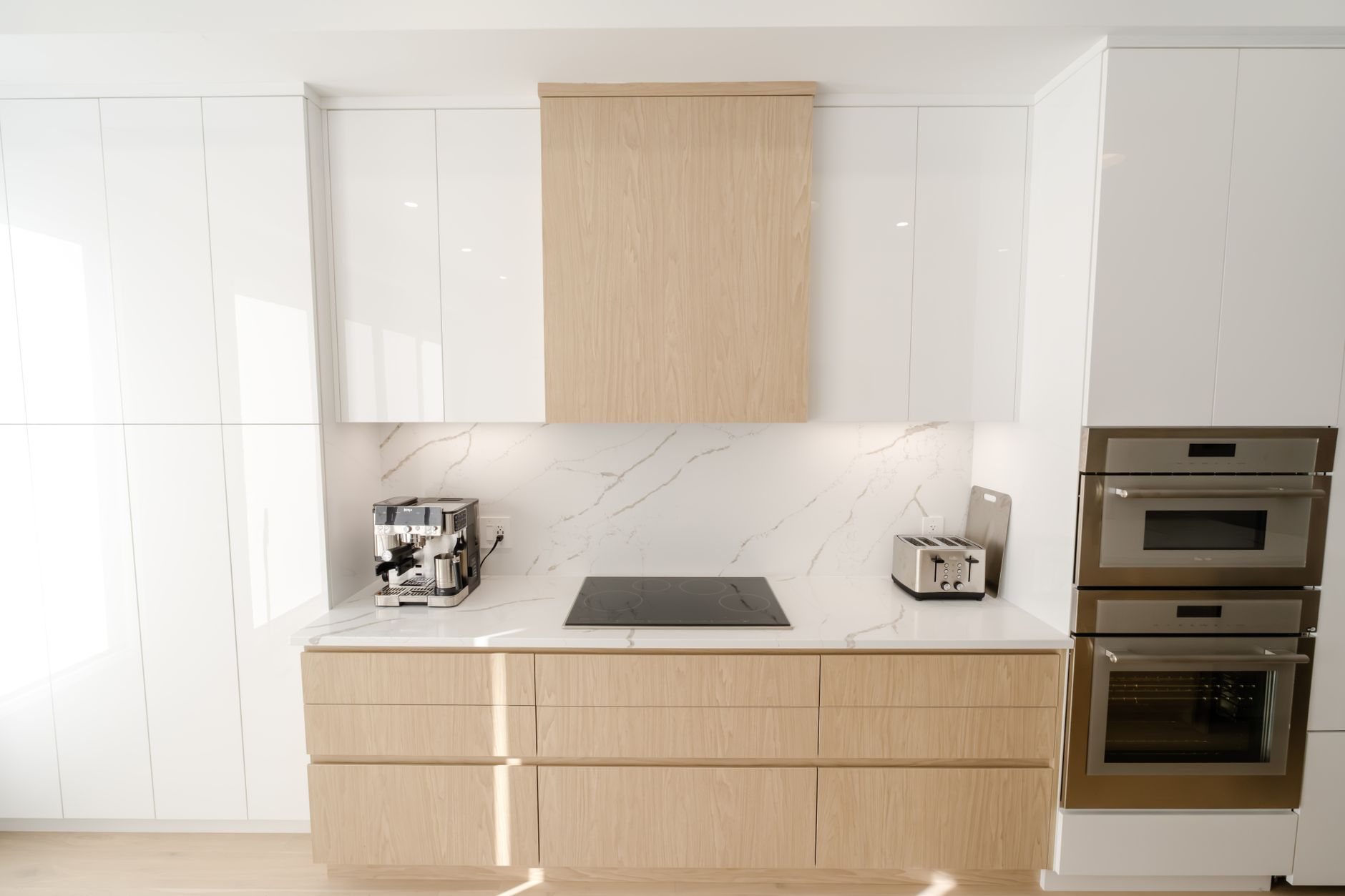
Templating happens after the cabinets are set and level, not off the drawings — the difference between a top that drops in and one that gets shimmed. The full sequence is on our templating and fabrication page. Install is typically one day: tops set on silicone, seams filled and polished, sink clipped and sealed, and the licensed plumbers we coordinate reconnect the faucet and disposal.
One Utah detail belongs in the sink conversation. Wasatch Front water is hard, and while quartz won’t etch, mineral film builds around the faucet base. Deciding on a softener or filtration tap before the slab is cut keeps that extra hole in the shop plan, not drilled through polished quartz on site.
What quartz countertops cost in Utah
As ballpark planning numbers, installed quartz in Utah County typically lands between $65 and $120 per square foot, with entry lines at the low end and premium brands with heavy veining at the top. A mid-sized kitchen with 50–60 square feet of counter is usually a $4,000–$7,500 project; a large kitchen with an island waterfall can clear $12,000. These are not quotes — they’re the range we use to tell you early whether plan and budget are in the same room.
What moves the number: brand and pattern (plain white is far cheaper than a marble-look), slab count and yield, 3cm versus 2cm, cutouts, edge profile, and waterfall ends. Like-for-like quartz replacement in the same footprint generally isn’t permitted work; moving the sink or adding a circuit for an induction cooktop is, under current Utah-adopted code. All of it runs under one B100 license you can check at dopl.utah.gov.
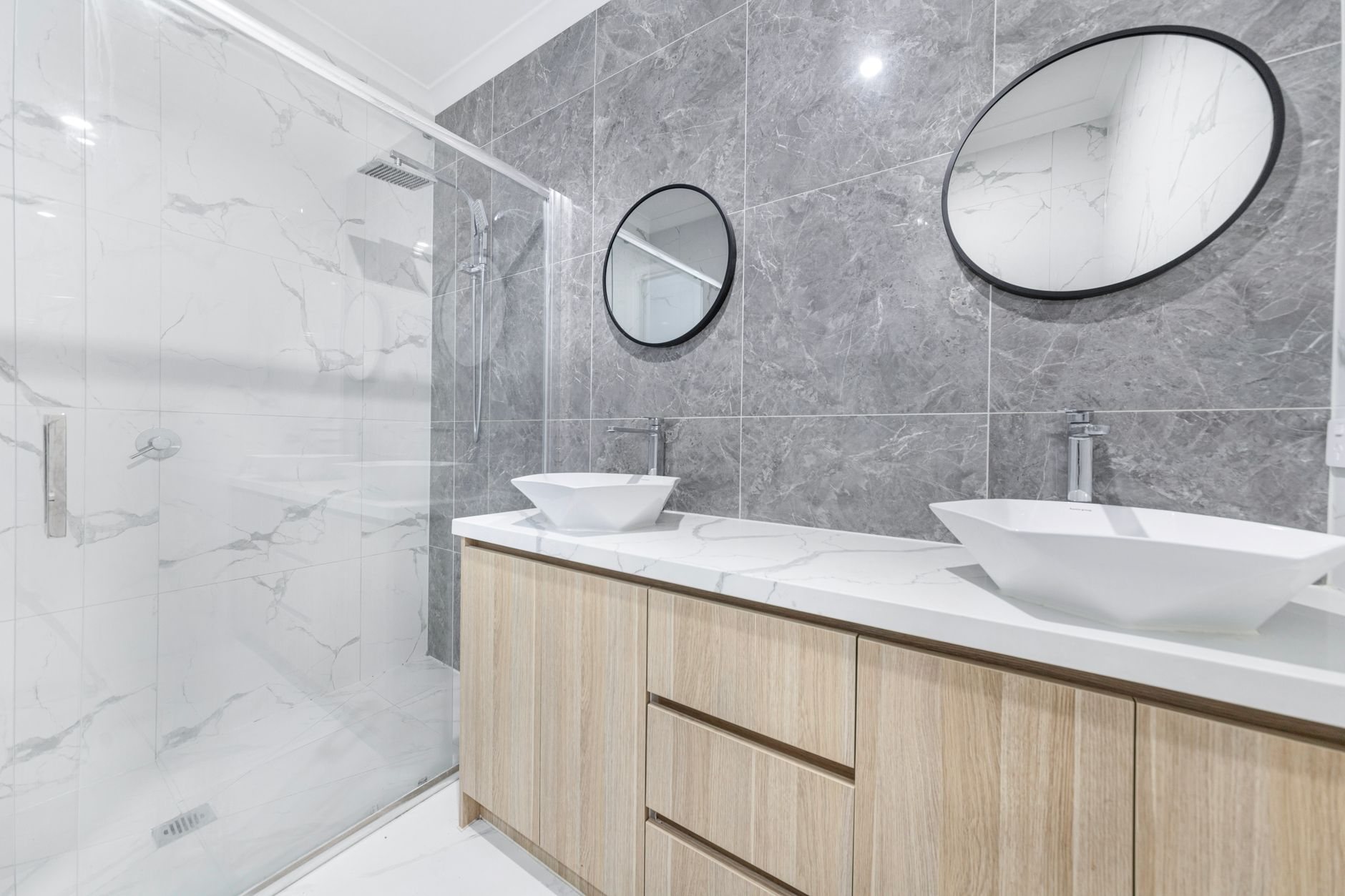
Quartz is the default for most bathroom vanity tops: a remnant often covers a double vanity, and remnant pricing is a real saving when the kitchen job leaves offcuts.
Questions we actually get
Can I put a hot pan on a quartz countertop?
Not directly. The resin in quartz is heat-sensitive and most manufacturers exclude heat damage from their warranties — Cambria, for one, publishes care guidance that calls for trivets. A pan from a 400°F oven can leave a permanent ring.
Do quartz countertops need to be sealed?
No. Quartz is non-porous, so there is no sealer to apply or reapply. Daily care is mild soap and water. Skip abrasive pads and strong solvents, and lift hard-water spots around the faucet with a non-acidic cleaner.
Will my cabinets hold a 3cm quartz top?
Usually. 3cm quartz weighs about 18–20 pounds per square foot, roughly three times laminate. Sound, level boxes anchored to studs carry it without a sub-top. Older particleboard boxes, water-swollen sink bases, or free-standing islands sometimes need blocking first — we check that at the walkthrough.
How long from signing to installed quartz counters?
Most quartz colors stock locally, so the clock is fabrication, not shipping. Templating happens once cabinets are set; fabrication takes one to two weeks; install is one day. If the cabinets are staying, the whole project is typically two to three weeks from template to a working sink.
Related services
New boxes under quartz tops are a cabinetry and countertop project; a new island to put them on is a kitchen island addition; and if the layout is changing too, start with renovation and build-outs.
Tell us what you’re working on
We reply within a couple of hours during business hours — a day at most. You’ll get a straight read on scope, sequence, and budget before anyone commits to anything.