
Marble & quartzite countertops in Utah County
Marble and quartzite are the natural slabs people choose for the veining, and they get confused with each other — and with quartz — more than any other counter material. Grandview Contractors sources, templates, and installs marble and quartzite countertops across Utah County and Salt Lake County under a B100 general contractor license, with a plain talk about etching and sealing before any slab is tagged.
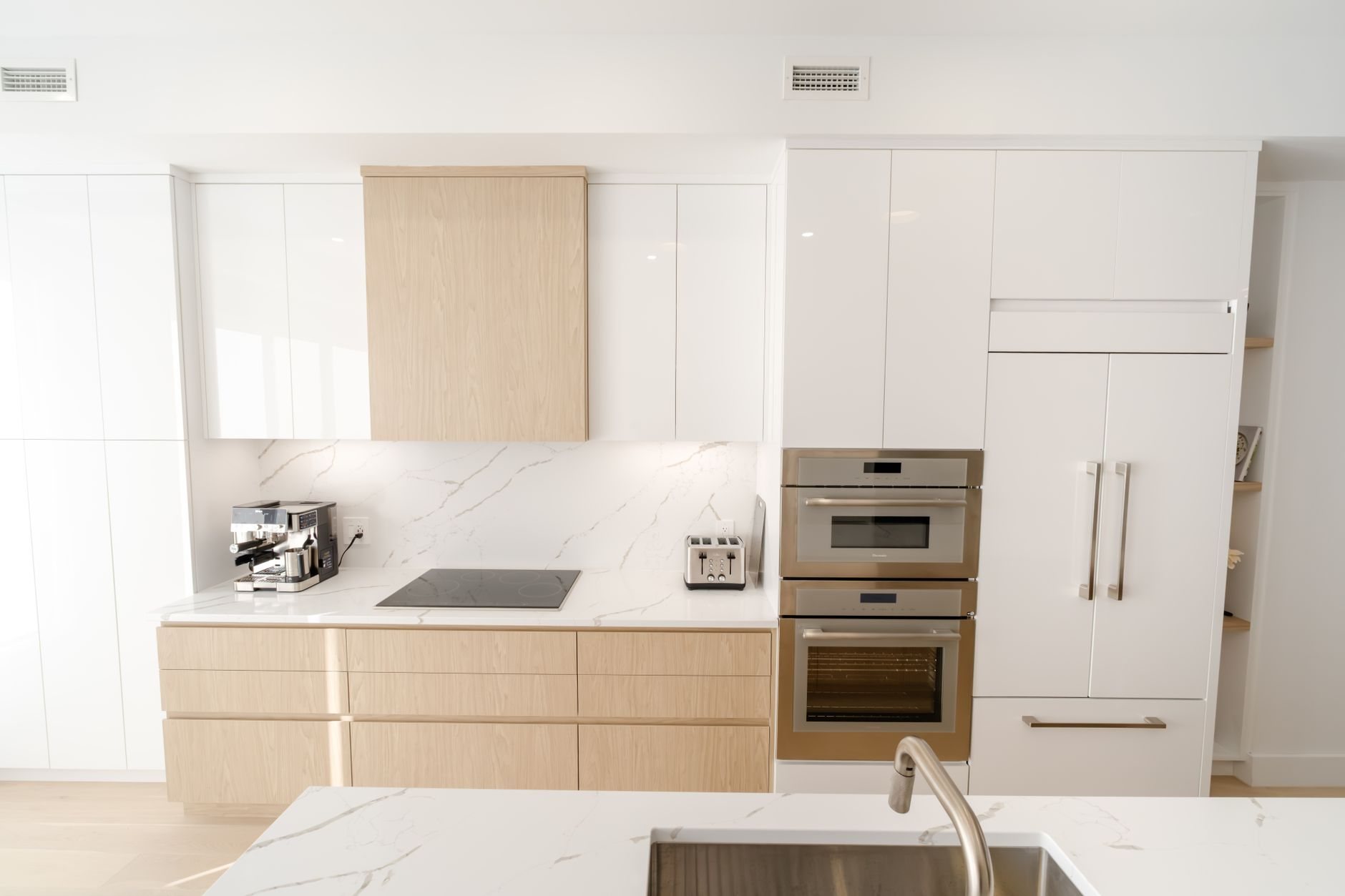
Two different rocks that happen to look alike
Marble is calcium carbonate. Anything acidic — lemon, vinegar, wine, tomato sauce — dissolves a little of the surface where it lands and leaves a dull spot called an etch. Sealer slows staining; it does nothing for etching. Marble suits a household that will either guard it or accept the patina: a baker’s island, a bathroom vanity, a butler’s pantry that doesn’t see weeknight dinners.
Quartzite is sandstone recrystallized under heat and pressure into something harder than granite. True quartzite doesn’t etch, shrugs off knife scratches, and takes a hot pan — marble’s look with granite’s toughness, at a price above both. The catch is labeling. Some slabs sold as “soft quartzite” are dolomitic marble and etch exactly like it, which is why we test the stone before you commit.
Natural toughness without the premium is granite. Consistent pattern with no sealing schedule is quartz, though it scorches where quartzite won’t. Outdoor kitchens belong to porcelain slab. If the veining is the point, you’re on the right page.
Slab selection, verification, finish, and support
Natural stone is bought by the slab, not the sample. These decisions separate a marble or quartzite counter that ages gracefully from one that disappoints in year two.
- View and tag the actual slabs. Veining changes across a bundle, so you pick specific slabs at the yard. We map vein direction across island and perimeter; bookmatched waterfall ends come from consecutive slabs cut as mirror images, which can cost a full extra slab in yield.
- Test the stone. A drop of lemon juice left fifteen minutes on an offcut tells the truth: true quartzite shows nothing, marble and “soft quartzite” dull. A glass-scratch check confirms it — quartzite scratches glass, marble doesn’t. The Natural Stone Institute publishes the standards behind these field tests.
- Choose the finish. Polished marble shows the most depth and the most etching, since each etch reads as a dull spot in a shiny field. Honed marble is already matte, so etches nearly vanish — our usual kitchen recommendation. Quartzite takes polished, honed, or leathered; leathered hides water spots best.
- Plan thickness, seams, and support. 3cm is standard. Marble is softer than granite, so overhangs past about 10″ get flat steel brackets set into the cabinet first. Seams run along a vein where possible so the eye follows the stone, not the joint. Quartzite is among the hardest materials a shop cuts; that slower fabrication shows in the price.
- Seal, set, and connect. An impregnating sealer goes on before install. Tops set on silicone, seams filled with color-matched resin and polished flush, undermount sink clipped and sealed, and the licensed plumbers we coordinate reconnect the faucet. Marble wants re-sealing every six to twelve months; most quartzite every one to three years.
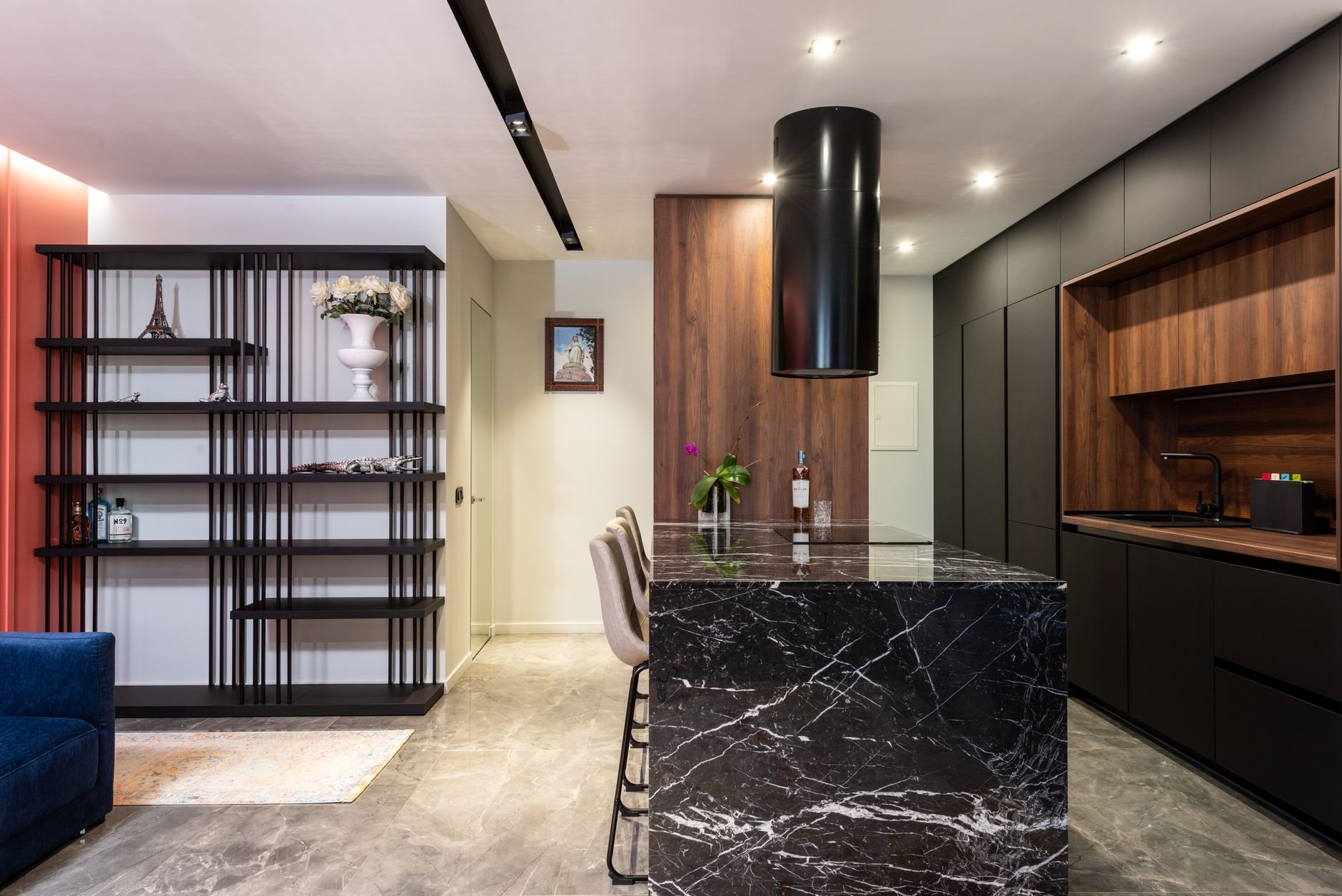
Templating happens after cabinets are set and level, never off drawings; the sequence is on our templating and fabrication page.
Two Utah specifics belong here. Wasatch Front water is hard, and the descalers people reach for — vinegar, citrus cleaners, lime removers — are acids that etch marble on contact, so marble owners keep a pH-neutral stone cleaner by the sink. On the plus side, natural stone carries no resin, so a slab in a south-facing window at Utah’s elevation won’t yellow the way UV can discolor engineered quartz.
What marble and quartzite countertops cost in Utah
As ballpark planning numbers, installed marble in Utah County typically lands between $70 and $150 per square foot for common Carrara and Calacatta-type stones, with statuary and rare colors above that. Quartzite usually runs $90 to $200 per square foot installed; dramatic bookmatched material can exceed it. A 50–60 square foot kitchen is often $5,000–$9,000 in marble or $6,000–$12,000 in quartzite. These are not quotes; they’re the range we use to tell you early whether the slab you fell for and the budget are in the same room.
What moves the number: slab rarity, vein-matching waste, quartzite’s slower cutting, finish, waterfall ends, overhang steel, and cutouts. Swapping tops in the same footprint generally isn’t permitted work; moving a sink or adding a circuit is under current Utah-adopted code. All of it runs under one B100 license you can verify at dopl.utah.gov.
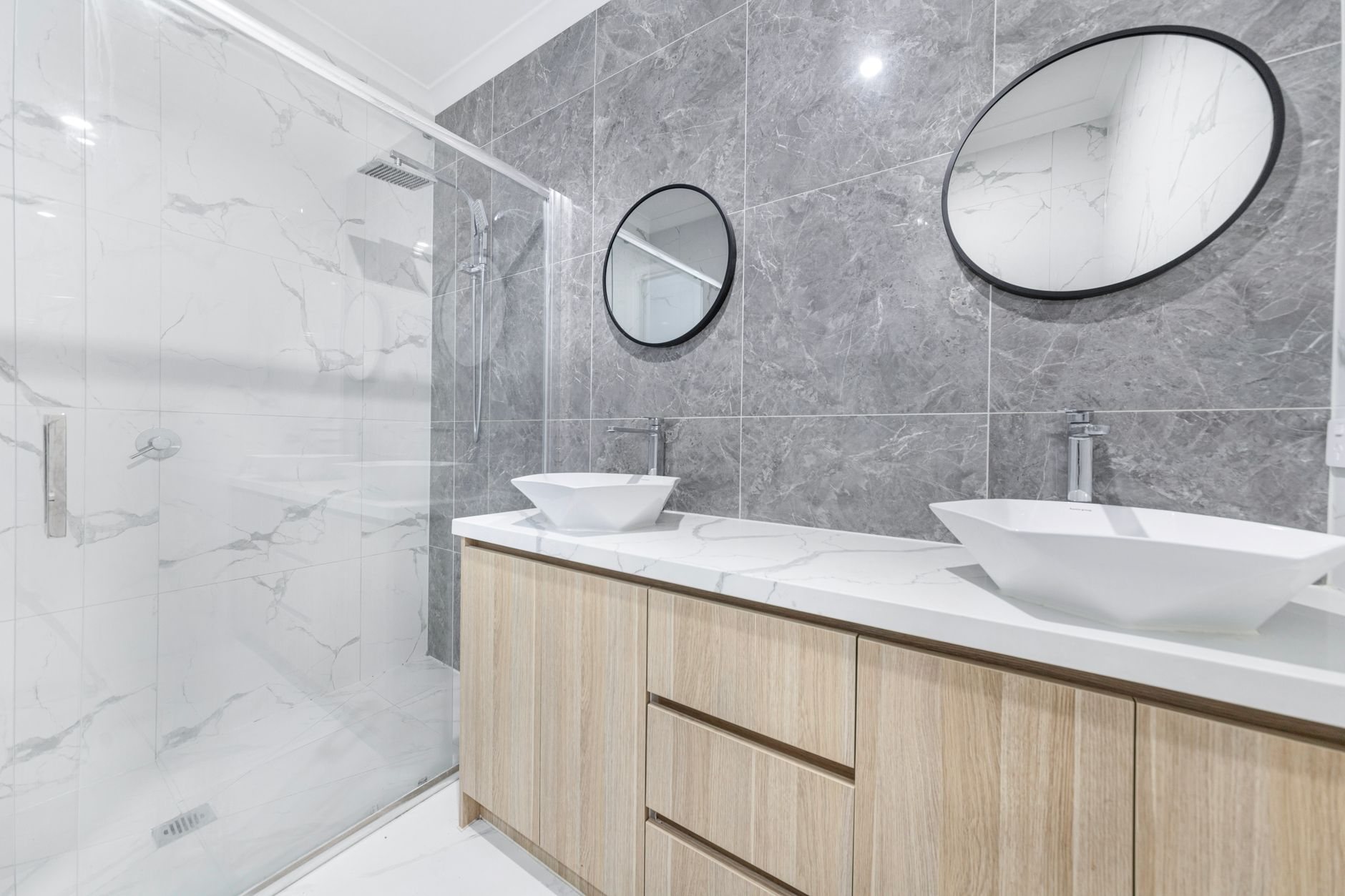
A bathroom vanity is the most forgiving place to own marble: no tomato sauce, no hot pans, and a kitchen remnant often covers a double vanity. For every counter material and cabinet tier, see cabinetry and countertops, or at renovation and build-outs if the counter is part of a larger kitchen remodel.
Questions we actually get
Is quartzite the same thing as quartz?
No. Quartzite is a natural metamorphic rock cut into slabs; quartz countertops are engineered from ground quartz bound in resin. Quartzite is harder, heat-tolerant, and needs sealing; quartz is non-porous, never sealed, and can scorch. We confirm which one is on the ticket.
Will my marble countertop stain or etch?
It will etch — that’s chemistry, and sealer doesn’t prevent it. Acid dulls the polished surface where it sits. Staining is separate, and sealer does control it: a sealed top wipes clean of coffee and oil if you get to it soon. Honed finishes hide etching well, and light etching can be re-honed.
Can marble or quartzite go on my existing cabinets?
Usually, if the boxes are sound and level. A 3cm stone top weighs roughly 18–20 pounds per square foot, three to four times laminate, so we check for water damage and racked face frames first. Seating overhangs past about 10″ get steel added before the slab arrives.
Why does quartzite cost more than granite when both are natural stone?
Rarer quarries and longer shipping, slower fabrication because quartzite wears diamond tooling faster than granite, and vein-matching waste — a bookmatched island can consume most of an extra slab. Granite’s uniform pattern lets a shop cut for yield; quartzite gets cut for the look.
Tell us what you’re working on
We reply within a couple of hours during business hours — a day at most. You’ll get a straight read on scope, sequence, and budget before anyone commits to anything.