
Solid surface countertops in Utah County
Solid surface is an acrylic sheet material (Corian, HI-MACS, Wilsonart and similar lines) that gets bonded, sanded, and shaped into one continuous counter with an integral sink and no visible seams — and because the color runs all the way through, scratches and burns sand out instead of staying forever. Grandview Contractors fabricates and installs solid surface countertops across Utah County and Salt Lake County under a B100 general contractor license.
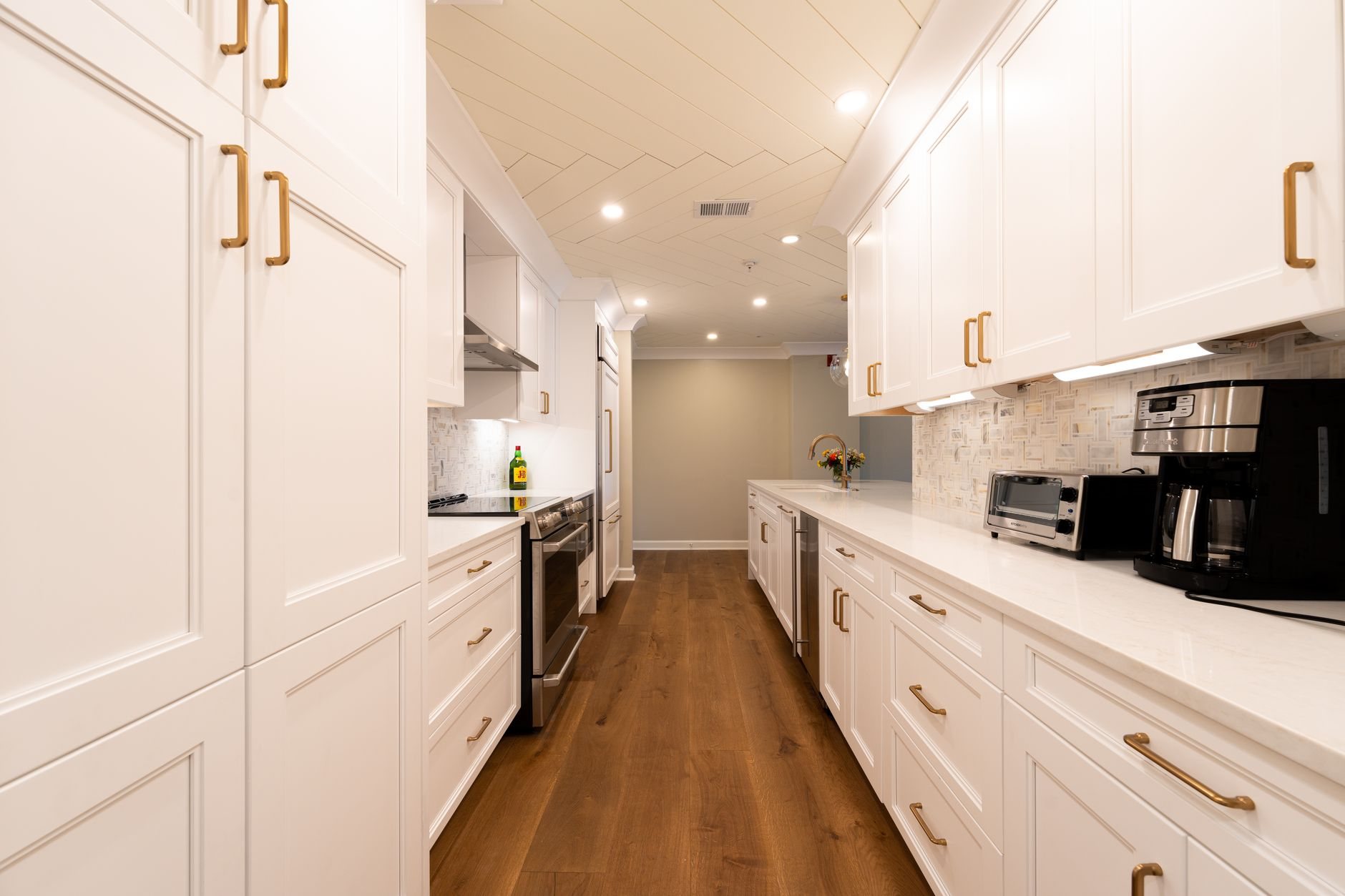
Solid surface versus quartz, laminate, and porcelain
Solid surface wins on two things slab materials can’t match: repairability and the integral sink. A tenant’s cigarette burn or a decade of knife marks come out with sandpaper and a buffing pad, with no slab to replace. And because the sink is bonded from the same material and sanded flush, there’s no undermount lip and no caulk line for grime to hide in — which is why it shows up in clinics, labs, and school restrooms more than any other counter.
It loses on hardness and heat. Quartz is harder and reads as stone; solid surface reads as a warm matte polymer and scorches under a pan straight off the burner. If the lowest installed price matters most, laminate is cheaper still, though it can’t be repaired or take an integral sink. For an outdoor counter or one in direct afternoon sun, porcelain slab is the honest pick: at Utah’s elevation the UV load fades saturated acrylic colors over years, and pale neutrals outlast deep blues and blacks in a south-facing kitchen.
Sheet, substrate, seams, and the integral sink
- Sheet layout. Material arrives as ½”-thick sheets, typically 30″ wide by 12′ long. A 25″-deep counter yields cleanly; a 36″-deep island needs a wider sheet or a planned seam, so we lay out every run before quoting.
- Edge build-up. A ½” sheet reads thin, so the front edge is doubled or tripled with strips of the same material, bonded and routed to a 1¼” or 1½” eased, bullnose, or ogee profile.
- Substrate. Unlike 3cm quartz, a ½” acrylic sheet does not span a cabinet run on its own. It needs a level perimeter frame plus cross supports roughly every 18 to 24 inches, extra support at sink openings, and a small expansion gap at the walls because acrylic moves with temperature.
- Seams. Pieces are joined with color-matched two-part adhesive, clamped, then sanded flush through a series of grits until the seam disappears at arm’s length. Seams stay away from cutouts and never cross a cooktop.
- Integral sink and cove. The bowl is bonded to the underside of the top and the joint sanded flush, so bowl and deck become one surface. A coved backsplash — a curved inside radius instead of a caulked 90° corner — is the companion detail.
- Finish. The whole top is sanded to matte or satin. Matte hides scratches best, so that’s where we steer kitchens and all commercial work.
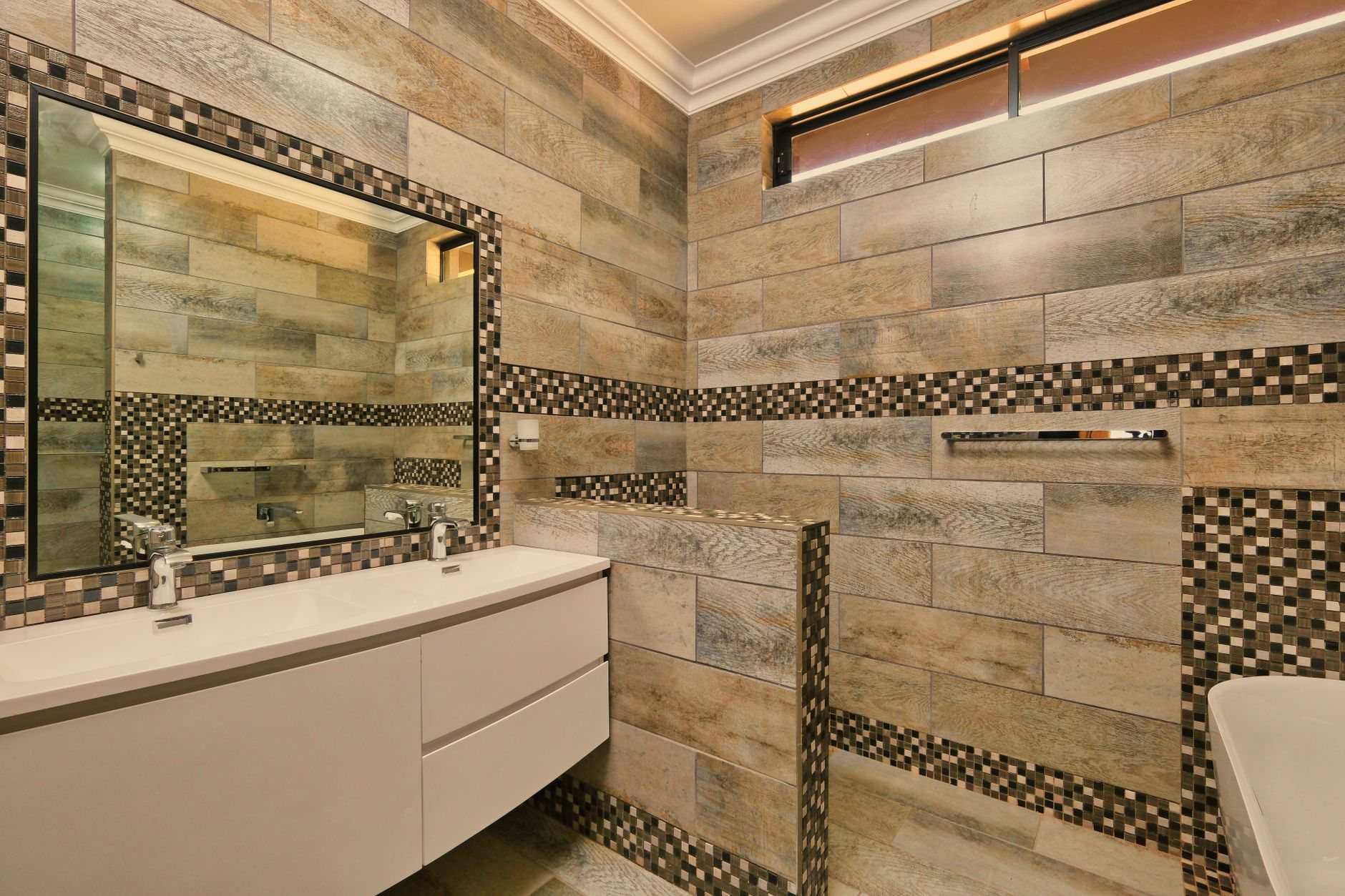
The cove and the integral sink are the details Utah owners end up grateful for. Wasatch Front water is hard, and the white mineral crust that collects in a caulk line or around an undermount sink lip has nowhere to settle on a coved, one-piece top. The same logic makes a double-bowl solid surface vanity top about the most forgiving thing you can put under a family of five.
Tops are built from a template taken after the cabinets are set and level — the sequence is on our templating and fabrication page. Install is usually one day, with the licensed plumbers we coordinate reconnecting the faucet the same day. We build to the support and fabrication requirements manufacturers such as Corian publish, so the material warranty holds.
What solid surface countertops cost in Utah
As ballpark planning numbers, installed solid surface in Utah County typically runs $55 to $100 per square foot — above laminate, overlapping entry-level quartz, below natural stone. A standard kitchen with one integral sink usually lands between $3,000 and $6,000 installed. Planning figures, not a quote: you get a budget range after a walkthrough and a fixed number from the template.
What moves the price: each integral bowl (a few hundred dollars over a drop-in sink), a coved backsplash versus a plain 4″ splash, edge profile beyond eased, seam count, and color tier — plain whites and speckles are the economy lines; saturated colors and veined patterns cost noticeably more and fade faster in sun.
For property managers across the fast-growing apartment stock in Lehi, Saratoga Springs, and Eagle Mountain, the math is lifecycle rather than first cost: a top that gets sanded on each turn can outlast two or three laminate replacements, which is why it’s a standing item in our unit-turn programs. The same holds in medical and dental build-outs, where a non-porous, repairable deck is what the infection-control policy usually asks for. All of it is installed under one B100 license, verifiable at dopl.utah.gov.
Questions we actually get
Can scratches and burns in solid surface really be repaired?
Yes. The color runs through the full ½” sheet, so light scratches sand out with fine abrasive and the matte finish comes back with a buffing pad. Deep gouges and scorch marks get routed out and patched with a bonded plug of the same material, then sanded flush. Quartz, granite, and laminate have no equivalent.
Can I put a solid surface counter on my existing cabinets?
Usually, if the boxes are sound and level. The dependency is the substrate: a ½” sheet needs a perimeter frame and cross supports built on your cabinets before the top goes on. If the old counter was laminate on a particleboard deck that’s swollen from water, that deck gets replaced first.
Is a solid surface integral sink worth the extra cost?
In a kitchen or bathroom that gets cleaned hard, yes. The bowl bonds to the deck with no rim, no caulk line, and no undermount gap, so hard-water scale and grime have nowhere to lodge. It adds a few hundred dollars per bowl over a drop-in stainless sink; we can undermount stainless or fireclay instead if you prefer.
How does solid surface hold up to heat and UV in Utah?
Heat is its weak point: acrylic can scorch or deform above roughly 300°F, so hot pans need a trivet. UV is a slower problem at our elevation; light colors stay stable for decades, while dark and saturated colors can fade in a sunny window over years. For an outdoor counter, we’d steer you to porcelain slab.
Solid surface is one of nine countertop materials we install; compare the lineup on our cabinetry and countertops page, or see everything we remodel under renovation and build-outs.
Tell us what you’re working on
We reply within a couple of hours during business hours — a day at most. You’ll get a straight read on scope, sequence, and budget before anyone commits to anything.