
Granite countertops in Utah County
Granite countertops are slabs of natural igneous stone, templated, cut, polished, sealed, and set on your cabinets — the right pick for households that cook hot and want a surface no two kitchens share. Grandview Contractors templates, fabricates, and installs granite countertops across Utah County and Salt Lake County under a B100 general contractor license.
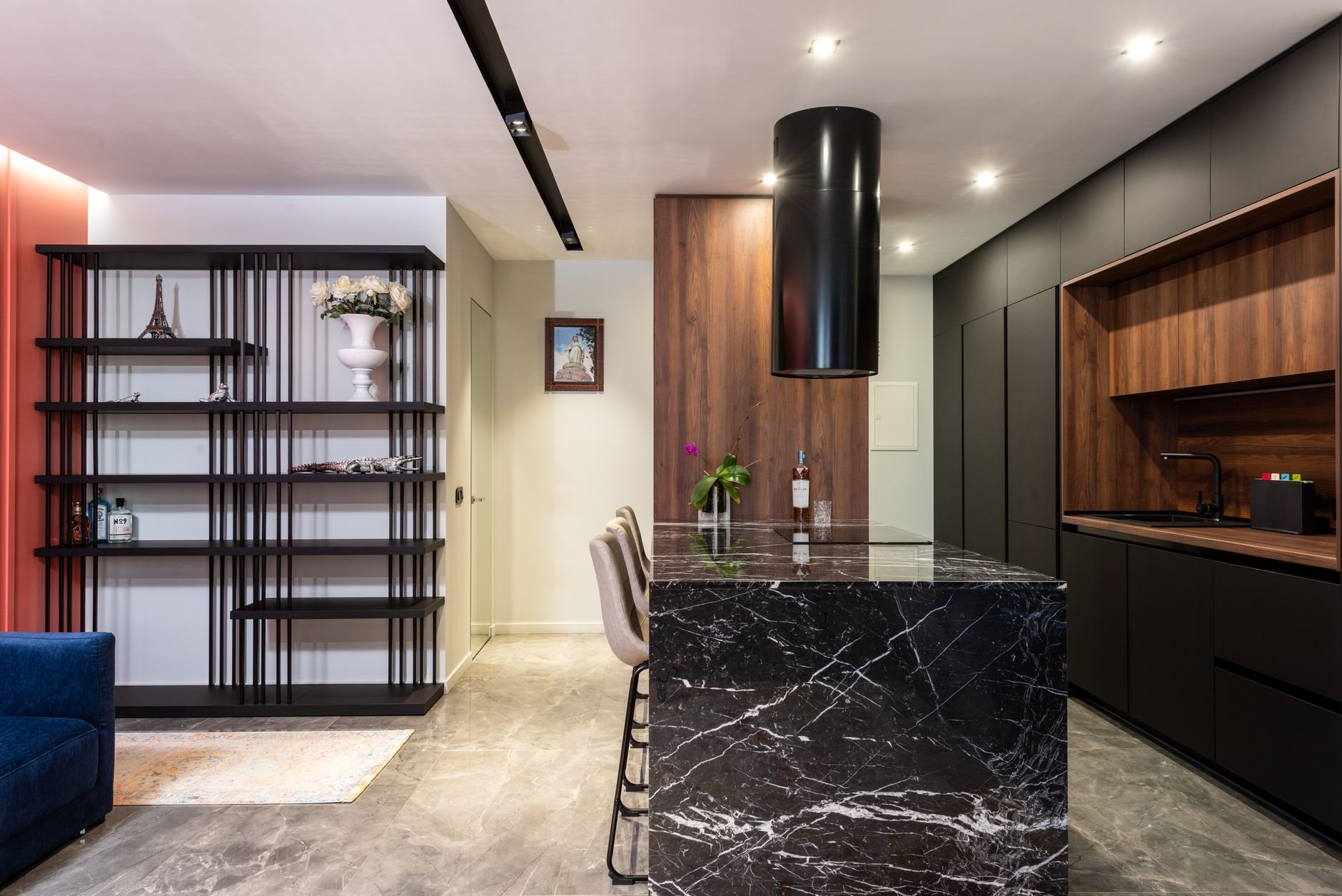
Granite versus quartz, quartzite, and marble
Granite wins on three things: heat, price per square foot of real stone, and variety. A pan straight off the burner won’t scorch it the way it can mark the resin in quartz countertops. Commodity colors — the speckled blacks, grays, and browns quarried in volume — usually price under quartz. And you choose your exact slab at the yard, not a sample chip.
Granite loses on consistency and maintenance. A uniform white with no sealing is quartz’s job. Dramatic veining that reads like marble but survives a kitchen is quartzite, at a higher price. Granite’s honest position: the hardest-working natural stone for the money, with a sealer coat every one to several years as the trade-off.
It also makes a strong outdoor-kitchen top: no UV-sensitive resin to yellow under Utah’s high-elevation sun, and a sealed, well-supported slab rides out Wasatch Front freeze–thaw cycles better than most alternatives.
Slab selection, rodding, seams, and sealing
Granite is graded by rarity and workability. Level 1 colors are quarried in quantity and arrive resin-treated to fill natural pits. Exotic slabs — blues, heavy-movement whites, anything with quartz veins running through — cost more and chip more easily on the saw, so cutouts and edges get planned around the pattern.
A fissure is not a crack. Fissures are natural separations that don’t weaken the stone; cracks are failures. We walk every slab with you at the yard and point out both before anyone cuts, because a fissure that lands in a sink rail is worth planning around.
Three details separate a granite top that lasts from one that doesn’t. Rodding: the narrow stone rails in front of and behind a sink cutout are the weakest point, so we slot the underside and epoxy steel rods in before the slab leaves the shop. Seam placement: granite’s pattern shifts across a slab, so seams go where grain changes read naturally, away from the sink and cooktop. Overhang support: 3 cm granite carries roughly 10 inches unsupported; bar overhangs beyond that get steel brackets let into the cabinet. Templating itself is covered on our templating and fabrication page.
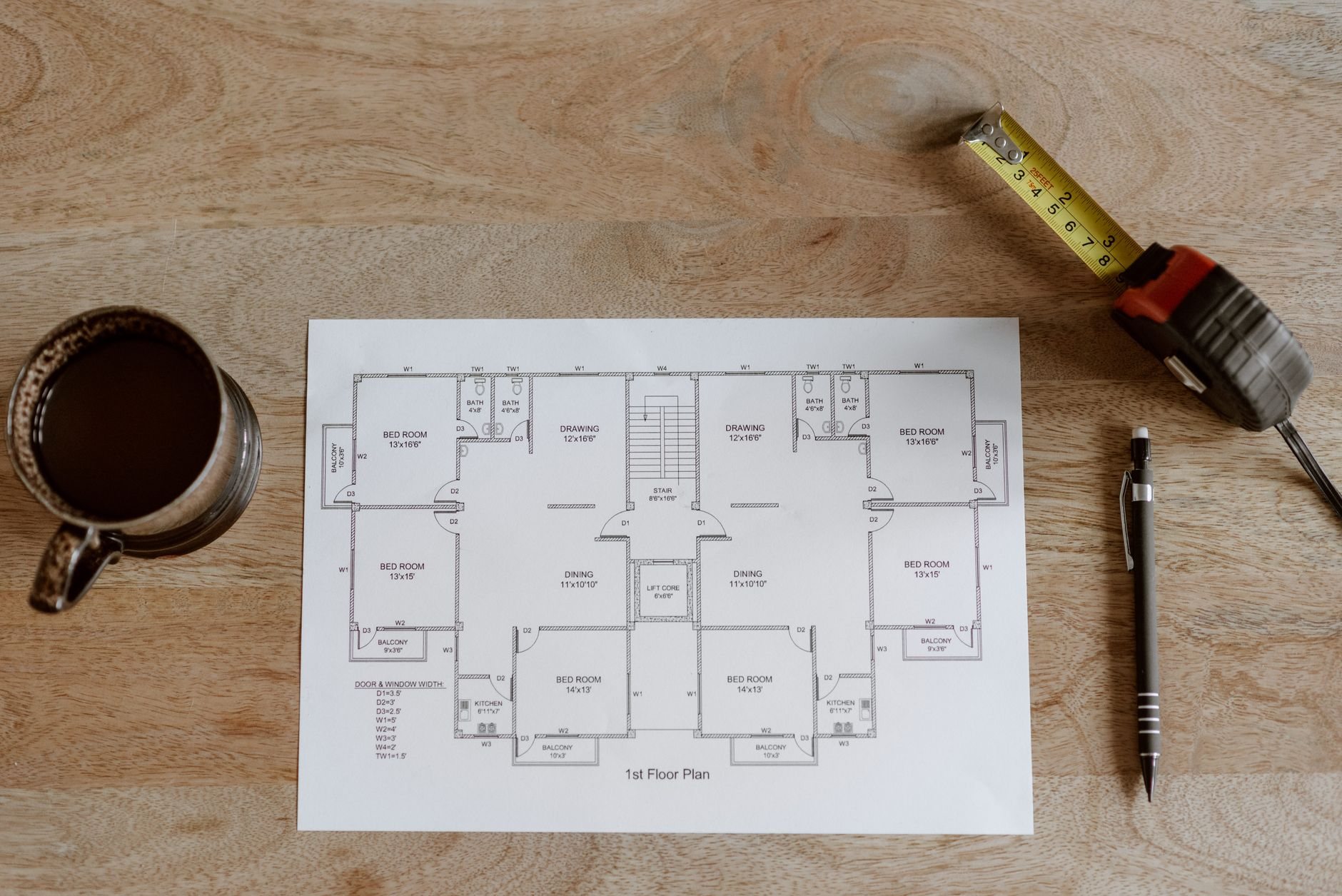
From the slab yard to a sealed counter
- Check the cabinets. Three-centimeter granite weighs around 18 to 20 pounds per square foot. Older or particleboard boxes sometimes need a plywood sub-top before stone goes on.
- Tag your slabs. You pick the actual slabs at the yard and we tag them by serial number so the lot that arrives is the lot you chose. Multi-slab kitchens get laid out together to match tone.
- Template off the installed boxes. Digital templating happens after cabinets are set, with sink, faucet, cooktop, and filter-tap holes decided — Utah’s hard water sends many households that way, and a hole in polished granite is permanent.
- Fabricate. Cutouts, rodding, edge profile, and polish. Eased, bevel, and bullnose edges are standard on granite; ogee and mitered waterfall edges add shop time.
- Set, seam, seal. Tops go on a bead of silicone, seams are color-matched and pulled tight with a vacuum seam setter, and the top gets its first coat of impregnating sealer. The licensed plumbers we coordinate reconnect the sink the next day once the silicone has cured.
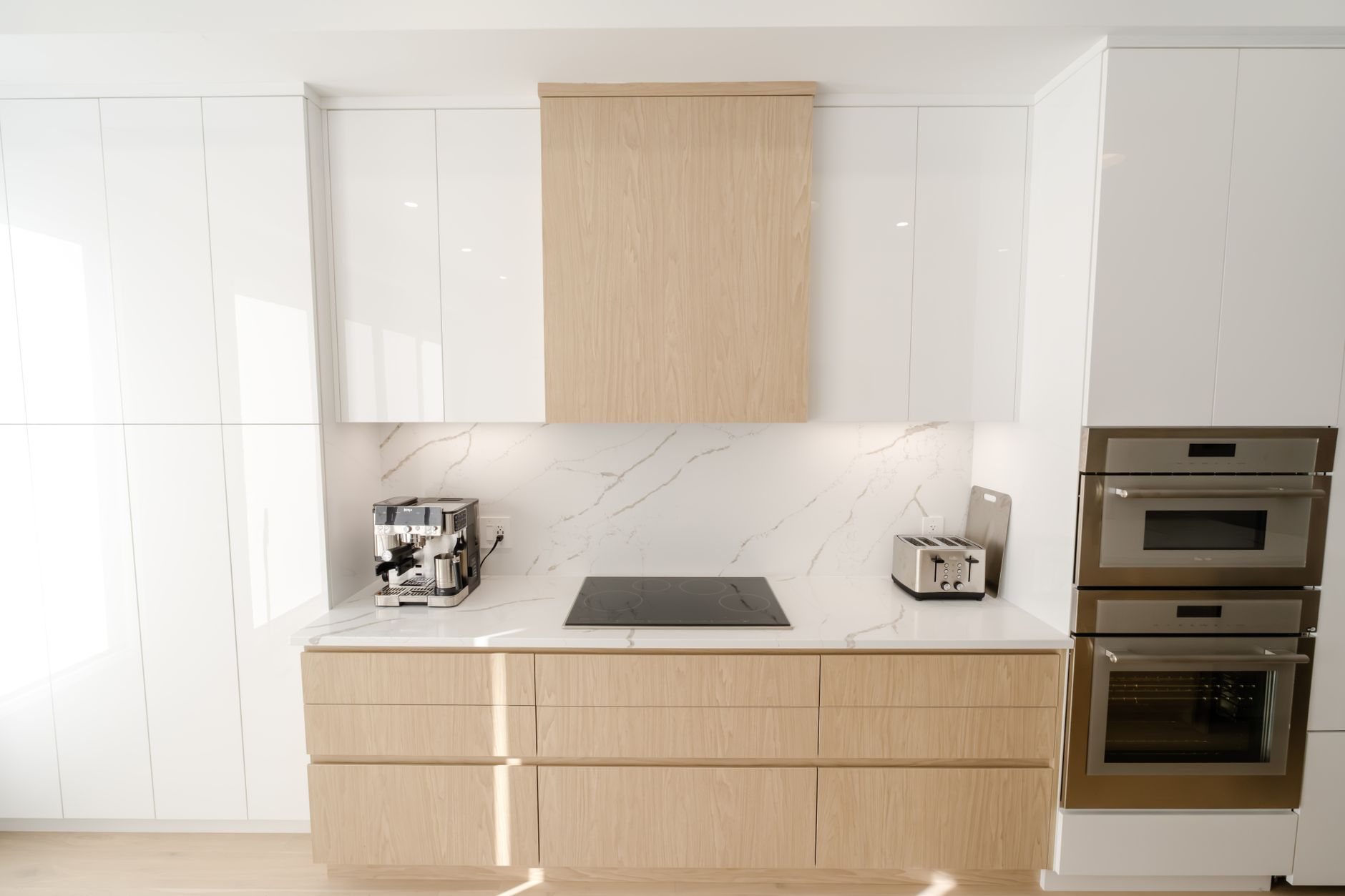
What granite countertops cost in Utah
As ballpark planning numbers, not a quote: installed granite in Utah County typically runs about $45 to $75 per square foot for level 1 and 2 colors, and $80 to $120 or more for exotic slabs. A common 50-to-60-square-foot kitchen lands somewhere between the mid-$2,000s and the high single digits of thousands, depending on where you sit on that ladder.
What pushes the number: slab count (a third slab for one small return costs a whole slab), seams, undermount sink and cooktop cutouts, upgraded edges, full-height granite backsplash, and overhang brackets. What pulls it down: a level 1 color, a seam where it’s invisible anyway, 2 cm stone with a laminated edge, and keeping the sink where it is so plumbing stays put. Everything runs under one B100 general contractor license you can confirm at dopl.utah.gov.
Questions we actually get
How often do granite countertops need to be sealed?
It depends on the stone, not the calendar. Dense dark granites can go several years; lighter, more porous slabs may want a coat every year. Leave a few drops of water on the surface for ten minutes: if it darkens the stone, reseal; if it beads, you’re fine. Resealing is a wipe-on, wipe-off job most owners do themselves.
Does granite give off radon?
Some granite contains trace uranium and can emit small amounts of radon, but the EPA’s position is that granite countertops are rarely a significant source compared with the soil under a house. In Utah’s high-radon geology, the basement slab matters far more than the kitchen counter — test the house, not the countertop.
Can I set hot pans directly on granite?
Yes, within reason. Granite tolerates direct heat that would mark quartz or laminate. The one caution is thermal shock near seams and sink cutouts, where a sudden hot spot on a resin-filled area can stress the stone. A trivet by the cooktop is cheap insurance; everywhere else, cook normally.
Why is my granite quote higher than my neighbor’s?
Usually slab grade or slab count. Two kitchens with the same square footage can need two slabs or three depending on layout, and a level 3 exotic costs roughly double a level 1 color before anyone cuts it. Ask for the slab count and grade on any bid.
Related services
See the full material lineup on our cabinetry and countertops page, compare porcelain slab if heat and UV are your main concerns, and plan counters alongside a kitchen remodel or an outdoor kitchen. For everything else, start at renovation and build-outs.
Tell us what you’re working on
We reply within a couple of hours during business hours — a day at most. You’ll get a straight read on slab grade, seams, and budget before anyone commits.