
Porcelain slab countertops in Utah
Porcelain slab is a large-format ceramic panel — typically 12mm thick and about 63″ by 126″ — fired at over 2,200°F until it is harder than granite, non-porous, and indifferent to heat, UV, and frost. Grandview Contractors templates, fabricates, and installs porcelain slab countertops for kitchens and outdoor kitchens across Utah County and Salt Lake County under a B100 general contractor license.
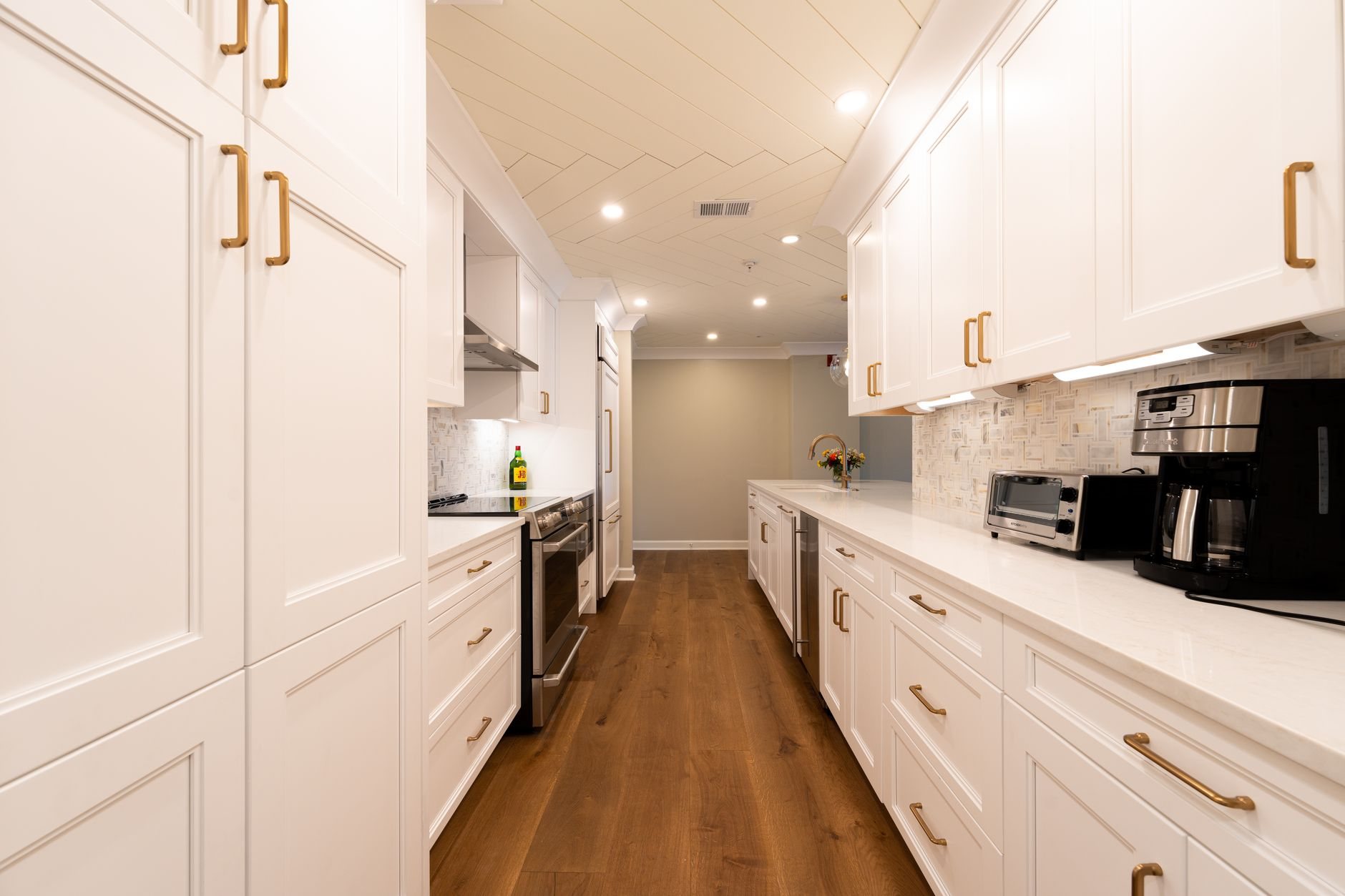
Porcelain slab versus quartz, quartzite, and granite
Porcelain slab earns its place in three situations: a counter that takes hot pans directly, a counter that sits in sunlight, and a counter that lives outside. There’s no resin in it, so a cast-iron skillet off the burner leaves nothing behind — the failure point of quartz, whose binder discolors around 300°F. The color is baked in at the kiln, so it doesn’t yellow under the UV that comes through a south-facing window at 4,500 feet.
It loses on two things. Edges chip more readily than granite under a hard knock, and a chip in a printed-surface slab shows the core color underneath. And it is thin — 12mm instead of 30mm — which changes how the edge is built and how overhangs are supported. If you want marble’s look without the etching, porcelain does that well; if you want the real rock and will seal it, marble or quartzite is the honest choice.
Fabricating a 12mm slab so it looks and acts like a full counter
Porcelain is extremely hard once installed and fragile on the way there.
- Through-body or printed. Most porcelain slabs print the pattern on a solid-color body; some lines run the veining through the full thickness. Printed slabs cost less but show a plain core at any exposed edge.
- The edge build-up. A 12mm edge reads thin on a kitchen run. The fix is a mitered build-up: a strip of the same slab cut at 45° and glued to the front edge for a 1½” to 2″ apparent thickness, pattern wrapping the corner. On a printed slab it’s the only way to hide the core.
- Sub-top and support. A 12mm slab is set on a continuous plywood or cement-board sub-top, not bridged box to box the way 3cm stone can be. Seating overhangs past about 4″ get flat steel underneath; the slab doesn’t forgive deflection.
- Cutouts with radiused corners. Sink and cooktop openings get inside corners rounded to at least ½” radius and the cut edge polished. A square inside corner in porcelain is a crack starter.
- Handling and seams. Slabs travel on A-frames and move with vacuum lifters; a full panel will snap if carried flat by the ends. Seams land at inside corners, never across a cutout. Install is one day; the licensed plumbers we coordinate reconnect the sink after the top is set.
Templating happens off the installed cabinets and sub-top — the sequence is on our templating and fabrication page. Large-format porcelain falls under the gauged porcelain tile panel standard (ANSI A137.3) published through the Tile Council of North America; fabricators who work to it treat the slab differently from stone.
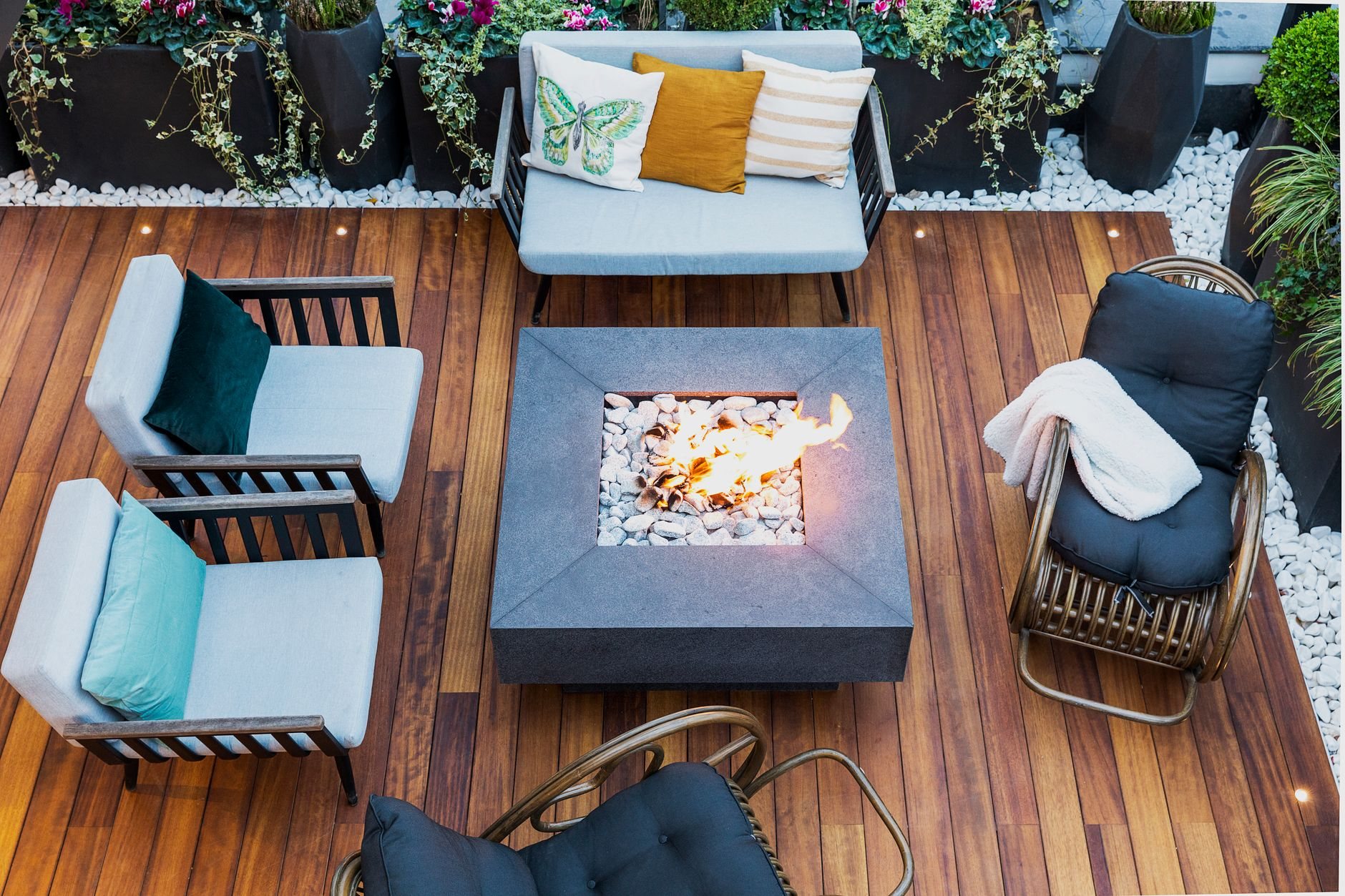
Why porcelain is the outdoor kitchen counter here
Along the Wasatch Front an outdoor counter sees roughly a hundred freeze-thaw days a year, summer sun at elevation, and a grill running at 500°F two feet away. Porcelain slab absorbs less than 0.5% water, so there’s nothing in it to freeze and spall the way a sealed-but-porous stone eventually does; its color is fired in, so the UV that fades resin-bound quartz doesn’t register; and a platter straight off the grate doesn’t mark it. That’s why it’s the default top on our outdoor kitchen builds and outdoor countertop and cabinetry projects.
Indoors, Utah’s hard water matters more than people expect. Mineral deposits ring the faucet on any counter; on non-porous porcelain they wipe off with a mild acid cleaner instead of lodging in the pores of unsealed stone. There’s no sealing schedule to miss.
What porcelain slab countertops cost in Utah
As ballpark planning numbers, porcelain slab installed in Utah runs roughly $70 to $130 per square foot — the quartzite range, above most quartz. The slab itself often costs no more than mid-range quartz; the premium is fabrication. A mitered build-up edge adds the most, then waterfall ends, then the count of cutouts. A printed slab with a simple edge sits at the bottom; a through-body slab with mitered edges and a waterfall island sits at the top.
Two cost notes specific to this material. Fewer Utah fabricators cut porcelain than stone, so lead time after templating is usually two to three weeks rather than one to two. And because a slab that cracks in transit is a total loss, attic stock on a large job is worth discussing up front. All of it runs under one B100 license you can verify at dopl.utah.gov, and you’ll get a budget range before an estimate. For the wider picture, start at cabinetry and countertops or the renovation and build-outs hub.
Questions we actually get
Can porcelain slab countertops crack?
Installed and supported, rarely. A cracked porcelain counter almost always traces to a sharp inside corner at a cutout, a seam across a sink opening, an unsupported overhang, or a slab that flexed in transport. Radiused cutouts, a continuous sub-top, and proper handling address all four.
Does the pattern go all the way through the slab?
Only on through-body lines. Most slabs print the veining over a solid-color body, which shows at a chipped or square-cut edge. If you want an exposed square edge, choose a through-body or plain-color slab; otherwise plan on a mitered edge that wraps the pattern around the front.
Why does a thin slab cost more than 3cm quartz?
Fabrication. Porcelain needs a mitered edge build-up, dedicated blades and slower cuts, radiused cutouts, a sub-top, and handling by a fabricator set up for it. The slab is often cheaper than stone; the hours around it are not.
Can I cut directly on a porcelain counter?
You can, and the counter will win — it’s harder than a steel knife edge, so it dulls the blade rather than scratching. The habit to break is sliding heavy cast iron across the front edge, where any porcelain top can chip.
Tell us what you’re working on
We reply within a couple of hours during business hours — a day at most. You’ll get a straight read on scope, sequence, and budget before anyone commits to anything.