
Value-add unit renovations
A value-add unit renovation upgrades an apartment past rent-ready into a higher rent tier — kitchen surfaces, a rebuilt bath, plank flooring, better lighting — on a scope sized to the premium your market will pay. Grandview builds value-add units for owners and operators in Salt Lake City and Utah County under a B100 general contractor license.
When value-add is the right call
Value-add is the middle rung of the unit-turn ladder. Below it, a standard apartment unit turn restores a unit to the rent it already earned. Above it, a bulk unit renovation program runs a proven spec across dozens of units. This page is about the spec itself: what goes into one unit so the rent moves.
It fits 1970s–1990s Class B and C properties along the Wasatch Front — garden-style walk-ups in Salt Lake City, Murray, and Orem with oak-front cabinets and almond laminate — where a modest upgrade closes most of the gap to newer product. It does not fit a property where comps are already tight; there, a standard turn earns the same rent for a third of the money, and we’ll say so. Property-wide upgrades belong under amenity and common-area renovation.
What goes into a value-add scope
Spend where tenants look during a showing and nowhere else: a renter decides in the kitchen, confirms in the bathroom, and notices flooring and light the whole time.
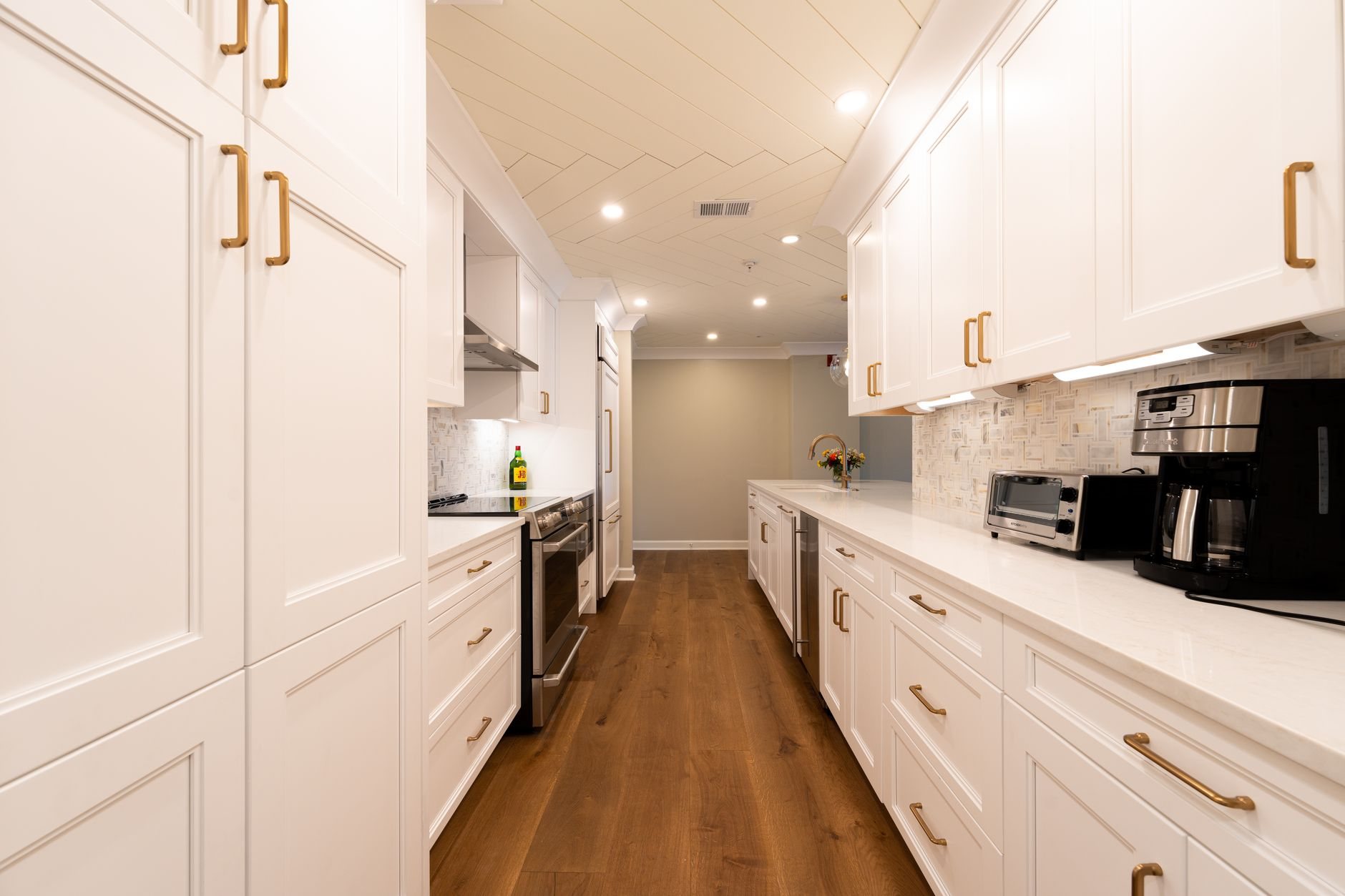
Kitchen
Cabinets set the budget. Refacing — shaker fronts, painted boxes, soft-close hinges — keeps sound carcasses at a fraction of replacement cost; replace when boxes are water-swollen under the sink. Prefabricated quartz is the value-add counter default because it photographs like custom and survives tenants; stone-look laminate is the honest budget alternative. Add a backsplash, stainless appliances, an undermount sink, and a pull-down faucet with a ceramic cartridge — Wasatch Front water is hard, and scaled valves are the first thing the next tenant reports.
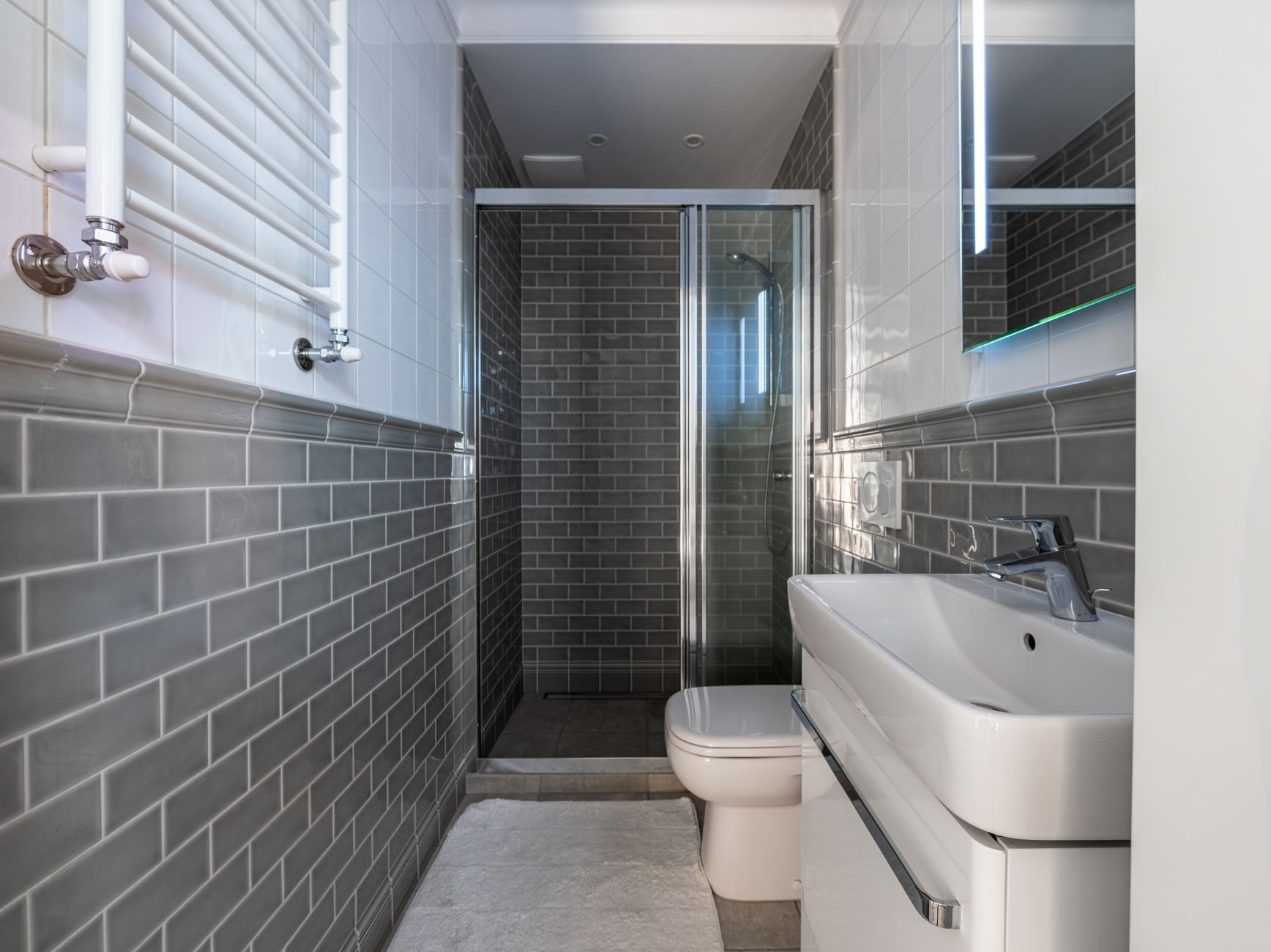
Bathroom
Most value-add baths keep the tub and the drain. The surround changes — one-piece acrylic for speed, or tile on cement board when the rent tier justifies it — along with a new vanity, framed mirror, brighter light, comfort-height toilet, and pressure-balanced valve. Reframing a bath costs more than it returns in a rental.
Flooring, lighting, and the small things
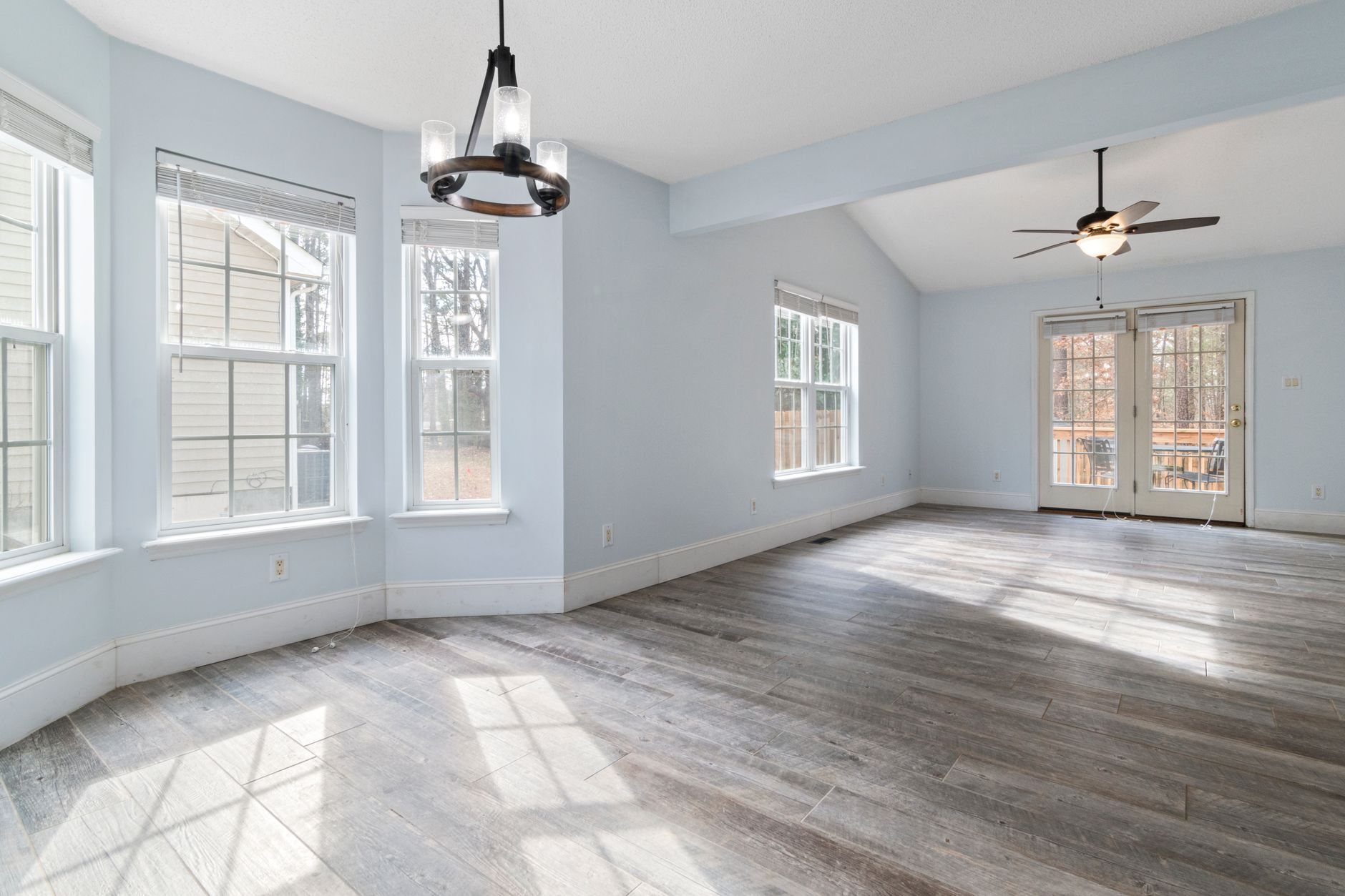
Carpet comes out everywhere except, sometimes, bedrooms. Luxury vinyl plank runs through living areas, kitchen, and bath in one continuous plane, which makes a 700-square-foot unit read larger and cuts the cost of every future turn. Lighting is the cheapest upgrade with the biggest showing impact: the lone ceiling box becomes a flush LED fixture, the kitchen gets under-cabinet strips. Where an owner wants in-unit laundry, we check whether the stack and dryer-vent routing are possible before anyone falls in love with the idea.
Anything beyond fixture-level electrical and plumbing — a dishwasher circuit, a relocated sink, a new vent fan — runs through licensed electricians and plumbers; Grandview holds the contract, sequences their work inside the unit schedule, and checks it before the next trade starts.
How a value-add unit runs
- Underwrite the scope, not the wish list. We start from your target premium and the comps, then build a finish schedule that gets there.
- Build one proof unit. We lock cabinets, counter, plank, fixtures, and paint on a model unit, and you lease it. If the premium holds, the spec is frozen.
- Sequence inside the vacancy. Demo, trade rough-in, drywall repair, paint, cabinets and counters, flooring, fixtures, clean. A value-add unit is typically offline two to four weeks, versus five to ten days for a standard turn.
- Hand it back documented. Completion photos, a line-item record, and the spec sheet so maintenance can reorder the same faucet later.
Timing follows your leasing calendar. Provo and Orem student housing turns over in a two-week August window, which is not when you want a unit stripped to the studs; those properties run value-add on off-cycle vacancies and save the rush for standard turns. The plans may change. The standard does not.
What does a value-add unit renovation cost in Utah?
As ballpark planning numbers for Salt Lake County and Utah County, not quotes: a light value-add — paint, plank flooring, lighting, hardware, counters, refaced cabinets — commonly lands between $9,000 and $16,000 per unit. A full package with new cabinets, quartz, appliances, and a rebuilt bath typically runs $16,000 to $28,000. Adding laundry, moving plumbing, or new circuits pushes past $30,000. The real number comes from the proof unit.
What moves the number
- Reface versus replace. Cabinets are the largest single swing; sound boxes are money already in the wall.
- Counter material. Prefab quartz versus laminate is a few thousand dollars per unit, repeated across the program.
- Bath surround. Acrylic installs in a day; tile takes a week of trade time and a waterproofing detail done right.
- Repetition. The second unit on a frozen spec costs less than the first; twenty units is a bulk program with stocked materials and a rate card.
Questions we actually get
Which upgrades actually move the rent?
Kitchen surfaces and the bath, in that order, then continuous plank flooring and lighting. Those four lines carry most of the premium in a Wasatch Front Class B unit. Washer-dryer hookups move rent sharply where feasible, but feasibility depends on venting and panel capacity, so we check before we promise.
How do you keep per-unit cost in line with the rent premium?
By building the first unit as a priced model and leasing it before the spec is frozen. If the market pays less than underwritten, we strip lines from the spec — laminate for quartz, acrylic for tile — rather than quietly cutting quality on the work you keep.
Do we need a permit for a value-add unit?
Cosmetic work — paint, flooring, cabinets on existing plumbing, like-for-like fixtures — generally doesn’t. Adding circuits, relocating plumbing, or installing laundry hookups generally does, and the licensed trades pull it. Requirements vary by city, so we confirm with each property’s building department and build the inspection window into the schedule.
Can you do this while the rest of the building is occupied?
Yes, and nearly all of it is. We contain dust at the unit door, stage materials inside the unit, keep hallways passable, observe quiet hours, and lock up nightly. Demo days are the noisy ones; we schedule them mid-day and tell your manager ahead so residents hear it from you first.
Tell us what you’re working on
Send us the property, the unit mix, and the premium you’re underwriting — we reply within a couple of hours during business hours, a day at most. You’ll get a straight read on scope and per-unit budget before anyone commits. Part of our unit turn programs within the property services family.