
Unit turn & make-ready programs for Utah rental portfolios
A unit turn program is a standing agreement to get your vacant units rent-ready on a fixed scope, a fixed calendar, and pricing that holds across the portfolio. Grandview runs make-ready programs for property managers and multifamily operators across Utah County and Salt Lake County under one B100 general contractor license.
Built for managers who count vacancy in dollars per day
Unit turn programs are for people responsible for more doors than they can personally walk: property management companies, multifamily operators, student-housing managers in Provo and Orem, and out-of-state investors who need to trust the photos because they can’t drive by. If a vacant week costs you real money and your current turn process is a group text and a hope, this is the fix.
It’s also for the fast-growth side of the market. Lehi, Saratoga Springs, and Eagle Mountain added a wave of multifamily and single-family rental inventory over the last decade, and those buildings are now hitting their first serious turn cycles — first full repaints, first flooring replacements, first rounds of tenant wear that a handyman visit can’t absorb.
What it’s not: a one-off refresh of your own rental. We’ll happily do that too, but a single unit is a repair project — see our handyman services. A program means recurring volume, a standing scope, and a contractor who already knows your paint colors.
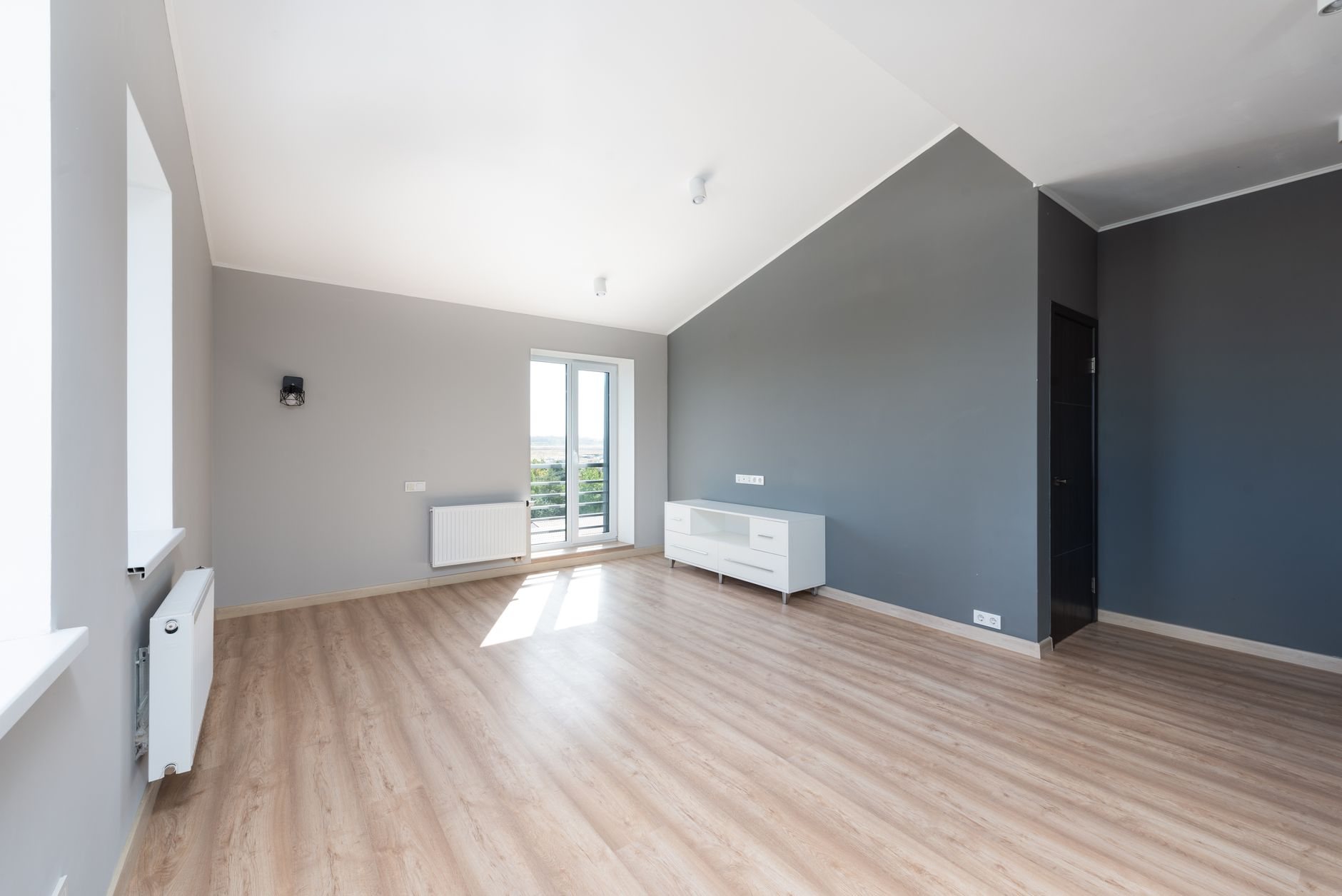
What’s included in a make-ready scope
Every portfolio we work with settles into two or three standard turn tiers. Standardizing the scope is what makes the schedule and the pricing predictable — the crew knows what “done” means before they open the door.
Refresh turn
For units coming back in good shape: paint touch-up or single-wall repaint, drywall patching, door and hardware adjustment, caulk and grout renewal, blind and fixture swaps, and a punch of everything the move-out inspection flagged. Deep cleaning and carpet cleaning are scheduled in sequence so the unit photographs well the day it lists.
Standard turn
The full make-ready: complete interior repaint, flooring replacement or repair, cabinet and countertop repairs, new fixtures and hardware, appliance swaps, and re-caulking of wet areas. In most of our service area, hard water is rough on fixtures — scaled aerators, crusted shower valves, shortened water-heater life — so a standard turn includes checking and replacing the small plumbing trim that makes a unit feel worn even when it’s clean.
Renovation-grade turn
When a unit is being repositioned rather than re-rented as-is: new cabinets or refacing, countertops, tile, lighting layouts, and sometimes wall changes. This tier overlaps with our renovation team, and we’ll tell you plainly when a unit belongs there instead — different scope, different timeline, honest numbers for both.
One honest line on trades: where a turn touches electrical, plumbing, or HVAC beyond fixture-level work — a failed water heater, a furnace at end of life, aluminum-wire receptacle issues — Grandview holds the contract and manages licensed electricians, plumbers, and HVAC technicians. We coordinate, sequence, and quality-check their work inside the same turn schedule, and it shows up as a documented line on the same invoice.
How long does a unit turn take?
As planning numbers: a refresh turn typically takes two to four working days, a standard turn with full repaint and new flooring runs five to ten working days, and a renovation-grade turn runs two to five weeks. The biggest schedule variable isn’t the work — it’s whether the scope was locked before move-out, which is exactly what a program is for.

How a programmed turn actually runs
- Pre-move-out walk. Where access allows, we scope the unit before the tenant leaves, so materials are ordered and the tier is assigned before the keys come back.
- Day-one confirmation. The morning the unit is vacant, we verify the scope against reality, photograph existing conditions, and flag anything the walk couldn’t see — under appliances, behind furniture.
- Sequenced work. Repairs and drywall first, then paint, then flooring, then fixtures and hardware, then clean. One crew lead owns the unit start to finish.
- Documented handback. You get completion photos, a line-item record of what was done, and any warranty or system notes — the paper trail an owner or out-of-state investor actually wants.
Timing matters more here than in most markets. Provo–Orem student housing turns on a brutal late-summer calendar, where hundreds of leases end within the same two weeks — that crunch only works with crews and materials committed months ahead. And units that sit vacant into winter carry their own risk: January freeze events burst supply lines in unheated vacant units more than anywhere else, so our turn checklist includes heat settings and a water check on every vacant handback.
What does a unit turn cost in Utah?
As ballpark planning numbers for Utah County and Salt Lake County — not quotes: refresh turns commonly land between $1,000 and $3,500 per unit, standard turns with full repaint and flooring between $4,000 and $10,000, and renovation-grade turns from roughly $12,000 up, depending on kitchen and bath scope. Your portfolio’s real numbers come from a walkthrough and a standardized scope, not a chart.
What moves the number
- Flooring choice. Carpet-and-pad replacement versus LVP versus tile is the single biggest per-unit swing.
- Paint scope. Touch-up, walls-only, or full repaint including ceilings, doors, and trim — three very different labor numbers.
- Unit condition and age. Buildings hitting their first major turn cycle need more than buildings on their fifth; deferred maintenance always surfaces during turns.
- System surprises. Water heaters, furnaces, and valve replacements coordinated through licensed trades add cost but prevent a mid-lease emergency.
- Volume and standardization. Committed volume with a fixed scope lets us hold unit pricing and stock your materials — this is where program pricing beats bid-per-unit pricing.
The volume logic is simple and worth stating plainly. When we know a property will produce, say, four to eight turns a month on a standard scope, we can schedule crews in advance, buy paint and flooring in quantity in your exact spec, and quote a per-tier price that holds for the season. You trade bid-by-bid haggling for a rate card and a calendar. Vacancy days are the real cost of a turn, and predictability is how you cut them.
When a turn uncovers something bigger
Turns are where buildings confess. A repaint reveals the ceiling stain from a slow roof leak; pulling carpet exposes a subfloor soft spot; a ground-floor unit shows the water line from last summer’s monsoon cloudburst finding an undersized window well. Because Grandview is a licensed general contractor and not just a turn crew, the discovery doesn’t stall the program — we document it, price it separately, and handle it on the same contract.
Water intrusion goes to our water damage restoration team, storm-related exterior damage to storm damage repair, and the recurring small stuff between turns rolls into a property maintenance program with documented visits. One contractor, one point of contact, one paper trail — good work should not require detective work.
Questions we actually get
How does volume pricing work for unit turns?
We walk representative units, agree on two or three standard scope tiers, and set a per-tier price that holds for a defined term and volume. Committed volume lets us pre-schedule crews and stock your materials, which is why program pricing runs lower and steadier than bidding each unit separately. Out-of-scope discoveries are priced individually before work proceeds.
What happens if you find damage the scope didn’t cover?
We stop at the boundary, document it with photos and measurements, and send you a separate priced scope before touching it. Nothing out-of-tier gets billed by surprise. If it’s urgent — active leak, electrical hazard — we stabilize it first, then paper it. The turn itself keeps moving wherever the discovery doesn’t block it.
Can you turn units in an occupied building?
Yes — that’s most of this work. We contain dust at the unit door, keep common areas clean and passable, respect quiet hours, and lock the unit at the end of every day. Your residents shouldn’t know we were there except for the paint smell in the hallway for an afternoon.
How much notice do you need to schedule a turn?
Inside an active program, a move-out date on the shared calendar is the notice — we slot the crew as soon as you post it. For the Provo–Orem student-housing rush in late summer, we plan volume months ahead. For a first-time portfolio walkthrough, we typically respond within a couple of business hours and can usually walk properties the same week.
Do you handle appliances, water heaters, and HVAC during a turn?
Appliance swaps, yes, directly. Water heaters, furnace work, and anything electrical or plumbing beyond fixture-level trim runs through licensed trade contractors — Grandview holds the contract, sequences their work inside the turn schedule, and quality-checks it before handback. It appears as a documented line on the same invoice, not a second company to chase.
Do you require a minimum number of units?
No hard minimum, but program pricing makes sense at roughly a few turns per month or a concentrated seasonal batch. Below that, we’ll still do the work — it just prices as individual projects rather than a rate card. If you’re not sure which side you’re on, send us your last six months of turnover and we’ll tell you.
Tell us what you’re working on
Send us your unit count, your turnover pace, and what a turn costs you today — we reply within a couple of hours during business hours, a day at most. You’ll get a straight read on scope tiers, timelines, and per-unit pricing before anyone commits to anything. Part of our repair, restoration & property services family.