
Cabinet refacing in Utah County
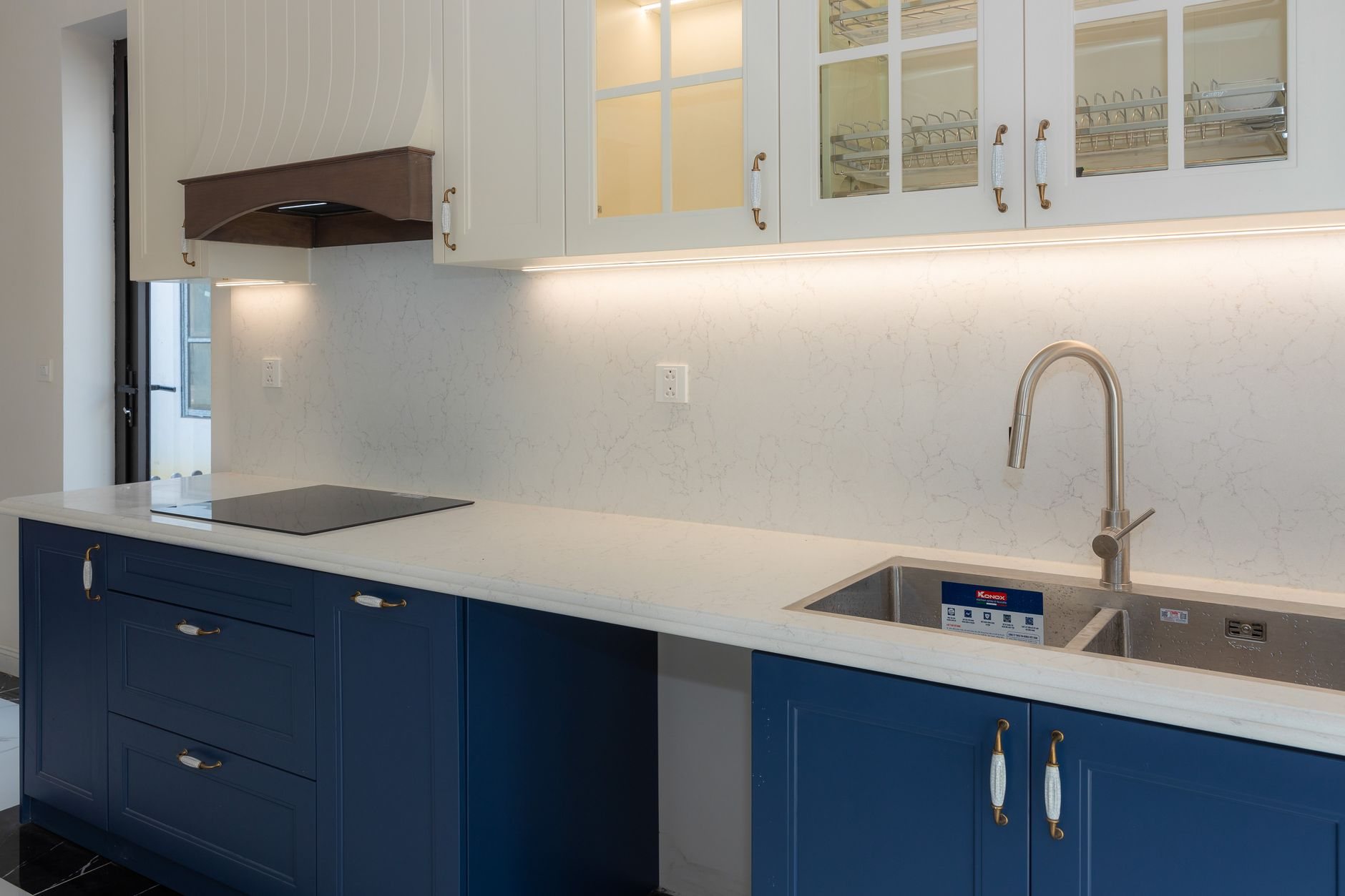
Cabinet refacing replaces every door and drawer front, then covers the exposed face frames and end panels with matching veneer, so the kitchen reads as new while the boxes stay on the wall. It’s the right move when the cabinets are sound and the layout works, and Grandview Contractors handles refacing across Utah County and Salt Lake County under a B100 general contractor license.
Keep the boxes when the boxes deserve keeping
Refacing makes sense when the carcasses are plumb, dry, and solid; the layout works; and the thing you dislike is the look. A lot of Utah County kitchens from the 1990s and 2000s fit that description: builder-grade honey oak doors on perfectly good boxes, in houses where the sink wall has no reason to move.
It stops making sense when the boxes are the problem. Swollen particleboard under a leaky sink, face frames that have pulled loose, or sagging shelves are reasons to look at stock cabinet installation or semi-custom cabinets instead.
If the doors are fine but the color is wrong, paint is cheaper than new doors, and we’ll say so. If you want deeper drawers, a pull-out pantry, or an island that doesn’t exist yet, that’s custom cabinetry or a full kitchen cabinet installation. We’ll tell you which one you’re describing at the walkthrough.
What a refacing job is actually made of
Doors and drawer fronts. Every door is replaced, not refinished. The common options are rigid thermofoil (RTF) over MDF, painted MDF, and stained or painted solid wood. RTF is the budget line and holds up well away from the dishwasher vent and the toaster. Solid wood costs more and moves more: in Utah’s dry, high-elevation air a wood panel shrinks a hair each winter and shows a faint line at the panel edge on dark stains. Normal, but worth knowing before you pick a color.
Veneer. Face frames, end panels, and exposed toe kicks get a pressure-sensitive wood veneer or matching RTF laminate, trimmed flush and rolled tight. This is the step that separates refacing from “new doors on old cabinets.” Done well, the end-panel seam disappears. Done poorly, it peels at the first pot of pasta.
Hinges and slides. New doors mean new concealed European hinges, which is why overlay matters. We measure the existing reveal, order doors to it, and bore for soft-close hinges. Drawer boxes can stay or be swapped for dovetail boxes on undermount slides. That upgrade is where a refaced kitchen stops feeling refaced.

How a refacing job runs, start to finish
- Inspect the boxes. We open every door, pull the sink base shelf, and check for water damage, loose face frames, and anchoring. With the doors off is the cheapest time to add screws into studs on any upper hung into drywall alone, and along the Wasatch Front that isn’t cosmetic.
- Measure and order. Each opening gets measured for overlay and hinge location, then doors, fronts, veneer, and hardware go on order. Lead time is typically two to four weeks for RTF and painted MDF, longer for stained wood.
- Prep. Doors come off, frames get degreased and scuff-sanded, gouges get filled. Grease is the enemy of veneer adhesion, and decades of it hide on the bottom rails of uppers.
- Veneer and panel. Frames, end panels, and the underside of uppers get veneered and trimmed. New crown, light rail, or toe kick goes on if the design calls for it.
- Hang and adjust. Doors go on, hinges get adjusted in three axes so reveals are even, pulls get bored on a jig. Most kitchens are back in service in three to five working days on site.
Because boxes, plumbing, and electrical don’t move, refacing isn’t permitted work under current Utah-adopted code, and the kitchen stays usable through most of it. If a quartz countertop swap rides along, we template after the doors are hung so the overhang reads right against the new fronts.
What does cabinet refacing cost in Utah?
As a ballpark planning number, refacing a typical Utah kitchen lands at roughly a third to a half of what replacing the same cabinets would cost, with RTF at the low end and stained solid wood at the top. Door count is the biggest driver, then door material, then add-ons like new drawer boxes, crown, or glass inserts. Veneer labor scales with exposed end panels: a galley with two finished ends is cheaper per door than a peninsula kitchen with six.
Less obvious movers: painted MDF needs a topcoat that can handle a south-facing window, because Utah’s elevation puts more UV on a finish than the same kitchen sees at sea level, and cheap paint yellows. Any box repair found at inspection is quoted as its own line, not folded in quietly.
You’ll get a budget range after the walkthrough, a firm proposal once doors are specified, and a license you can verify at dopl.utah.gov before either.
Questions we actually get
Can particleboard cabinets be refaced?
Yes, as long as the particleboard is dry and the face frames are tight. Veneer bonds fine to sound particleboard. What it can’t fix is water swelling, which is why the sink base is the first thing we inspect. One bad box can be replaced and refaced to match the rest.
How long does refacing take compared to new cabinets?
Three to five working days on site once doors arrive, versus a week or more of demo and set for replacement plus the countertop wait. The real difference is disruption: the sink stays connected, the counters stay put, and you cook dinner most nights.
Will refaced cabinets look like new cabinets?
From the front, yes, when the veneer is seamed in the right places and the reveals are even. Inside, you’ll see the original interior, which is why many people add new drawer boxes and roll-out shelves. We’ll show you a veneered corner sample before you commit to a color.
Can I change the door style, like going from raised panel to shaker?
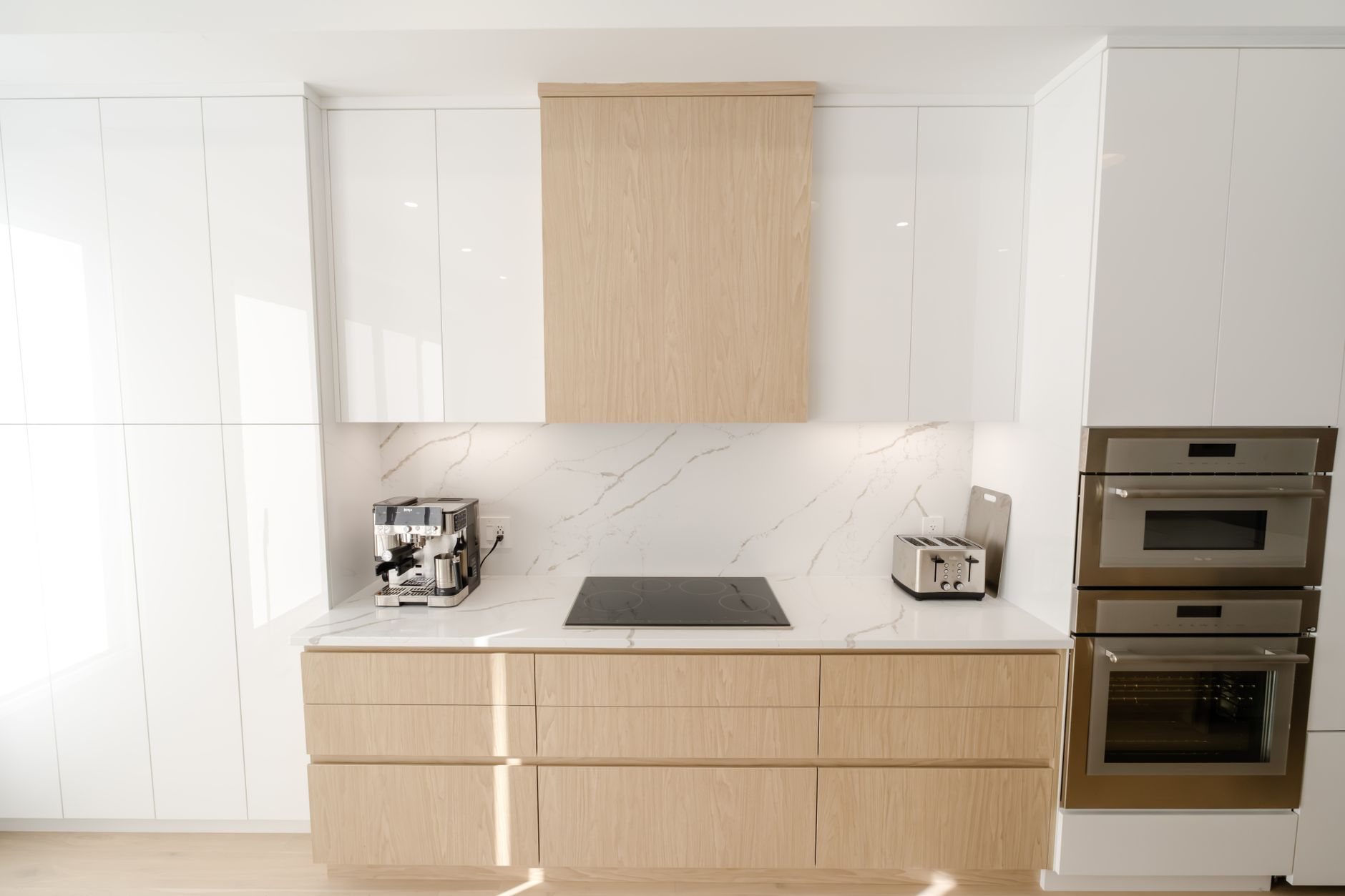
That’s the most common request and exactly what refacing is for. Door style, overlay, and color are all open. The constraint is the box openings: a 12-inch door stays a 12-inch door, and drawer front heights follow the existing boxes unless those are replaced too.
Refacing sits inside our cabinetry and countertops work, under renovation and build-outs. If the kitchen needs more than a new face, start there.
Tell us what you’re working on
We reply within a couple of hours during business hours — a day at most. You’ll get a straight read on scope, sequence, and budget before anyone commits to anything.