
Architectural & decorative metalwork in Utah County
Architectural metalwork is steel meant to be looked at: blackened plate fireplace surrounds, laser-cut privacy screens, steel-and-glass partitions, exposed feature beams with ground welds, custom brackets and trim. Grandview fabricates and installs it for homeowners, architects, and commercial owners across Utah County and Salt Lake County under Utah DOPL B100 license #14282236-5501.
When decorative metalwork is the right page
If the steel will be seen and judged as a finish, it belongs here. The weld bead, the plate edge, the color, and how the surface ages are the product. A beam hidden behind drywall is judged by the inspector; one left exposed over a dining room is judged by everyone who eats there.
Three neighboring pages cover work that looks similar but is specified differently. Miscellaneous metals is the utilitarian list on a commercial set — ladders, lintels, embedded angles — where the finish is primer. Steel column wraps dress a structural column that already exists. Monument sign frames carry someone else’s graphics. Metal railings and steel stairs have their own pages inside the same specialty capabilities family.
Material and finish decisions that define the piece
Most of the design conversation is about finish, because finish is what you’ll see for the next twenty years.
- Hot-rolled plate with mill scale. The blue-gray, mottled surface people picture as “raw steel.” Inexpensive, but mill scale flakes where plate is bent or welded, so it suits flat pieces with few seams.
- Cold-rolled and blackened. Smoother plate given a chemical patina — gun blue, brown, or black — then sealed with wax or a matte clear coat. The finish behind most blackened-steel fireplaces. Interior only.
- Powder coat. A baked polyester coating over blasted steel: the most durable colored finish for exterior screens, planters, and canopies. Utah’s elevation makes UV exposure harsher than sea-level data sheets assume, so we specify super-durable formulations for south- and west-facing pieces.
- Weathering steel. ASTM A588 or A606 forms a stable rust layer instead of continuing to corrode. Two cautions: it bleeds rust onto concrete below it for a year or two, and it never stabilizes where it stays wet, so detailing must let it dry.
- Stainless and nonferrous accents. 304 stainless indoors; 316 wherever de-icing salt gets tracked in. Brass and bronze serve as trim and hardware, priced accordingly.
Every finish gets a physical sample before fabrication — a plate coupon with the proposed patina and sealer — because photos of blackened steel lie about tone. You sign off on the coupon; the piece is finished to match it.
What the fabrication work involves
- Measure the finished opening, not the framing. Decorative steel fits against tile, stone, and glass, so we field-measure after those surfaces are set.
- Shop drawings. A dimensioned drawing shows plate thickness, seam locations, which welds get ground flush, and how the piece attaches. You approve seams on paper before steel is cut.
- Cut and form. Plate is laser-cut, then press-brake-formed where a bent edge can replace a welded corner; a bent corner on 11-gauge plate reads cleaner and costs less to finish.
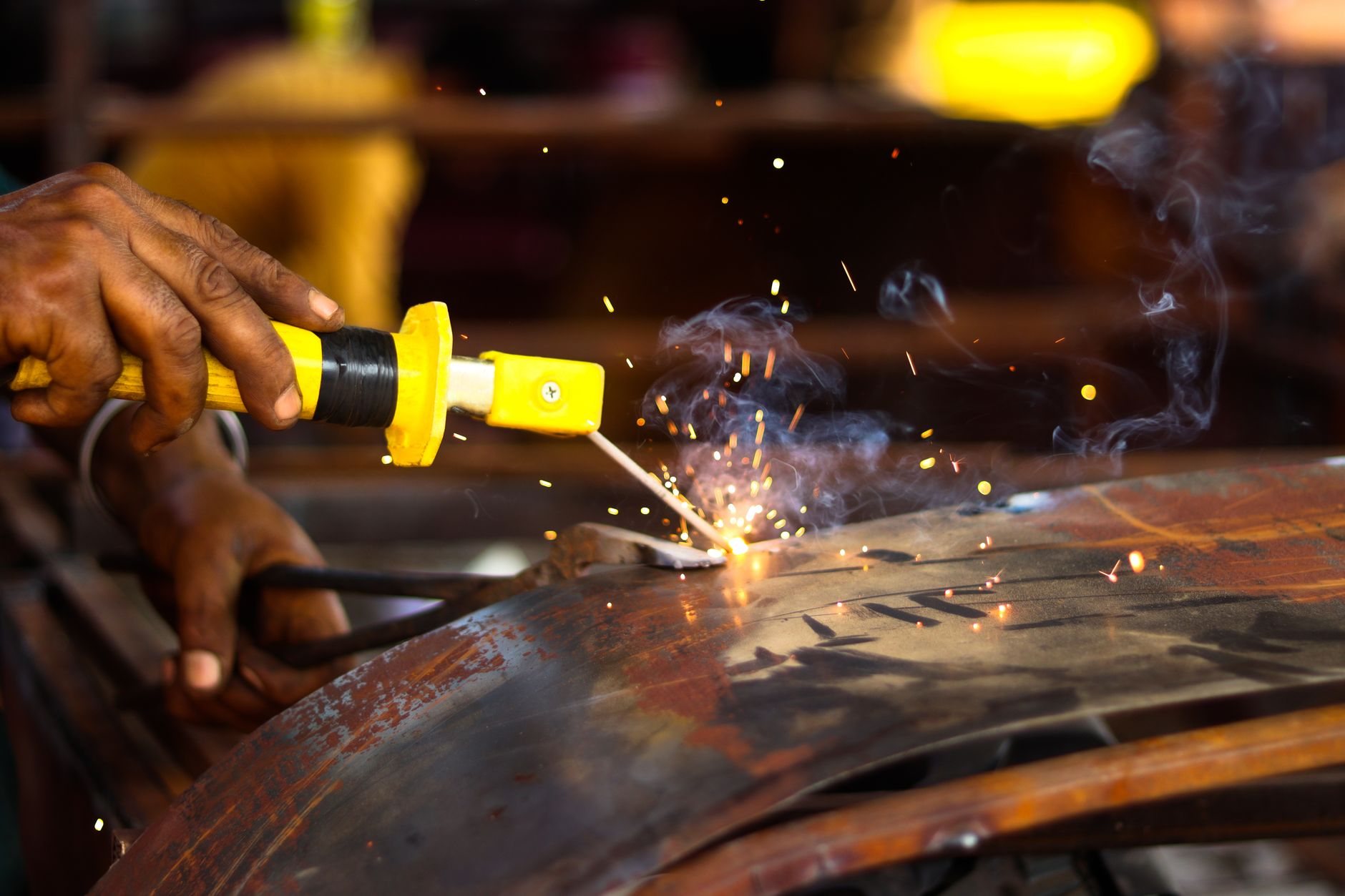
- Weld for appearance. Visible joints are TIG-welded in short, sequenced passes so thin plate doesn’t warp. Ground welds are blended and checked under raking light.
- Finish in the shop, protect in the field. Finish goes on in controlled conditions; the piece ships wrapped and is set with concealed fasteners.
- Anchor. A plate surround can weigh several hundred pounds, and on the Wasatch Front it still has to stay on the wall when the building moves, so heavy pieces get engineered anchorage into blocking or masonry.
What does architectural metalwork cost in Utah?
For planning purposes: a blackened-steel fireplace surround with a floating shelf, shop-finished and installed in a Utah County home, most often lands between $4,000 and $12,000. Laser-cut exterior screens typically run $150 to $400 per square foot installed. Partitions and exposed feature beams vary too widely to ballpark without drawings. These are planning ranges, not quotes.
- Weld finishing. A seam left as an honest bead costs a fraction of the same seam ground flush and blended. Invisible corners are the largest labor variable on this work.
- Finish system. Mill scale and wax is cheapest; patina plus clear coat is mid; powder coat adds blasting; stainless, brass, or bronze multiply material cost.
- Pattern complexity. Laser-cut work is priced by cut length and the deburring that follows.
- Exterior exposure. Pieces on bench lots in Draper, Alpine, or the Salt Lake east bench take canyon wind and more freeze-thaw cycling than valley-floor sites, so closed sections get weep holes and anchorage gets heavier.
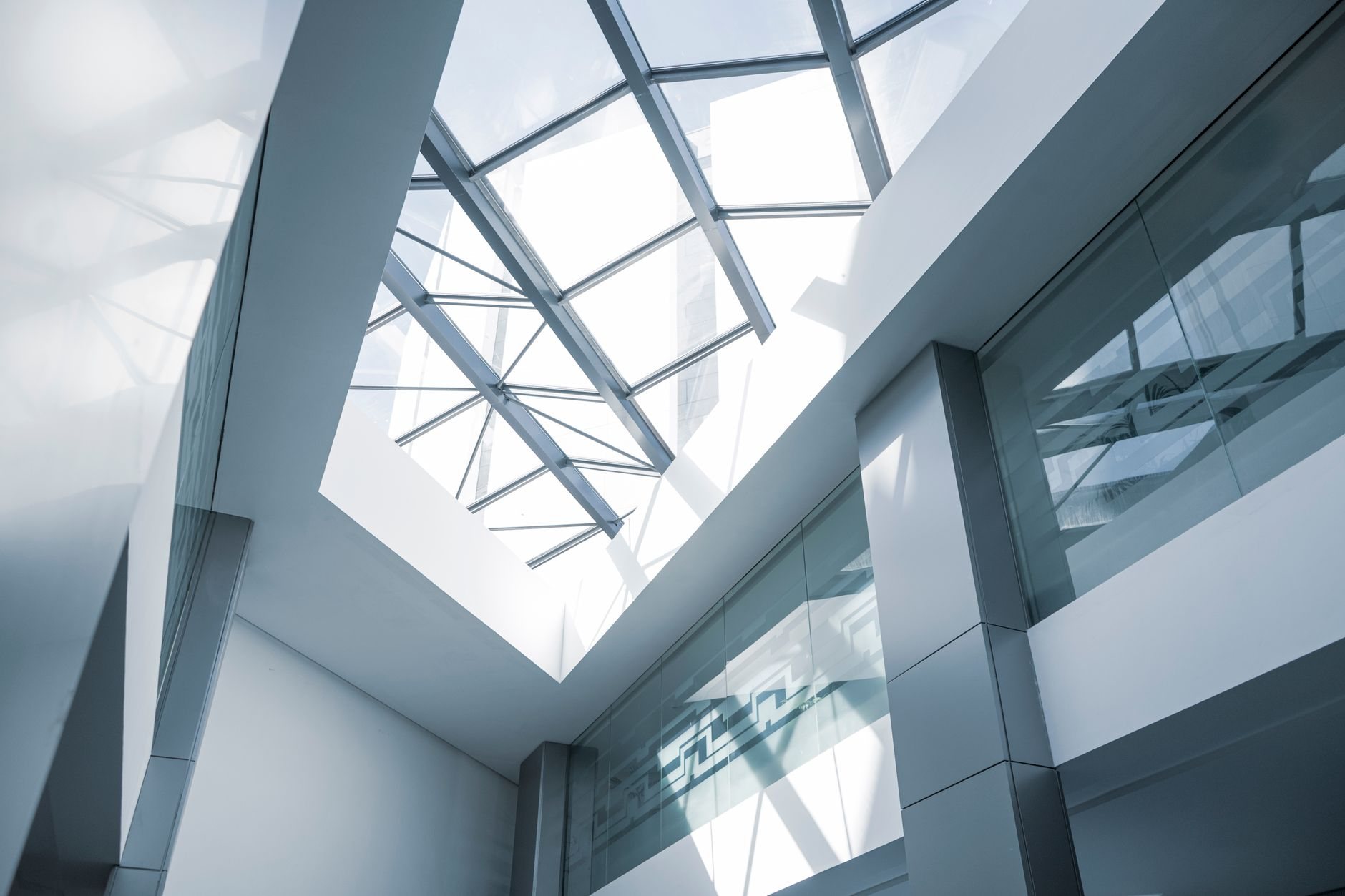
An exposed feature beam is engineered as structural steel and finished as furniture here; exterior pieces often share a finish schedule with canopy and awning steel. Because Grandview is a B100 general contractor, verifiable at dopl.utah.gov, the metalwork and the finishes around it can sit under one contract.
Questions we actually get
Can raw blackened steel be used outdoors in Utah?
Not well. Chemical patinas are porous, and the clear coats that protect them chalk and yellow under Utah’s high-elevation UV within a few seasons. Outdoors we steer you to powder coat for color or weathering steel for a rust finish that is meant to be there. Indoors, blackened steel with wax holds up for decades.
Will a steel fireplace surround get too hot to touch?
It depends on the appliance. Gas inserts and zero-clearance fireboxes publish required clearances to finishes, and steel conducts heat, so a surround is built with a ventilated air gap or standoff where the manufacturer calls for one. We build to the listed clearances for your specific unit, and the installation is inspected like any fireplace finish.
Why do you want tile and drywall finished before you measure?
Because decorative steel fits to the finished surface, with reveals measured in sixteenths. A quarter inch of thinset we didn’t know about turns a flush panel into a proud one. When the schedule doesn’t allow a late field measure, we agree tolerances with the preceding trades in writing and build an adjustable reveal into the design.
What makes one screen or surround cost twice what another does?
Usually weld finishing and finish system, in that order. A piece with visible welds and a wax finish is fast; the same piece with every seam ground invisible and a powder finish on blasted steel can double. Pattern density and the condition of the opening make up most of the rest.
Tell us what you want the steel to look like
Send a sketch, a reference photo, or the architect’s detail. We reply within a couple of hours during business hours — a day at most — with a straight read on finish options, lead time, and a planning budget.