
Storm-damage siding repair in Utah County
Storm-damage siding repair puts a wall back together after wind, hail, or debris has cracked, dented, or torn the cladding off it — and fixes the flashing and house wrap the storm exposed. Grandview performs the work under a Utah B100 general contractor license and documents it in the format insurance adjusters expect.

When storm damage is its own scope
Storm damage arrives all at once, usually on one or two exposures, often with an insurance claim attached. That puts documentation before repair — the reverse of a routine job.
If your siding aged out gradually — chalking, split caulk, a faded south wall — general siding repair and replacement is the better fit. If the hail also hit your shingles, storm-damage roof repair runs alongside this scope under one contract, because roof-to-wall flashing is where separate contractors disagree about whose leak it is. If the storm merely exposed a wall already failing, full siding replacement is where it ends up. For whole-property losses, storm damage repair coordinates everything, with siding as one line in a larger scope.
What wind, hail, and debris actually do to siding
Each material fails in its own way, and the failure tells us how far the repair goes.
Vinyl in wind. Canyon-wind events along the Wasatch Front get under a panel’s bottom lock and unzip the course above it; one loose panel at a gable peak can shed half a wall in a gust. Flying edges tear the house wrap, and nail hems on neighboring panels stretch. We replace stretched panels, not just missing ones, and re-hang on the manufacturer’s high-wind fastening schedule.
Vinyl in hail. Hail punches holes or crescent cracks on the exposure that faced the storm. Vinyl loses impact resistance as it gets colder, so a spring hailstorm after a cool night does outsized damage. Cracks admit water, so even small ones get replaced rather than sealed.
Fiber cement. It rarely cracks from hail, but large stones chip the finish and expose the substrate — usually a prime-and-paint repair rather than a board swap. Boards split at the nail line by wind-flexing are replaced and blind-nailed to spec.
Engineered wood and cedar. Impact dents break the finish seal; wind-driven rain wicks in and the board swells. Dented boards near grade or at cut edges are replaced; higher boards with intact edges can often be sealed and refinished.
Debris strikes. A branch punctures siding, house wrap, and sometimes sheathing. We open it up, patch the drainage plane with lapped and taped wrap, and renew the flashing before siding goes back on. Torn soffit and fascia at the eave usually joins the same scope.
How a storm-damage siding repair runs
- Stabilize. Loose panels come off before they become projectiles; open wall gets tarped so a second storm doesn’t double the damage.
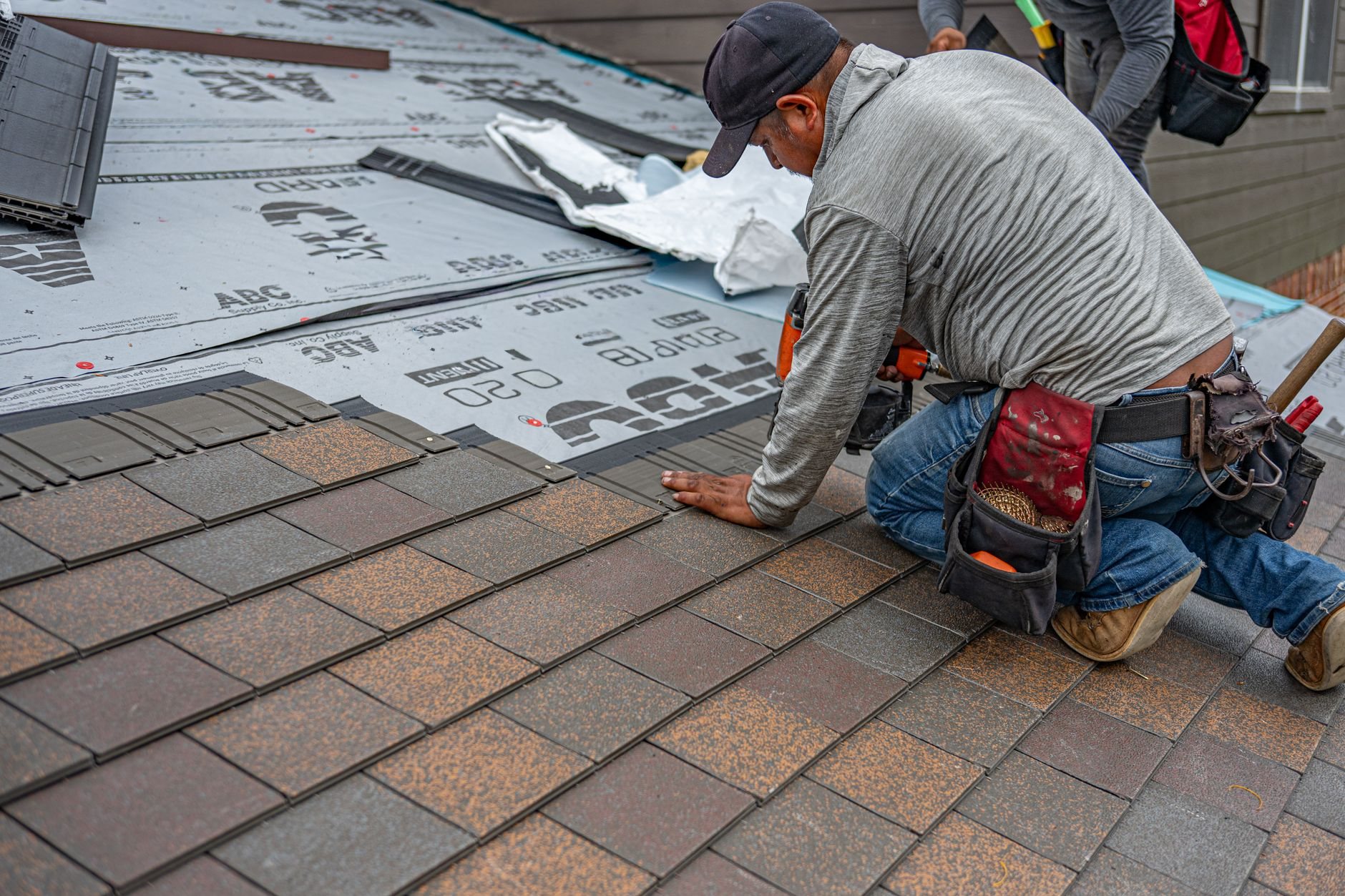
- Document. We photograph every exposure, chalk-mark damaged panels, count and measure, and note wrap and flashing damage an adjuster can’t see from the lawn. You get the photo set and a written scope for your carrier.
- Match or decide. We identify the profile and color and check whether it’s still made. If it is, the repair is scoped by panel. If it isn’t, or the sun has shifted the color too far, the scope becomes a whole-elevation replacement, stated in writing.
- Repair the layers. Sheathing repaired, house wrap patched in lapped courses, flashing renewed at windows and roof-wall intersections, then siding and trim, J-channel, and corners rebuilt.
- Close out. Walkthrough, nail sweep, and a final photo set matched to the damage photos for your claim file.
Siding, trim, house wrap, and flashing are carpentry scopes we perform under a Utah DOPL-verifiable B100 license, within our wider site, structure & envelope work. Where a storm also damaged an exterior light, outlet, or meter base, licensed electricians handle that — Grandview holds the contract and sequences and checks their work inside the same project.
What does storm-damage siding repair cost in Utah?
As ballpark planning numbers only: replacing a handful of wind-torn or hail-cracked vinyl panels with a matched profile typically runs about $500–$1,500 along the Wasatch Front; a single-elevation rebuild with new wrap, flashing, siding, and trim usually lands between roughly $3,000 and $9,000 depending on material and height. Ranges to plan with, not quotes — a firm number follows the inspection and a defined scope.
What moves the number:
- Whether the profile still exists. A discontinued vinyl profile forces a full-elevation replacement where a dozen panels would otherwise do.
- Color drift. Utah’s elevation and UV intensity fade south and west walls fast; a new panel beside a ten-year-old one may not blend, and whether to accept that or replace the wall is your call with the facts in hand.
- How deep the water got. Torn wrap and wet sheathing add layers, usually because a monsoon cloudburst followed the windstorm by a day or two.
- Access and height. Gable peaks and second-story walls over sloped lots add staging.
- Fastening upgrades. Re-hanging to a high-wind schedule costs a little more labor and is the cheapest insurance against doing this again next spring.
One claims note: many homeowner policies carry a separate wind-and-hail deductible, sometimes a percentage of dwelling coverage. Check your declarations page before filing — small repairs sometimes aren’t worth a claim, and we’ll say so.
Questions we actually get
Should I wait for the adjuster before you touch anything?
Wait for the inspection, not the stabilization. Carriers expect loose panels secured and open wall covered; it prevents a second claim. Photograph everything before we move it — we do the same — and we keep removed panels on site until the adjuster has seen them.
Can you match siding that’s been on the house for years?
Sometimes exactly, often closely, occasionally not at all. If the profile is still made, we source it and warn that a new panel reads slightly brighter beside sun-faded neighbors. If it’s discontinued, the honest answer is a whole-elevation replacement on the damaged wall, which also settles the color question.
Why replace panels that aren’t visibly broken?
Because wind stretches vinyl nail hems and loosens locks on panels that stayed on the wall. They look fine, hold for a season, and let go in the next gust. We check engagement across the whole affected exposure and replace what’s compromised, not just what’s missing.
Does the repair need a permit?
Like-for-like replacement usually doesn’t; sheathing or structural repair often does, and rules differ by city — verify with your building department or let us handle it within the scope. HOA neighborhoods may also need architectural sign-off if the replacement profile or color differs from the original.
Send us the storm photos
Describe what the wind or hail did and attach pictures of the worst wall. We reply within a couple of hours during business hours — a day at most — with a straight read on scope, matching, and whether a claim makes sense.