
Storm, Hail & Wind Damage Roofing
Storm damage roof repair is the targeted repair or replacement of roofing that a specific wind, hail, or snow event broke — creased and missing shingles, bruised fields, lifted flashing, punctured decks — done so the roof is sound again and the damage record holds up. Grandview handles it under a B100 general contractor license across Utah County and Salt Lake County.
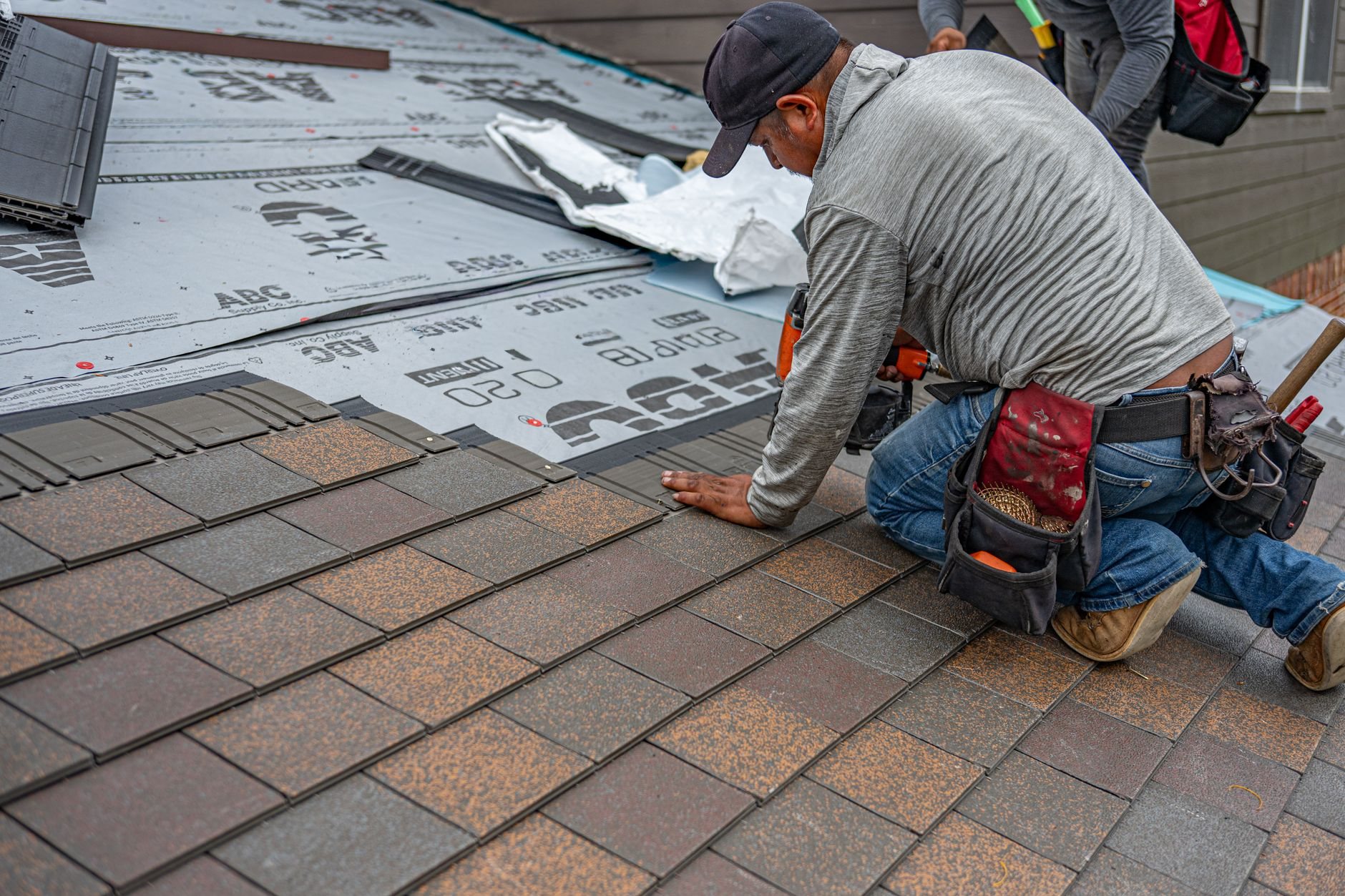
Repair the slope, or replace the roof: how we decide after a storm
A storm repair is the right scope when the damage has a boundary: wind peeled a band of shingles off the south slope and the rest of the field is still sealed, or hail bruised the west face and left the other three alone. We repair what the storm hit and tie new material into sound old material.
It stops being a repair when the damage is everywhere, or the roof was near the end of its life already. Brittle, UV-cooked shingles at Utah’s elevation often can’t be lifted without cracking the neighbors; a repair that breaks three shingles for every one it fixes isn’t a repair. Then it’s full roof replacement, usually with Class 4 impact-resistant shingles so the next hail event is a non-event.
If the roof is leaking but no storm is to blame, roof leak repair covers the slow failures. If the claim spans more than the roof, our storm damage repair team runs the whole-property scope and insurance supplement, with this roofing work folded in.
Wind and hail leave different evidence, and the repair follows the evidence
Wind damage along the Wasatch Front is mostly canyon wind. Gusts out of Weber, Parleys, and the Utah County canyons hit the windward slope and ridge and do three things to asphalt roofing: crease shingles along the seal line so they flap and tear, lift tabs and expose nails, and strip ridge caps first because they take wind from both sides. A creased shingle still attached counts as damaged — the seal is broken, the mat is cracked, and it’s the next one gone.
Hail is less frequent here than on the Front Range, but when a summer cell drops it on Lehi or Draper it leaves bruises: soft spots where granules are gone and the mat is fractured. Bruises don’t leak the week of the storm; they leak two winters later when freeze–thaw works the crack open. We confirm hail with test squares — a 10-by-10-foot section per slope, hits counted — and the collateral marks that don’t lie: dents in soft-metal vents and gutters.
Ice storms are different again: dams at the eaves back meltwater under the shingles, and the fix lives in underlayment and ventilation. Everything gets photographed before anyone touches the roof. Those photos are the claim; FEMA gives the same advice after any disaster — document before you clean up.
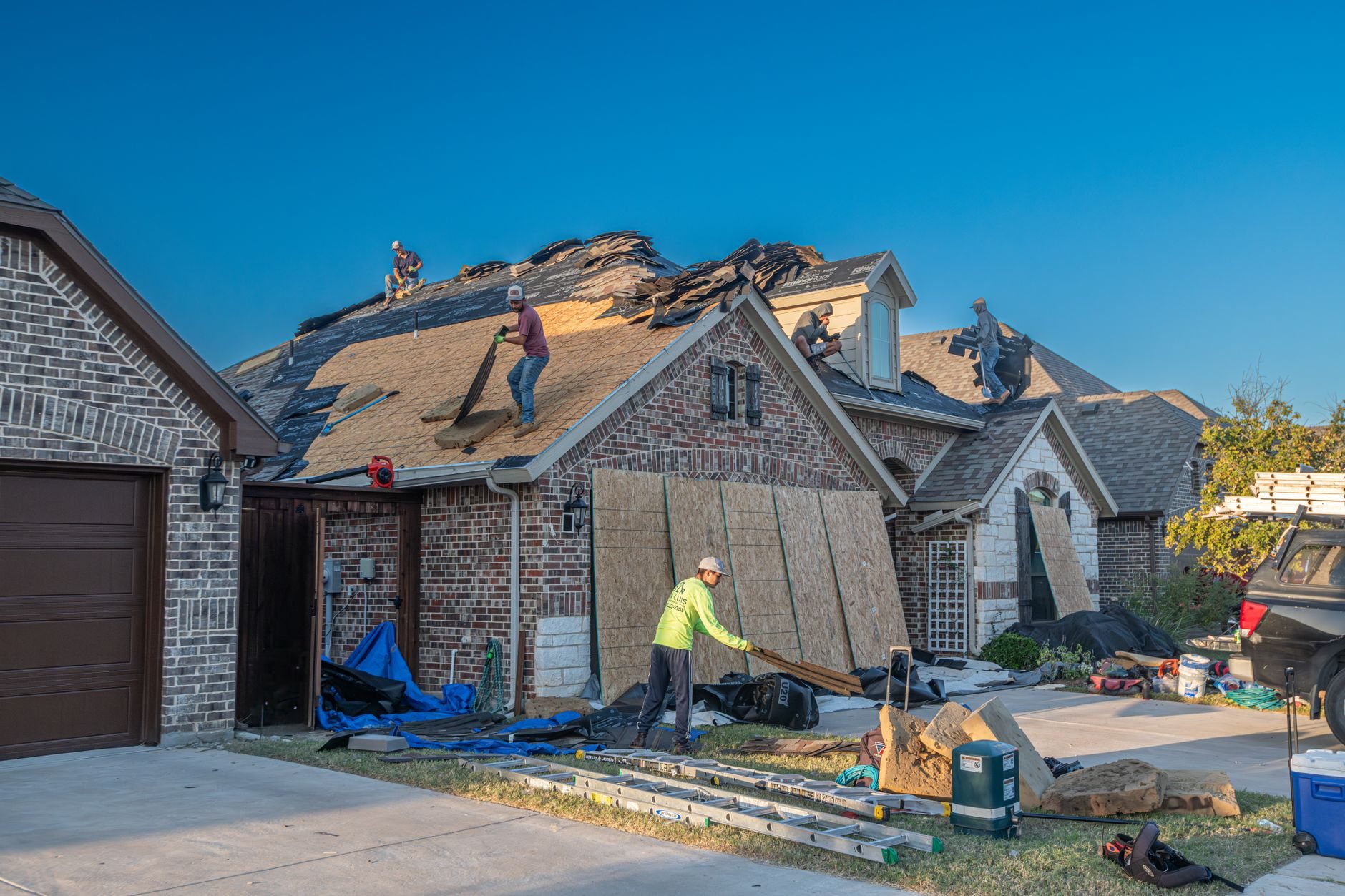
What the storm repair work involves
- Stabilize. If water is getting in, emergency roof tarping goes on first — anchored at the ridge, not nailed through the field.
- Inspect and document. Roof walk, attic look, test squares where hail is suspected, slope-by-slope photos.
- Match material. Storm repairs live or die on the match. We identify the manufacturer and line, source the closest current color, and say plainly when a shingle is discontinued and the patch will show.
- Repair in sequence. Damaged shingles come out individually, nails pulled rather than driven through. Exposed deck gets ice-and-water membrane first. Creased shingles get replaced, not re-sealed — roofing cement on a cracked mat is a two-season fix. Ridge caps go back on with a high-wind nailing schedule.
- Check the rest. Vent boots, flashing, and gutters took the same storm; lifted step flashing gets reset while the slope is open.
- Close out. Magnetic sweep, final photos matched to the first set, paperwork an adjuster can use.
Most wind repairs are a day on the roof; slope replacements after hail run two to three. The standards behind every roofing project we run apply here; our license is verifiable at Utah DOPL.
What does storm damage roof repair cost in Utah?
As ballpark planning numbers: replacing a band of wind-lifted or missing shingles on one slope typically runs $450 to $1,500 in Utah County and Salt Lake County, depending on pitch, access, and how much ridge cap went with it. A partial slope replacement after hail — tear-off, membrane, new field on one face — tends to land between $2,000 and $6,000. Whole-roof damage becomes a replacement number; a firm estimate follows an inspection.
What moves the price:
- Shingle condition around the damage. Brittle shingles that crack when lifted expand the repair boundary — the biggest variable on older roofs.
- Match availability. A discontinued line means a visible patch or a larger area replaced to a break line.
- Deck exposure. Punctures and torn-off sections need sheathing and membrane, not just shingles.
Questions we actually get
How soon after a storm should the roof be inspected?
Within days, not months. Creased shingles and hail bruises are easy to read right after the event and harder to attribute as the roof weathers, and most policies set a reporting window. If water is coming in, call the same day; we tarp first, document second.
Can you match my existing shingles for a partial repair?
Usually, if the line is still made. We pull a sample, identify manufacturer and color, and order the closest current run. Expect a slight shade difference on an older roof, since the field has faded under Utah sun. When the line is discontinued, we show you the natural break lines so a bigger section can be replaced cleanly.
My insurance adjuster said the damage is cosmetic. Is it?
Sometimes. Granule loss with no mat fracture can be cosmetic. A bruise you can feel, a crease along the seal line, or an exposed nail is functional damage that will leak. We document each hit with photos and test-square counts so the distinction is on paper, and we’ll tell you which category you’re in before you dispute anything.
Should I upgrade to impact-resistant shingles when the storm-damaged slope is replaced?
If a whole slope or the full roof is coming off, price it. Class 4 shingles resist the hail that bruises standard architectural lines, and some carriers discount premiums for them. For a small patch, the match matters more than the rating.
Tell us what the wind took
Send photos, or just tell us which slope. We’ll inspect, document, and give you a straight read on repair versus replacement — within a couple of hours during business hours, a day at most. More of the envelope: site, structure & envelope.