
Fiber Cement Shake & Shingle Siding
Fiber cement shake siding gives you the texture of cedar shingles in a board that doesn’t swell, split, or feed carpenter ants. Grandview installs shingle panels, staggered-edge shakes, and half-round accents on gables, dormers, and whole elevations across Utah County under a B100 general contractor license.
When shake is the right fiber cement profile
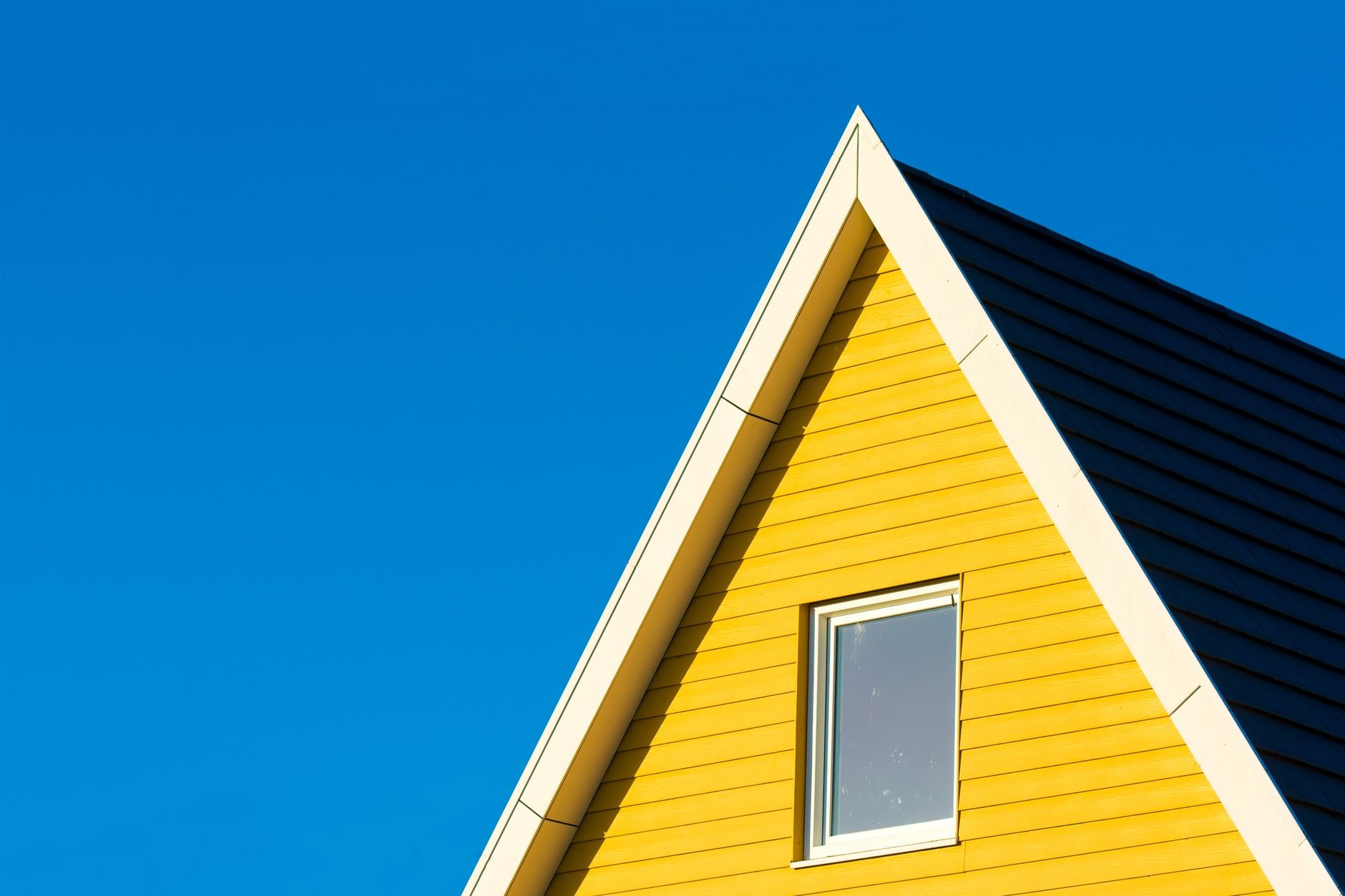
A two-story gable end clad in fiber cement lap siding from grade to ridge reads as one big plane; the same gable in staggered shingles reads as a craftsman detail. Most of the fiber cement shake we install is accent work — gable fields, dormer cheeks, bay bump-outs, the upper story above a lap or stone base — rather than the whole house.
The decision usually comes down to three comparisons. Against real cedar shakes, fiber cement wins on maintenance: cedar on a south or west exposure in Utah wants restaining every few years and still cups and checks through freeze–thaw winters; fiber cement holds a finish for a decade or more. Against vinyl shake panels, fiber cement wins on realism and rigidity — no visible panel seams every four feet, no oil-canning in August heat — at a higher price. Against fiber cement board and batten, it’s a style call: battens suit farmhouse and modern elevations; shingles suit craftsman, cottage, and traditional ones.
Fiber cement is also a noncombustible cladding. On bench and foothill lots where a city applies wildland-urban interface rules, shingle-look fiber cement is one of the few ways to get a cedar-shake appearance that passes — verify the requirement with your building department.
What the installation actually involves
Fiber cement shingles come three ways, and the choice drives both the look and the labor. Straight-edge panels are 48-inch-wide boards with shingle keyways cut into the face; they install in courses like a wide lap board and give a tidy, uniform shingle line. Staggered-edge panels are the same width with a randomized bottom edge for a hand-split, rustic read. Individual and half-round (fish-scale) shingles are set one at a time — the slowest route, and the only way to get a true Victorian or shingle-style look with no repeating pattern. James Hardie’s HardieShingle line is what we’re asked for most, in the cold-climate formulation Utah falls under.
Sequencing is what keeps a shake wall dry. Each course laps over the one below, with vertical joints staggered so no keyway lands directly above the one beneath it — on staggered panels, we also shift the panels so the factory stagger doesn’t repeat visibly across the wall. Fasteners go on the manufacturer’s nail line so the course above conceals them; face nails only appear on the top course under the soffit, where they’re sealed and painted. At corners, shingles die into fiber cement corner boards rather than being mitered; at windows and doors they butt to trim with a small gap that gets a high-movement sealant.
Gables hold most of the detail. Every shingle along the rake is cut to the roof pitch, and a kick-out flashing goes in wherever a lower roof dies into the shingled wall. Where shingles meet a lap-sided story below, a Z-flashing separates the two profiles so water sheds out, not behind. Required clearances — roughly six inches to soil and two inches to decks, roofs, and hardscape — apply to the bottom course and matter more on shingles because the lower edges are cut.
Shingles, corner boards, trim, and flashing are carpentry we perform directly. Field-painting factory-primed shingles is done by professional painting crews that Grandview contracts and manages inside the project; the siding painting page covers that finish path. Pre-finished shingles skip painting but limit the palette — often the deciding factor in HOA communities around Lehi, Saratoga Springs, and Eagle Mountain, where exterior color needs architectural approval before work starts.
What does fiber cement shake siding cost in Utah County?
As ballpark planning numbers only: fiber cement shingle panels installed on a gable or accent field typically run about $12–18 per square foot, roughly 20–40 percent above the same wall in lap boards. Individual and half-round shingles push higher. A pair of gable ends on a two-story home commonly lands in the $4,000–9,000 range; a full elevation is priced by the wall. A firm estimate follows a site walk and a written scope.
- Panel versus individual shingle. The single biggest driver. Panels install several times faster than loose shingles.
- Gable geometry. Steep pitches, multiple gables, and dormers mean more rake cuts and more staging.
- Height and access. Shake accents live on upper stories by definition; scaffold or lift time is built into the number.
- Finish path. Pre-finished shingles cost more per square but remove the painting phase and its weather window.
- Wind exposure. Gables take canyon-wind gusts head-on; homes in known corridors get an upgraded fastening schedule at modest cost.
Questions we actually get
Can I put fiber cement shingles just on the gables and leave the rest?
Yes, and that’s the most common scope we see. Shingle gables over an existing lap body is a clean upgrade if the lap is sound. We add a flashing transition between the two profiles, replace any failed house wrap behind the gable field, and match or repaint trim so the accent reads as designed.
Staggered or straight-edge — which looks better?
Straight-edge reads crisp and traditional and suits homes with lots of trim. Staggered-edge reads rustic and hides minor course variation on long walls. Half-round is a Victorian or cottage detail that looks out of place on a modern elevation. We’ll put samples against your trim color on site before you decide.
How does fiber cement shake hold up to Utah sun and winter?
Better than any wood shingle. Fiber cement doesn’t absorb water the way cedar does, so the hundred-plus freeze–thaw days a year along the Wasatch Front don’t split or cup it. High-elevation UV fades the finish, not the board; a repaint every ten to fifteen years keeps it looking new, and pre-finished shingles stretch that interval.
Why do fiber cement shingles cost more than lap boards?
Labor and cuts. Shingle panels carry more edge per square, every rake and corner takes more fitting, and the work sits on the upper story where staging is required. Material costs modestly more than lap too. On accent fields the premium is small in dollars; on a whole house it adds up, and we’ll say so.
The full tear-off, house wrap, flashing, and trim scope lives on our siding installation and replacement page, and the rest of the shell — roofing, foundations, decks, and windows — under site, structure & envelope.
Tell us what your gables are doing
Send a photo of the elevation and the look you’re after. We reply within a couple of hours during business hours — a day at most — with a straight read on profile, finish path, and budget range before anyone commits to anything.