
Cedar Shake & Cedar Shingle Roofing
Western red cedar shakes and sawn cedar shingles, installed over a ventilated deck with stainless fasteners so the wood can dry and last. Grandview installs cedar roofs across Salt Lake County and Utah County under a B100 general contractor license, and we’ll say up front if your lot’s fire zone or HOA rules out untreated wood.
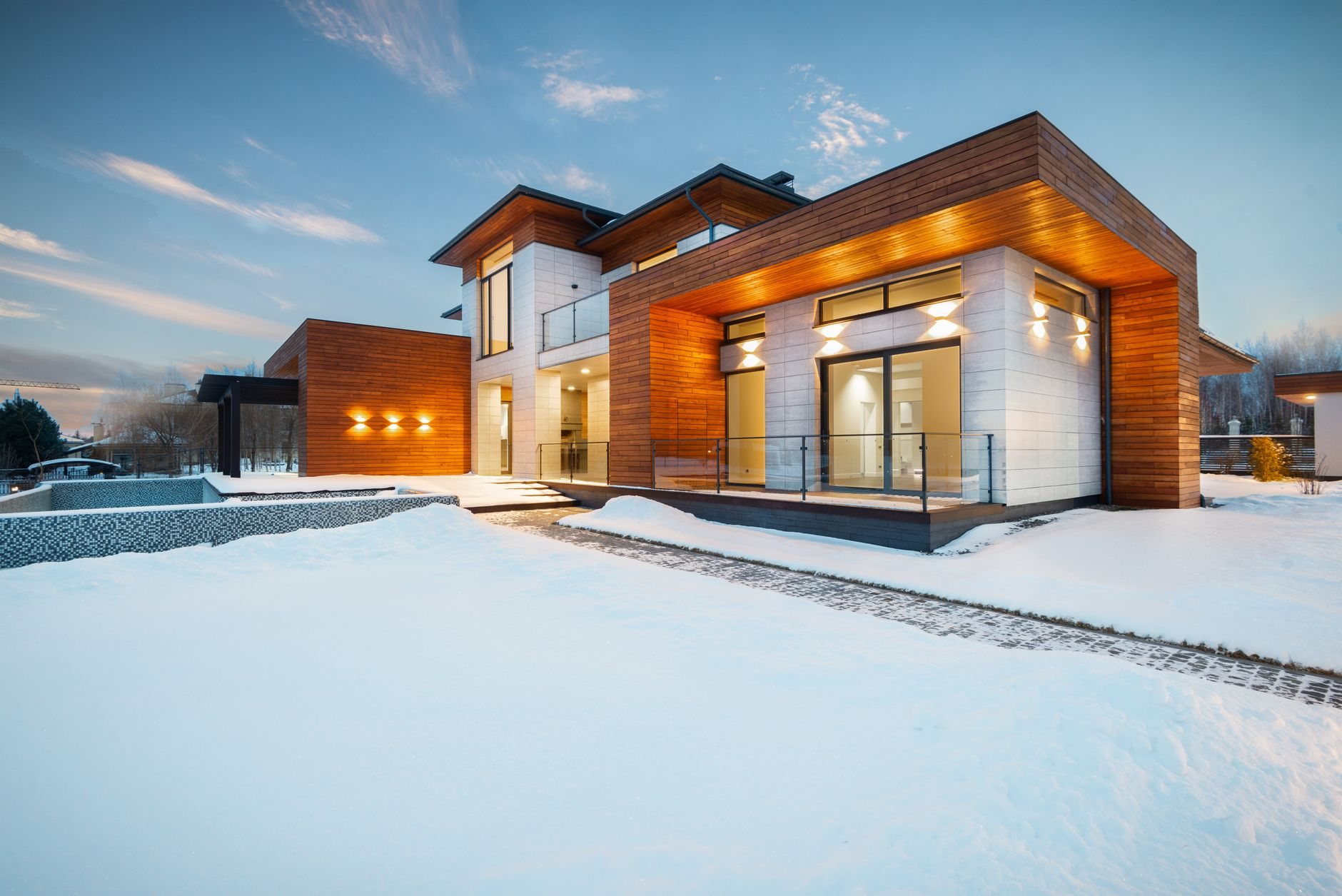
Shake, shingle, or a cedar look-alike: which one is right?
A cedar shake is split along the grain, so one face is rough and the piece is thick: about half an inch at the butt for a “medium,” three-quarters for a “heavy.” A cedar shingle is sawn smooth on both faces, thinner and uniform, and lays up as a clean, tailored plane. Same Western red cedar; the difference is texture, thickness, and about a third of the price.
Choose cedar when the house wants a roof that ages instead of fades: mountain-modern and craftsman designs on the east bench, canyon cabins, and older Avenues and Sugar House homes built with wood roofs. Cedar weighs about what asphalt does, so switching needs no structural upgrade.
Choose a look-alike when fire rating, HOA rules, or maintenance tolerance says no to real wood. Metal shake-profile roofing is the closest match for a Class A requirement with no upkeep. Architectural shingles in a shake-cut profile get you the shadow line at a fraction of the cost, and designer shingles push the imitation further. We install all three, so the recommendation isn’t weighted toward the one we’d rather sell. The whole family sits under roofing.
What a cedar shake installation involves
Cedar fails from the underside, not the top. Short-lived wood roofs are almost always nailed tight to a solid deck over felt, where the back of each shake stays damp after every storm. The details below let the wood dry from both sides; they’re what separates a 35-year roof from a 15-year one.
- Grade the material. Roofs get No. 1 Blue Label shingles or No. 1 handsplit-and-resawn shakes: all heartwood, all edge grain, no knots. Flat-grain or No. 2 stock belongs on a wall. We order Cedar Shake & Shingle Bureau certified bundles so the grade is on the label, not on a promise.
- Build a breathing deck. Spaced 1×4 sheathing on an open-rafter roof, or a three-dimensional ventilation mat over solid decking on a re-roof. Eave and valley membrane goes under the mat, so ice dams are stopped without sealing the roof airtight.
- Lay the courses. Shingles run at 5-inch exposure for 16-inch stock and 7½ for 24-inch; 24-inch shakes run at 10 inches, with an 18-inch strip of 30-pound felt interlaid between every course. Shingles get no interlayment. Gaps of ¼ to ⅝ inch leave room to swell, and no joint lines up within three courses of another.
- Fasten with the right metal. Two stainless or hot-dipped galvanized ring-shank nails per piece, driven flush, never countersunk. Cedar extractives eat electro-galvanized nails within a decade; stainless costs a few hundred dollars more on a whole roof and never becomes the reason it fails.
- Flash in copper or stainless. Open metal valleys at least 20 inches wide, step flashing at every wall, copper at chimneys, and factory hip-and-ridge units with alternating overlaps.
- Walk it, then document it. We check exposure, nail placement, and spacing on every slope, then hand over bundle labels and treatment certificates with the permit close-out.
Underlayment and ice-and-water shield explains what we use and where; roof ventilation covers the attic side of keeping a wood roof dry.
Fire, sun, and snow: what Utah does to a cedar roof
Fire comes first. Untreated cedar carries no fire classification, and many foothill and bench lots along the Wasatch sit inside a mapped wildland-urban interface area where current Utah-adopted code calls for a Class A or B roof assembly. Pressure-impregnated fire-retardant shakes over a rated cap sheet can meet that as a system, but it’s specified at order, not sprayed on later. Utah’s Division of Forestry, Fire & State Lands publishes the interface maps; we check your parcel and confirm with the city before material is ordered.
Sun is the quiet one. At 4,500 feet and up, UV turns cedar silver within two summers. In Utah the enemy isn’t rot, it’s checking: south- and west-facing slopes split and cup sooner than north slopes. Heavy shakes tolerate this far better than mediums, and keeping needles and moss off the roof does more than any sealer or stain, which we don’t recommend.
Snow stays longer on wood. Cedar holds snow where metal sheds it, and bench-lot design snow loads run meaningfully higher than on the valley floor. The structure is fine with that; eave membrane and generous open valleys simply matter more in Alpine or Cottonwood Heights than in Provo or Murray.
What does a cedar shake roof cost in Utah?
As a ballpark planning number, heavy handsplit cedar shakes over a ventilated deck in Salt Lake County or Utah County typically run about $10 to $16 per square foot of roof area installed, and sawn No. 1 cedar shingles about $8 to $13. Fire-retardant treatment adds roughly $1.50 to $3 per square foot. What moves the number:
- Shake versus shingle, medium versus heavy. Thicker splits cost more per bundle and cover less roof. Heavy shakes also last longest, so the per-year cost often favors them.
- Treatment. Fire-retardant treatment is non-negotiable in interface zones. Preservative treatment, standard in wet coastal markets, is rarely worth paying for in Utah’s dry air.
- Deck conversion. A ventilation mat over solid sheathing is modest; stripping to the rafters for spaced sheathing is not. We settle the breathing-deck strategy before we price the wood.
Planning numbers, not promises. The estimate follows a roof walk and a fire-zone check, and you can verify our license through Utah DOPL before we climb a ladder.
Questions we actually get
How long does a cedar shake roof last in Utah?
Plan on 30 to 40 years from heavy handsplit shakes over a ventilated deck, and 20 to 30 from sawn shingles. Utah’s dry air helps; its UV hurts. The roofs that fall short almost always share one flaw: wood nailed tight to a solid deck with no way to dry from underneath.
Can I put cedar shakes on my house if I’m in a fire zone?
Often, but only as a fire-retardant-treated assembly rated Class A or B, and only if the city signs off. Some bench HOAs and cities prohibit wood roofs outright regardless of treatment. We check the interface map and your CC&Rs before quoting; if the answer is no, a metal shake profile gives you the look with a Class A rating.
What’s the biggest cost variable on a cedar roof?
Deck ventilation. A re-roof over solid sheathing needs a ventilation mat at minimum, and some roofs are better served by stripping to the rafters and installing spaced sheathing. That decision can swing the price by several thousand dollars, so we settle it during the inspection, not after tear-off.
Tell us what you’re working on
Send the address and a roof photo. We’ll check the fire-zone map, walk the roof, and give you a straight read on shake versus shingle, treated versus not, and what the deck needs. We reply within a couple of hours during business hours, a day at most. The rest of the envelope lives under site, structure & envelope.