
Manufactured & Cultured Stone Veneer
Manufactured stone veneer is lightweight concrete cast in molds taken from real stone, then adhered to a lath-and-mortar wall rather than stacked on a footing. It’s the right choice for wainscots, columns, fireplaces, and facades where weight, budget, or an existing wall rules out natural stone, and Grandview installs it across Utah and Salt Lake counties under a B100 license.
When manufactured stone is the right pick
The deciding factor is almost always weight. Manufactured stone runs roughly 8 to 15 pounds per square foot, light enough to adhere directly to a framed wall with no concrete ledge or steel shelf angle beneath it. Natural stone veneer and anchored brick veneer both need something to bear on, so on an existing house with no ledge, manufactured stone is often the only veneer that goes on without touching the foundation.
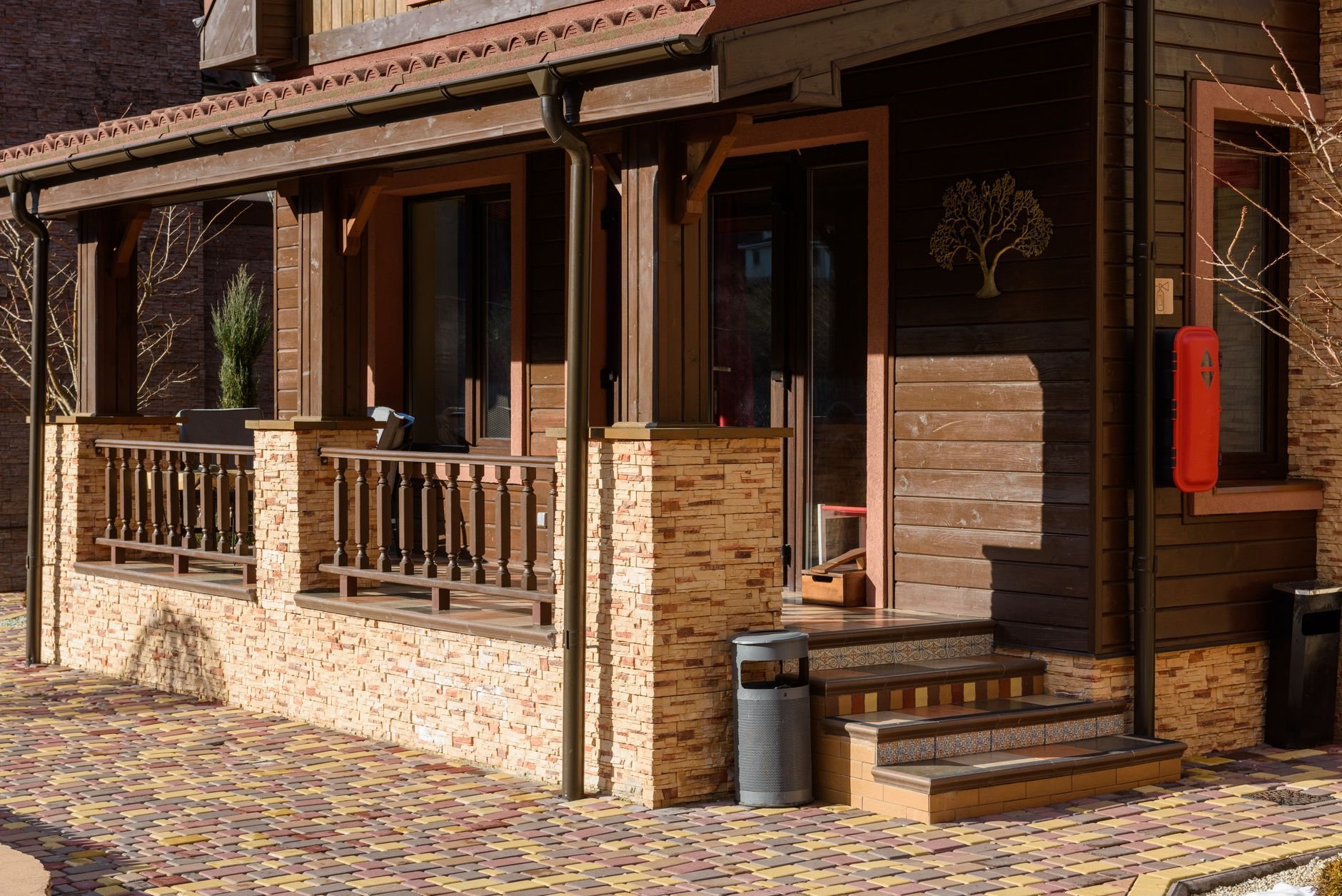
It’s also the practical answer for the stone wainscot that HOA-governed developments in Lehi, Saratoga Springs, and Eagle Mountain so often require on the front elevation. Profiles come in consistent sizes and colors from one production run, corners are cast as L-shaped pieces, and it sets in a fraction of the time stacked natural stone takes.
It’s the wrong pick where the stone has to hold itself up; a freestanding garden wall or anything you’ll sit on belongs under stone walls and dry-stack masonry. And if you want the depth and color variation only a quarry gives you, natural thin veneer is worth the premium.
What’s behind the stone matters more than the stone
Adhered veneer is a stucco assembly with a stone face, and it fails the way stucco fails: water gets behind it and stays. The wall is built from the sheathing outward. Two layers of water-resistive barrier, or one layer plus a drainage mat, go on first. Then galvanized expanded metal lath, fastened into studs rather than just sheathing and lapped to shed water. A scratch coat of mortar goes over the lath and cures before any stone is set.
At the bottom, a weep screed lets that drainage plane actually drain. The stone stops roughly four inches above soil and two inches above a patio, because snow piles against Utah walls for weeks and wicks into stone that touches grade. Flashing at windows, the roof-to-wall line, and every transition to stucco or siding goes in before the lath, not caulked over afterward.
The stone is set in a polymer-modified mortar made for adhered veneer, back-buttered on every piece and pressed in with a slight twist so there are no voids behind it. Voids hold water, and roughly a hundred freeze–thaw days a year along the Wasatch Front will pop a hollow-backed stone off the wall within a few winters. Joints are grouted and tooled, or fitted tight for a dry-stack look.

How a manufactured stone install sequences
- Pick the profile and the plan. Ledgestone, fieldstone, ashlar, or a linear cut; grouted or dry-fit joints; where the stone starts and stops. We lay out corners and terminations so the pattern doesn’t end in a sliver at a window.
- Prep the substrate. New framing gets sheathing, barrier, and flashing in the right order. A re-clad means stripping old siding, correcting rot, and confirming the wall is flat enough to carry a half-inch scratch coat.
- Lath and scratch coat. Lath fastened on a tight schedule, scratch coat applied, scored, and left to cure. Rushing this is the most common shortcut we see on failed veneer.
- Set stone, corners first. Cast corners go on first, alternating long and short legs so the corner looks solid rather than wrapped, and the field works back from them.
- Grout, clean, and seal if warranted. Joints filled and tooled, haze cleaned before it cures, and a breathable sealer on sun-facing walls to slow the pigment fade high-elevation UV causes.
Current Utah-adopted code limits how heavy an adhered veneer can be and how it’s supported, and Cultured Stone, the brand that gave the product its common name, publishes installation details aligned with them. We build to the manufacturer’s spec for whichever line you choose; inspections focus on barrier, flashing, and lath, which is where we want them looking anyway.
What does manufactured stone veneer cost in Utah?
As a ballpark planning range, installed manufactured stone along the Wasatch Front typically lands between roughly $18 and $40 per square foot, well below natural stone. Labor, lath, and prep dominate; material is a smaller share than people expect.
What moves the number: wall height and scaffolding, how many corners and openings the stone wraps, dry-fit versus grouted joints, the profile (through-body color costs more than surface-pigmented), and what hides under old cladding on a re-clad. We give a budget range after a site walk and a firm estimate once profile and extent are set. Our license (#14282236-5501) is verifiable at dopl.utah.gov.
Questions we actually get
Can manufactured stone go over my existing stucco?
Often, yes, if the stucco is sound and well bonded. We test adhesion, add lath where needed, and re-check base-of-wall clearance once the stone adds thickness. Loose, cracked, or painted stucco comes off first, because the stone is only as attached as what it’s stuck to.
Will the color fade in Utah sun?
Some. Manufactured stone is colored with mineral pigments, and surface-pigmented lines fade faster under high-elevation UV than through-body lines do. On south- and west-facing walls we recommend a through-body product and a breathable sealer reapplied every few years.
Does manufactured stone need a footing or ledge?
No. At its typical weight it adheres to the lath-and-mortar wall with no ledge or shelf angle, which is its main advantage over natural stone and brick on an existing house. It does need a weep screed at the bottom and clearance above grade, and heavier profiles must stay within the weight limit current Utah-adopted code sets for adhered veneer.
What makes one manufactured stone job cost more than another?
Corners and openings, mostly. Every window and outside corner adds cutting and cast corner pieces, so a wainscot with six windows costs more per square foot than a blank wall twice its size. Dry-fit joints add labor, scaffolding adds cost above one story, and substrate repairs on a re-clad are the usual surprise.
Part of our masonry services in the site, structure & envelope family; it often rides along with a fireplace build or an exterior refresh.
Tell us what you’re working on
A wainscot, a fireplace surround, or a full re-clad: we’ll give you a straight read on profile, prep, and budget before anyone commits. We reply within a couple of hours during business hours, a day at most.