
Natural Stone Veneer Installation
Natural stone veneer is real quarried stone — cut thin or laid full-bed — set over a framed or masonry wall to give a building a stone facade without a stone structure. Grandview installs it on entries, chimney chases, wainscots, and whole elevations across Utah County and Salt Lake County under a B100 general contractor license.
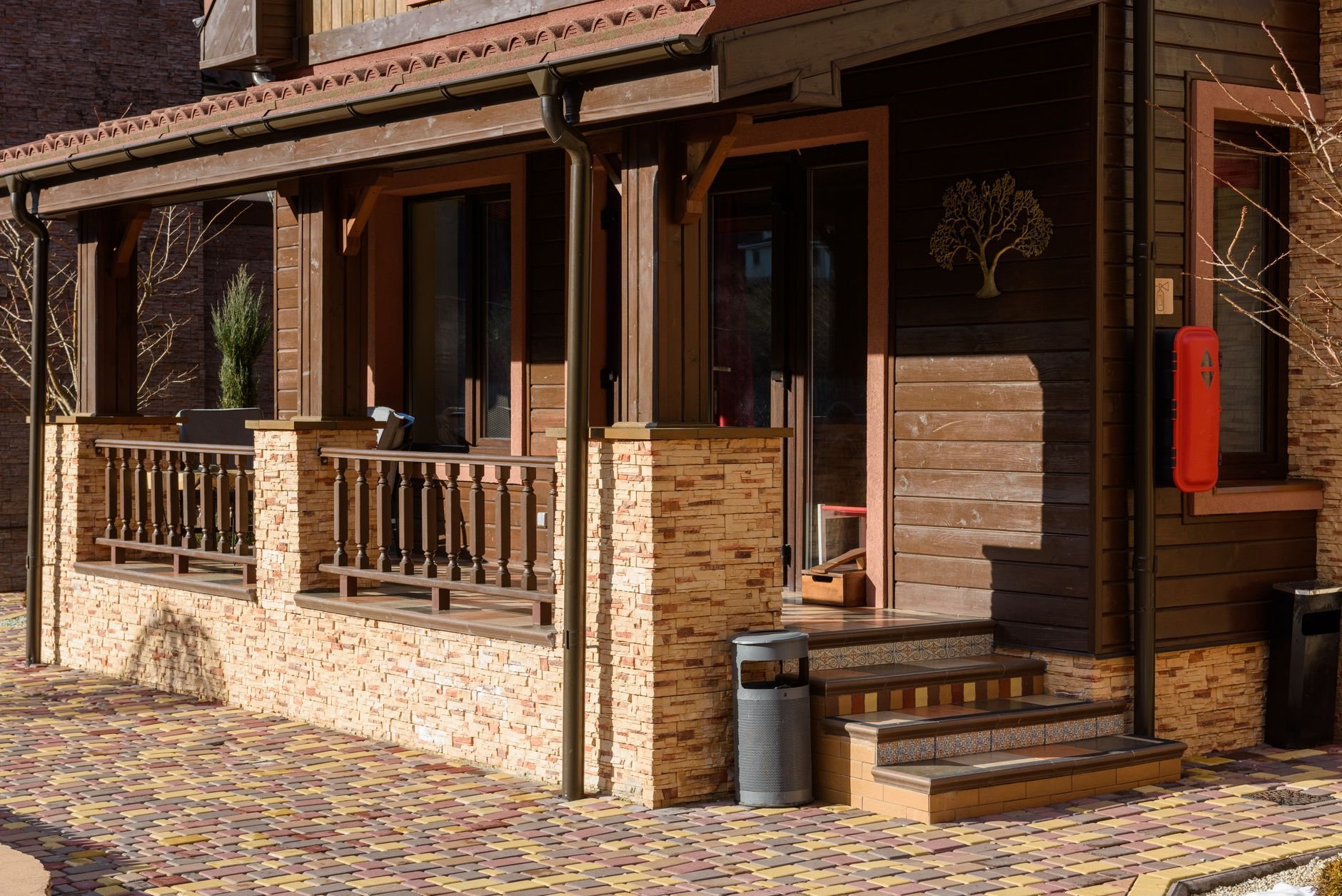
When natural stone is the right veneer — and when it isn’t
Natural stone wins on three counts: it’s color-fast under Utah’s high-elevation sun, every piece is different, and chips and edges show the same stone all the way through. Where the facade is seen up close — an entry, a porch, a wainscot — those differences are worth paying for.
It isn’t always the right answer. Manufactured stone veneer weighs less, costs less, and installs faster over the same lath-and-scratch-coat system — the sensible pick for large upper-story fields or tight budgets. Brick veneer fits better when the house or neighborhood already speaks brick, or when you want an anchored cavity wall rather than an adhered one. A freestanding yard or border wall is a different assembly entirely — see stone walls and dry-stack masonry.
This page covers natural stone as cladding, within our masonry services and site, structure & envelope family.
What natural stone veneer installation involves
There are two ways to put real stone on a wall, and the choice drives everything else:
Adhered thin veneer. Stone sawn to roughly one to one-and-a-half inches thick and bonded to a scratch coat. Over wood framing the assembly runs: sheathing, two layers of water-resistive barrier, a drainage mat or rainscreen gap, galvanized self-furring lath, a cured scratch coat, then stone set in a polymer-modified setting mortar with every piece back-buttered. A weep screed at the base lets water out. Current Utah-adopted code limits how heavy and large an adhered unit can be; thin natural veneer generally qualifies, but we check the actual weight of the stone you pick rather than assume.
Full-bed anchored veneer. Stone three to five inches deep laid on its own foundation ledge or steel angle, tied back with corrosion-resistant anchors, with a continuous air space behind it. Heavier and costlier, and the only option when the look calls for deep reveals and real corners — or when a brick ledge is already waiting for it.
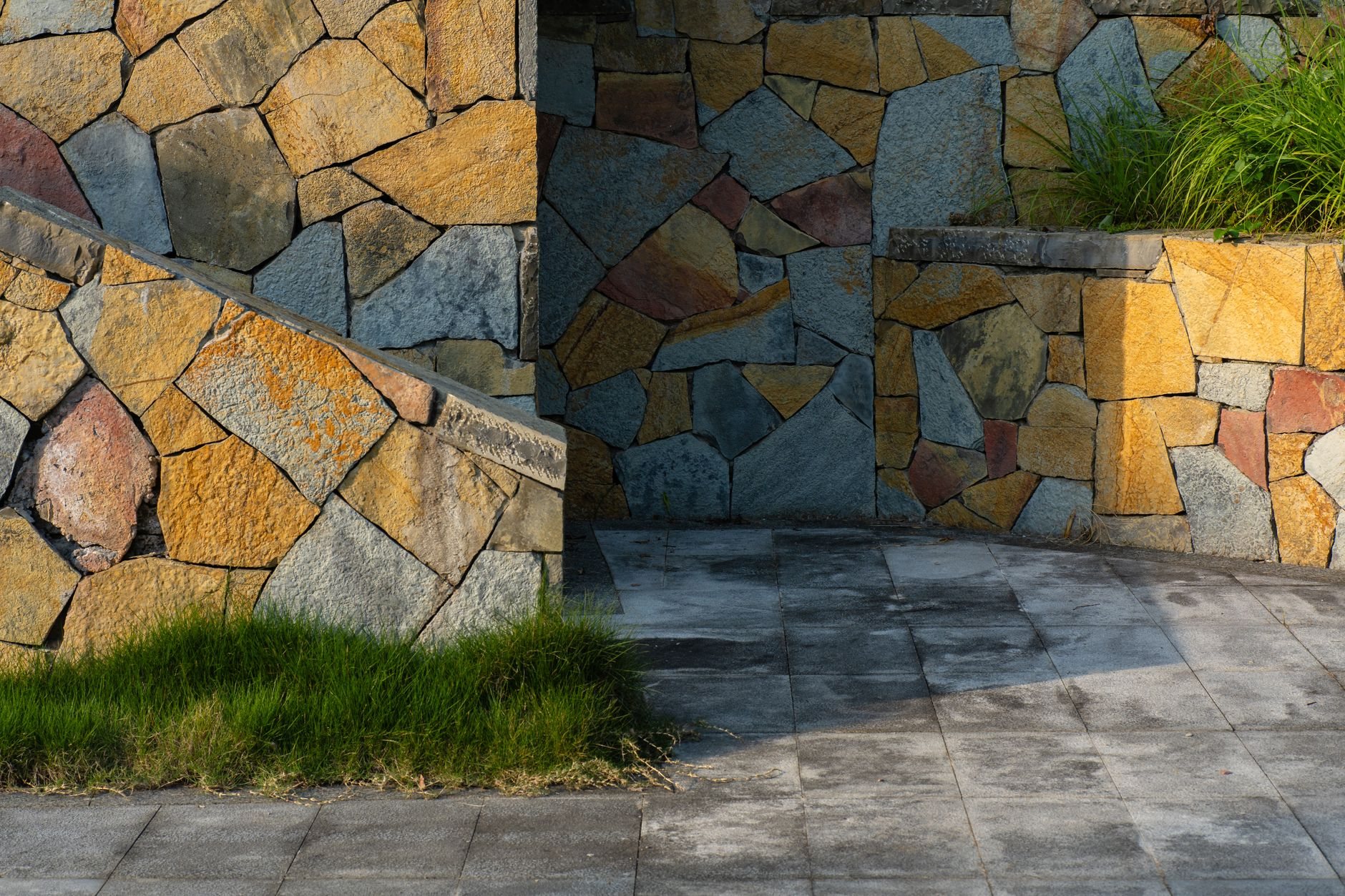
Stone selection is its own decision. Quartzite, sandstone, and limestone come in ledgestone, ashlar, and fieldstone patterns, and dry-stack looks (tight, no visible mortar) take longer than grouted joints because every piece gets fitted, not just placed.

How a stone veneer project runs
- Confirm what it bears on. Full-bed stone needs a footing ledge sized for the load; adhered stone needs sound sheathing. On bench lots with collapsible soils, we look at the foundation before pricing the facade — heavy veneer on a moving footing cracks at the corners first.
- Choose stone and pattern from samples on site. Color reads differently in Provo sun than in a showroom, so joint width and mortar color get decided on a mock-up panel before the pallets arrive.
- Build the drainage plane. Barrier laps, window flashing, roof-to-wall kickouts, and the weep screed go in before any lath. Most stone veneer failures are water failures.
- Lath, scratch coat, cure. The scratch coat needs moist curing before it takes stone; rushing it in July heat is the most common shortcut we see.
- Set the stone. Corners first, then fields, back-buttered and pressed to full contact, held clear of grade and paving so splash and snow can’t wick into the bond.
- Joint, clean, and sign off. Grouted joints are tooled; dry-stack joints are cleaned of squeeze-out. Breathable sealer only where the stone needs it.
The plans may change. The standard does not.
What does natural stone veneer cost in Utah?
As a ballpark planning number, installed natural thin-stone veneer on a typical Utah County home commonly lands in the range of $35 to $60 per square foot, with full-bed anchored stone and tight dry-stack patterns above that. That’s not a quote — a firm estimate follows a site walk and a defined scope.
What moves the number:
- Stone type and pattern. Quarried quartzite in a fitted dry-stack pattern costs more in both material and labor than a grouted sandstone ledgestone.
- Thin versus full-bed. Full-bed stone adds footing or angle work and anchorage before a single stone is set.
- Corners and trim. Outside corners, window sills, and caps are sold and set as separate pieces; a facade with many returns costs more than a flat field of the same area.
- Height and access. Chimney chases and upper gables mean scaffolding; a wainscot does not.
- What’s behind the old cladding. Rotted sheathing or missing flashing found during a re-clad gets fixed before stone goes on — and shown to you first.
Our B100 license (#14282236-5501) is verifiable at dopl.utah.gov; the Utah Geological Survey maps the collapsible and expansive soils that make footing checks worth the hour.
Questions we actually get
Will natural stone veneer survive Utah freeze–thaw winters?
Yes, if water can get out. The Wasatch Front sees roughly 100-plus freeze–thaw days a year, and stone that traps water behind it will pop loose or spall its joints. A proper drainage mat, weep screed, flashing, and grade clearance matter more to longevity than which stone you choose.
Can natural stone go over my existing stucco or siding?
Over sound stucco, sometimes — it depends on whether the wall can carry the added weight and whether the flashing behind it is intact. Over siding, no; the siding comes off so the drainage plane and lath go onto sheathing. We open a small section before answering.
Does a full-bed stone facade need engineering?
Often. Full-depth stone adds real mass to a wall, and anchorage into the structure in a seismic region like the Wasatch Front is a code item, not a preference. A wainscot on an existing ledge is straightforward; a whole elevation on a new build gets coordinated with the project’s engineer on ledge and tie spacing.
Why is natural stone priced so differently from manufactured stone?
Weight and labor. Real stone is quarried, sawn, and shipped heavy, and each piece is fitted by hand because no two are alike. Manufactured stone is cast in repeatable shapes that set faster over the same lath system; the difference is material and hours on the wall.
Tell us what you’re working on
An entry wainscot, a chimney chase, or a full re-clad — you’ll get a straight read on stone, assembly, and budget before anyone commits to anything. We reply within a couple of hours during business hours, a day at most.