
Chimney Builds, Repairs & Rebuilds
Chimney repair covers the masonry above and around the flue: cracked crowns, spalled and loose brick, failed flashing, and stacks that have started to lean, up to taking a chimney down to sound courses and rebuilding it. Grandview repairs, rebuilds, and builds new masonry chimneys across Salt Lake and Utah counties under a B100 general contractor license.
Repair, partial rebuild, or full rebuild: how we decide
A chimney fails in a predictable order: the crown cracks, water gets into the top courses, brick faces spall, joints wash out, and the stack leans. Where yours sits in that sequence decides the fix.
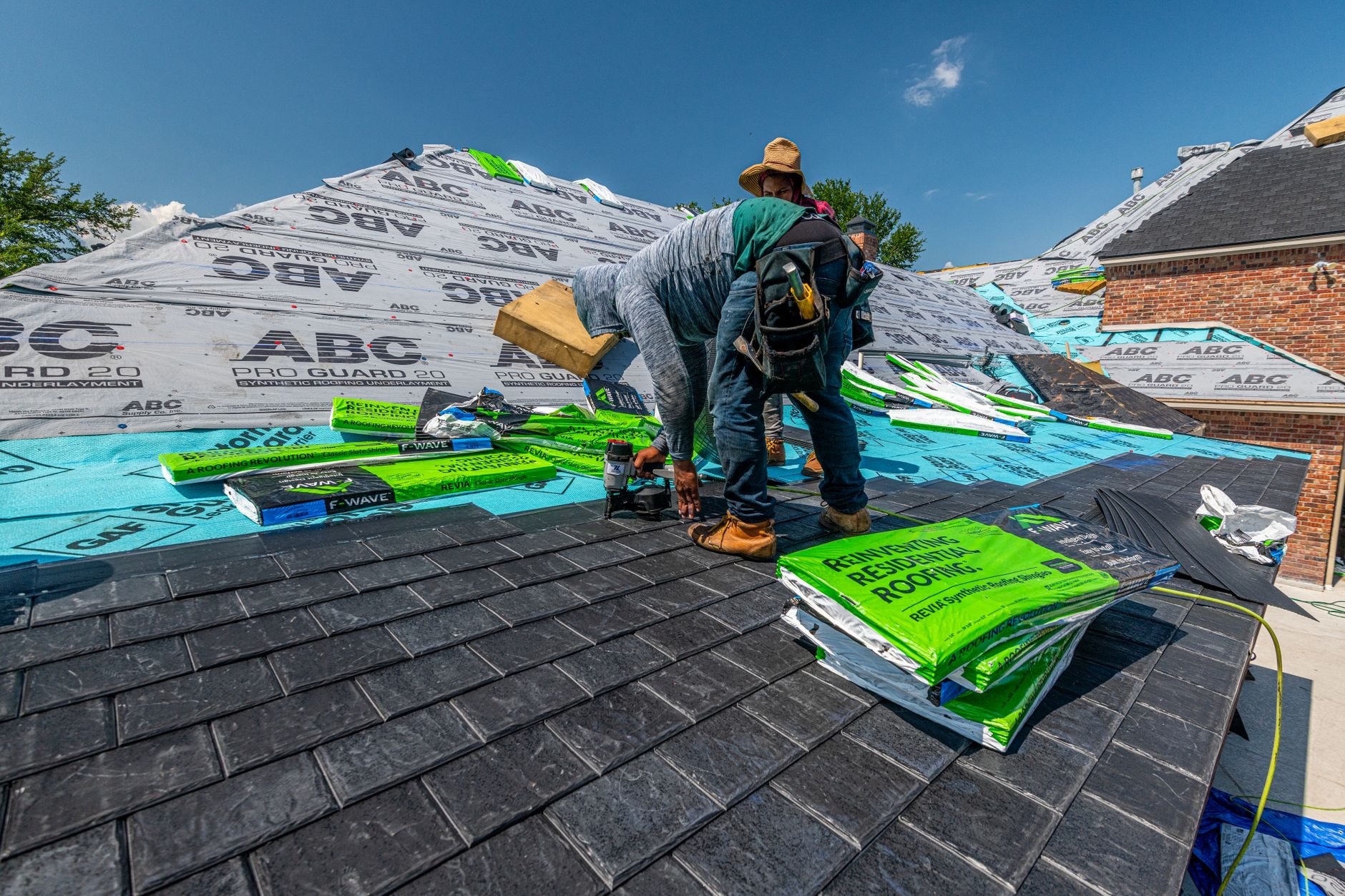
Repair fits a plumb stack with mostly sound brick: a new crown, a few replaced units, fresh flashing. If soft mortar is the only problem, that is a tuckpointing and repointing job and priced as one. A partial rebuild fits a chimney whose top three to ten courses are loose or leaning while everything below the roofline is solid; we take it down to the first sound course and rebuild from there. A full rebuild fits deterioration below the roof, a stack pulling away from the house, or an unreinforced chimney you want rebuilt to current Utah-adopted seismic code.
Damage inside the firebox belongs on our firebox and firebrick repair page. A new fireplace with its own smoke chamber and throat is masonry fireplace construction; we build its chimney under the same contract. Pre-1940 chimneys laid in lime mortar follow the softer-mortar rules of historic masonry restoration.
What a chimney rebuild involves
- Inspect from the roof and the attic. We sound the brick, check the crown, lift flashing, and look at the stack in the attic, where leaning shows first. Flue camera inspections are coordinated with a chimney service professional.
- Protect the roof and take it down. Shingles get covered, and the stack comes down to brick that rings solid, not to a convenient line.
- Rebuild with reinforcement. New courses go up in Type N mortar matched to the original color and joint profile, around a clay tile or stainless liner, with vertical steel and anchorage where current Utah-adopted code calls for it.
- Cast a real crown. Poured concrete, at least two inches thick, sloped, overhanging the brick with a drip edge, with a bond break at the liner so the two move independently.
- Flash it twice. Step flashing woven into the shingles, then counterflashing let into a mortar joint, so the seam can move without opening. A cricket goes uphill of any stack wider than thirty inches.
- Cap and seal. A stainless rain cap with spark screen, and a breathable water repellent on the brick after cure; film-forming sealers trap moisture and worsen spalling.
Why the crown and flashing fail first in Utah
Most Wasatch Front chimneys were finished with a mortar wash troweled over the top course rather than a concrete crown. Mortar is porous and shrinks as it cures, so hairline cracks open within a few seasons, and the Wasatch Front’s roughly 100-plus freeze–thaw days a year drive water deeper into those cracks each winter. By the time spalling shows from the driveway, the top courses are saturated.
Flashing fails the same way. Sealant-only flashing, or step flashing without counterflashing, opens as roof and masonry expand at different rates; a summer monsoon cloudburst then puts an inch of rain against the uphill side of the stack in an afternoon, and the first sign is a ceiling stain near the fireplace. On bench lots exposed to canyon-wind events we mechanically fasten the cap and use heavier-gauge counterflashing. Flashing is often fixed alongside roofing work; if your roof is a few years from replacement, rebuilding and reflashing once beats reflashing twice.
Seismic bracing on older chimneys
Unreinforced brick chimneys are the part of a house most likely to fail in an earthquake; the 2020 Magna earthquake made that visible across the Salt Lake Valley, where toppled chimneys were among the most common damage reports. The Utah Geological Survey documents the Wasatch fault hazard in detail, and a stack with no steel in it is a heavy cantilever waiting for a lateral load.
A rebuild is the practical moment to fix that: vertical reinforcing grouted into the cores, ties into the roof framing, and a strap or angle brace at the roofline. On a sound chimney, bracing alone is a smaller job. If stair-step cracks run through the chimney base into the foundation, the ground is moving and foundation repair comes first.
What does chimney repair cost in Utah?
As planning numbers, not quotes: a crown replacement with reflashing typically runs $800 to $2,500; a partial rebuild from the roofline up, $2,500 to $8,000; a full rebuild with a new liner, $10,000 and up. A firm estimate follows a roof-level inspection.
- How far down the deterioration runs. Each course below the roofline adds demolition, roof repair, and staging.
- Roof pitch and height. A two-story stack on a steep roof needs scaffolding or a lift.
- Liner condition. Cracked clay tiles found during the rebuild add a stainless relining to the scope.
- Season. Mortar wants the air above roughly 40°F for its first days, so winter work carries the cost of enclosure and heat.
Our B100 license (#14282236-5501) is verifiable at dopl.utah.gov. Chimney work is part of our masonry service in the site, structure & envelope family.
Questions we actually get
Can my chimney be repaired, or does it have to be rebuilt?
If the stack is plumb and most brick rings solid when tapped, repair. If the top courses are loose, leaning, or spalled on more than one face, a partial rebuild from the roofline is usually cheaper than chasing individual bricks. We price both after inspecting.
Is the fireplace out of service during the work?
Yes, while the stack is open. A partial rebuild typically takes two to five working days plus mortar cure time before the first fire, and we tarp the flue so weather stays out of the firebox. Gas inserts can be relit sooner than wood-burning fireplaces once the liner is reconnected.
Why can’t you quote a chimney rebuild from a photo?
Because the number depends on what’s under the top course. A photo shows spalling and lean; it doesn’t show whether the liner is cracked, how far the soft brick runs below the roofline, or whether the flashing has rotted the deck. A roof-level inspection answers those, and a like-for-like repair above the roof often needs no permit while a full rebuild usually does.
Tell us what you’re working on
Send a photo of the chimney from the ground and we’ll tell you what we expect to find on the roof. We reply within a couple of hours during business hours, a day at most.