
Copper & specialty gutters
Copper gutters are soldered, not sealed, and they’re chosen when the gutter is part of the architecture rather than something to hide behind the fascia. Grandview installs copper, zinc, and galvanized steel gutter systems on custom, historic, and restoration homes across Utah and Salt Lake County under a licensed and insured B100 general contractor.
When copper is the right call, and when it isn’t
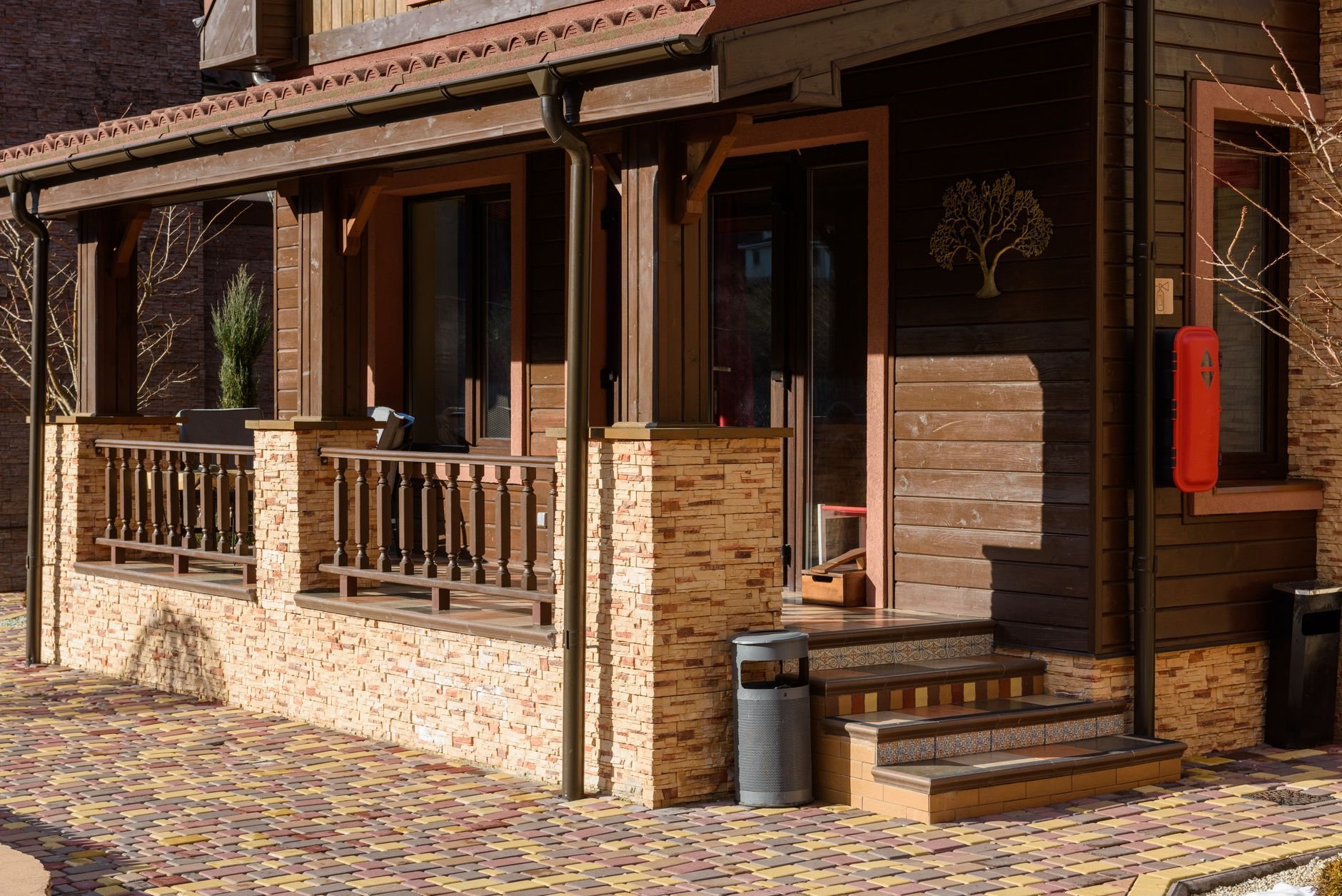
Copper earns its price in three situations: a home where the eave is meant to be seen (slate, tile, or cedar roof, brick or stone elevation, a bungalow in Provo’s older neighborhoods or a house in the Salt Lake Avenues where painted aluminum would read as a repair); a restoration where the originals were copper or galvanized half-round and a historic review board or your own standards want them back; and a custom build on the bench where the owner wants a system that outlasts the roof, and probably the next one too.
If none of that describes your house, seamless aluminum gutters do the same drainage job for a fraction of the cost, and we’ll say so. If you want the half-round shape rather than the metal, that profile comes in aluminum under K-style and half-round gutters. Flat-roof buildings that need capacity, not appearance, belong under commercial and box gutters. An existing copper system with a few failed solder joints is usually a gutter repair, not a replacement. This page is one scope within gutter installation and repair, part of the building shell under site, structure & envelope services.
What goes into a copper gutter installation
- Spec the metal. Residential copper gutter is 16-ounce sheet; we move to 20-ounce for 6-inch and larger profiles, long eaves, and anywhere sliding snow will hit the front lip. Half-round with a rolled bead is the traditional profile; copper K-style exists for homes that need the capacity and want the metal.
- Isolate from other metals. Copper touching aluminum, galvanized steel, or zinc sets up galvanic corrosion, and the other metal loses. Hangers, straps, and screws are copper, brass, or stainless. Existing aluminum drip edge is replaced with copper at the eave or separated with a membrane; a bare screw head is enough to start the problem.
- Hang on cast or formed brackets. Half-round copper rides in exposed brackets or roof-mounted shank-and-circle hangers, which is part of the look. On bench lots and north eaves that hold snow, spacing tightens from 30 inches to 24 or less, and slate and metal roofs get snow guards above the run so a sheet of ice doesn’t shear it off.
- Solder every seam. This is what separates copper from everything else in the gutter family. Lap joints, end caps, outlets, and miters are riveted, fluxed, and sweated with solder so they become one piece of metal. Sealant is a maintenance item; a solder joint done right is not. Expansion joints go in roughly every 40 to 50 feet, because a rigid soldered run with nowhere to grow in July heat will buckle or tear a seam.
- Finish the downspouts. Round smooth or corrugated copper leaders, conductor heads where a second roof plane dumps into a run, rain chains where the owner prefers them. Discharge planning is covered under downspout installation and extensions.
Patina, zinc, and the other specialty metals
New copper is bright salmon for a few weeks, then darkens to brown. The green verdigris people picture forms slowly, and in Utah’s dry air it may never fully arrive; most copper along the Wasatch Front settles into a deep chocolate brown and stays there. The Copper Development Association publishes the weathering sequence and why it varies by climate. Green on day one means chemically pre-patinated metal from the shop. Staying bright means a clear lacquer that holds for a few seasons, but UV at our elevation breaks coatings down faster than at sea level, and recoating is a ladder job you’ll repeat. We generally recommend letting it weather.
Copper isn’t the only specialty metal we install. Zinc weathers to a soft grey, costs about the same as copper, and suits contemporary and European-influenced homes. Galvanized steel half-round is the honest budget version of the traditional look: stronger than aluminum, roughly half the cost of copper, and it takes paint once weathered. Lead-coated copper gives a grey finish with copper’s longevity underneath. Each has its own compatible-fastener list, and mixing them is how a thirty-year gutter becomes a five-year one.
One practical note: copper sells by the pound as scrap, so we don’t stage material on site overnight, and every hanger is through-fastened into framing. Canyon-wind gusts at the mouth of Provo Canyon are reason enough; theft is the other.
What do copper gutters cost in Utah?
Installed 16-ounce copper half-round with copper downspouts typically runs about $30–$50 per linear foot along the Wasatch Front, roughly three to five times aluminum. A two-story home with 180 feet of eave usually lands between $7,000 and $14,000; a large restoration with conductor heads, 20-ounce metal, and custom miters can pass $20,000. Those are ballpark planning numbers, and copper moves with the commodity market, so last year’s range may not hold.
What moves it: ounce weight, the count of soldered corners and outlets, conductor heads and ornamental brackets, and whether aluminum flashing has to come out to avoid galvanic contact. Zinc prices close to copper; galvanized half-round usually lands at $14–$24 per foot. Fascia repair is its own line. Our B100 license is verifiable at dopl.utah.gov, and the measure and material conversation cost you nothing.
Questions we actually get
How long do copper gutters last in Utah?
Properly soldered and hung on compatible hardware, copper gutters commonly serve 60 years or more and are often reused through a roof replacement. Utah’s freeze-thaw cycling, well over a hundred days a year, is what kills sealed aluminum seams; a solder joint doesn’t rely on a flexible sealant, so ice has nothing to pry apart.
Can copper gutters go on a home with aluminum drip edge or steel roofing?
Yes, but not touching. Copper in contact with aluminum, galvanized steel, or zinc corrodes the other metal, and runoff carrying copper ions does the same to a galvanized valley below. We swap the drip edge for copper at the eave and plan the whole roof-edge detail, which is why copper gutters pair well with a roofing scope.
Will my copper gutters turn green?
Slowly, if at all. The green patina depends on moisture and air chemistry, and Utah’s dry climate usually stops the process at brown. Pre-patinated copper is available if green is the goal; a clear coat holds the bright finish for a few seasons. We’ll show you samples at each stage before you commit.
Do copper gutters need snow guards?
On slate, tile, and standing-seam metal roofs, usually yes. Snow releases from those surfaces in sheets, and on bench lots it’s heavier and more frequent than on the valley floor. Half-round copper sits proud of the fascia in exposed brackets, so a sliding slab hits it directly. Snow guards above the eave are far cheaper than re-soldering a flattened run.
Tell us what you’re working on
A restoration, a custom build, or a roof replacement where the gutters should match the house — we’ll give you a straight read on metal, profile, sequence, and budget before anyone commits to anything. We reply within a couple of hours during business hours, a day at most.