
K-style & half-round gutters
K-style gutters have a flat back and a crown-molding face and carry the most water per inch of width; half-round gutters are an open semicircle that suits older homes and sheds debris on its own. Grandview installs both profiles across Salt Lake City and Utah County under a licensed and insured B100 general contractor.
Which profile belongs on your house
Profile is the shape of the trough, a separate decision from how the gutter is made. A seamless gutter run or a sectional gutter system can be either profile; those pages cover joints and fabrication, and the full gutter installation and repair scope sits under site, structure & envelope. This page is about shape.
K-style is the default for a reason. The flat back screws to a fascia board with hidden hangers, the ogee front reads like trim from the street, and a 5-inch K-style holds roughly the same volume as a 6-inch half-round. If your home was built after about 1960 and has a flat fascia, K-style is almost always the answer.
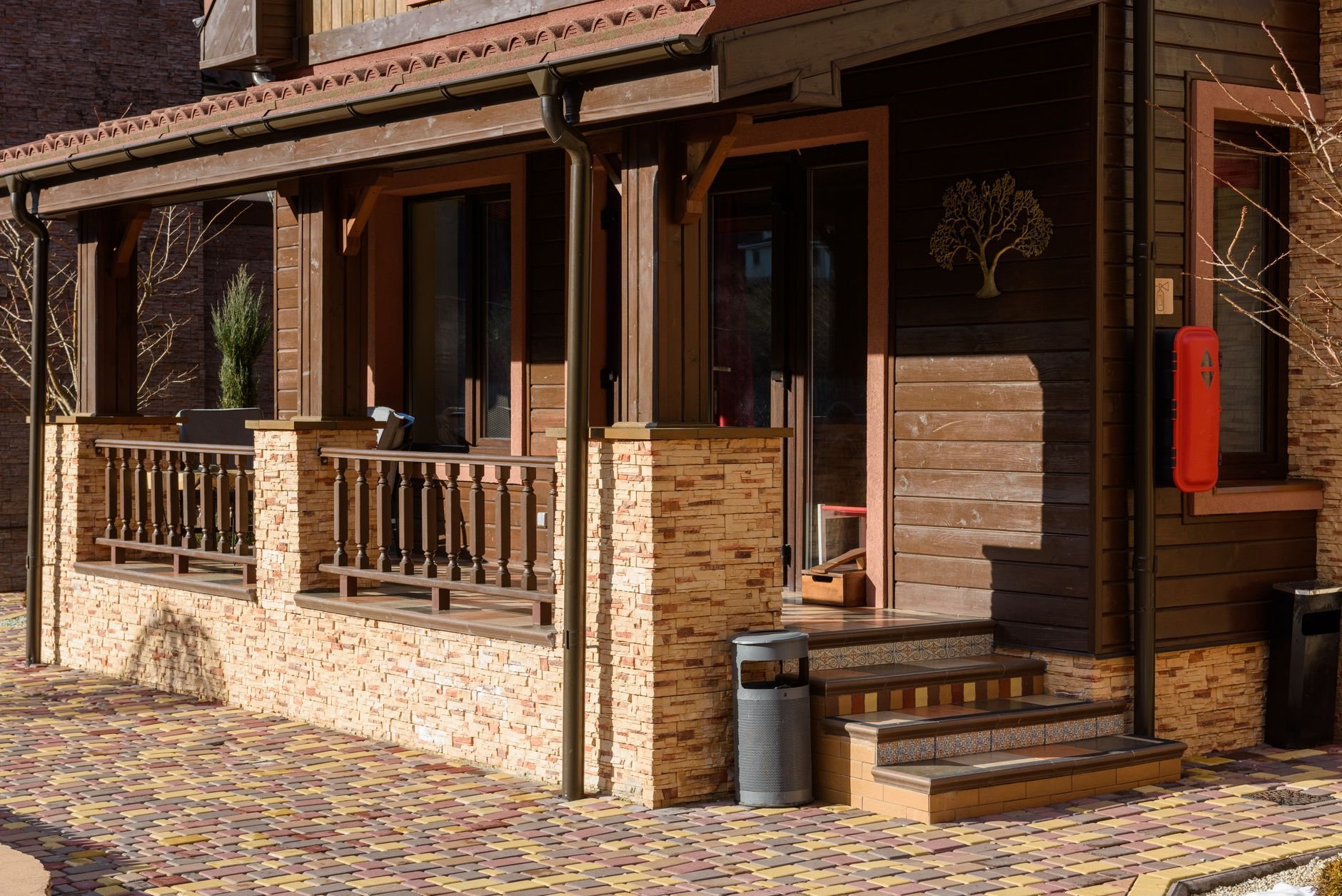
Half-round earns its place on three kinds of houses. Pre-war bungalows, Tudors, and Victorians in the Avenues, Sugar House, and Provo’s older neighborhoods were built for it, and K-style on a 1915 porch looks wrong even to people who can’t say why. Craftsman homes with exposed rafter tails have no fascia to screw into, so half-round on rafter-mounted or roof-mounted brackets is the practical option, not just the pretty one. And where the gutter is a visible design element, half-round in copper or galvanized steel is the honest version of that idea; see copper and specialty gutters.
We are fond of straight lines and straight answers, and on most homes the straight answer is K-style. When it isn’t, we’ll say so before anyone orders coil.
Hangers, outlets, and corners are different jobs
- Fastening. K-style hangs on hidden hangers screwed through the back into solid fascia; we tighten spacing from the usual 24 inches to about 16 on bench lots and north-facing eaves, where sliding snow loads the front lip. Half-round hangs from external brackets or shank-and-circle hangers that carry the trough from below, so the fascia or rafter tail must be sound where each bracket lands.
- Corners. K-style corners are box miters sealed on the inside. Half-round corners are formed radius pieces, lapped and sealed on aluminum rather than soldered, and that lap is where most half-round leaks start if it faces the wrong way.
- Outlets and downspouts. K-style takes rectangular 2×3 or 3×4 downspouts cut into the flat bottom. Half-round takes round 3- or 4-inch downspouts with a wire strainer at each outlet, plus its own elbows and straps. Count and discharge are covered under downspout installation.
- Expansion. Aluminum moves with temperature, and a west-facing run on a Salt Lake summer afternoon moves more than the spec sheet suggests. Runs over roughly 40 feet get an expansion joint; half-round joints show more, so we place them where the eye doesn’t land.
Does a 6-inch K-style gutter make sense in Utah?
Often, yes. A 6-inch K-style carries about 40 percent more water than a 5-inch for a dollar or two more per foot. It’s worth it on steep roofs, long eaves feeding a single downspout, metal roofs that dump snowmelt fast, and any house that has overflowed in a summer monsoon cell. Those storms can put an inch of rain on a roof in under an hour, and a 5-inch gutter on a big drainage plane can’t move it.
Half-round sizing works the other direction: the semicircle holds less for its width, so 6-inch is the normal case and 5-inch is for small porches and single-story runs. The trade is that a smooth bowl gives pine needles and cottonwood fluff nowhere to lodge, so it clears itself in the next storm. If your K-style fills every fall, a gutter guard is the usual fix, not a profile change.

What do K-style and half-round gutters cost in Utah?
As ballpark planning numbers, 5-inch seamless aluminum K-style installed on a typical Wasatch Front home runs about $8–$14 per linear foot, with 6-inch adding $1–$3. Aluminum half-round runs roughly $12–$22 per foot because brackets, round downspouts, and radius corners are more hardware and more hours. Copper and galvanized half-round start well above that. Two-story eaves, steep pitches, and fascia repair move either number up.
One more item on half-round: in Salt Lake City’s local historic districts, exterior changes visible from the street can require a certificate of appropriateness, and a profile swap on a contributing house can count. Check with the Salt Lake City Planning Division before you commit; we’ll help with the paperwork. Our B100 license is verifiable at dopl.utah.gov, and the estimate starts with a tape on the fascia.
Questions we actually get
Can I put half-round gutters on a house that has K-style now?
Yes. The fascia stays; we remove the hidden hangers, patch and prime the screw holes, and mount half-round brackets on a fresh layout. Downspouts change too, since round pipe doesn’t connect to rectangular outlets. If the fascia is soft from years of overflow, that gets repaired first, often as a roofing item, and it’s the main thing that moves the price.
Is half-round harder to keep clear of snow and ice?
Not meaningfully. Both profiles sit below the roof plane, so sliding snow passes over them when the gutter is set at the right height against the drip edge. The damage we see comes from undersized hangers, not profile. On bench lots with real snow loads we tighten spacing on either system and recommend snow guards on metal roofs.
Why does half-round cost more if it holds less water?
Hardware and labor. Each bracket is a separate mounted piece instead of a hanger that clips inside the trough, corners are formed radius fittings rather than cut miters, and round downspouts need their own elbows and straps. Fewer stock colors can also mean a painted finish or a bare metal that’s meant to weather.
Which profile works with gutter guards?
K-style takes nearly every guard on the market because the flat back and front lip give a guard something to clip to. Half-round takes fewer products, mostly screen inserts and brush-style guards, and its smooth bowl needs them less often in the first place. We’ll tell you which guards fit before you buy either.
Tell us what you’re working on
Send a photo of the eave and the age of the house for a straight read on profile, size, and budget. We reply within a couple of hours during business hours, a day at most.