
Chain-Link Fences with Privacy Slats
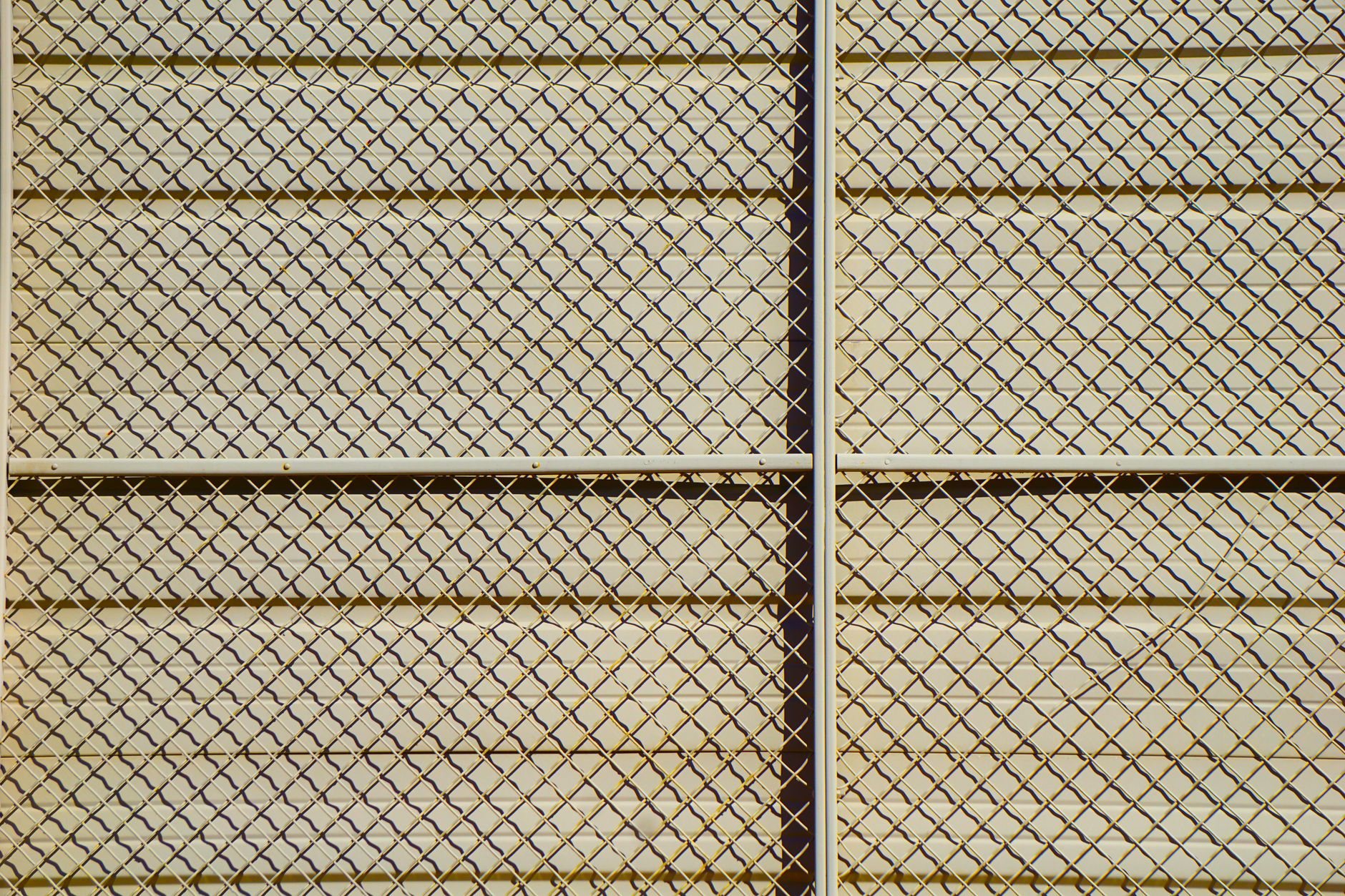
Privacy slats are UV-stabilized plastic strips woven vertically through chain-link mesh, turning a see-through fence into a 75–90 percent visual screen on the same steel framework. Grandview installs slatted chain-link for shop yards, multifamily service areas, and homeowners across Utah County and Salt Lake County under a B100 general contractor license — framed for the wind the slats will catch.
When slatted chain-link is the right fence
Slats make sense when you need screening and security from one fence and the budget rules out a solid panel. Equipment yards, contractor laydown areas, trash and mechanical corrals behind apartment buildings, and dog runs along a busy sidewalk are the usual cases. Many Utah commercial districts require outdoor storage to be screened from the street, and slatted chain-link is the cheapest way to meet that on a long run — part of the fence installation work within our site, structure & envelope services.
If nobody needs to be screened out, plain galvanized chain-link or vinyl-coated chain-link costs less and shrugs off wind. If the fence is a hardened perimeter, slats are an add-on to steel security fencing, not a substitute for it. On street-facing lots in HOA communities, slatted chain-link is often prohibited outright; we read the CC&Rs before we price.
Choosing the slat: coverage, lock, and color
Profile and coverage. Standard single-wall tube slats are extruded high-density polyethylene (HDPE) sized for 2-inch mesh and give roughly 75–85 percent screening — shapes, not detail. Winged and fin slats add side flaps that overlap the diamond and push coverage past 90 percent, the pick for yards with a city screening condition. Double-wall slats carry a reinforcing web inside the tube, hold their shape in heat, and are what we recommend for 8-foot commercial runs. Tighter 1¾-inch mesh needs its own slat width, so mesh and slat are specified together.
Locking. Bottom-lock slats slide into a horizontal channel woven through the bottom row of diamonds, which holds every slat at the same height and stops them walking upward in wind; top-lock systems do the same from the top rail. Slats with no channel are the ones you see leaning at odd angles in year two, so we specify a locking channel on any fence over four feet.
Color and UV. Slats are pigmented through the body with UV inhibitors, which matters at 4,500 feet, where sun is harder on plastics than at sea level. Black, green, brown, and gray are stock; matching a vinyl-coated mesh gives the quietest look.
Why slats change the framework, not just the look
Open mesh passes wind through; slatted mesh is closer to a solid wall. A 6-foot run that was fine on 10-foot post spacing will lean, rack, or pull its terminal posts over once slats turn it into a sail. The Chain Link Fence Manufacturers Institute treats slatted fence as a wind-load design case for exactly this reason. On east-bench lots and in the Centerville–Farmington canyon-wind corridor, we design the slatted fence like the wall it has become.
- Tighter posts. Line posts drop to 6–8 feet on center and step up a size — 2⅜-inch OD rather than 1⅞ at 6 feet, larger again at 8 feet — and terminals upsize with them.
- Bottom rail. A rigid bottom rail replaces the usual tension wire so the panel is framed on four sides and the lock channel has something to bear against.
- Deeper, wider footings. Posts set in concrete 36 inches or more, belled in expansive clay so the Wasatch Front’s roughly 100 freeze–thaw days a year cannot lift a post that now carries real lateral load.
- Mesh stretched, then slatted. Fabric is tensioned and tied before any slat goes in; slatting first leaves a wavy fence.
- Slats, channel, gates. Slats are threaded with the lock channel and trimmed flush at the top rail; gates are slatted on heavier frames with hinges rated for the added weight and wind.
Retrofitting slats works when the existing framework has the margin to take them. Often it does not; we say which at the site walk, and route you to fence repair and replacement if the posts have already heaved.
What does chain-link with privacy slats cost in Utah?
As ballpark planning numbers, not quotes: on a new 6-foot fence along the Wasatch Front, slats and the heavier framework they require typically add roughly $8–$18 per linear foot over bare chain-link, putting a slatted 6-foot run around $25–$45 per linear foot installed. Eight-foot commercial fence with winged, double-wall slats on Schedule 40 posts runs higher. Slatting an existing fence that can take it is cheaper; one that first needs new posts is not.
What moves the number: height, slat profile, locking channel, post spacing and size, the number of gates — each one a heavier frame — and whether a city screening condition dictates a coverage percentage. We give a budget range after a site walk and a firm estimate once height, slat, and gate count are settled, under a B100 license you can verify at dopl.utah.gov.
Questions we actually get
Can I add privacy slats to the chain-link fence I already have?
Sometimes. If the line posts are 2⅜-inch or larger, spaced 8 feet or closer, and set in concrete below frost depth, slats go in cleanly. Fence built at 10-foot spacing on light posts usually needs intermediate posts and a bottom rail first. We check the framework before quoting the slats.
How much privacy do slats really give?
Standard tube slats screen about 75–85 percent — enough to hide what is stored behind the fence, not enough to read a license plate through. Winged or fin slats push past 90 percent. If a city screening condition names a percentage, we specify the slat that meets it and keep the data sheet for inspection.
Will the slats survive Utah wind and sun?
UV-stabilized HDPE slats in a locking channel do; loose bargain slats do not. Wind is handled by the framework — tighter, larger posts and a bottom rail — not by the slat. Fading is a UV-inhibitor question, so we specify slats with a manufacturer fade warranty.
Does slatted chain-link satisfy a screening requirement for outdoor storage?
In many Utah County and Salt Lake County commercial districts, yes, provided coverage and height meet the zoning condition — verify the exact language with your city’s planning department. It is often paired with a code-required dumpster enclosure on the same site; we build both under one contract.
Tell us what you’re screening
Send the rough footage, the height, whether the fence exists yet, and what has to stay out of view. We reply within a couple of hours during business hours — a day at most — with a straight read on slat, framework, and budget.