
Steel security fencing in Utah County
A steel security fence is a welded, heavy-gauge steel picket fence — usually 6 to 10 feet tall with anti-climb pales — built to control access at commercial yards, utility sites, and secure properties. Grandview fabricates and installs it across Utah County and Salt Lake County under a B100 general contractor license, from footing to gate operator.
When steel security fencing is the right call
The question is what the fence has to resist. If the answer is “a person who wants over it, through it, or under it,” you are in security-fence territory: equipment yards, self-storage, substation and cell sites, multifamily parking, and larger properties where the perimeter is not a suggestion.
Its nearest siblings solve different problems. A wrought iron and steel fence is appearance first — scrollwork, finials, 4- to 6-foot heights, lighter stock. Chain-link with privacy slats screens a yard, but mesh cuts in seconds. Aluminum ornamental fencing never rusts, but aluminum pickets bend where steel ones do not. If vehicles are the threat, that is a bollard conversation, often alongside the fence. Steel wins when you need height, rigidity, a climb-resistant top, and access-controlled gates on one contract — within our fencing scope under site, structure & envelope.
What goes into a welded steel security fence
Steel sections. Pickets are 1-inch square tube in 14- or 16-gauge, set at 4 inches on center or tighter so nothing passes between them. Rails run 1½- to 2-inch square tube; posts are 2½- to 4-inch tube in 11-gauge, upsized at corners, ends, and anywhere a gate hangs.
Anti-climb detailing. Security height starts at 6 feet and usually lands at 8; 10 is common at utility sites. Pickets extend past the top rail as pales — pressed spear, flat-top, or curved outward — and rails are placed so the first one is too high off grade to use as a step. The bottom rail sits close to grade, with a mow strip or buried skirt where digging under is a concern.
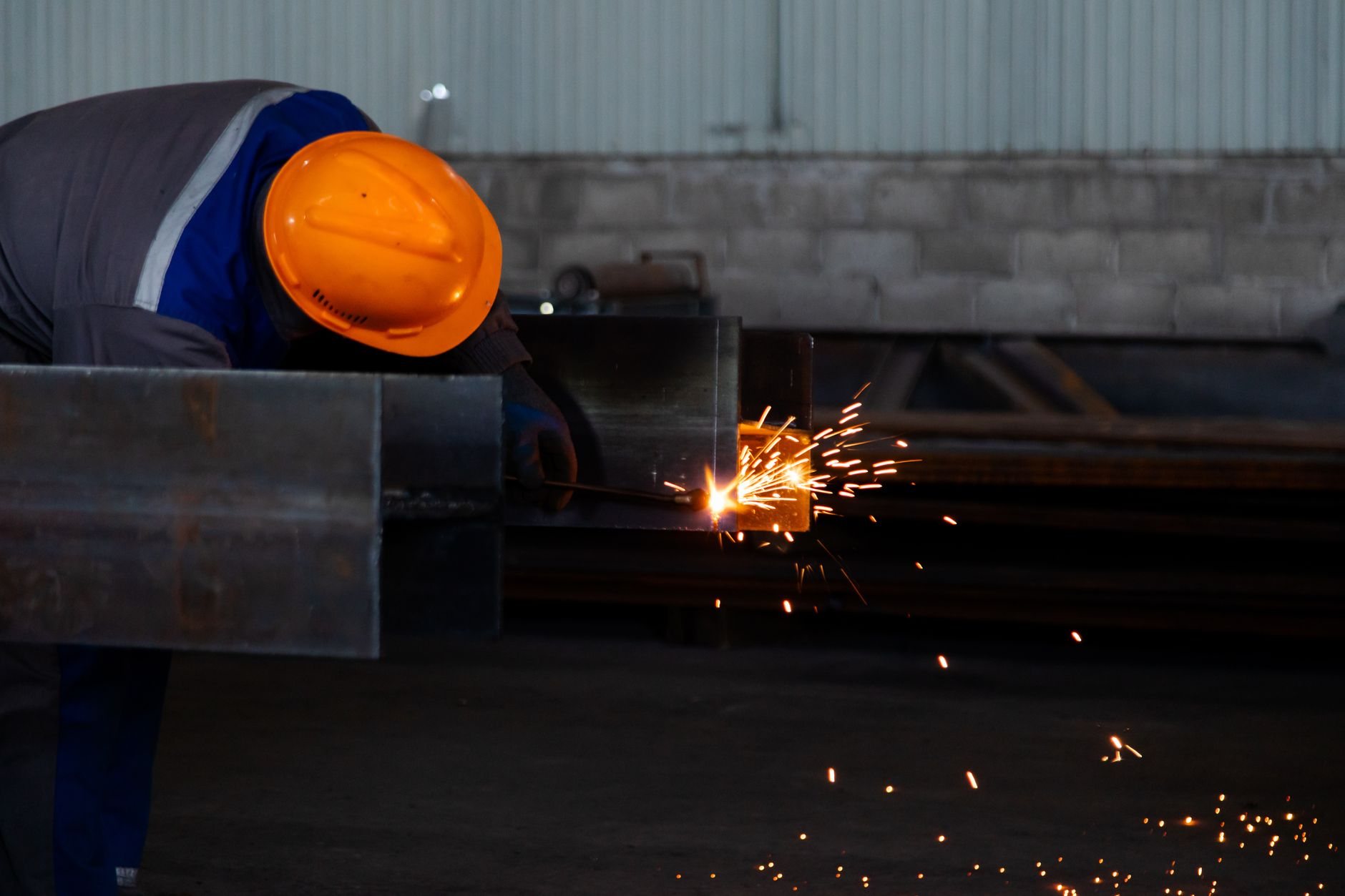
Welded, not riveted. Panels are fully welded assemblies — pickets welded to rails on both faces, not punched rails with pickets riveted through — then field-welded or bracketed to posts, leaving no fasteners on the public side for a wrench. Eight-foot sections rack on sloped lots instead of stepping, which closes the triangular gaps a stepped fence leaves at grade.
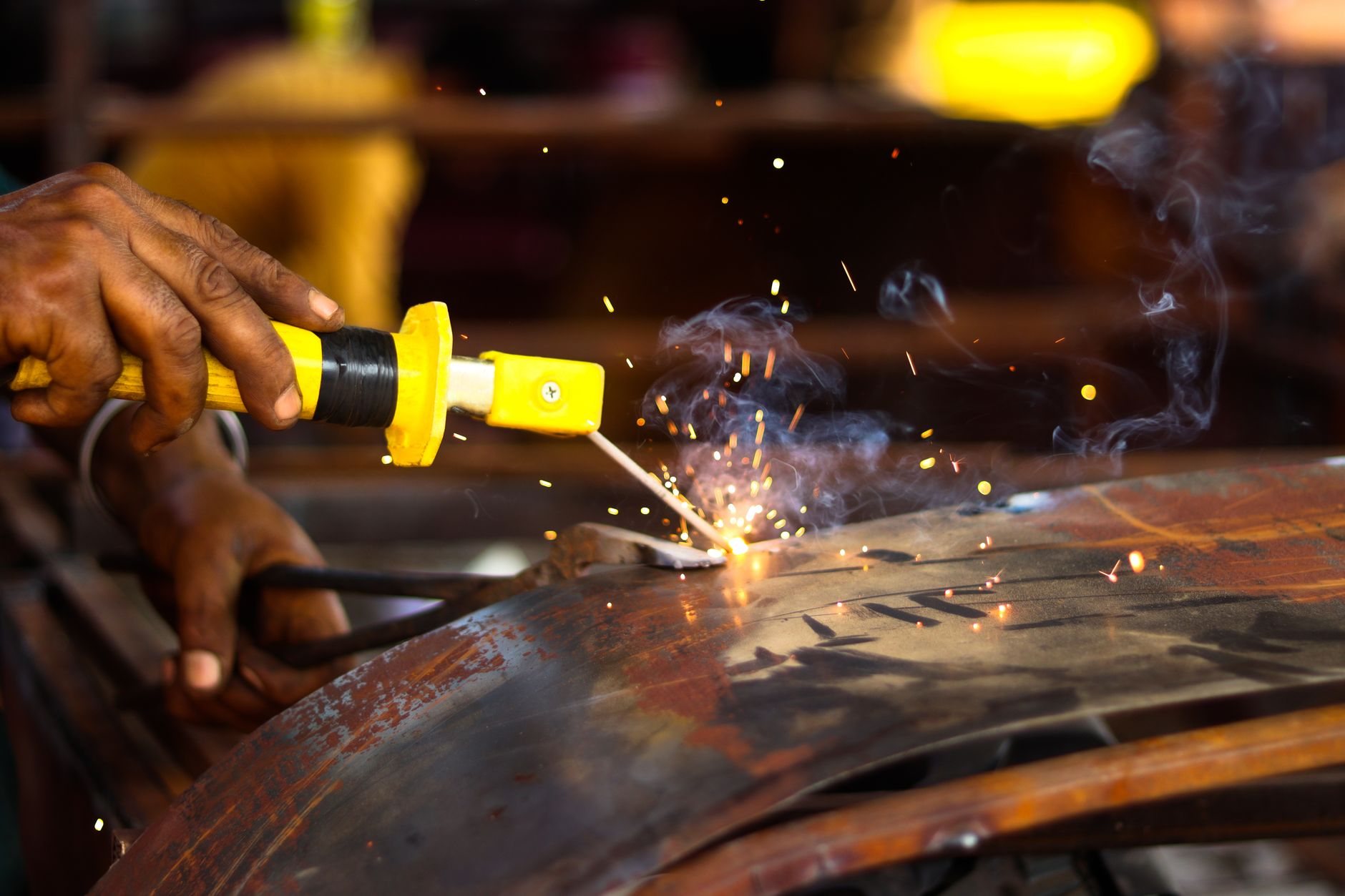
Finish. Bare steel does not survive sprinklers and road salt. The durable spec is hot-dip galvanizing under a polyester powder coat; the budget spec is zinc-rich primer under powder. Either way, field welds are cleaned and cold-galvanized, because the weld is where coatings fail first.
Footings. An 8-foot fence with tight pickets is nearly a solid wall to a canyon gust, so posts go into 12- to 18-inch concrete footings at 36 inches or deeper, below frost depth. Expansive clay, which the Utah Geological Survey maps across much of the valley floor, lifts shallow posts a little more with each of the hundred-plus freeze–thaw cycles a Wasatch Front winter delivers; on bench lots with collapsible soils we bell or deepen the footings.
Gates. Vehicle openings usually get a cantilever slide gate — no bottom track to pack with snow or gravel — framed from the same steel as the fence; pedestrian openings get a welded swing gate with panic bar or maglock. Operators and access control are part of the fence contract, with licensed electricians coordinated for the power run. Crash-rated barriers are a separate engineered category, and we will say so if your site needs one.
How a security fence project runs
- Threat and site walk. We walk the perimeter with you and name what the fence has to stop, where people and vehicles actually move, and where neighboring structures create climb points.
- Design and submittals. Height, picket spacing, pale style, finish, and gates go on a drawing. Commercial sites usually need site-plan review, and fast-growing Lehi, Saratoga Springs, and Eagle Mountain run that differently from Provo or Salt Lake City; height above 6 feet typically triggers a permit — verify with your city’s building department.
- Fabrication. Panels, gate frames, and caps are welded, cleaned, and sent for galvanizing and powder coat while footings cure on site. We see dependencies before they become delays.
- Set posts, hang panels. Utility locates, augered footings, posts plumbed and braced, concrete placed. Panels follow once posts have cured, racked to grade.
- Gates and walk-through. Gates hung and adjusted, operators cycled, and the finished line walked with you — under a license you can verify at dopl.utah.gov.
What does a steel security fence cost in Utah?
As ballpark planning numbers, not quotes: welded steel security fencing at 6 to 8 feet, galvanized and powder-coated, typically runs roughly $60–$120 per linear foot installed along the Wasatch Front. Ten-foot heights, solid panel infill, and buried anti-dig skirts push that higher. An automated cantilever slide gate with access control is its own line item, from the low five figures up depending on span and hardware.
What moves the number: height, picket gauge and spacing, pale style, galvanizing versus primer-only, gate count and automation, rock or saturated clay in the post holes, and demolition of an existing fence. A long straight run on a flat industrial lot is the economical version; a segmented perimeter on a sloped bench lot with three gates is not. A site walk gets you a budget range, then a firm estimate.
Questions we actually get
How tall can a security fence be in Utah County?
Most cities cap rear and side fences at 6 feet without a permit and allow taller fencing in commercial and industrial zones with one. Eight feet is the common security height; 10 is typical for utility yards. Front setbacks and corner sight triangles are where limits tighten. We confirm the zoning rule with your city before anything is fabricated.
Is a steel security fence better than chain-link with barbed wire?
For cut and climb resistance, yes. Chain-link mesh cuts in seconds, and barbed wire creates liability on many commercial sites. Welded steel pickets with pressed pales resist cutting, offer no footholds, and read as a finished property rather than a compound. Chain-link still wins on cost for low-risk perimeters, and we will say so when it fits.
Will the powder coat hold up to Utah sun and sprinklers?
Hot-dip galvanizing under a UV-stable polyester powder coat holds up well: the zinc protects the steel if the coating is scratched, and the topcoat resists fade at elevation. Primer-only finishes chalk and rust at the weld seams within a few years where irrigation hits the fence daily. We spec the finish to the exposure, not the catalog.
Can you integrate the fence with gate operators and card readers?
Yes. Operators, keypads, card readers, loop detectors, and safety photo-eyes are installed as part of the fence contract, with licensed electricians coordinated for the power run. We size gate frames and posts for the operator from the start, which is what keeps a 20-foot cantilever gate tracking straight after a few thousand cycles.
Tell us what you’re working on
Send the rough perimeter length, the height you have in mind, and what the fence needs to stop. We reply within a couple of hours during business hours — a day at most — with a straight read on scope, sequence, and budget.