
Polished Concrete Floors in Utah
Polished concrete is a finished floor made by grinding the slab itself with progressively finer diamonds, hardening it with a densifier, and refining it to the sheen you choose — no coating to peel, chip, or yellow. Grandview installs polished concrete in shops, basements, and retail and office space under a Utah B100 license, and we’ll tell you up front if your slab is a candidate.
Discuss a project Or call (385) 236-1741
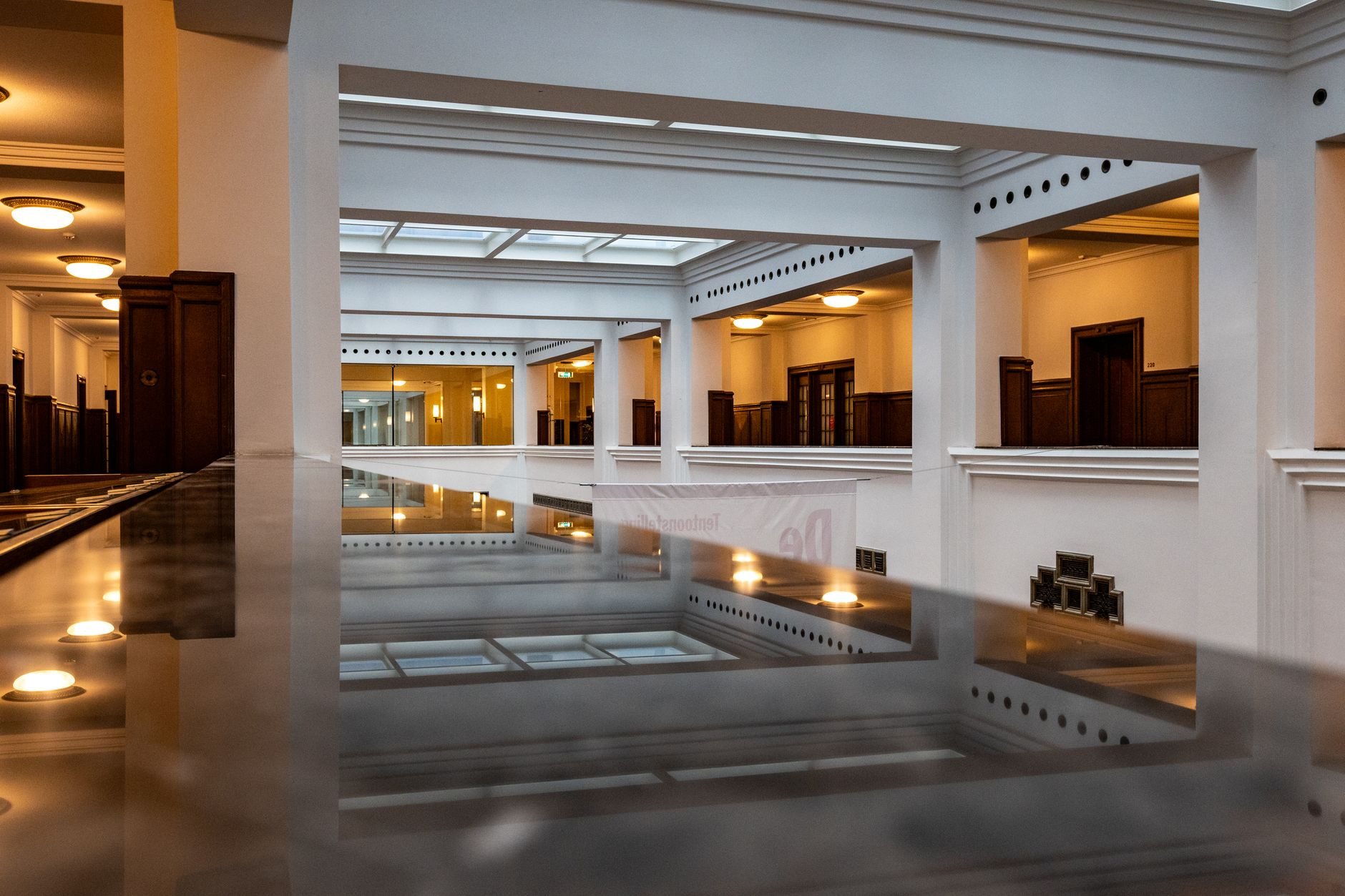
When polishing beats a coating — and when it doesn’t
Polished concrete is the right call when you want a floor that is part of the slab rather than a film on top of it. Nothing bonds, so nothing delaminates.
It is the wrong call in three cases. A garage that sees Utah winter road brine daily is better served by a polyaspartic coating or an epoxy system; polished concrete is still concrete, and chloride slush will etch it. A slab with wide active cracks or an old tile-mortar bed usually wants a micro-topping first — polishing reveals a slab’s history, it doesn’t hide it. And if you want one solid, uniform color, a coating gets there more predictably than dye in concrete will.
If color variation is the goal rather than the problem, stained concrete is the closer sibling. Polish for durability and low upkeep; coat for chemical resistance; stain for character on a budget.
What the polishing process actually involves
- Slab assessment. Hardness, flatness, coatings, cracks, and moisture, checked before we quote.
- Coarse metal-bond grinding. Roughly 30- to 80-grit diamonds remove curing compound, adhesive, and surface paste, and set the aggregate exposure: cream (almost no stone), salt-and-pepper (fine sand), or a full aggregate cut.
- Crack and joint treatment. Cracks are chased and filled with semi-rigid polyurea and control joints filled flush so the floor reads as one plane. On Wasatch Front slabs over expansive clay, we expect hairline movement and choose the filler for it.
- Densifier. Lithium silicate reacts with free lime in the slab to form more calcium silicate hydrate — the compound that gives concrete its strength. Skip this and you have a ground floor, not a polished one.
- Resin-bond honing. 100-, 200-, and 400-grit passes, each checked under raking light; a skipped grit shows as haze no later pass will fix.
- Final polish to sheen level. Level 1 (flat, about 400 grit) through Level 4 (high gloss, 3000 grit). Most basements and shops land at Level 2 or 3.
- Stain guard and burnish. A penetrating guard, burnished in at high speed, resists water and oil for a few years and is the one component renewed over the floor’s life.
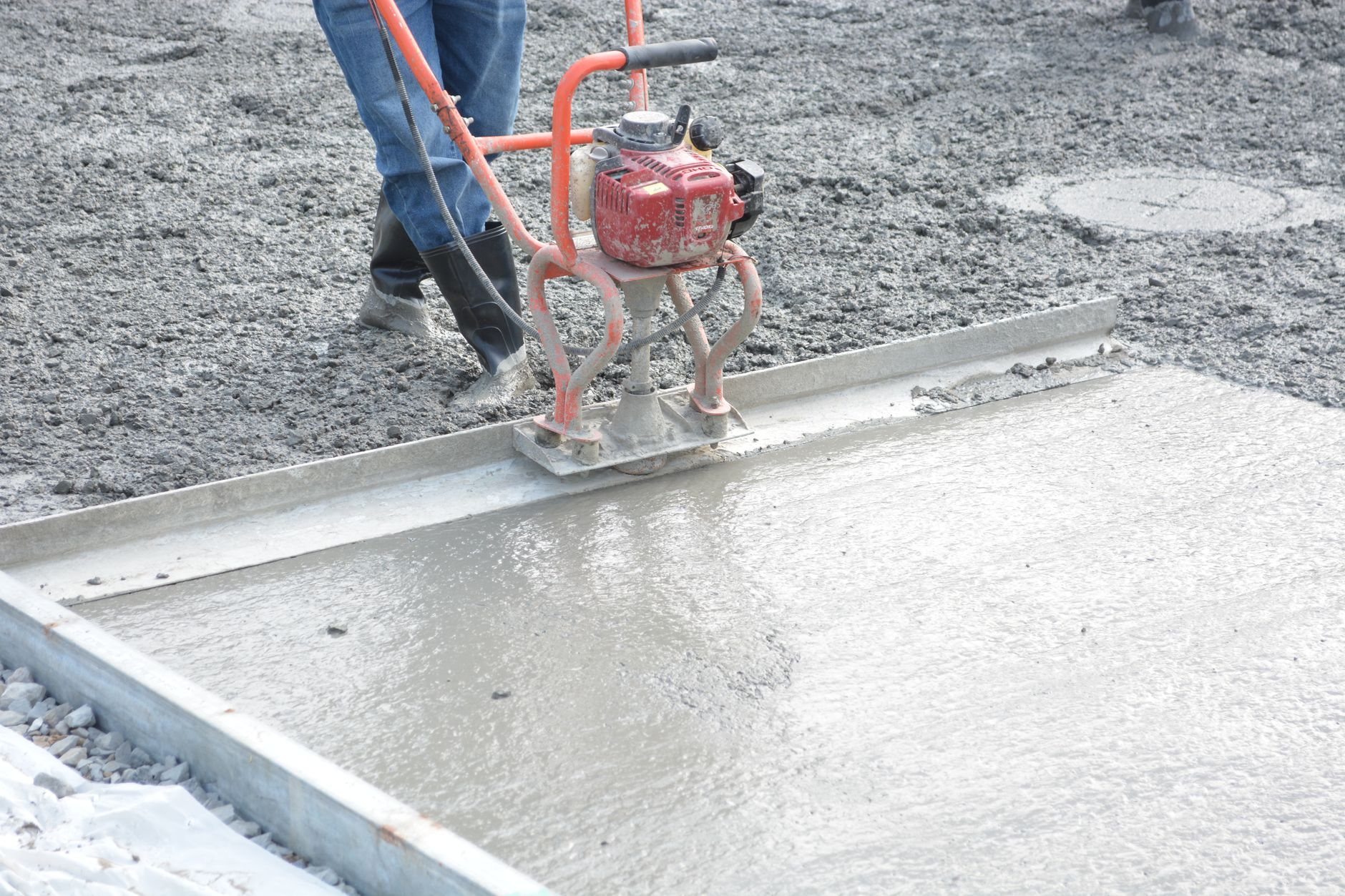
For a new slab, the finish starts the day it’s poured: a hard steel-trowel finish, flat placement, and no membrane-forming curing compound. When the project includes new concrete flatwork, we specify the slab for polishing and hold a 28-day cure before the first grinder touches it. Everything above is performed under Grandview’s Utah DOPL B100 general contractor license, verifiable at dopl.utah.gov.
Why polished concrete suits Utah slabs
Polished concrete breathes. Vapor moving up through a slab passes through a polished surface instead of collecting under it, which is why coatings blister on damp slabs and polished floors don’t. That matters on low-valley lots in Vineyard and Saratoga Springs with high water tables, and in older basements poured without a vapor retarder.
In a basement finish, polishing also keeps the slab accessible. Utah’s geology produces high indoor radon in a meaningful share of homes, and mitigation usually means a suction point cored through the slab — easy through a polished floor, a bigger job through a floating floor over a coating. Polishing is not radon control, but it doesn’t get in the way of it.
Utah’s elevation also means stronger UV through windows. Epoxy ambers in that light within a few years; polished concrete doesn’t, so sunlit shops and retail get steered toward polishing.
What does polished concrete cost in Utah?
As a ballpark planning number — not a quote — a grind-and-polish on a sound existing slab along the Wasatch Front typically runs about $4 to $8 per square foot. Full aggregate exposure, integral dye, or a Level 4 gloss can push a floor toward $10 to $12. That’s above a basic epoxy and well under installed tile or hardwood.
- Exposure level. Cream and salt-and-pepper finishes need fewer coarse passes; a full aggregate cut can double grinding time on a hard slab.
- Slab condition. Tile mastic, carpet glue, or old epoxy adds a removal stage. Crack chasing and joint filling is billed by the linear foot.
- Edges and corners. The last few inches at walls and posts are hand-ground; cut-up rooms cost more per foot than open plans.
- Size. Mobilization is the same for 400 square feet as for 4,000, so small areas carry a higher per-foot rate.
Ranges are for planning; the written proposal after a slab assessment is the number.
Questions we actually get
Can my existing basement slab be polished?
Usually, if it’s reasonably flat and hasn’t been patched with soft repair mortar. We scratch-test for hardness and meter for moisture before quoting. Slabs with voids, spalling, or thin leveling compound are better candidates for a micro-topping that is then polished.
Will polished concrete crack?
The slab will do what it was already going to do; polishing neither adds nor prevents cracks. Existing cracks are filled flush and become part of the floor’s character, and new hairlines over Utah’s expansive soils are normal. Cracks that offset vertically are a base or soil issue — a different conversation we’d have with you plainly.
How is polished concrete different from grind-and-seal?
Grind-and-seal stops after coarse grinding and relies on a topical sealer for the shine — faster and cheaper, but the sealer wears and needs recoating like any film. A true polish refines the concrete itself through densification and fine honing, so the gloss is in the floor. Ask any bidder which one they’re quoting.
How long does polishing take, and can we stay in the house?
A typical 1,000-square-foot basement takes three to five working days. Grinding is dust-extracted, so it’s manageable in an occupied home, but the area must be fully cleared and the densifier and guard need curing time between steps. Keep foot traffic off until we hand it back burnished.
Polished concrete is one finish in our decorative concrete scope, inside the site, structure and envelope family. On new shop builds we specify the slab for polishing from the first pour — one contract, one standard.
Tell us what you’re working on
Send a few photos of the slab and rough square footage. We reply within a couple of hours during business hours — a day at most — with a straight read on whether it’s a polishing candidate and a realistic budget range before anyone commits to anything.