
Stair Trim & Skirtboards in Utah County
A skirtboard is the wide, flat board along the wall side of a staircase that gives every tread and riser a clean edge to die into; stair trim is the cove, nosing, and riser molding that finishes the rest. Grandview Contractors installs both across Utah County and Salt Lake County under a Utah DOPL B100 license, on new stairs and on existing flights that never got one.
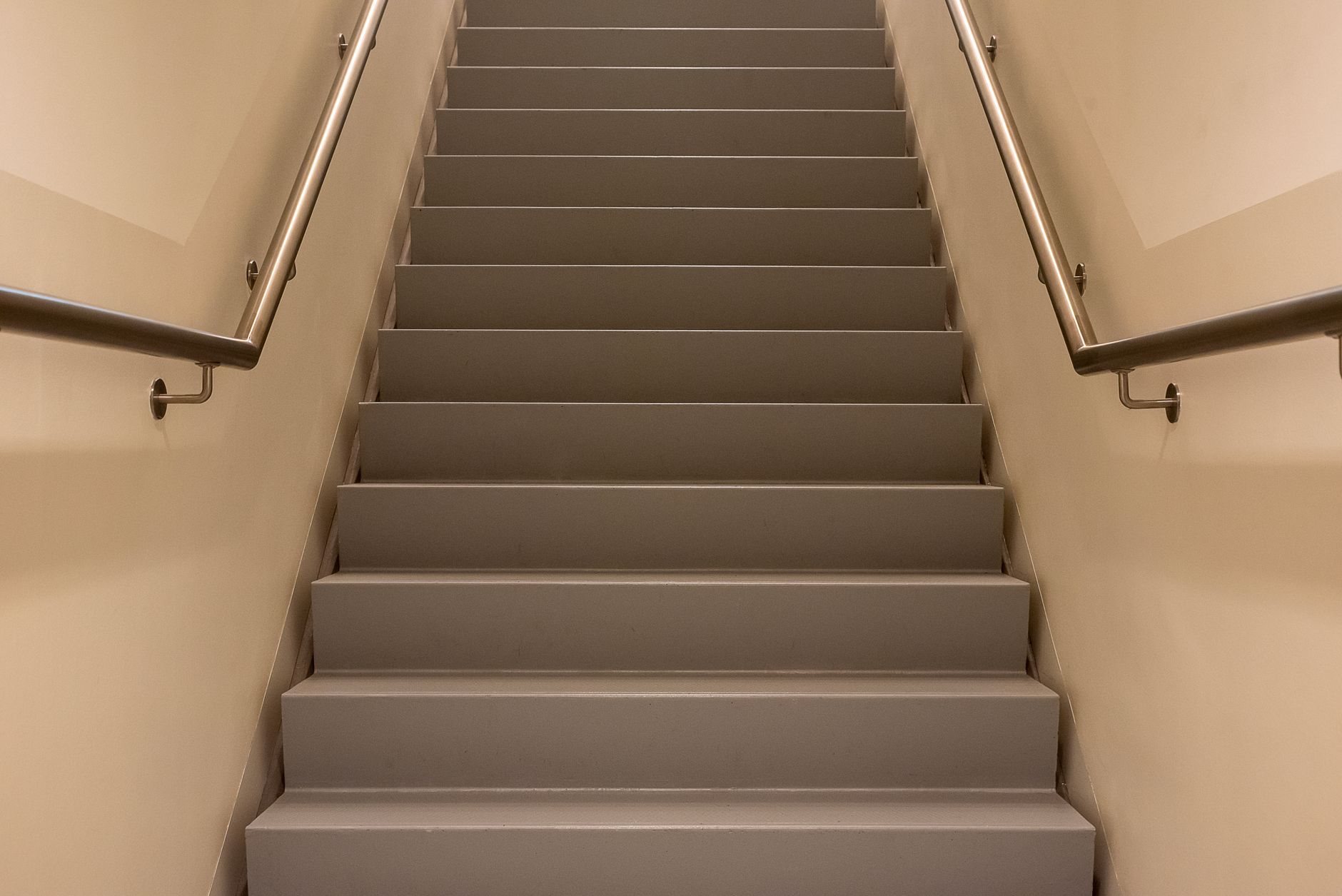
When you need a skirtboard, not just taller baseboard
The usual trigger is a flooring change. A carpeted stair in a Lehi or Saratoga Springs production home hides a lot: carpet wraps each tread and tucks against the drywall, and nobody notices there is no skirt at all. Pull it for hardwood treads or a stair runner and the wall side shows fourteen slightly different gaps. The skirtboard closes that line.
The second trigger is a whole-home trim upgrade. If you’re replacing 2¼-inch builder trim with a taller profile through our baseboard and casing service, the stairwell is where that baseboard has to climb. Stepped short pieces look like a shortcut; a skirtboard carries the same height up the flight in one unbroken line.
Stair trim is its own niche inside trim and millwork because nothing on a stair is square. Door casing meets at 45-degree miters and wainscoting follows one drawn rake angle; a skirtboard has to meet every tread and riser individually.
Notched skirt or straight skirt: the first decision
There are two ways to build a wall-side skirt, and the order of operations decides which one you get. On a new or rebuilt stair, we set a straight skirt first — one plank, typically a 1×10 or 1×12, laid against the wall at the rake angle — then cut each tread and riser to fit against it. Every joint hides behind a tread end. It’s the method we use when a stair is rebuilt inside a larger renovation.
On an existing stair where treads and risers stay, the skirt goes on last and has to be notched: a sawtooth cut along its lower edge that steps over every tread and riser. We template the flight, transfer each nosing and riser face to the stock, cut it, then scribe every notch by hand to the actual tread (rarely level) and riser (rarely plumb). On a thirteen-riser flight that’s twenty-six fitted edges. It’s slow by design, and it’s where a skirtboard looks built-in or tacked-on.
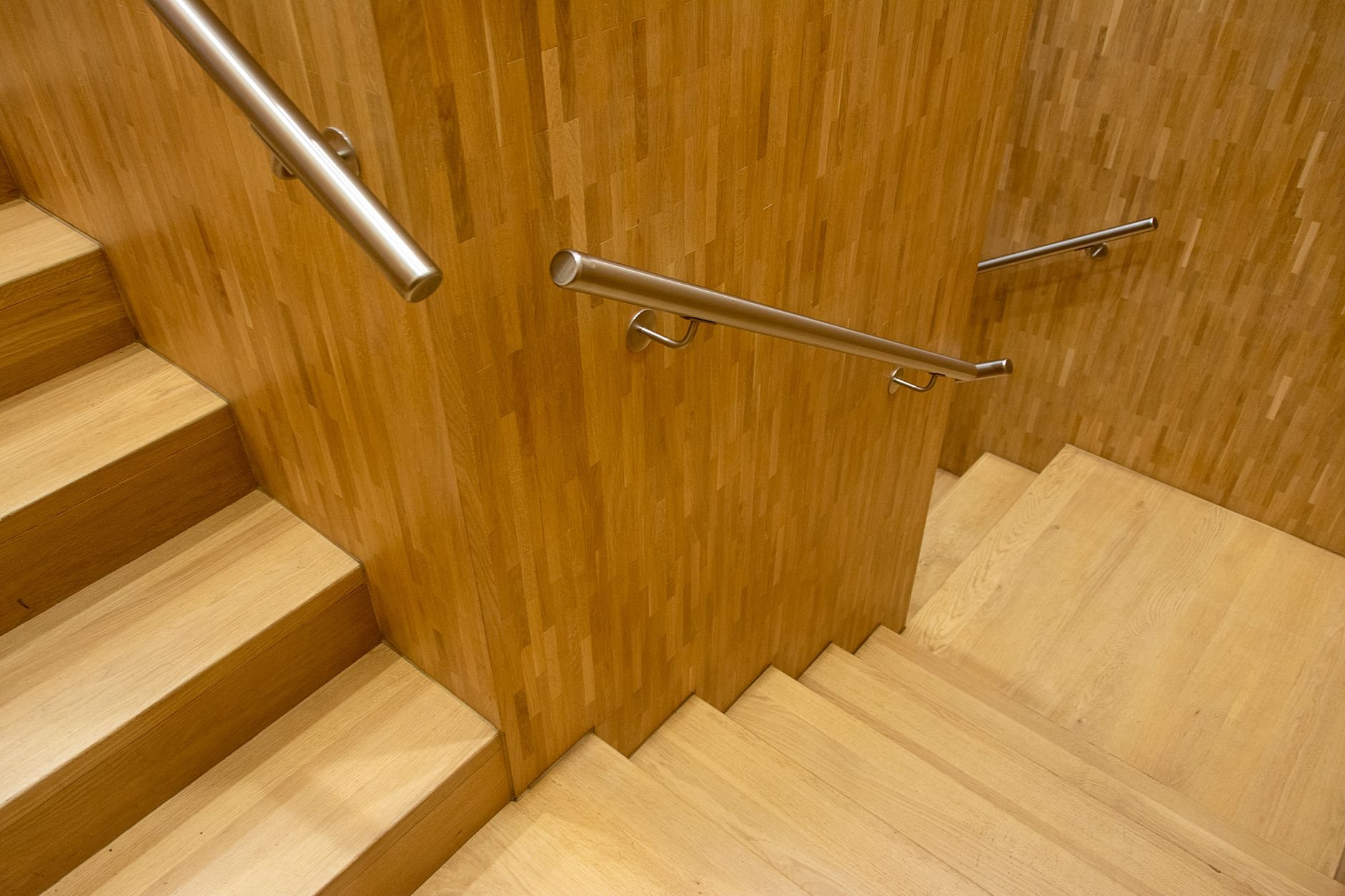
The rest of the package is the small pieces that make a skirt look finished:
- Cove or scotia under each nosing — closes the gap between tread overhang and riser, mitered into the skirt, returned on open sides.
- Riser faces — paint-grade MDF or poplar over the construction-grade plywood risers that carpet was hiding.
- Return nosings on open-side treads — a mitered return that wraps the tread end so no end grain shows.
- Terminations — a plumb cut and coped baseboard at each landing, and clean clearance at the newel and rail brackets.
Sequencing matters as much as cutting. If a hardwood refinish is part of the project, skirt and risers go in before the finish coats so there’s one sealed surface rather than a caulk line. If the railing is being replaced, the skirt goes in first so the rail returns die into finished trim; handrail height and guard spacing are set by current Utah-adopted code, and we build stair trim so that rail work can pass inspection.
Paint-grade MDF, poplar, or hardwood: what holds up on a Utah stair
For a painted skirt, MDF or primed poplar is the right stock: flat, scribes cleanly, and doesn’t move with the season. That matters more on a stair than anywhere else in the house, because a skirtboard is a wide board with a long exposed edge, and wide boards are where Utah’s furnace-dried winter air does its damage. A solid-pine 1×12 fitted tight in a swamp-cooled August can shrink across its width enough to open a line at every tread by January. Stable stock and finish on all faces prevent it.
For a stain-grade skirt matched to oak or maple treads, we use ¾-inch hardwood acclimated in the stairwell, from the same species and finish schedule as the treads so the color reads as one piece. A south-facing stairwell window at Utah’s elevation puts real UV on that wood; a painted skirt with stained treads is often the more durable pairing, and we’ll say so.
What stair trim and skirtboards cost in Utah County
Skirtboards are priced per flight, not per foot, because the labor is in the fitting. As a planning ballpark — not a quote — a paint-grade retrofit skirt on one wall side of a straight thirteen-to-fourteen-riser flight, with cove and terminations, typically lands in the high hundreds to low thousands of dollars installed in Utah County. New riser faces, a second side, or stain-grade hardwood add to that; an open-side stair with return nosings, or a winder with landings, can roughly double the labor.
The most expensive version is a stain-grade notched skirt on an old Provo or Salt Lake City flight where every riser has settled differently. You’ll get a budget range at consultation and a fixed proposal before any carpet comes up; our B100 license is verifiable at dopl.utah.gov.
Questions we actually get
Can you add a skirtboard to my existing stairs without rebuilding them?
Yes — that’s a notched retrofit skirt, and it’s most of the stair trim work we do. The board is templated to the flight, cut sawtooth along its lower edge, and hand-scribed to each tread and riser; the treads and risers stay. It takes longer than a skirt set before the treads, but on a finished house it’s the only way to get one.
Should the skirtboard go in before or after new stair flooring?
Before, whenever the schedule allows. If hardwood treads or a runner are going in, the skirt is set first so the flooring dies into a finished edge instead of the skirt being scribed over it. If the stairs are being refinished, skirt and risers go in before the final coats so everything seals as one surface.
What makes one stair skirtboard job cost more than another?
Whether the skirt is straight or notched, how many sides it runs on, and how far out of level the existing flight is. Stain-grade hardwood costs more than paint-grade MDF and needs acclimation. Open-side stairs add a mitered return nosing on every tread, and winder or switchback stairs add landings, each with a termination to fit.
Tell us what you’re working on
We reply within a couple of hours during business hours — a day at most. You’ll get a straight read on scope, sequence, and budget before anyone commits to anything.