
Custom tile patterns & inlays in Utah County
Custom tile patterns are layouts that depend on geometry rather than material — herringbone, chevron, basketweave, Versailles, borders, and inlaid medallions — where a small drift at the start line becomes a visible wander by the far wall. Grandview Contractors draws, cuts, and sets patterned tile across Utah County and Salt Lake County under a Utah DOPL B100 general contractor license.
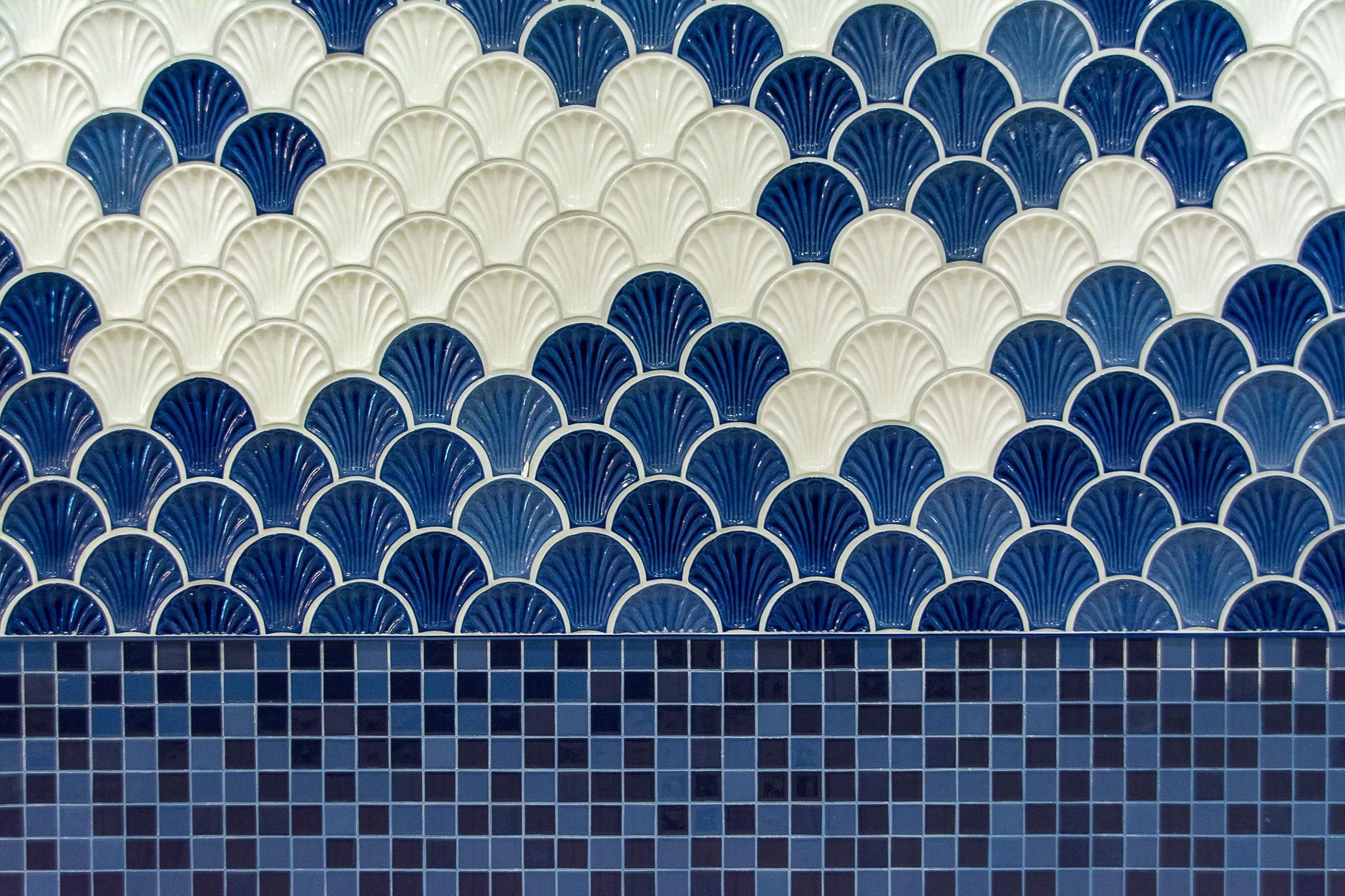
When a pattern is the right call, and when a different page is
A pattern earns its cost where the floor or wall is the room’s main event: an entry, a kitchen floor seen from the living room, a shower feature wall. If the tile will mostly live under rugs, a straight lay of good tile is the better spend. Nearby work lives on its own pages:
- Penny rounds, hex, and glass bands pre-mounted on mesh are mosaic and accent tile — pattern by the sheet, not the cut.
- Plank tile in a plain staggered lay is large-format tile. The same plank set in herringbone is this page.
- A travertine floor in a French pattern is also natural stone tile; the stone governs the setting spec.
- Parquet, wood borders, and wood medallions are on our hardwood inlay page.
What each pattern demands before the first tile is set
Herringbone. Rectangular tile in an L-shaped zigzag, square to the walls or turned 45 degrees. It lives or dies on the first two courses, so we snap a reference grid and check every third course against it. Plan on 15–20 percent waste at 45 degrees, because every perimeter piece is a mitered cut.
Chevron. Tiles meet point to point, so each piece is a parallelogram — cut on site from rectangles or bought as factory chevron tile. We’ll tell you which route is cheaper for your tile before you order.
Basketweave, pinwheel, and hopscotch. Two-size modular patterns, typically a 12×12 with a 6×6. They only work if the small tile is an exact fraction of the large one, joints included, which is why we specify rectified tile.
Versailles (French) pattern. Four stone sizes in a repeating module that has to start from the same corner every repeat, or the eye finds the break immediately.
Borders and inlays. A contrasting band inside a field, or a waterjet-cut medallion let into an entry floor. Both are laid out from the border inward, not the wall inward: the border sets the centerline and the field is cut to meet it.
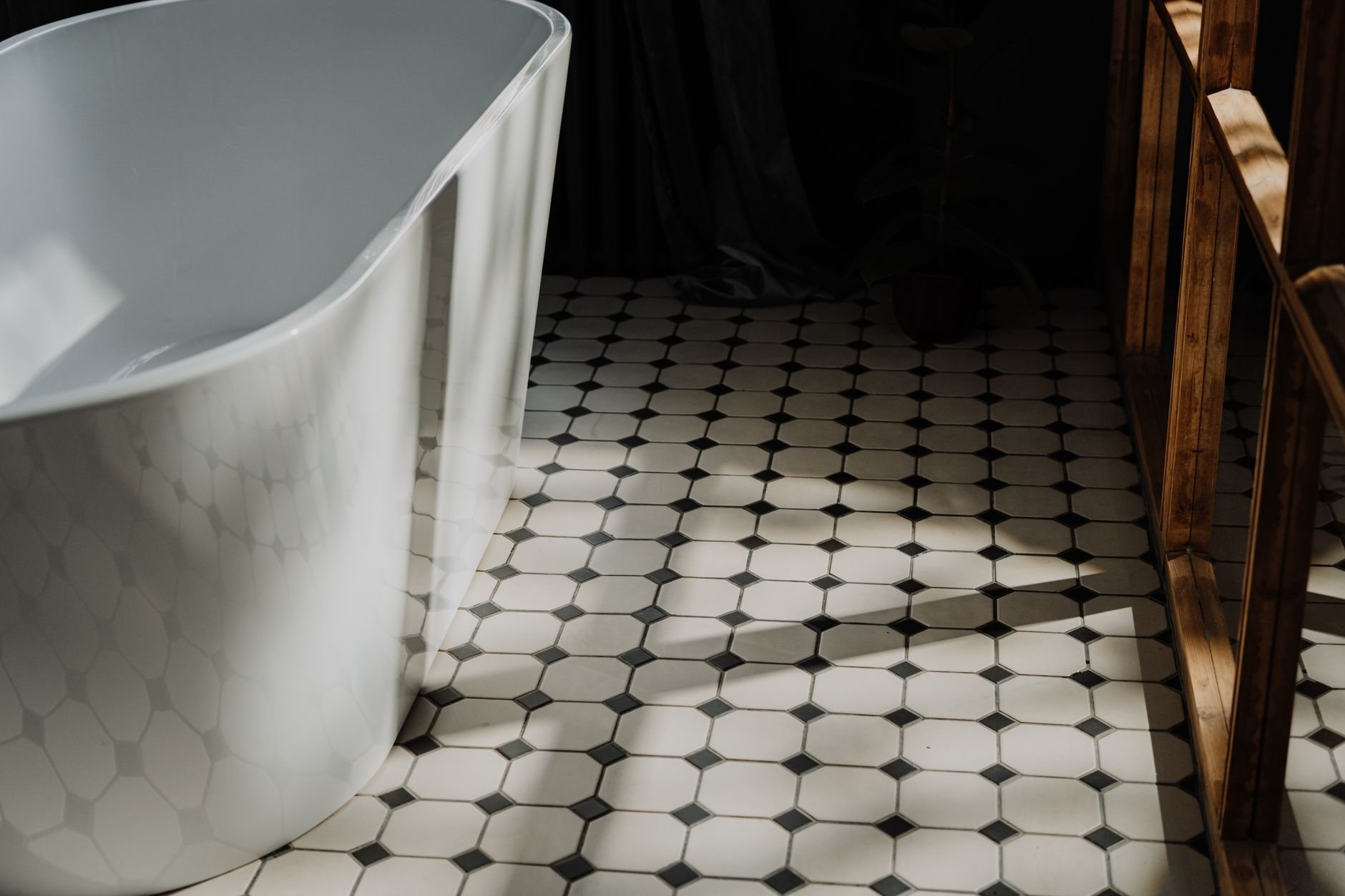
How a patterned floor or wall gets built
- Layout on paper first. We draw the pattern on the room’s real dimensions, including doorways and cabinet runs, for balanced cuts at every visible edge and no slivers at a doorway. You approve the drawing before anything is ordered.
- Order the right waste, from one dye lot. Straight lay needs about 10 percent overage; herringbone and diagonals 15–20; chevron and borders more. Patterns make shade variation obvious, so everything comes from one lot.
- Flatten the substrate. A herringbone has far more joint intersections than a straight lay, and each one can show lippage, so we flatten floors to the standard the Tile Council of North America publishes for the tile size in use. On the Wasatch Front’s expansive clay soils, slabs crack and move, so an uncoupling membrane goes down first and a slab crack can’t walk through the pattern.
- Dry lay and reference lines. We dry-set the first full module, then laser the complete grid and set outward from the room’s focal centerline, so the pattern reads symmetrical where you look at it most.
- Set, grout, seal. Leveling clips on plank herringbone, spacers holding narrow joints. Stone borders and medallions are sealed before grouting so pigmented grout can’t stain them, then again after. Movement joints go at perimeters and every change of plane.
What custom tile patterns cost in Utah
As ballpark planning numbers rather than a quote: a patterned layout in Utah typically adds 30–60 percent to the labor side of a straight-lay installation of the same tile, plus the material waste above. Prefabricated waterjet medallions run from a few hundred dollars to several thousand before setting; site-built borders are priced by the linear foot and number of cuts. Across a kitchen floor that premium is a real line item; on a shower wall it’s modest.
- Pattern and angle. A 90-degree herringbone costs less than a 45; chevron more than either; mitered border corners more than a border that dies into the field.
- Tile size and type. Small formats mean more pieces per square foot; stone cuts slower than porcelain and chips at mitered points.
- Where it lives. A patterned exterior entry needs frost-rated porcelain and exterior setting materials; the Wasatch Front sees roughly 100 or more freeze-thaw days a year, and the wrong tile heaves at the joints. Stone inlays near sinks need resealing on a schedule; Utah’s hard water etches unsealed stone quickly.
- Substrate. Flattening a wavy slab or stiffening a bouncy subfloor is the hidden line item on nearly every pattern floor.
Patterned tile is one scope inside our broader tile and stone installation work and the renovation projects around it, such as bathroom remodels where a feature wall pairs with plain bathroom floor tile. Our B100 license is verifiable at dopl.utah.gov.
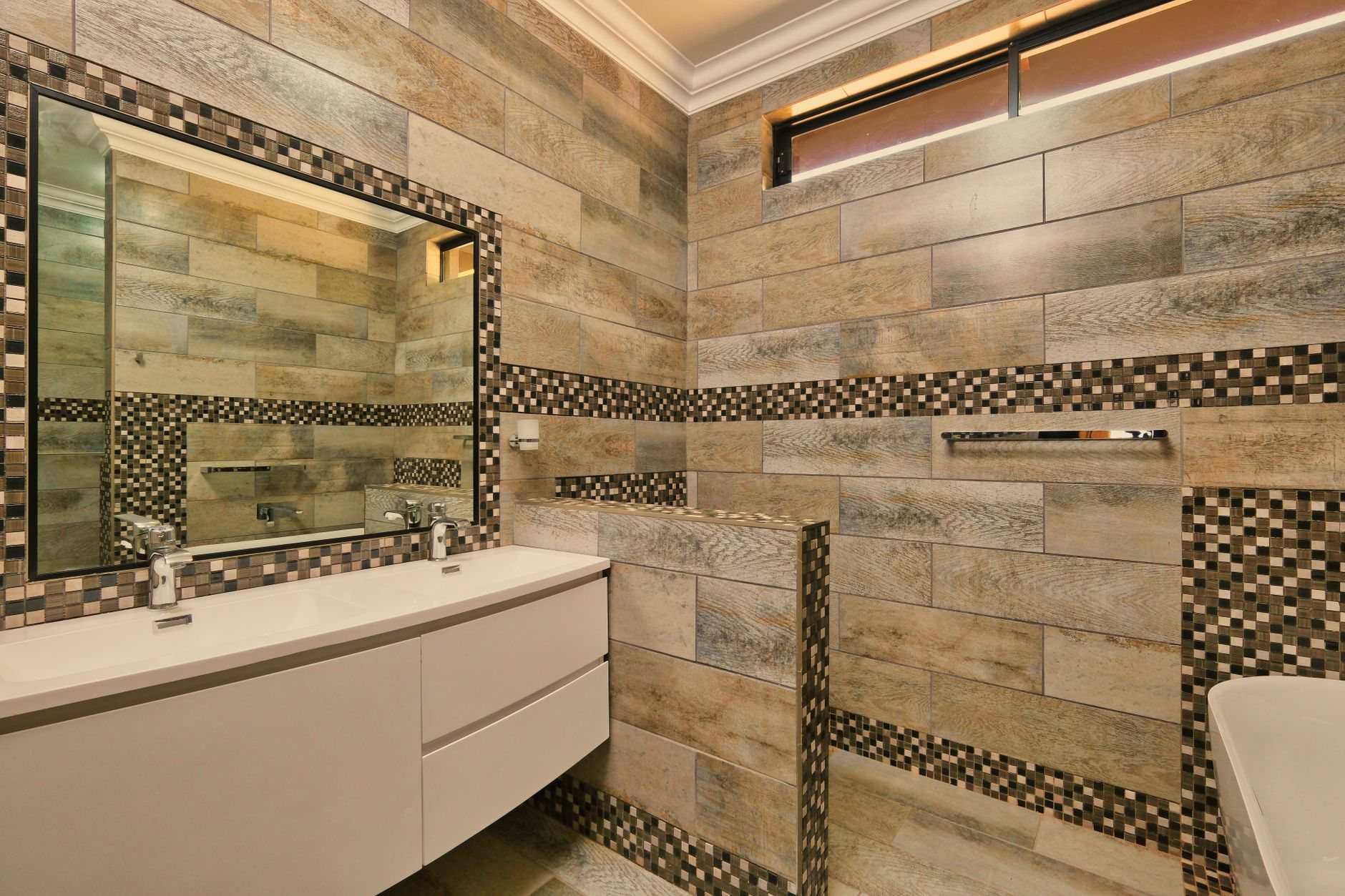
Questions we actually get
How much more does herringbone cost than the same tile laid straight?
Plan on a 30–60 percent labor premium plus 15–20 percent extra tile for waste, as a ballpark. A 90-degree herringbone sits at the low end; a 45-degree lay with mitered perimeter cuts at the high end. The premium shrinks as a share of the total when the tile itself is expensive.
Can you lay a patterned floor over my basement slab?
Yes, with prep. Basement slabs in Utah County often carry cracks from clay-soil movement and moisture from below, so we test the slab, flatten it, and set an uncoupling membrane first. A pattern shows a telegraphed crack more plainly than a straight lay, so skipping that step is a false saving.
What grout color makes a pattern look best?
Contrast if the pattern is the point; a close match if you want it to read softly. Dark grout on light herringbone makes every cut visible, including imperfect ones. We grout a sample board in two colors before committing the floor.
Should chevron tile be cut on site or bought pre-cut?
Usually bought. Factory chevron arrives as matched left- and right-hand parallelograms with clean points, and the labor saved covers the higher material cost. Site-cutting makes sense only for small areas or a tile not offered in chevron format.
Tell us what you’re working on
We reply within a couple of hours during business hours — a day at most. You’ll get a straight read on scope, sequence, and budget before anyone commits to anything.