
Mosaic & accent tile in Utah County
Mosaic and accent tile is small-format tile — glass, porcelain, stone, or metal, usually sheet-mounted — set as a backsplash, shower niche, shower floor, border band, or feature wall where detail does the work a big field tile can’t. Grandview Contractors installs it across Utah County and Salt Lake County under a Utah DOPL B100 general contractor license, as its own scope or inside a larger remodel.
When mosaic is the right call, and when it isn’t
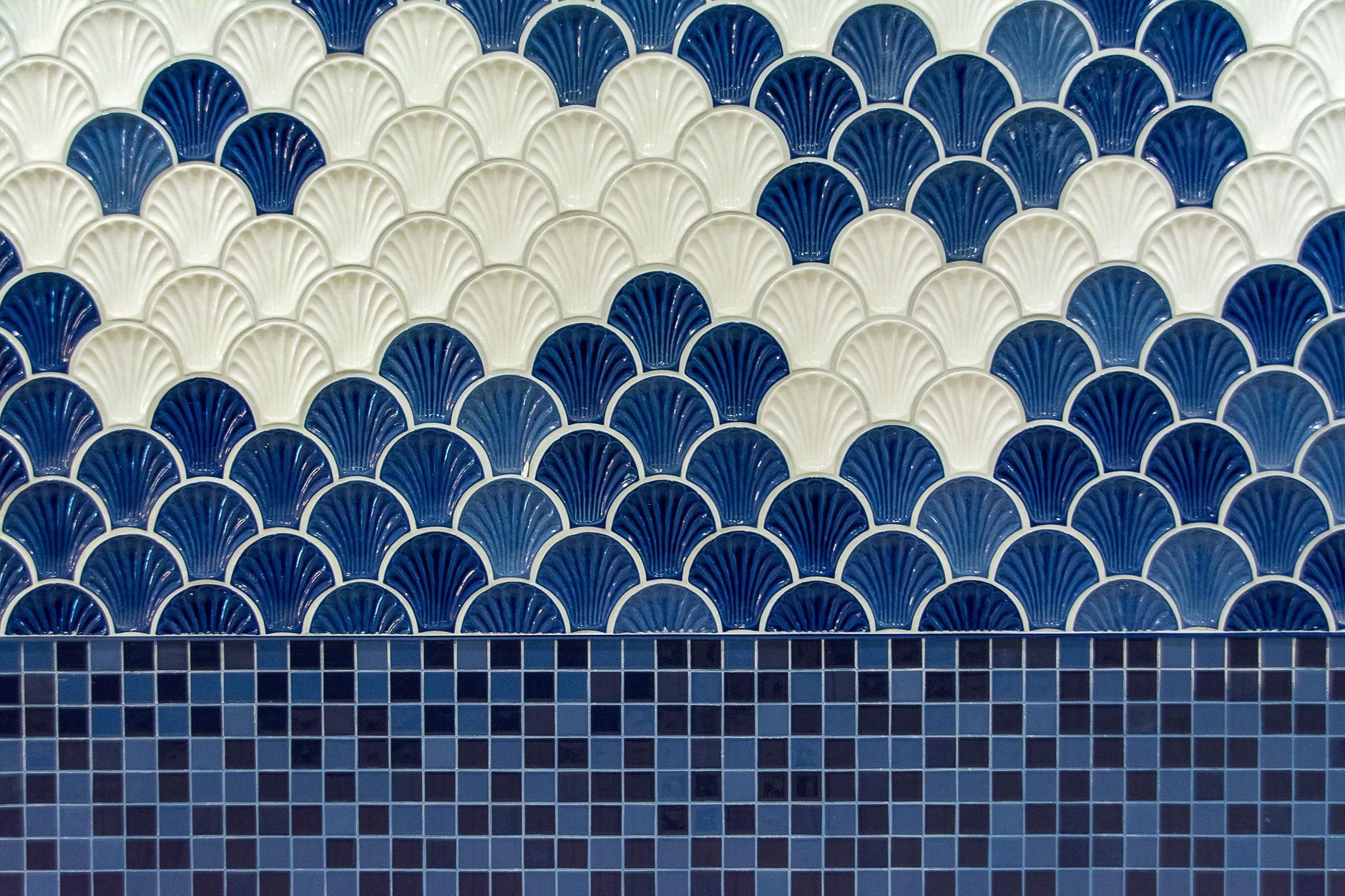
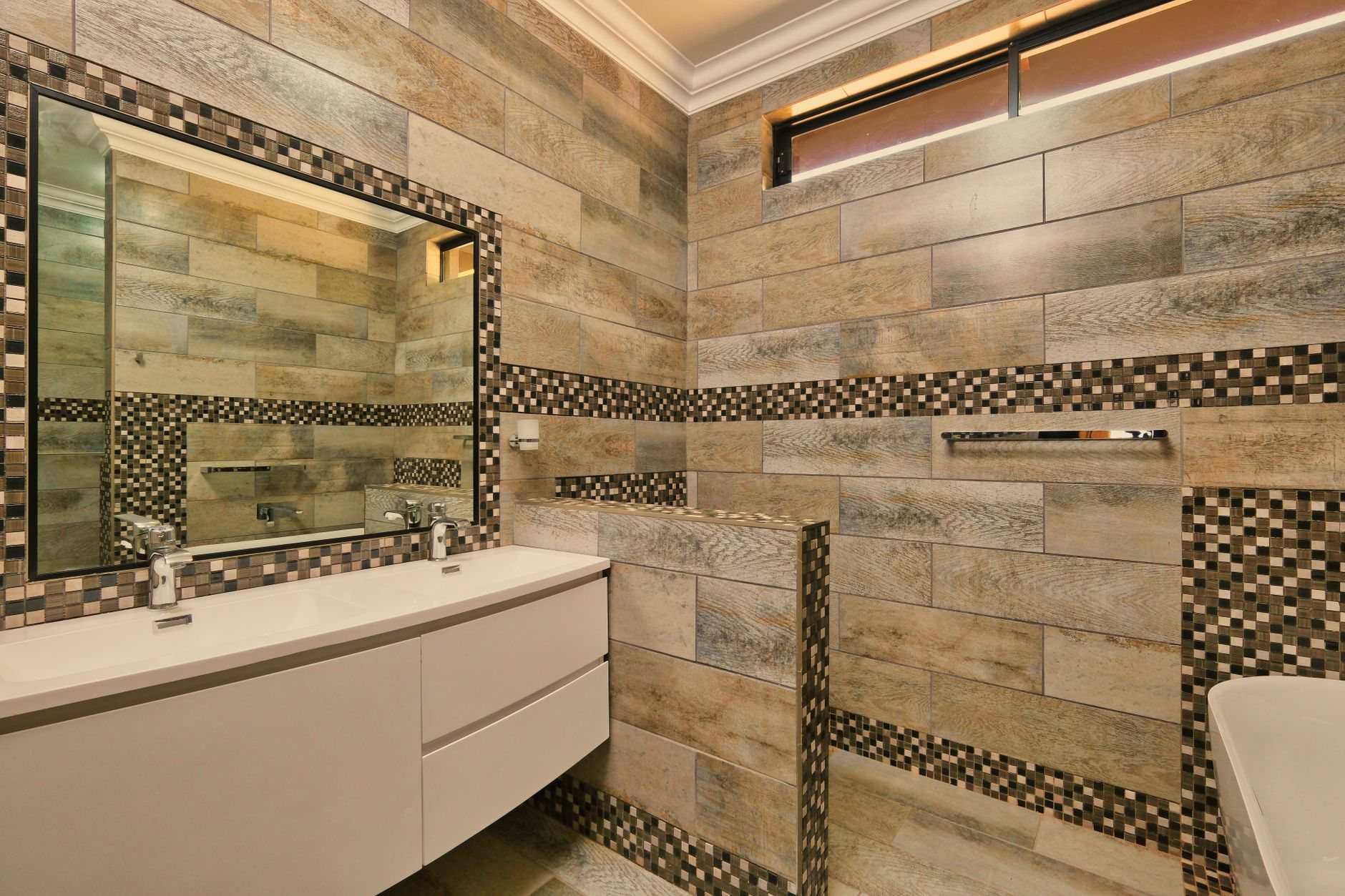
Mosaic belongs where the surface is small, curved, sloped, or meant to be looked at. A shower floor needs tile small enough to follow the pitch to the drain without lippage — the one place mosaic is nearly mandatory. A niche, an eye-level band, a backsplash behind a range, or a short feature wall behind a vanity are the other places where two-inch hexagons, penny rounds, or glass sticks make sense.
It is the wrong call for big open floors and tall walls, where the grout-to-tile ratio climbs and setting costs run two to three times what large-format tile does. A pattern made from standard tile — herringbone, basketweave, a floor border — is custom tile patterns and inlays, a different layout problem. A marble listello or travertine band is driven by the stone; see natural stone tile. Most of our mosaic work sits inside a shower tile build or a bathroom remodel, as one line in a larger scope.
What setting mosaic actually involves
Mosaic comes on 12-by-12 sheets held together by a mesh backing, a paper face, or a clear film face. The sheets — not the individual tiles — are what we are really installing, and the job is making the seams between them disappear.
- Substrate and flatness. Small tile hides nothing. A wave in the backer board reads as a shadow across a glass backsplash under cabinet lighting, so we skim and flatten first. On shower floors the pre-slope and pan go in and get flood-tested before any mosaic touches them. A mosaic border set into a bathroom floor tolerates slight slab movement better than one big tile — useful on Utah’s expansive clay soils — but a cracked slab still gets a crack-isolation membrane first.
- Dry layout. Sheets go down dry, the centerline gets marked, and cuts are planned around outlets, the drain, and niche edges. Sheets are offset or trimmed so the row at a seam matches the rows inside the sheet, and mesh is cut back at edges so no fiber shows through the grout.
- Thinset and trowel. Mosaic takes a small notch — a 3/16-inch V or 1/4-inch square — and we flatten the ridges so mortar doesn’t push up through the joints. Glass gets bright white, polymer-modified thinset, because gray mortar shows through translucent glass and shifts its color. Setting materials follow the glass and stone mosaic methods in the TCNA Handbook.
- Beat-in and alignment. Each sheet is pressed in with a grout float, then the pieces that wander — mosaic always has a few — get nudged straight while the mortar is open. Paper- and film-faced sheets get their facing peeled after initial set, then a second alignment pass.
- Grout and sealant. Joints run 1/16 to 1/8 inch, which calls for unsanded or fine-aggregate grout; sanded grout scratches glass and polished stone. On shower floors and glass backsplashes we lean toward epoxy grout, which resists the mineral spotting Wasatch Front hard water leaves wherever it dries. Cement grout on stone mosaic gets sealed. Every change of plane gets silicone, not grout.
Glass and metal chip on a standard wet saw, so glass gets a glass blade and a slow feed and metal mosaic is laid out so cuts land in a thinset line. Mosaic going outside — an entry riser, an outdoor kitchen backsplash — needs frost-rated tile and exterior-grade setting materials; the Wasatch Front sees roughly 100 or more freeze-thaw days a year, and water trapped in hundreds of small joints does real damage at that frequency.
What does mosaic tile installation cost in Utah?
As ballpark planning numbers rather than a quote: mosaic labor in Utah County typically runs about $18–$35 per square foot set, two to three times the rate for field tile, because each sheet is aligned by hand and cut piece by piece. Material runs from roughly $8 per square foot for porcelain hex to $40 or more for glass, marble, or metal blends. A full kitchen backsplash in mosaic usually lands between $1,500 and $4,000 installed; a mosaic shower floor or niche adds a few hundred dollars to a shower build. A real estimate follows a real layout.
What moves those numbers: mounting type (film-faced sheets set slower than mesh), outlets and penetrations to cut around, epoxy versus cement grout, and how much flattening the substrate needs. Small accent jobs carry a minimum, because setup, cure time, and the grout return trip are the same whether the niche is one square foot or four.
Questions we actually get
Why do the sheet lines show on some mosaic backsplashes?
Because the joint between sheets ended up wider or narrower than the joints inside the sheet, so the 12-inch grid shows through the grout. We dry-lay, offset, and nudge the outer rows of every sheet so the seam matches the interior spacing before the thinset skins over.
Can glass mosaic go on a shower floor or in a steam shower?
On a shower floor, yes, with a textured or matte glass that carries a wet slip rating; smooth glass underfoot is a fall hazard. Steam showers add a vapor layer behind the tile, and some glass manufacturers restrict their product in steam, so we check the installation sheet for the specific tile before it’s ordered.
Can you add a mosaic accent to an existing tiled shower?
Only by cutting out a band of existing tile, which risks the waterproofing behind the wall. If the shower is sound, a narrow band is feasible and we’ll be plain about the risk. If the waterproofing is unknown or failing, the better path is a rebuild with the accent designed in from the start.
Grandview is licensed and insured; our B100 license is verifiable at dopl.utah.gov. Every tile scope we take on is on the tile and stone page, inside renovation and build-outs.
Tell us what you’re working on
We reply within a couple of hours during business hours — a day at most. You’ll get a straight read on scope, sequence, and budget before anyone commits to anything.