
Concrete countertops in Utah County
Concrete countertops are cast, ground, and sealed to order — an island, bar top, or vanity in exactly the shape, thickness, color, and edge you want, with sinks and drainboards cast into the slab. Grandview Contractors forms, pours, finishes, and installs them across Utah County and Salt Lake County under a B100 license.
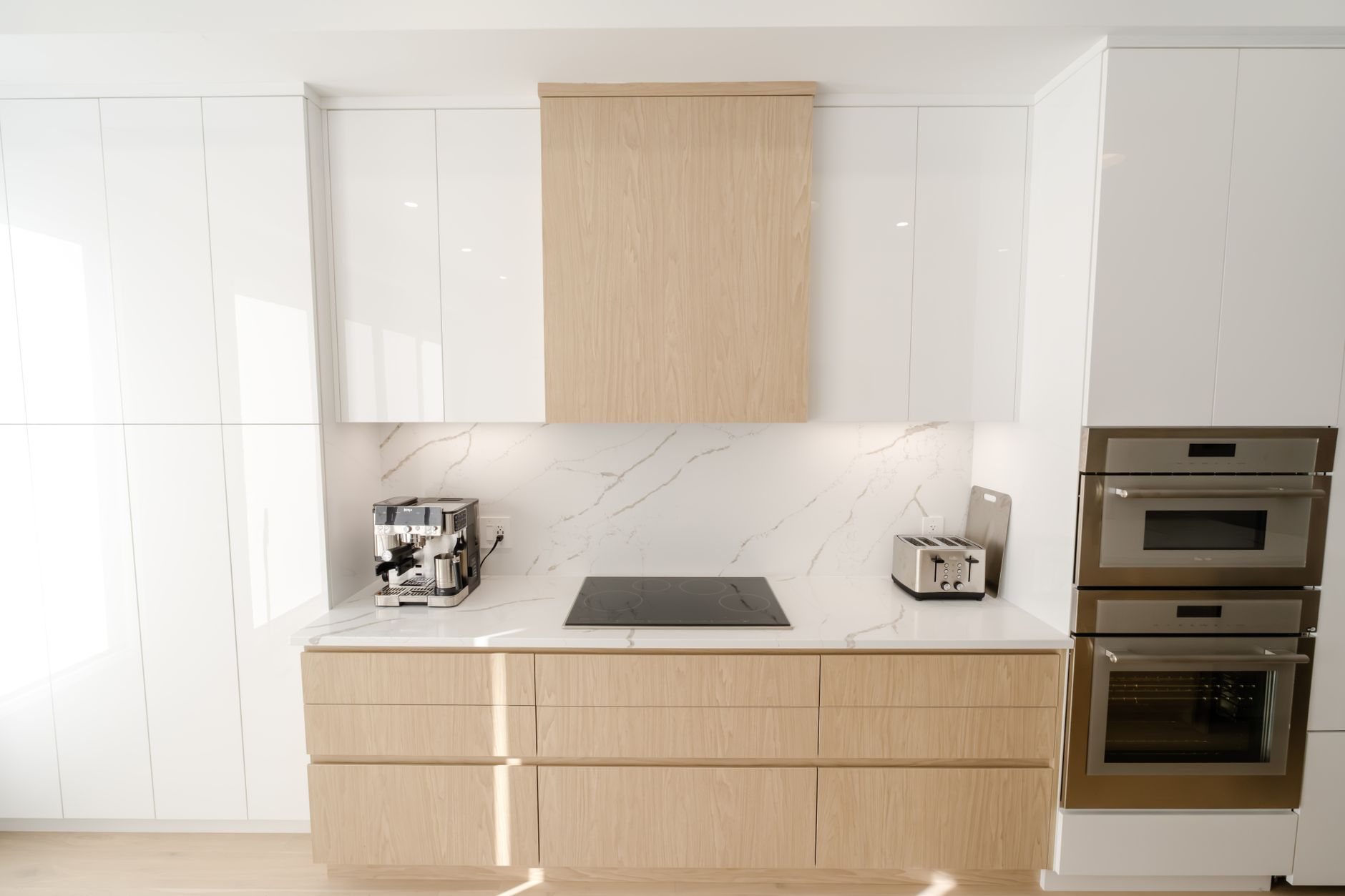
Choose concrete when the shape matters more than the catalog
Concrete earns its place when no slab product does what you need. A 14-foot island with no seam, a curved bar top, a 3-inch waterfall edge, an integral sink with a sloped drainboard, a top that matches a paint chip — those are concrete jobs.
If you want a hard, uniform, zero-maintenance surface in a standard rectangle, quartz does that for less and never needs resealing. For an outdoor kitchen where UV and winter are the enemies, porcelain slab is the lower-maintenance answer. Concrete sits in the middle: more freedom than either, more upkeep than quartz, and patina by design.
Precast or cast in place — and why we usually precast
Cast in place means forming on the cabinets, pouring, and hand-troweling the surface where it sits — the only way to get a one-piece top longer than a shop door, at the cost of wet concrete, dust, and a week of curing in your kitchen.
Precast is how we build most tops. Forms are built upside down on melamine off a field template, so the smooth form face becomes your finished surface. Sink knockouts, faucet holes, drainboard slopes, and edge profiles are built into the form before any concrete is mixed. We pour, vibrate, wet-cure for about a week, then strip, grind, polish, and seal in a controlled space — your kitchen stays a kitchen until install day.
The mix matters as much as the method. A wet-cast top is 1.5 to 2 inches thick, steel- or fiber-reinforced, and weighs around 18 to 20 pounds per square foot. A GFRC (glass-fiber-reinforced concrete) top is typically 3/4 to 1 inch thick, roughly half the weight, far less prone to shrinkage cracking, and can be cast in long cantilevered pieces regular concrete can’t carry. GFRC is our default for islands and waterfalls. Either way, cabinets get checked for level and anchored into framing before the top arrives — a 400-pound island top on an unanchored box is a bad idea anywhere, and worse in Wasatch fault country.
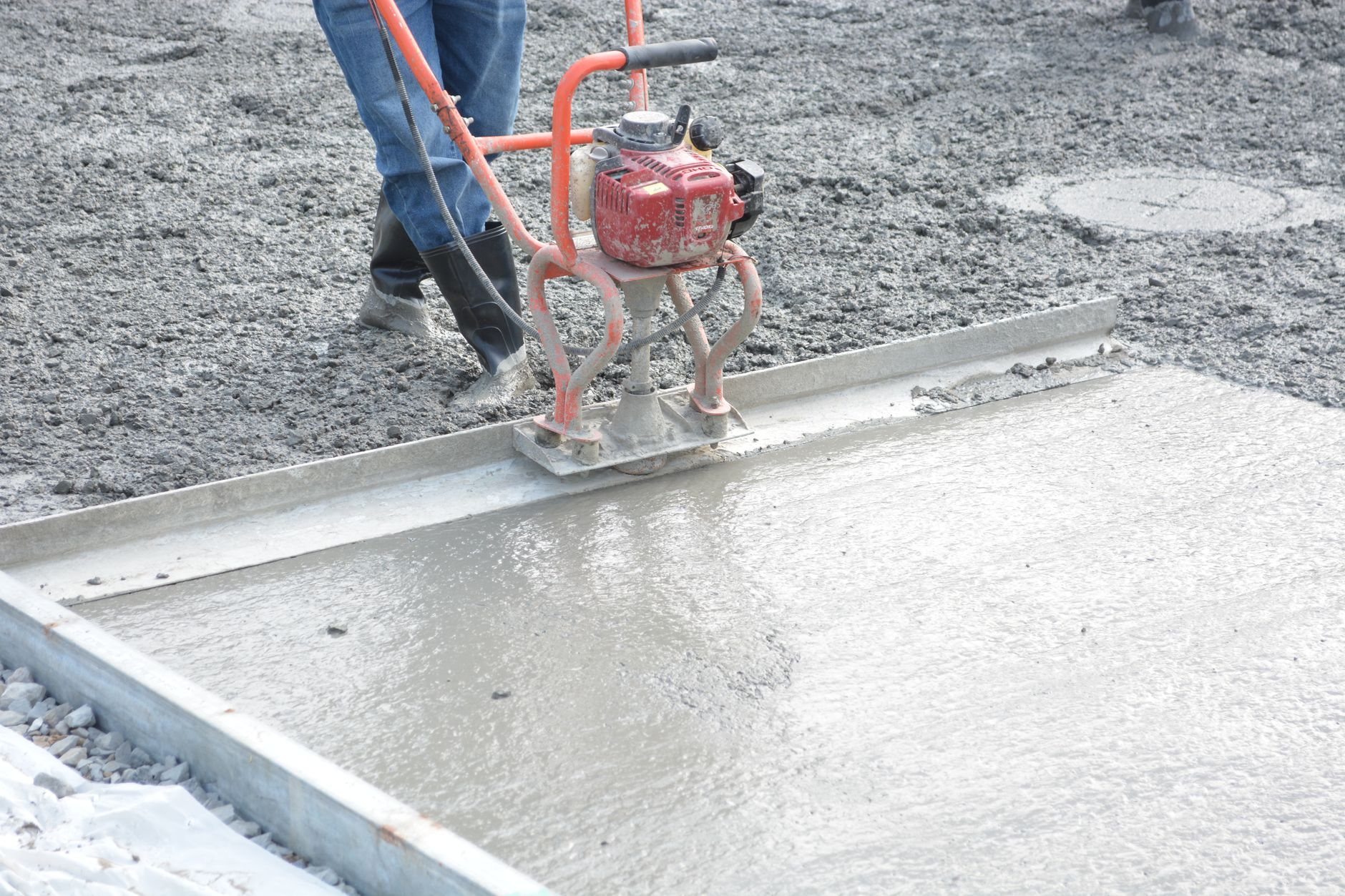
From template to sealed top in about five weeks
- Design and samples. Thickness, edge profile, integral features, and color come first. Color is pigment plus finish depth: a cream polish shows no aggregate, a deep grind shows stone. We cast physical samples with your actual sealer.
- Template. Once cabinets are set and level, we template the installed boxes — see templating and fabrication — with an extra pass for overhangs, since concrete cantilevers need reinforcement planned into the form.
- Form and pour. Reinforcement placed, mix batched to a low water-cement ratio, pour vibrated to pull air off the form face. Utah’s dry air pulls moisture out of concrete fast, so tops cure covered and damp; a slab that dries before it cures stays weak and chalky.
- Process and seal. Grind to the agreed exposure, slurry-fill pinholes, polish, seal. Sealer is the biggest living-with-it decision — a penetrating sealer keeps a natural feel but etches from lemon juice and vinegar; a topical urethane resists stains and acids but shows scratches and is harder to spot-repair.
- Install and connect. Pieces are set on silicone over a level substrate, seams filled with color-matched material, and the sink and faucet connected by the licensed plumbers we coordinate. We see dependencies before they become delays.
What concrete countertops cost in Utah
As ballpark planning numbers, cast concrete tops in Utah typically land between $85 and $150 per square foot installed, with detailed work — integral sinks, complex curves, thick waterfall legs — running higher. It’s labor, not material: the cement and pigment in a kitchen’s worth of tops cost less than one quartz slab, but every square foot is formed, poured, ground, and polished by hand.
What moves the number: thickness and the reinforcement it demands; integral features (each sink or drainboard is its own form); finish depth (exposed aggregate means more grinding); sealer system; and piece count. Hard water is a Utah line item too — mineral deposits sit on a sealer and etch it over time, so around a sink we favor a topical sealer and fold any softener or filtration decision into the plumbing scope.
All of it runs under one B100 general contractor license, verifiable at dopl.utah.gov, with cabinet and plumbing coordination on the same contract as the top.
Questions we actually get
Do concrete countertops crack?
Hairline shrinkage cracks can happen; in a well-built top they’re cosmetic, sealed, and nearly invisible. Structural cracking comes from thin unreinforced sections, unlevel cabinets, or a top that dried too fast. GFRC, reinforcement around cutouts, and a damp cure take most of that risk off the table.
How much maintenance does a concrete top need?
Depends on the sealer. A penetrating sealer with wax wants re-waxing every month or two, resealing yearly, and will etch from acids. A topical urethane needs almost nothing for several years but shows wear in one spot rather than everywhere. We match the sealer to how hard you use the kitchen.
Can my existing cabinets carry a concrete top?
Usually, for GFRC — it weighs about the same as 3cm quartz. A full-thickness wet-cast top is heavier, so we check boxes for level, sound sides, and anchorage into studs before we template, and reinforce or replace weak boxes first.
Can I put concrete countertops in an outdoor kitchen?
Yes, with the right mix and sealer. Along the Wasatch Front a top sees over a hundred freeze-thaw cycles a year and intense high-elevation UV, so outdoor tops get an air-entrained or GFRC mix, UV-stable pigments, and an exterior-rated sealer. We build those alongside the outdoor kitchen itself.
Related services
Start at cabinetry and countertops for the full material lineup; compare butcher block if you want warmth on an island; see kitchen remodeling when the layout is changing too. Everything else lives under renovation and build-outs.
Tell us what you’re working on
We reply within a couple of hours during business hours — a day at most. You’ll get a straight read on scope, sequence, and budget before anyone commits to anything.