
Equipment Skids & Dunnage in Utah County
Equipment skids are welded steel base frames that carry a pump, compressor, generator, or process unit as one liftable, anchorable package; dunnage is the raised steel that holds rooftop units off the roof deck and delivers their weight to the structure below. Grandview fabricates, sets, and anchors both across Utah County and Salt Lake County under Utah DOPL B100 license #14282236-5501.
When a skid or dunnage frame is the right scope
The call usually comes from a mechanical contractor or a facility manager. A replacement rooftop unit is heavier than the one it replaces and the old curb won’t carry it. A standby generator needs a frame with lifting lugs and anchor holes so it lands once and stays put. A chiller is being relocated and the owner wants it on something that can be unbolted and moved again.
What separates this work from its neighbors: the steel exists to serve a piece of equipment, and the equipment’s cut sheet drives every dimension. Loose angles, lintels, and brackets with no equipment attached are miscellaneous metals. A frame that already exists with a cracked weld or a rusted leg is structural weld repair. A welder on your roof for a day to tie a factory skid into existing steel is mobile welding. A walkable floor rather than an equipment stand is a mezzanine or platform. The rest lives on the structural steel and welding page and the specialty capabilities hub.
What goes into a skid, and what goes into dunnage
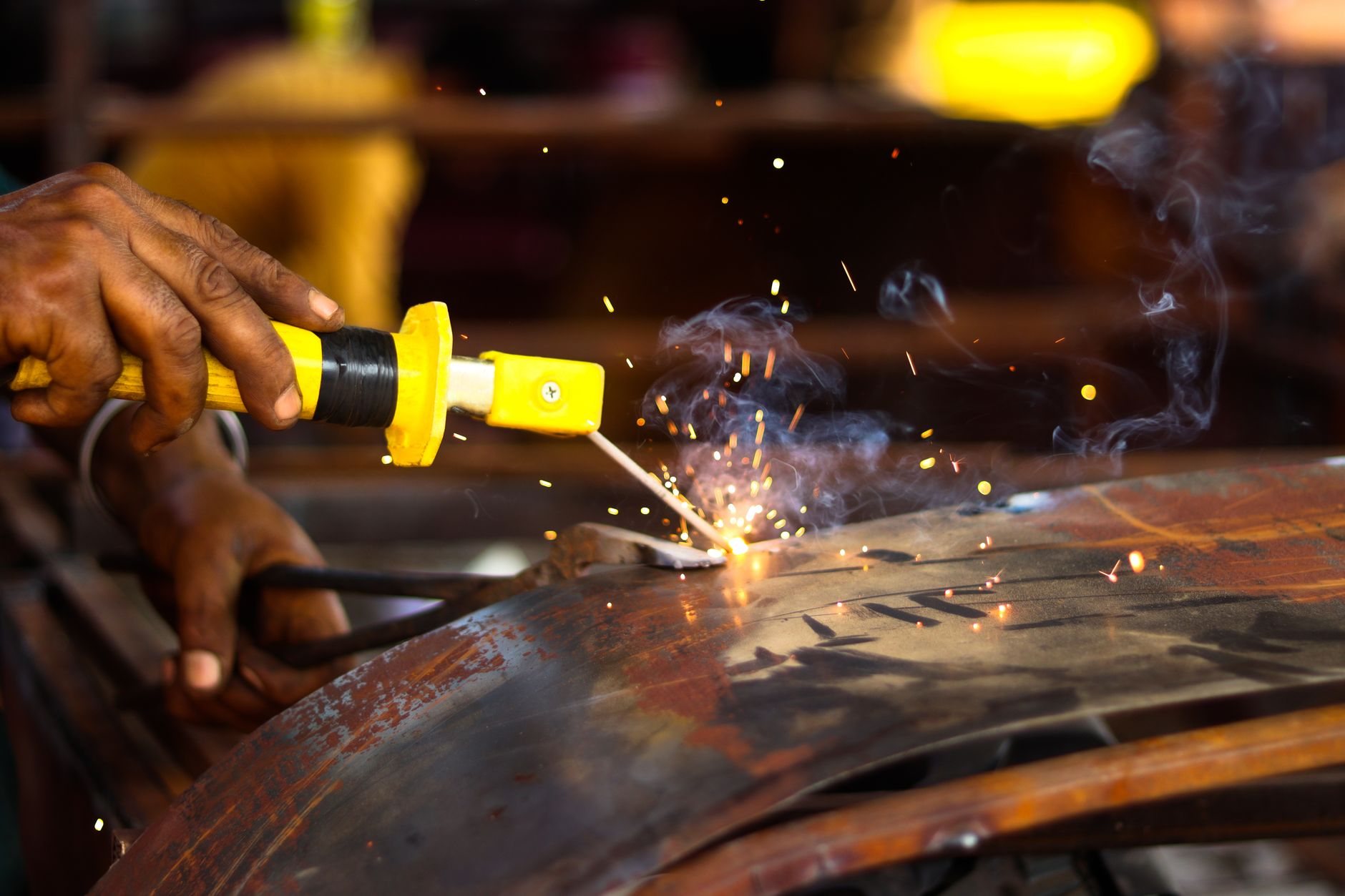
A skid is a closed rectangular frame, usually structural channel with flanges turned in or square HSS tube, with cross members placed under the equipment’s feet rather than on an even grid. We build from the manufacturer’s base drawing: bolt pattern, center of gravity, service clearances, piping and conduit entry points. Lifting lugs are sized for equipment plus frame and located so the loaded skid hangs level. Anchor holes are drilled to the engineer’s detail, and the frame gets jack bolts or shim pockets, because no housekeeping pad is as flat as the drawing says. Where the unit vibrates, the isolator footprint is coordinated so isolators land on solid steel, not a gap between members.
Dunnage is a different problem. It’s a set of wide-flange or HSS beams raised on posts that pass through the roof and bear on the building’s framing, not on deck alone. The beams carry the unit’s operating weight, the snow that lands on it, and the technician standing on it. We hold the top-of-steel height so the curb adapter and flashing both have room, and every post penetration is coordinated with the roofing contractor before steel goes up. A leak around a dunnage post is a roofing claim with your name on it.
Finish follows exposure. Interior skids in a mechanical room get shop primer and industrial enamel. Anything on a Wasatch Front roof gets hot-dip galvanizing or a zinc-rich primer and topcoat, because our elevation puts exterior steel under harder UV and roughly a hundred-plus freeze-thaw days a year. Ground-mounted exterior equipment gets an air-entrained housekeeping pad for the same reason, with its anchor layout tied to the skid drawing.
How a skid or dunnage job runs
- Collect the cut sheets. Base drawing, operating weight, center of gravity, isolator type. We won’t cut steel to a model number alone.
- Engineer the anchorage. Along the Wasatch fault, current Utah-adopted code treats mechanical and electrical equipment as seismically anchored components, so a structural engineer sizes the frame and anchors and, for dunnage, confirms the roof framing can take the new point loads. The USGS Earthquake Hazards Program explains why plainly.
- Verify the landing. We measure the pad, curb, or roof framing before fabrication; on older roofs an exploratory opening tells us where the purlins actually are.
- Fabricate and finish. Frame welded, lugs checked, holes drilled, galvanized or painted, delivered on the equipment’s schedule.
- Set and anchor. Crane or forklift placement, level and shim, anchors set to the detail, grout under base plates where specified. Our embed plates and anchor bolts page covers the pad side in depth.
- Hand off. Mechanical contractor sets the unit, roofer flashes the penetrations, anchorage inspection closes out if the permit requires one.
What does equipment skid fabrication cost in Utah?
For planning only: a single-unit interior skid for a pump, compressor, or small generator most often lands between $1,500 and $6,000. Rooftop dunnage for one replacement RTU — engineering, galvanized steel, crane time, anchorage — more often runs $6,000 to $20,000, with multi-unit arrays above that. Ballpark ranges, not quotes.
- Equipment weight and footprint. Heavier units mean deeper members, bigger lugs, and a larger crane.
- Roof access. A ground-set skid costs a forklift hour. Dunnage on a four-story roof in downtown Provo costs a crane and a lift plan.
- Snow load. Bench lots carry a higher design snow load than valley addresses, and rooftop dunnage grows with it.
- Roof framing surprises. If existing purlins can’t take the new point loads, reinforcement gets added before the dunnage does.
We’ll give a budget range from the cut sheet and a site look, then a firm proposal once the engineer has sized the frame — and say plainly which is which.
Questions we actually get
Can’t the mechanical contractor just set the new RTU on the old curb?
Sometimes, if the replacement matches the old unit’s weight and footprint. When it’s heavier or larger, the curb and deck were never designed for that load, and the engineer will usually call for dunnage that carries the unit to the structural framing. Comparing both cut sheets answers it before anyone orders steel.
Does equipment anchorage need an engineer and an inspection in Utah?
On commercial projects, usually yes. Current Utah-adopted code requires mechanical and electrical equipment to be anchored for seismic loads, so a structural engineer sizes the anchors and frame, and many cities require special inspection of post-installed anchors. Verify specifics with your city’s building department, or have us carry permitting inside the scope.
What do you need from us before you can quote a skid?
The manufacturer’s base drawing with operating weight, center of gravity, and bolt pattern; the isolator type if the unit vibrates; and where it lands — pad, mechanical room floor, or roof. With those we can give a budget range within a day or two. Without them, the honest answer is a consultation, not a number.
Who handles the roof penetrations around dunnage posts?
The roofing contractor flashes them; we coordinate the sequence so steel, flashing, and equipment set happen in the right order. When the project is ours, Grandview holds the contract, schedules the roofer and mechanical contractor around the crane day, and checks every post is flashed before the unit lands.
Send us the cut sheet
Equipment drawing, operating weight, and a photo of where it lands is enough. We reply within a couple of hours during business hours — a day at most — with a straight read on frame, anchorage, and budget. B100 license verifiable at dopl.utah.gov.