
Custom steel gate fabrication in Utah
Custom steel gate fabrication is the shop work that turns a field measurement into a finished gate leaf: cut list, jig fit-up, weld sequencing, grinding, and finish prep. Grandview fabricates driveway, pedestrian, and courtyard gates to order across Utah County and Salt Lake County under a Utah B100 general contractor license.
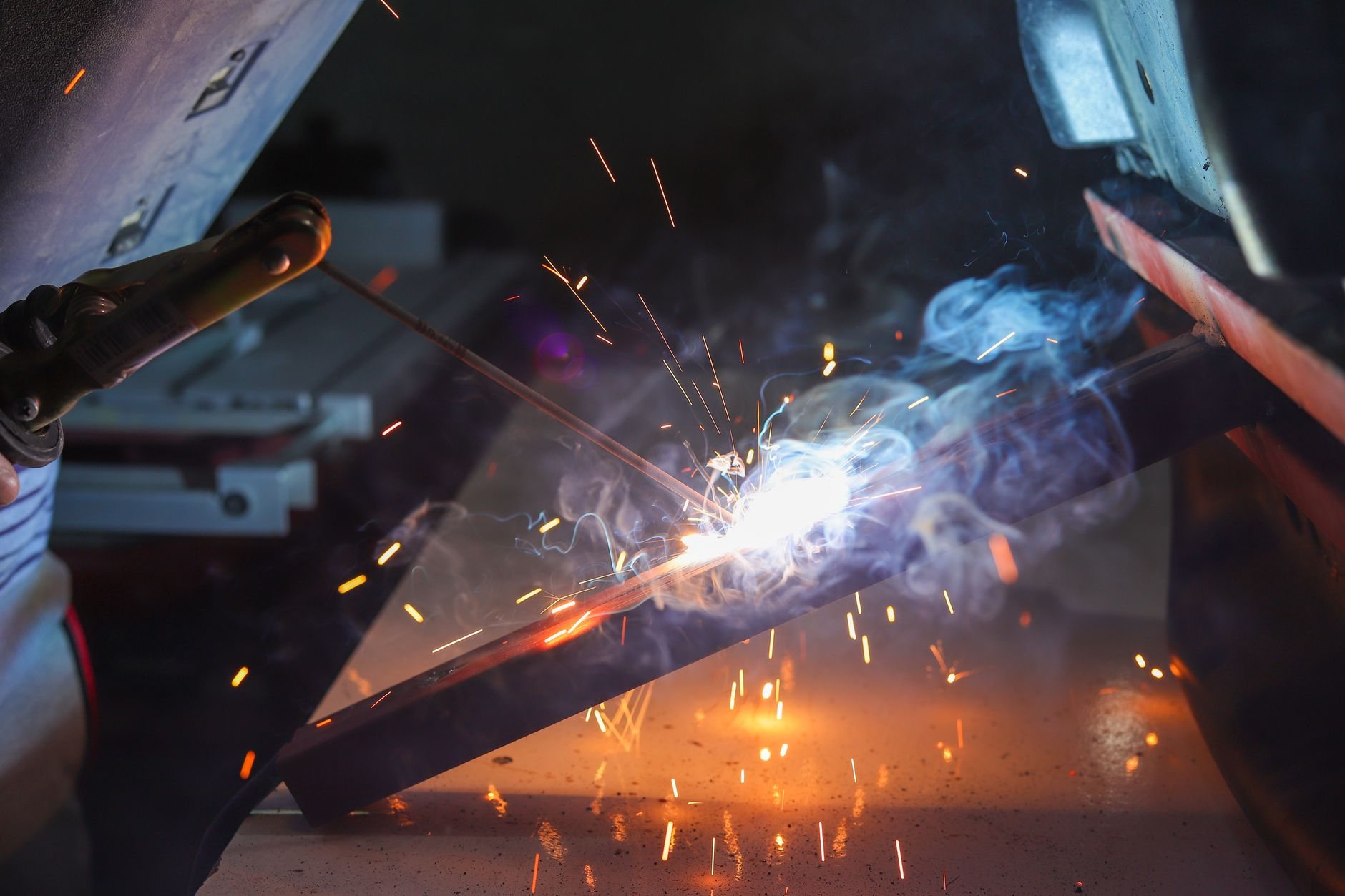
When you need fabrication, not just a gate
Most gate calls want the whole thing hung and latched. That scope lives on our custom steel gates page, with fence runs and automation on the custom steel gates, fencing and automation page. This page is the shop side.
That looks like a leaf built for posts that already exist because the old gate racked and the footings are fine; a replacement that must match the one across the driveway or a historic infill in the Avenues; an architect’s drawing that needs turning into welded steel; or a commercial opening where the engineer has specified tube sizes and wants shop drawings that follow them.
For fixed vehicle barriers, see bollard fabrication and installation; for a screened refuse corral with steel doors, steel dumpster enclosure frames; for a full perimeter, wrought iron fence.
What goes into the material list
A gate leaf starts as a cut list, and the cut list starts with the span. Frames come from ASTM A500 square tube: 2-inch at 14 gauge for light pedestrian gates, 2-inch at 11 gauge for daily traffic, and 2½- or 3-inch tube at ⅛-inch wall for driveway leaves over 8 feet. Pickets are ¾- or 1-inch square bar on 4-inch centers so a 4-inch sphere can’t pass, the spacing most Utah cities and every pool-barrier rule expect. Privacy infill is 16- or 14-gauge sheet or plasma-cut plate, and it changes the frame, because a solid panel on a bench lot above Draper or Alpine catches canyon wind that an open picket leaf lets through.
Hinge plates and latch keepers are ¼-inch A36 plate. Hinge barrels are sized to leaf weight, calculated from the cut list before anything is cut: a 7-by-14-foot privacy leaf in 3-inch tube and sheet runs several hundred pounds, and hinge class, post, and footing follow that number. If the leaf will be automated later, we weld the operator bracket pad on now, not in a driveway in January.
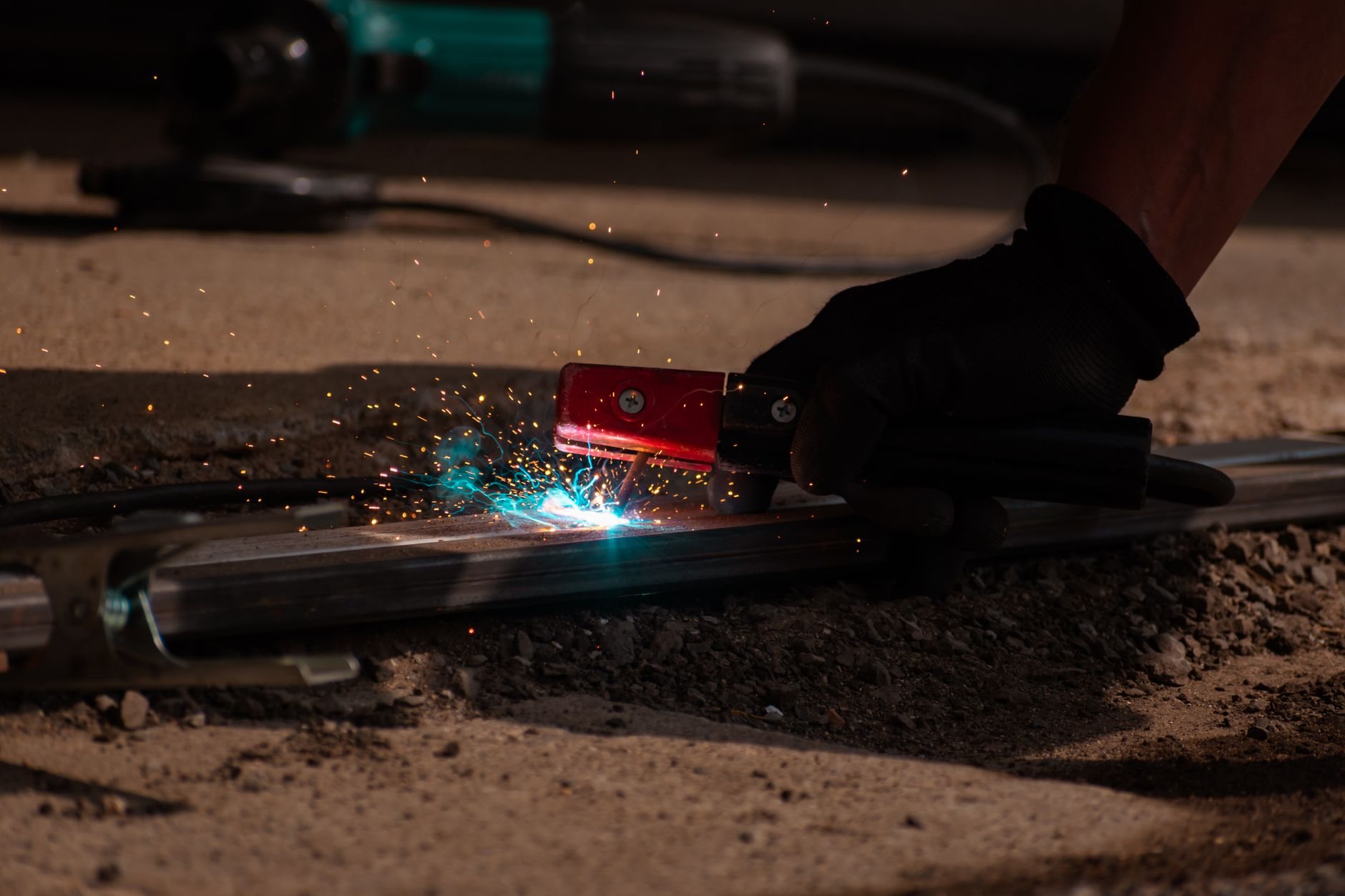
How a gate leaf is fabricated so it stays square
Welding pulls steel. Every bead shrinks as it cools, and a frame welded in the wrong order walks out of square by an eighth of an inch per corner. Fabrication is the discipline of controlling that.
- Shop drawing. Field dimensions become a drawing with tube sizes, picket spacing, hinge and latch locations, and finish. You approve it before any steel is cut.
- Cut and prep. Tube is cut on a cold saw for square ends and deburred. Every closed tube gets a weep hole at its low point so meltwater drains instead of freezing and splitting a seam, a real failure after a Wasatch Front winter.
- Fit-up on the table. The frame is clamped to a level jig, checked diagonal-to-diagonal, and tacked. The compression brace runs from the top of the latch stile to the bottom of the hinge stile so the steel carries sag instead of the welds.
- Weld in sequence. Corners are welded in opposing pairs, alternating sides, so each bead’s pull counteracts the last. Pickets are tacked at both rails before any are welded out, and diagonals are re-checked during weld-out.
- Dress and test-hang. Welds are ground flush where hands and finish meet them, left full where strength matters. The leaf swings on a shop test post before finish.
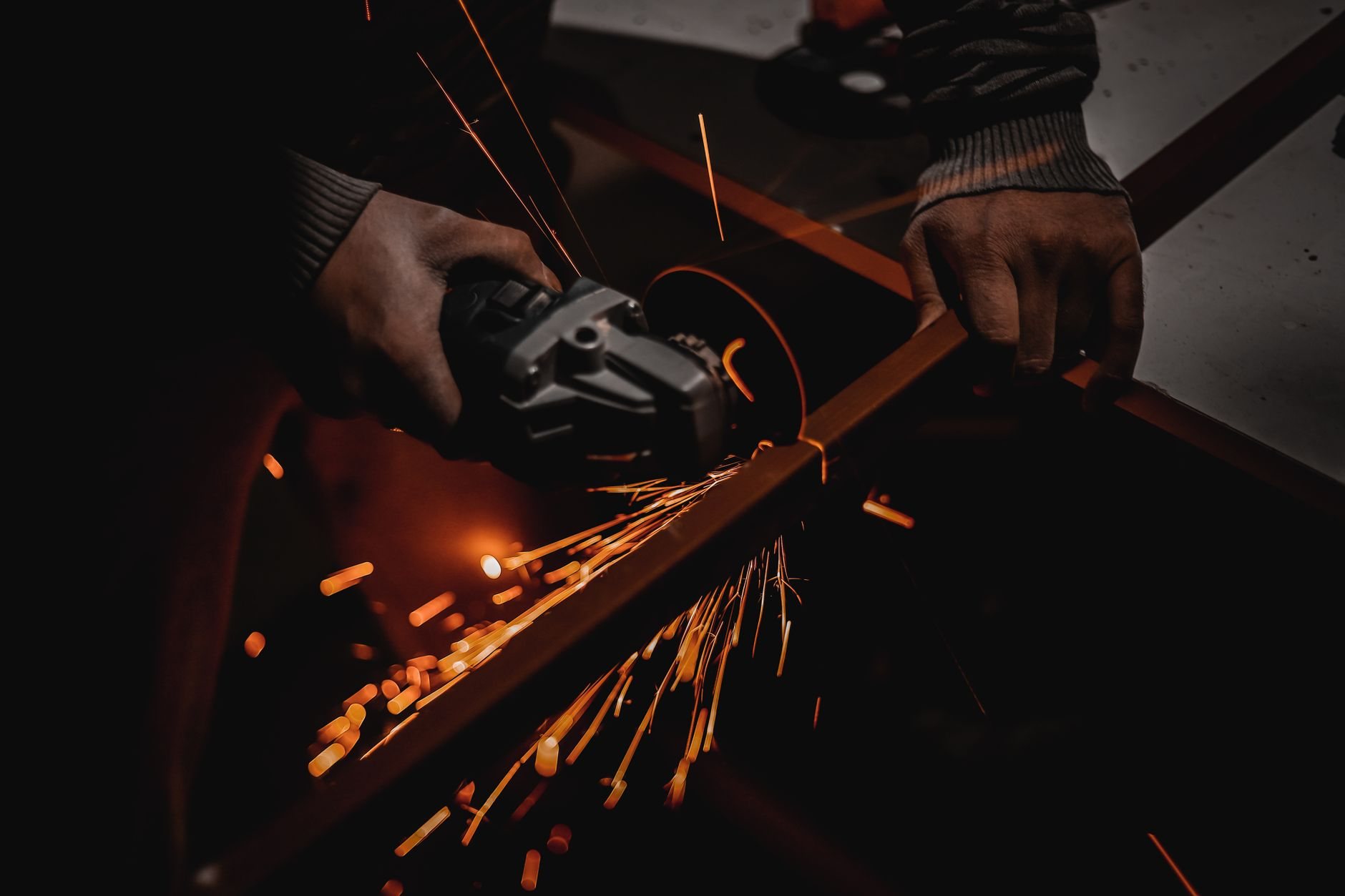
Finish is a fabrication decision
The finish is chosen on the shop drawing because it changes how the leaf is built. Hot-dip galvanizing needs vent and drain holes in every closed tube so zinc can flow and air escape, placed where they’re invisible once the gate hangs. The American Galvanizers Association publishes the process and coating standard, and we spec it on any gate that meets a salted driveway.
For most Utah gates the answer is galvanizing under powder coat: zinc handles ice-melt corrosion at the base of the leaf, and powder handles the UV load at 4,300 to 5,000 feet, which chalks plain paint on a south-facing leaf in a few seasons. Where budget rules that out, zinc-rich shop primer under two coats of urethane is the honest fallback.
What drives custom steel gate fabrication cost?
As ballpark planning numbers, our gates and fencing page lists $1,500–$4,000 for a custom pedestrian gate and roughly $6,000–$18,000 for a driveway gate, installed; the fabricated leaf is typically more than half of either. A fabricate-only leaf for existing posts comes in below those ranges, but the shop hours are the same whether or not we dig footings.
Inside the shop, price moves on four things: leaf weight, which sets tube wall and hinge class; infill labor, from a few hours for plain pickets to a day or more of layout for a plasma-cut panel or matched pattern; finish, where galvanizing under powder coat roughly doubles the cost of primer and paint; and drawings, where an engineer-specified gate needs shop drawings returned before cutting starts. You get a budget range from the drawing and a firm proposal before any steel is cut. The same weld discipline runs through our structural steel and the rest of our specialty work.
Questions we actually get
Can you fabricate a gate leaf to hang on my existing posts?
Usually, yes. We check the posts first: plumb, sound at grade, and footed deep enough that frost hasn’t walked them. If they pass, we measure the opening at three heights and build the leaf to that geometry. If a post has heaved or rusted at the collar, we’ll say so first.
How long does fabrication take?
A plain picket pedestrian leaf typically takes one to two weeks from approved drawing; a driveway leaf with custom infill, two to four weeks. Galvanizing adds about a week for the trip to the galvanizer, and powder coat a few days more. Engineered commercial gates add the shop-drawing review cycle on top.
Can you match an existing gate or a historic pattern?
Yes, within what steel can do. We template the existing leaf, match tube and picket sizes, and reproduce scrolls or plasma-cut motifs from a traced pattern. Cast iron ornament we source as castings and weld into the new frame. The matching work shows up as layout hours in the price.
Are you licensed for fabrication work?
Yes. Grandview Contractors holds a Utah DOPL B100 general contractor license, #14282236-5501, verifiable at dopl.utah.gov, and we’re insured. Fabrication, welding, and installation run under that license; where a gate is automated, licensed electricians we contract and manage handle the operator’s electrical supply.
Send us the opening
A photo, a sketch, or your designer’s drawing is enough to start. We reply within a couple of hours during business hours, a day at most, with a straight read on what the leaf needs to be and what it will cost before anyone commits.