
Bollard fabrication & install in Utah County
Bollards are short steel posts set in concrete or anchored to a slab so a vehicle stops before it reaches a storefront, gas meter, dock door, or walkway. Grandview fabricates and installs fixed, removable, and surface-mounted steel bollards across Utah County and Salt Lake County under a Utah B100 general contractor license — footings, steel, and finish in one scope.
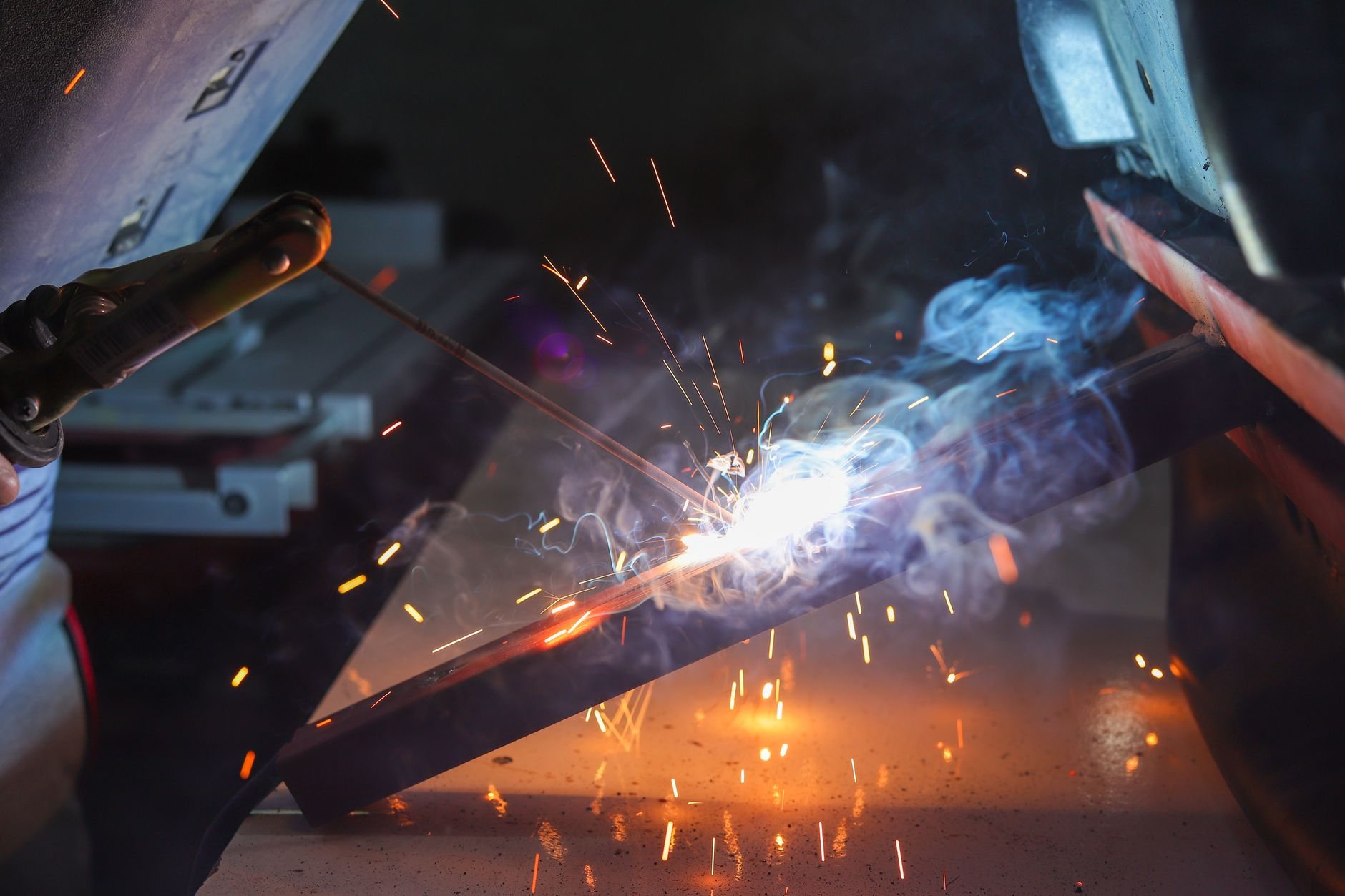
When a bollard is the right answer
A bollard solves one narrow problem: a vehicle can reach something it shouldn’t. Controlling who passes through an opening is a custom steel gate; screening a trash corral is a steel dumpster enclosure frame. They overlap often — nearly every enclosure we build gets a pair of bollards at its gate posts, because the hauler’s truck will eventually find them. A gate engineered to an odd opening is custom steel gate fabrication.
The usual reasons: storefront glazing facing head-in parking stalls; gas meters, propane tanks, and fire department connections within reach of a drive aisle (the fire code generally requires physical protection where equipment is exposed to vehicle impact — your local fire authority makes the final call); dock doors; and outdoor seating at the edge of a lot.
What bollard installation involves
Most of what we install is Schedule 40 steel pipe: 4-inch for walkway and parking-stall duty, 6-inch for drive aisles and dock protection, 8-inch where delivery trucks and forklifts are the threat. The pipe is cut to length, embedded in a reinforced concrete footing, and filled once it’s plumb. The embedment does the work: a 6-inch pipe with three feet in the ground is a very different object from the same pipe bolted to a four-inch slab.
Embedded, surface-mounted, or removable
Embedded bollards are the default for anything protecting people or equipment: a footing below local frost depth, pipe set in air-entrained concrete, then filled. Surface-mounted bollards bolt a baseplate to an existing slab with wedge or epoxy anchors — fast and tidy, but they only resist what the anchors can hold, so we use them for delineation, not for guarding a gas meter. Removable bollards drop into a galvanized ground sleeve with a locking cap — right for fire lanes and dumpster corrals that open for a roll-off. Where a project calls for crash-rated protection to a tested standard, we furnish an engineered system to that specification rather than pretending a filled pipe is one.
- Layout and locates. We mark positions against the real hazard — the swing of a dock door, the path of a backing truck — and call in utility locates before anyone drills.
- Core or cut. On existing paving we core-drill a 10- to 12-inch hole per bollard rather than opening a trench. On new work the footings are formed before the slab goes down.
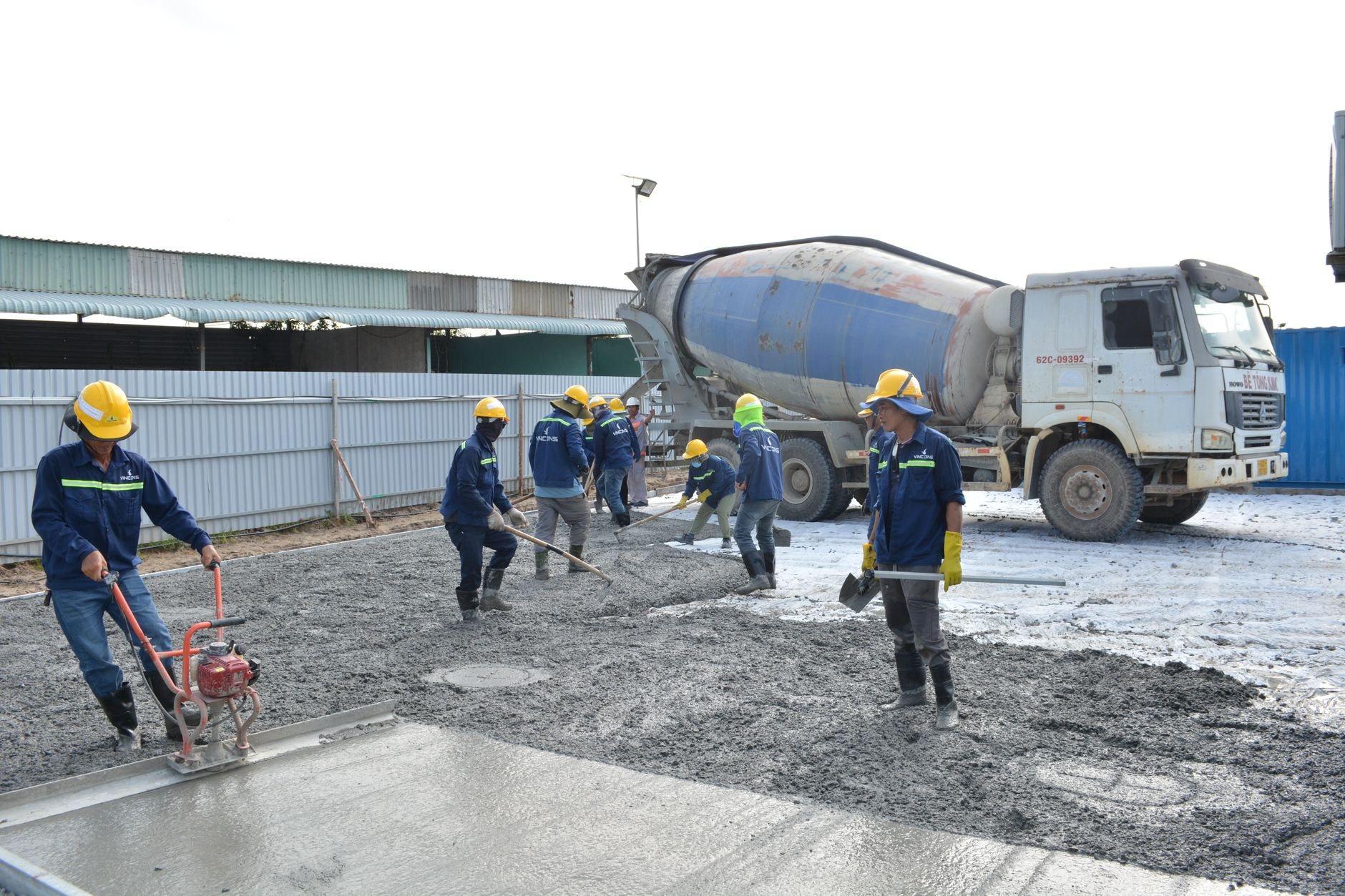
- Footing and set. The pipe is set, plumbed, and braced in an air-entrained mix — along the Wasatch Front a footing sees roughly a hundred-plus freeze–thaw days a year, and air entrainment keeps it from spalling and loosening its grip on the pipe. On bench lots with expansive clay we isolate the footing from the slab so a heaving edge doesn’t tilt the post.
- Fill and cap. Once the footing cures, the pipe is filled and capped — a domed concrete top or a welded plate ground smooth.
- Finish. Hot-dip galvanized, powder-coated, safety yellow, or a stainless or polymer cover that never needs repainting. Yellow is convention at docks, not a rule at storefronts. Utah entrances take ice melt all winter and hard UV all summer, so galvanizing under the color coat is our usual recommendation.
Removable sleeves get one more detail here: drainage. A sleeve that holds water freezes solid in January and locks the bollard in, so we set sleeves on a gravel pocket with a drilled drain.
How far apart should bollards be?
Close enough to stop a vehicle, far enough to pass a wheelchair. Along any accessible route — storefront walks, ramp landings, the path from accessible parking to the door — the ADA Standards require at least 36 inches of clear width between obstructions, so we typically set bollards four to five feet on center and tighten spacing at a dock door or meter bank. Bollards guarding accessible stalls are laid out with the ADA parking striping, and in a lot rebuild the concrete parking lot footings pour in the same mobilization.
What does bollard installation cost in Utah?
As ballpark planning numbers: a standard 6-inch concrete-filled embedded steel bollard, set, filled, and painted, typically runs $600–$1,500 each installed in Utah County, with the per-unit price dropping on runs of six or more. Surface-mounted baseplate bollards usually land between $350 and $900 each; removable sleeve-type units roughly $900–$2,000. Decorative covers add $150–$500 per post. Crash-rated systems are a different budget and are quoted from the specification.
What moves the price
Mobilization is the biggest factor on small counts — two bollards cost nearly as much to set up for as six. After that: core drilling through existing concrete versus forming in new work, pipe diameter, finish system, and how much paving has to be restored around each hole. Those are planning ranges, not a quote; after a site walk you’ll get a budget range, then a firm proposal before any steel is cut.
Questions we actually get
How deep does a steel bollard need to be set?
For a protective bollard, plan on embedment roughly equal to the exposed height — typically three feet in the ground for three feet above grade — with the footing below local frost depth so freeze–thaw can’t walk it out of plumb. We size embedment to the vehicle you’re stopping, not the catalog.
Can you install bollards in an existing parking lot without tearing it up?
Yes. We core-drill each location through the existing concrete or asphalt, excavate the footing through the core hole, set and fill the bollard, and patch the surface. The lot stays open except for the stalls we’re in, and the visible patch is a ring around each post.
Are you licensed for this work?
Yes. Grandview Contractors holds a Utah DOPL B100 general contractor license, #14282236-5501, verifiable at dopl.utah.gov, and we’re insured. Fabrication, footings, setting, and finish run under that license as one contract.
Bollards are one scope in our steel, welding & specialty family, most often installed alongside custom steel gates and fencing on the same visit; baseplate and embed detailing runs through embed plates and anchor bolts.
Tell us what needs protecting
Send a photo of the storefront, meter, or dock and roughly how many posts you need. We reply within a couple of hours during business hours — a day at most — with a straight read on type, spacing, and budget.