
24/7 emergency tarping & board-up
Emergency roof tarping stops a storm, fire, or tree loss from becoming a water loss too — heavy-gauge tarps battened through the sheathing into framing, with exposed openings boarded up in the same visit. Grandview does this work under a Utah B100 general contractor license, usually same-day during business hours, from Payson to North Salt Lake.
When tarping is the answer — and when it isn’t
Tarping and board-up are the right call when the envelope is breached but the structure still carries its load: shingles peeled back by a canyon-wind event, a tree limb through the decking, a fire hole vented through the roof, hail-shattered skylights. If rafters or trusses are actually broken — a sagging roofline, fire in the structure itself — you need emergency shoring before anyone puts weight up there, tarp included.
Nor is this the permanent fix. Once the claim is moving, wind and hail losses continue at storm damage repair and storm damage roof repair; fire losses continue at fire damage reconstruction. The tarp buys the weeks those decisions take. The full first-response scope lives at emergency stabilization & board-up, within repair, restoration & property services.
What separates a real roof tarp from a blue rectangle
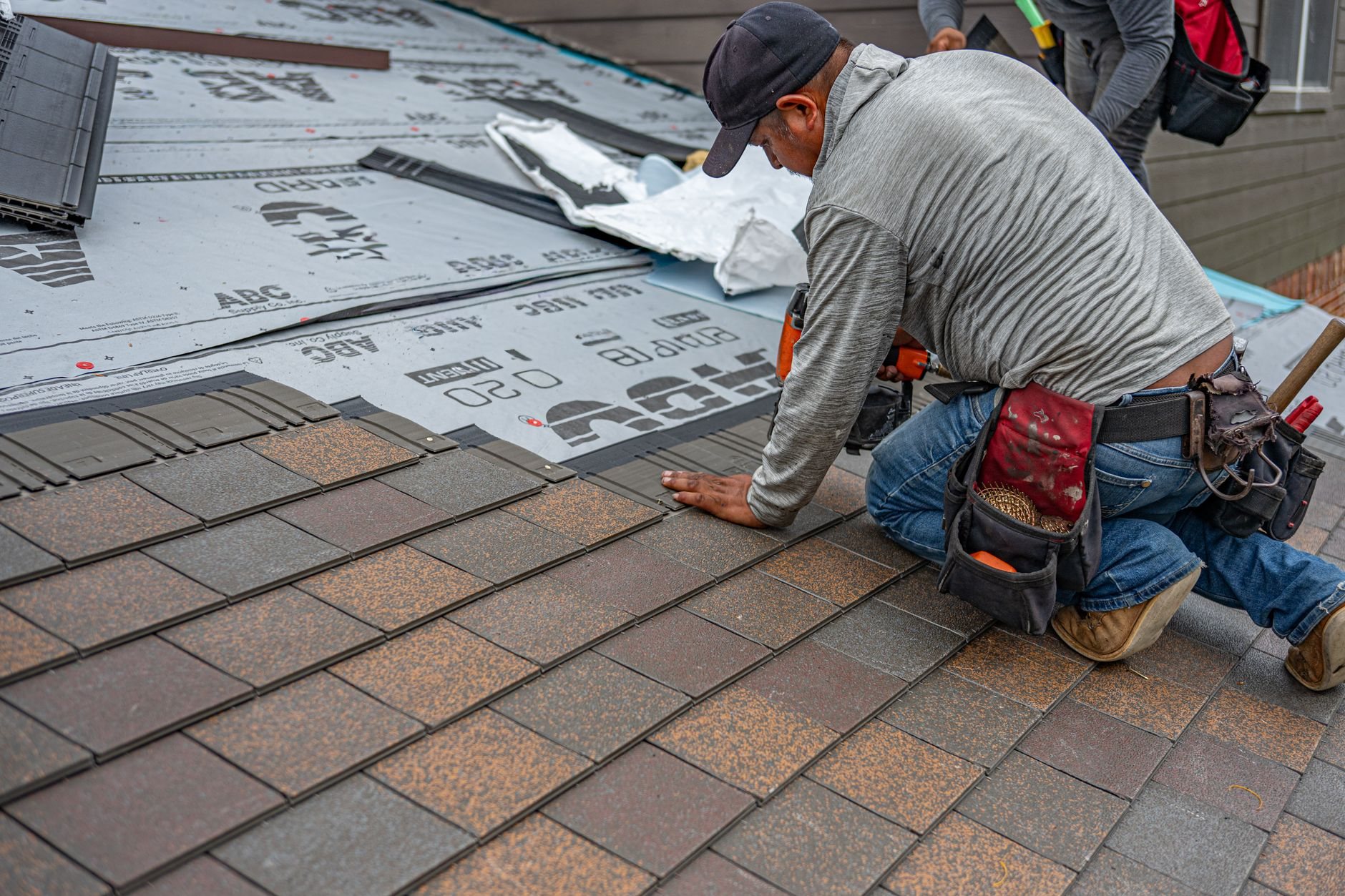
Most failed tarps fail the same way: fastened into shingles instead of framing, stopped short of the ridge, and left to the wind. Every choice in a proper tarp is about where water and wind will go next.
- Find sound anchorage. The tarp perimeter has to land on framing that will hold a screw, a couple of feet past the visible damage. On fire losses this matters most: charred decking holds nothing, so we span burned sections and fasten into unburned rafters.
- Run ridge over eave. The tarp goes over the ridge and down past the damage toward the eave, so water sheds across it instead of ponding against an upslope edge. A tarp that starts mid-slope is a funnel with extra steps.
- Batten, don’t dot. Tarp edges get wrapped around 1×3 furring strips and screwed through the sheathing into rafters or trusses — continuous clamping pressure, not a line of single fasteners the wind can unzip one at a time. Fastening schedules here assume canyon-wind gusts, not calm-day averages.
- Handle the penetrations. Chimneys, vents, and broken skylights get cut around and sealed, or boarded flat and tarped over — whichever sheds water. Small punctures sometimes skip the tarp entirely and get a patch of self-adhered membrane, which outlasts poly by a wide margin.
- Photograph everything. The loss before we touch it, the temporary work after, timestamped — the record your adjuster works from.
Board-up for the openings the same loss creates
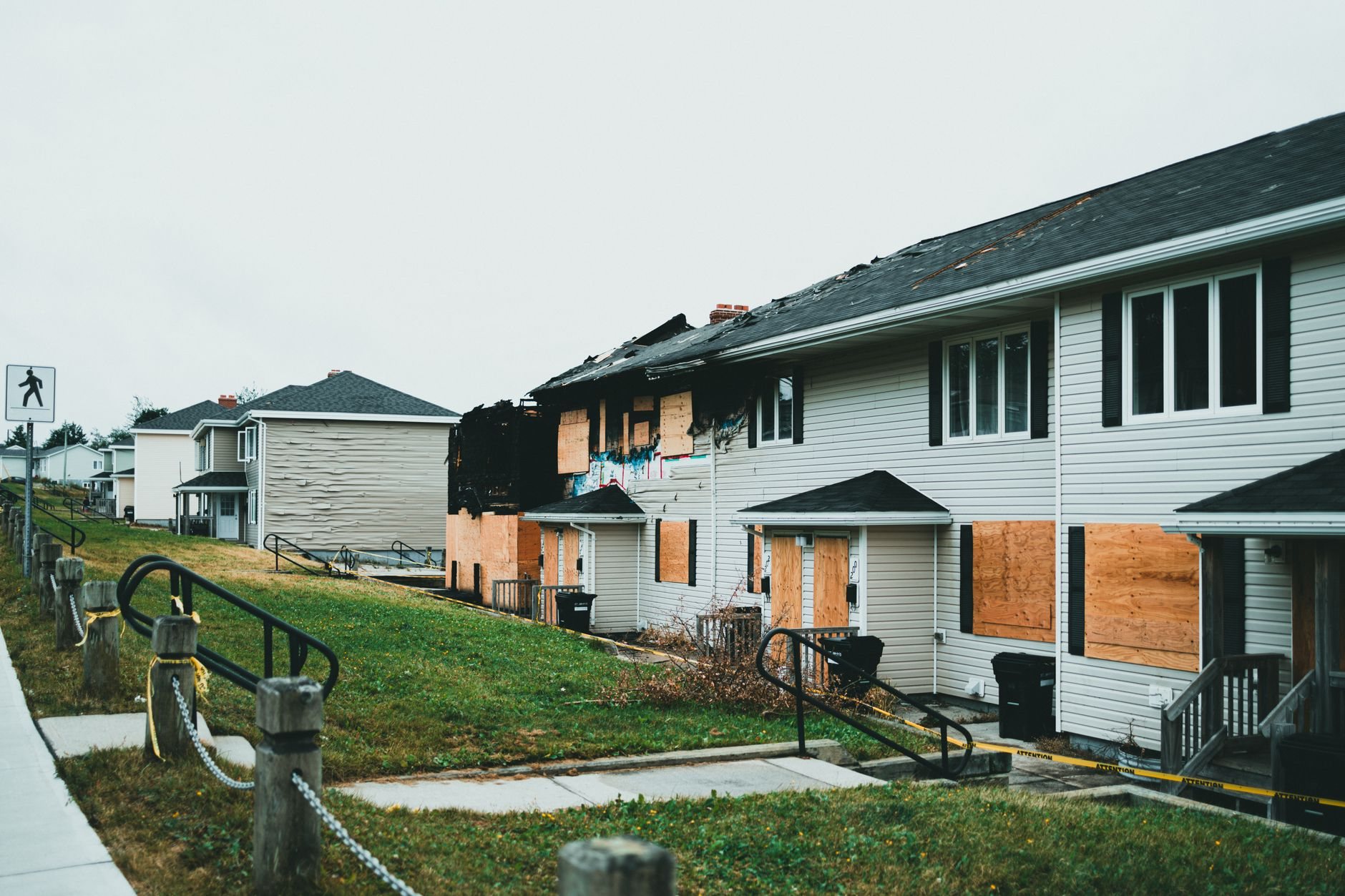
A roof loss rarely travels alone. The windstorm that stripped the shingles blew out a window; the fire that vented through the roof went in through a door the fire department removed. We close those openings the same visit — plywood or OSB fastened to framing, sized so removal doesn’t create a second repair. One mobilization, one invoice, one photo set.
About the “24/7” part
Plainly, rather than implying a dispatch desk we don’t run: our hours are Monday through Friday, 8am to 5pm, and inside them we move fast — Jordan answers the phone directly and a crew can often be on your roof the same day. After hours, call anyway; if we can come sooner, we will.
If it’s 2am and rain is coming: stay off the roof. Wet decking around a soft spot is how one emergency becomes two. Move what you can out from under the leak, photograph everything, and keep receipts — your policy almost certainly requires you to protect the property from further damage, and FEMA gives the same advice about documenting losses. A morning tarp done right beats a midnight tarp done badly.
What does emergency roof tarping cost in Utah?
As ballpark planning numbers only: a straightforward tarp on a walkable roof often lands between $500 and $1,500; steep, large, or complicated roofs commonly run $1,500 to $3,500, and board-up adds with the opening count. The invoice is itemized the way adjusters read it.
- Pitch and access. A walkable 4/12 tarps in hours; a steep, iced, or snow-loaded roof takes staging and rope work. Winter losses on bench lots, where snow runs heavier than the valley floor, are the slow end of the range.
- Coverage area. Tarps price roughly by the square; a two-square patch and a half-roof wrap are different jobs.
- Decking condition. Burned or rotted sheathing means spanning to sound framing, sometimes with lumber — more material, more time.
- Expected duration. Utah’s high-elevation UV and wind take standard poly apart within months; if the rebuild is quarters away, reinforced material or shrink-wrap costs more up front and less overall.
Questions we actually get
How long will a roof tarp last in Utah?
A properly battened heavy-gauge tarp is good for two to three months of real Utah weather; after that, high-elevation UV embrittles the poly and wind works the edges loose. Treat a tarp as a bridge measured in weeks — if the rebuild is further out, re-tarp or upgrade to shrink-wrap before it fails.
Will insurance pay for the tarp?
Usually, yes. Most property policies require you to protect the building from further damage after a loss, and emergency tarping sits squarely inside that duty — often reimbursed ahead of the main settlement. Coverage depends on your policy, so confirm with your adjuster and keep the itemized invoice and photos we hand you.
Can you tarp a roof with snow on it?
Often, but the sequence changes: snow gets cleared from the work area first, because battening through snow onto ice guarantees a leak path, and footing takes staging or ropes. It’s slower than the same roof in July. If the snow load itself caused the damage, shoring may come first.
Should I just tarp it myself?
If you can work safely from a ladder on a low-slope roof and anchor into framing past the damage, a self-tarp beats an open hole — photograph it and keep receipts. But most failed tarps we replace were fastened into shingles or stopped short of the ridge. If there’s any doubt about the decking, stay off; our license is verifiable at dopl.utah.gov.
Hole in the roof? Start with a phone call
Two minutes of triage gets you an honest arrival window and a straight read on whether you need a tarp, a board-up, or something more.