
Seawalls & waterfront retaining walls in Utah
A seawall is a retaining wall that holds soil on one side and takes waves, ice, and a moving waterline on the other. Grandview builds concrete and sheet-pile seawalls for lakefront, riverfront, canal, and pond lots across Utah County and Salt Lake County under a B100 license, shoreline permits included.
When a seawall is the right wall
If the toe of your wall will sit at or below the water at any point in the year, you’re building a seawall. Waves and ice push on the front, the backfill stays saturated for months, and the water level itself moves — on Utah Lake, by several feet between a drought year and a wet one.
A vertical wall isn’t always the answer. Where there’s room for a slope and the bank erodes slowly, a boulder or riprap revetment often costs less and absorbs wave energy instead of reflecting it. On soft, saturated ground where a footing can’t be dug and poured dry, a driven sheet pile wall is usually the system. On still water — a pond or a slow canal reach — a gabion wall can be a sensible middle ground. Seawalls are the most specialized of our retaining wall work within the site, structure and envelope family.
What seawall construction involves
Cast-in-place concrete seawalls
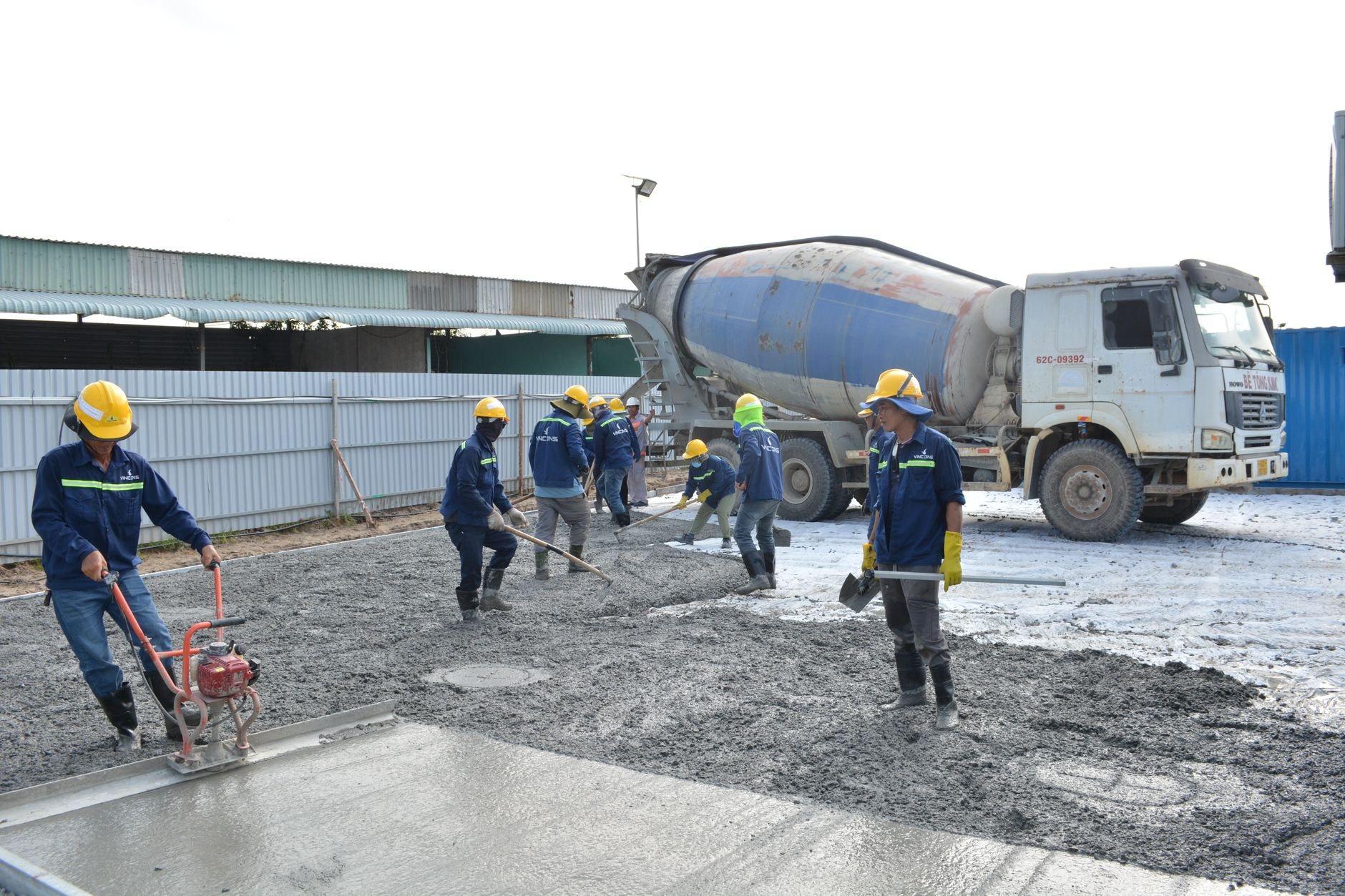
Where the shoreline can be dewatered and a footing dug to firm material, a reinforced concrete cantilever wall with a wide toe is the most durable option. The toe reaches toward the water under a scour apron or riprap blanket, because waves pulling sand from under the footing is how most concrete seawalls fail. The back face is waterproofed, and weep holes or a relief drain let trapped water out instead of building hydrostatic pressure. The splash zone wets and freezes all winter, the hardest freeze–thaw exposure on the property, so the mix is air-entrained and rebar cover is generous. Forming and reinforcing follow our poured concrete retaining wall practice; the seawall adds the toe, the scour apron, and the waterproofed back.
Sheet pile seawalls
Steel or vinyl sheets are driven into the bank and capped with concrete or steel. No footing is excavated, so the work proceeds in saturated soil without a cofferdam. Taller walls are held by tie rods back to a buried deadman anchor in stable soil. Either way, embedment below the mudline keeps the bottom from kicking out, and the engineer sets it from the soil, not a rule of thumb.
Both systems need filter fabric behind the wall, since wave action pumps water through every joint and carries fines out until a sinkhole opens; return walls turned into the bank at each end so water can’t flank the wall; and clean backfill compacted in lifts.
Permits, timing, and Utah shoreline conditions
Shoreline work carries permits a backyard wall never sees. The beds of Utah Lake, the Jordan River, and Great Salt Lake are state sovereign land, and building below the ordinary high water line needs authorization from the Utah Division of Forestry, Fire and State Lands. Fill in a lake or stream can also require a U.S. Army Corps of Engineers permit, and altering a natural channel needs a stream alteration permit from the Utah Division of Water Rights. Your city still reviews the wall as a structure. We identify which apply and run them — but plan on permitting taking longer than construction.
Timing follows the water. Along Utah Lake and the lower Provo and Jordan rivers, late summer and fall bring the lowest water, which is when footings and toe protection go in dry. Utah Lake is also shallow enough to freeze across, and wind-driven ice sheets shove the shore hard enough to tilt walls not designed for it. Spring runoff and summer cloudbursts raise the water fast; the design elevation accounts for that surge.
Shoreline soils around Utah Lake and along the Jordan River are largely saturated sands and silts that the Utah Geological Survey maps as high liquefaction potential in a Wasatch fault earthquake. That shapes embedment, anchorage, and whether a concrete footing is realistic. Many of the same lots sit in a mapped flood zone; checking your parcel on the FEMA Flood Map Service Center before design starts avoids a redesign later.
What does a seawall cost in Utah?
As ballpark planning numbers, not quotes: residential seawalls generally run from several hundred dollars to more than a thousand dollars per linear foot installed, with vinyl sheet pile at the low end and tall concrete with riprap toe protection at the high end. A site walk gets you a budget range; a surveyed shoreline and an engineered section get you a firm estimate.
- Water depth at the toe. Deeper water means deeper embedment or a bigger footing and more dewatering.
- Wave fetch. A lot facing open Utah Lake takes far more wave and ice energy than a sheltered canal bank, and the toe protection is sized to match.
Questions we actually get
Can I build a seawall on Utah Lake without state approval?
Not below the ordinary high water line. The lakebed is sovereign land managed by the Utah Division of Forestry, Fire and State Lands, and structures or fill there need its authorization on top of your city permit. A wall set entirely above that line on private ground is simpler, which is why placement is a design decision.
Why is my existing seawall leaning toward the water?
Usually scour: waves have pulled soil from under the toe, or water trapped behind the wall is pushing it forward with nothing relieving the pressure. We check the toe, weep holes, and backfill before saying whether it can be stabilized; a wall that has lost its toe support generally needs replacing.
Concrete or sheet pile — which lasts longer at a Utah waterline?
A concrete seawall with proper toe protection and an air-entrained mix can outlast most shoreline work. Vinyl sheet pile doesn’t corrode and handles ice well but is limited in height. Steel sheet pile is strong but needs coating or sacrificial thickness at the waterline. Soil conditions usually make the choice before longevity does.
How long does a seawall project take?
Construction is typically one to four weeks on site once water is low and permits are in hand. Permitting is the long pole: shoreline authorizations and any federal review can add two to four months, so a fall build should start its paperwork in spring. We lay out the full sequence before you commit.
Tell us what your shoreline is doing
Send a few photos at the current water level and a rough length, or ask us to walk the bank. You’ll get a straight read on wall type, permits, and budget before anyone commits to anything — we reply within a couple of hours during business hours, a day at most.