
Boulder & Natural Stone Retaining Walls in Utah
A boulder retaining wall is machine-placed quarry rock, each stone one to three tons, stacked and battered into the slope so the mass of the rock holds the hill. It suits bench lots with room behind the wall and a path for an excavator, and Grandview builds them across Utah County and Salt Lake County under a B100 general contractor license.

When a boulder wall is the right wall
Boulder walls win where the slope can absorb a leaning face, where a full-size excavator can reach the wall line, and where a natural look matters more than a plumb one. A rockery leans back at roughly one foot of setback for every two to four feet of rise, so a six-foot wall needs two or three feet of ground behind it that a vertical wall would not. A bench lot in Alpine, Draper, or Mapleton usually has that room. A tight Provo infill lot often doesn’t.
If you need a vertical face against a property line, a segmental block wall is the closer fit; it carries geogrid into the slope where a boulder wall relies on mass alone. If access is poor, a gabion basket wall gives a stone face from rock carried in by hand. On a slope too tall for one rockery, two shorter boulder walls as a tiered retaining wall system are usually safer and cheaper than a single tall one. All of these sit inside our retaining wall work in the site, structure and envelope family.
What goes into a boulder wall that stays put
A rockery has no mortar, no footing, and no geogrid. It stands because of how each stone bears on the stones below it.
The rock
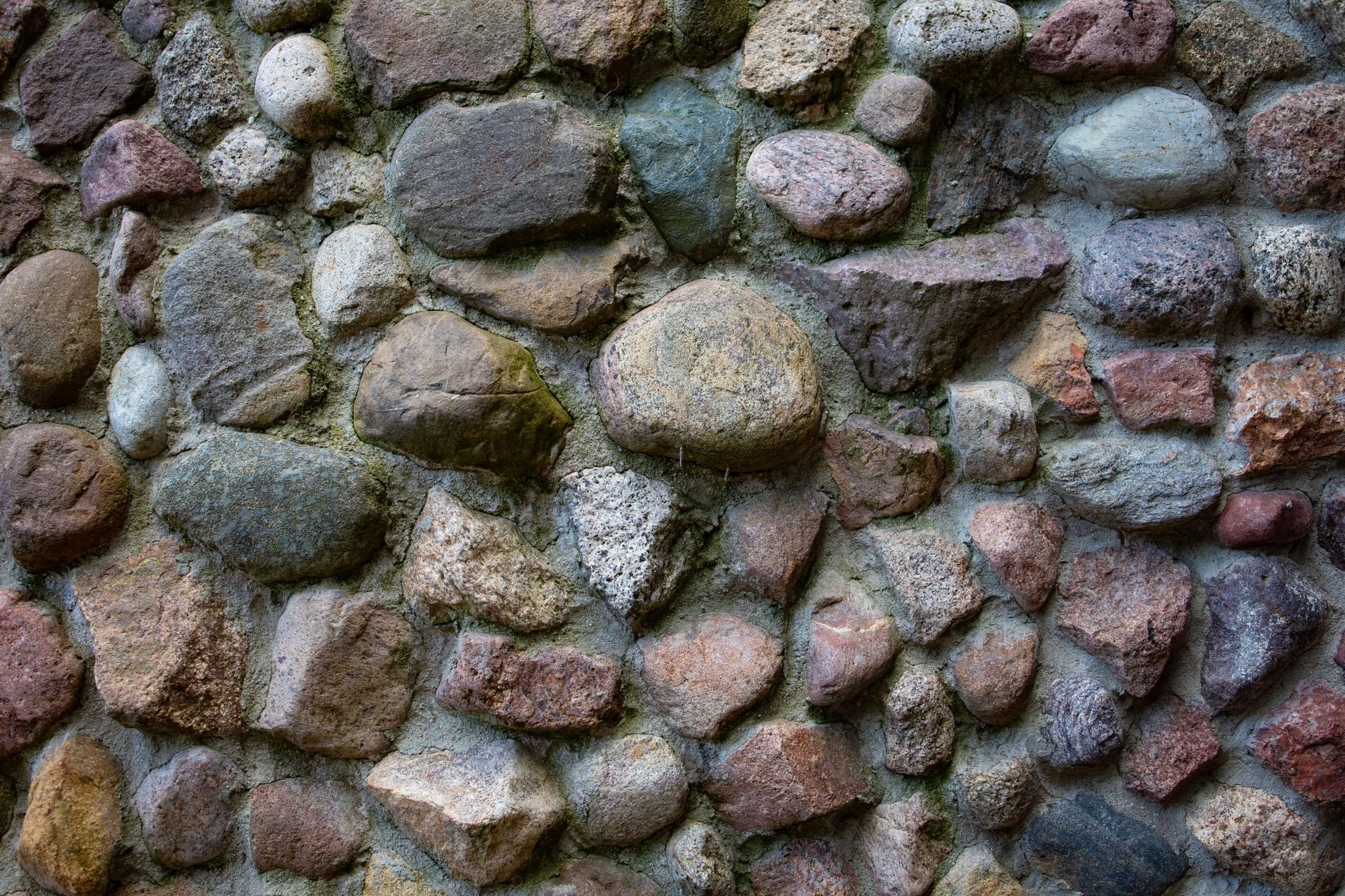
We use angular quarried stone, not rounded river rock. Angular faces lock against each other; round boulders roll. A four-foot wall wants base rocks in the one- to two-ton class; a taller wall wants larger. The biggest, flattest-bottomed stones go on the first course, and each course steps back so no rock’s center of gravity sits outside the rock beneath it. Rock is bought by the ton and placed by the piece, so we look at the pile before it ships; too many small or lumpy stones means a weaker wall.
The base
The first course sits in a trench cut below finished grade on a bed of compacted crushed rock, with the base stones tilted back into the hill. On the collapsible and expansive bench soils the Utah Geological Survey maps along the Wasatch Front, we over-excavate soft material and replace it with structural fill before a single boulder lands. A rockery that settles unevenly loses its interlock, and nothing above the base course can fix that.
Placement, chinking and drainage
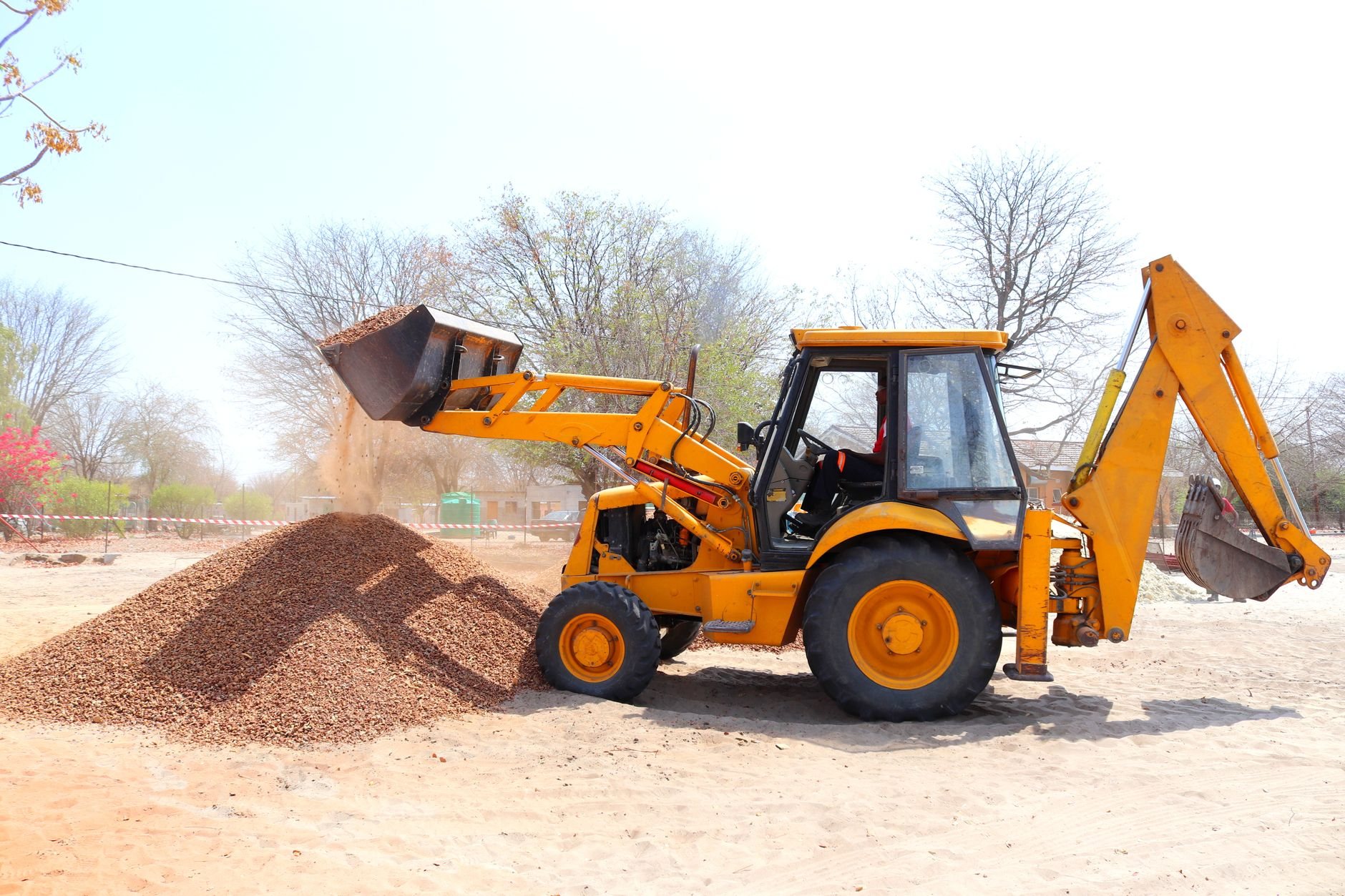
Each boulder is set with the excavator and rotated until it finds a stable three-point bearing. Gaps between large stones get chinked with smaller angular rock, which keeps backfill fines from washing out through the face during a monsoon cloudburst. Behind the wall goes a column of clean drain rock, filter fabric against the native soil, and a perforated pipe at the base that daylights downslope. Rockeries drain better than almost any other wall type, which is why they handle our freeze–thaw winters well, but only if water has a way out instead of pooling in clay behind the base course.
Most Utah cities apply the same roughly four-foot threshold to rockeries that they apply to block and concrete, and a driveway or structure above the wall can require a design at lower heights. We confirm the threshold with your city before anything is priced and, where a design is required, coordinate a licensed engineer to specify rock sizing, batter, and embedment.
What does a boulder retaining wall cost in Utah?
As ballpark planning numbers, not quotes, boulder walls along the Wasatch Front typically land between $25 and $55 per square foot of wall face installed, usually below segmental block and well below poured concrete at the same height. The price is mostly rock and machine time, and both swing with the site.
- Rock delivered. Priced by the ton, roughly a ton per ten to fourteen square feet of face. Haul distance and size class move this line most.
- Machine access. If the only route is a mini-excavator through a side yard, the stone size drops, the courses multiply, and the hours climb.
- Soil correction. Over-excavating expansive clay or loose bench fill and importing structural base is a real cost on the lots that need it.
- Height and engineering. Walls over the city threshold add a design fee and inspections, and taller walls need bigger stone that costs more per ton and places slower.
Decorative boulder placement for steps and accents can ride on the same rock delivery and machine day, which is the cheapest time to do it.
Questions we actually get
How tall can a boulder retaining wall be built?
Single rockeries are practical up to roughly six to eight feet with properly sized stone and a stable base; beyond that the rock gets hard to source and the batter eats a lot of yard. Taller grade changes are better handled as tiered boulder walls, and anything near four feet should expect engineering review.
Can a boulder wall be built where an excavator can’t reach?
Not well. Boulders in the one- to three-ton class are placed by machine, and rock small enough to move by hand makes a landscape border, not a retaining wall. If only a mini-excavator fits, we’ll say what height that supports; if even that is out, a gabion or segmental wall is the honest recommendation.
Do boulder walls need drainage if the rock already has gaps?
Yes. The gaps let water out of the face, but without drain rock, fabric, and a base pipe, fines from native clay plug those gaps and water pools against the base course. After a wet spring and a hard freeze, that is how a rockery starts to bulge.
Can plants grow in a boulder retaining wall?
They can, and it is one reason people choose rock over block. Pockets between stones are packed with soil during placement and planted with drought-tolerant species suited to Utah’s dry summers. We keep pockets above the drain column and off the base course so roots and watering never compromise the structure.
Tell us about your slope
Send a few photos showing the rise of the hill and where a machine could get in, or ask us to walk it. You’ll get a straight read on wall type, engineering, and a realistic budget range before anyone commits to anything.