
Masonry Cleaning & Efflorescence Removal
Efflorescence removal takes the white mineral bloom, lime run, and irrigation staining off brick, block, and stone without burning the surface, then closes the water path that carried the salts out. Grandview cleans and corrects masonry across Salt Lake and Utah counties under a B100 general contractor license.
When cleaning is the whole job, and when it isn’t
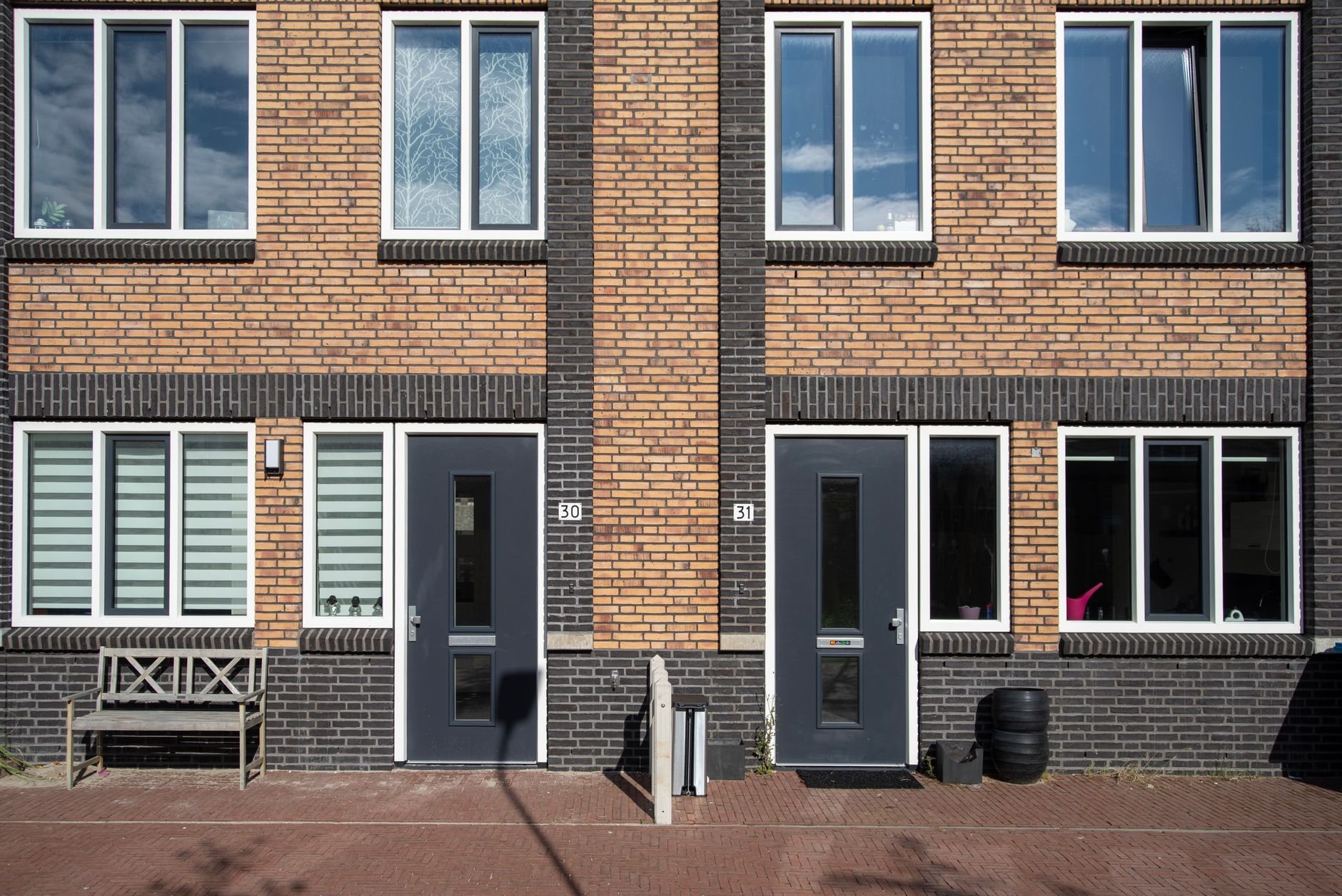
Cleaning is the right scope when the masonry itself is sound and the problem is on the surface: a white, powdery haze across a new brick elevation, a chalky crust creeping up a block wall from the grade line, a brown or green streak below a sprinkler head, or soot and weather grime that make a thirty-year-old facade look sixty. The brick is hard, the joints are tight, and nothing is loose.
It stops being the whole job when the bloom is a symptom. Efflorescence that keeps coming back after a cleaning means water is still moving through the wall, and the fix is a crown, a flashing, a weep, or grading — not more cleaner. Joints that crumble under a stiff brush belong on our brick repair and tuckpointing page. A chimney wearing a heavy white band near the top usually has a cracked crown or a saturated flue, which is chimney repair territory. And soft pre-war brick on an older Salt Lake City or Provo home needs the gentler chemistry and test-patch discipline described under historic masonry restoration.
Why Utah masonry grows so much white
Efflorescence is salt. Water moves through brick, block, mortar, or the concrete behind them, dissolves the soluble minerals already in those materials, carries them to the face, and evaporates — leaving the salt behind as a white crystalline film. Three Utah conditions keep the supply coming. Our soils and groundwater along the Wasatch Front are mineral-heavy, so any wall that sits on grade without a capillary break wicks salts up from below. Summer monsoon cloudbursts drive water into every unflashed cap and open joint in one afternoon, and dry heat pulls it back out through the face. And the hard water in most valley irrigation systems leaves its own calcium crust on the bottom two feet of many block and brick veneer walls.
New construction gets its own version. Fresh mortar and grout hold a lot of free lime, and the first wet season after a build in Lehi, Saratoga Springs, or Eagle Mountain often produces a one-time bloom that looks alarming and usually isn’t. Lime that has carbonated on the face is different: it no longer dissolves in water and needs an acidic cleaner rather than a brush and rinse.
What the work involves
- Find the water. We trace where the moisture is entering — a flat or cracked cap, a missing drip edge, a downspout dumping at the base, a sprinkler arc — because cleaning without that answer is a subscription, not a repair.
- Identify the deposit. Fresh efflorescence dissolves and disappears; carbonate crust, lime run, and iron or vanadium staining do not, and each wants a different product.
- Dry removal first. Loose bloom comes off with a stiff natural-bristle brush and a vacuum. Wetting fresh efflorescence drives the salts back into the wall.
- Test patch. Every cleaner gets tried on a hidden square foot and allowed to dry before it touches the elevation, so we know how the brick, mortar color, and adjacent finishes react.
- Chemical cleaning at low pressure. For bonded deposits we use manufacturer-formulated masonry cleaners such as those from PROSOCO, applied to a pre-wet wall, dwelled per the label, agitated, and rinsed at low pressure. Hardware-store muriatic acid and pressure washing are both off the table: the first burns mortar and etches brick, the second blows out joints.
- Neutralize and protect. Acidic cleaners get neutralized and rinsed so no residue keeps working. Where a water repellent makes sense, it’s a breathable silane or siloxane, never a film-forming sealer.
- Close the water path. The cap, flashing, grading, or sprinkler head that caused the problem gets corrected under the same contract, often alongside our waterproofing and moisture management work.
Problems happen. Surprises should not.
What does efflorescence removal cost in Utah?
For planning, a single stained wall section or a chimney at ground level often lands in the few-hundred-dollar range; a full elevation that needs chemical cleaning and lift or scaffold access typically runs into the low thousands. Those are ballpark numbers, not a quote. What moves the price is square footage, how high the wall is, whether the deposit brushes off or needs an acid product with dwell time, overspray protection for glass and plantings, and whether the moisture repair — a new crown, a regraded bed, a relocated sprinkler — rides along. We give a budget range after a site walk and a firm estimate once the scope is set. Our B100 license is verifiable at dopl.utah.gov. The rest of our masonry work sits in the site, structure & envelope family.
Questions we actually get
Will the efflorescence come back after you clean it?
Only if the water does. A one-time bloom on new masonry usually clears for good once the free lime is spent. Recurring bloom on an older wall means moisture is still moving through it, and the cleaning holds only as long as the cap, flashing, or grading fix that goes with it.
Can’t I just pressure-wash the brick myself?
Please don’t. Pressure above roughly a garden-hose level erodes mortar joints, drives water deep into the wall, and can scar the face of softer brick permanently. Fresh efflorescence is best handled dry with a brush; bonded deposits need the right cleaner at low pressure, with a test patch first.
Does masonry cleaning cost more on an older home?
Often, yes. Pre-1940s brick and lime mortar are softer and more absorbent, so we use milder chemistry, longer test-patch cycles, and more hand work. If the joints are also failing, that becomes repointing rather than cleaning, and we’ll price it that way.
Should I seal the brick after it’s cleaned?
Sometimes. A breathable silane or siloxane water repellent can slow surface water uptake on sound, dry masonry. A film-forming sealer should not go on exterior brick here; it traps vapor behind the face and the Wasatch Front’s hundred-plus freeze–thaw days turn that into spalling.
Tell us what you’re working on
Send a photo of the staining. We reply within a couple of hours during business hours — a day at most — with a straight read on whether this is a cleaning, a repair, or both.