
Exterior door & cabinet refinishing
Exterior door refinishing strips a weathered front door or outdoor cabinet back to sound material, repairs what the sun got to, and rebuilds the finish with a clear coat or enamel rated for the exposure. It’s for Utah County and Salt Lake County owners whose doors have gone gray, cracked, or sticky but aren’t worth replacing, and Grandview does the work under a B100 general contractor license.

When refinishing beats replacement
A stained wood front door is usually the most expensive single finish on the face of a house, and the first to fail. Clear coats on a south- or west-facing door along the Wasatch Front often chalk and peel within three to five years. The door is normally fine. The finish is what died.
Refinishing is the right call when the slab is straight, the stile-and-rail joints are tight, and the damage lives in the top sixteenth of an inch: faded stain, cracked varnish, gray UV-burned wood, surface checking. If the bottom rail is rotted, the panels have split through, or a steel door has rusted out at the kickplate, we’ll say so and price it through door replacement instead.
If the whole trim package is tired, trim and fascia painting is the broader scope; if it’s the body of the house, start with exterior house painting. Horizontal wood under snow all winter is a different product family, covered under deck and fence staining.
What refinishing a door actually involves
Wood, fiberglass, and steel look alike under a failed finish and want different chemistry, so we identify the material first.
- Pull the door, or tent it. Most doors come off the hinges and onto sawhorses, with a temporary panel securing the opening.
- Strip to sound material. Wood gets chemical stripper, scraping, and sanding through the grits until the gray oxidized layer is gone. Fiberglass gets scuffed, never stripped, so the molded grain survives. Steel gets rust converted or ground back to bright metal.
- Repair. Open joints are re-glued and clamped, checks get color-matched exterior filler, soft spots at the bottom rail get epoxy consolidant.
- Finish in coats. Wood: penetrating stain, then three to four coats of UV-inhibited spar urethane or marine varnish, sanded between coats. Fiberglass: gel stain to rebuild the grain tone, then a clear topcoat made for fiberglass. Steel: rust-inhibitive bonding primer under exterior acrylic enamel.
- Rehang and adjust. Fresh weatherstripping and sweep if the old ones are flattened, hinges shimmed so the slab doesn’t bind in summer swell. New locksets and hardware go in easiest while the door is off.
Outdoor cabinets, shutters, and garage-side built-ins
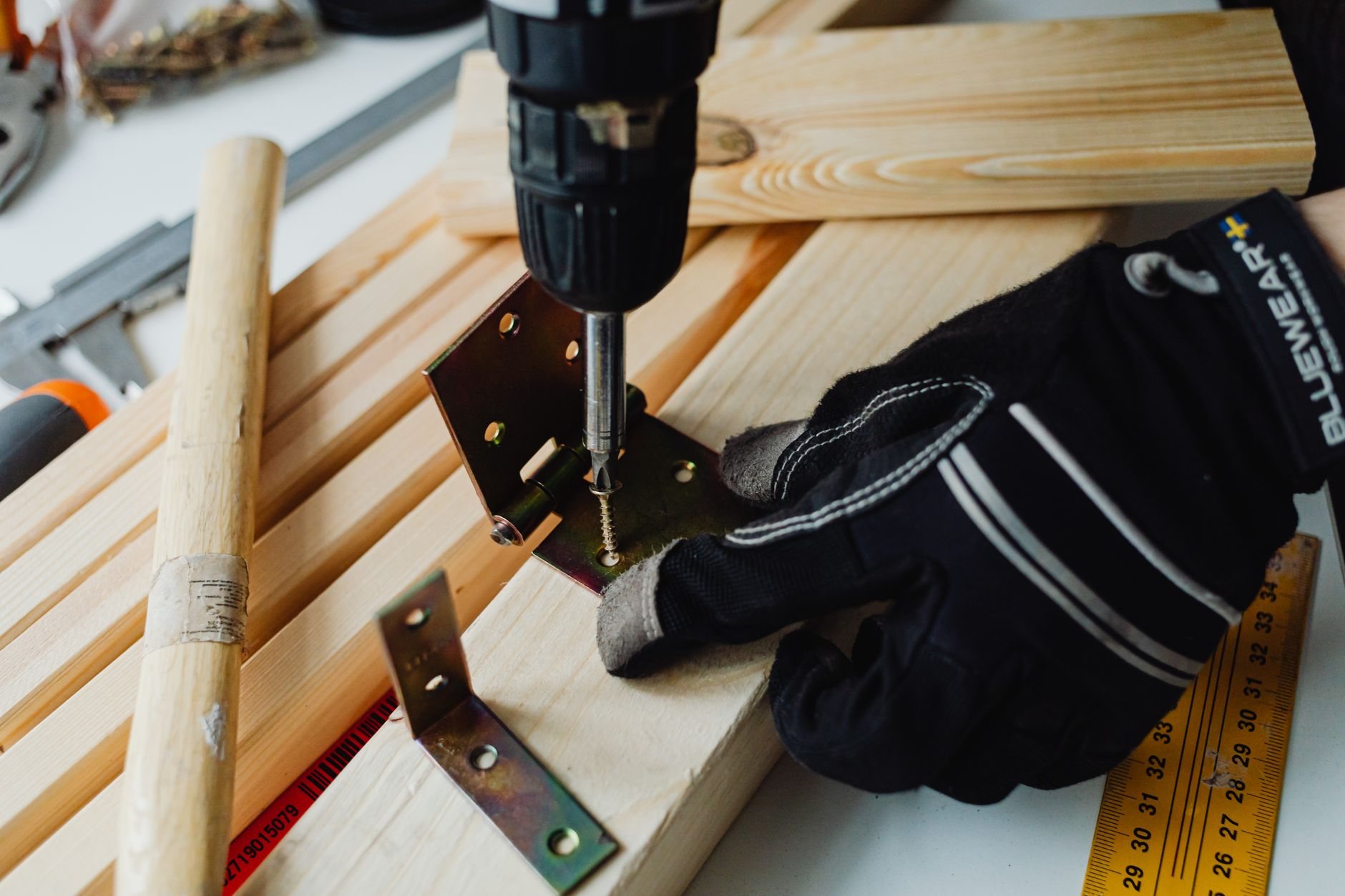
The same process scales down to outdoor kitchen cabinets, storage cabinets along a garage or shop wall, patio built-ins, and wood shutters. Doors and drawer fronts come off, get numbered, and get finished flat so the coats level; boxes are done in place. Laminate boxes can’t be refinished and shutters with rotted louvers are usually cheaper to replace, so send photos first.
How Utah sun and snow treat a front door
At 4,300 to 5,000 feet, UV is strong enough that a clear-finished wood door facing south or west is on a maintenance cycle, not a one-time job: expect a light scuff and maintenance coat every two to three years there, versus a decade for a shaded north door. We write the exposure into the spec: more UV inhibitor, more coats, and a satin sheen that hides the first signs of fade.
The other Utah failure is the bottom edge. Snow piles against the threshold, melts on the 100-plus freeze–thaw days a year, and wicks into the end grain of the bottom rail. Most finishes stop at the face; ours seal the top and bottom edges of the slab, because that’s where water enters. And a glass storm door over a dark stained door can trap enough heat on a July afternoon to blister the finish or warp a fiberglass skin, so if you have one, we’ll talk about venting it or a lighter stain first.
What moves the price
Material first: a wood door needing full chemical stripping and four coats of varnish is the most labor; a steel door needing rust treatment and two coats of enamel is the least. Then glass and size. Sidelights and double doors carry two to three times the edge and muntin work of a plain slab. Repair scope matters more than people expect; a sound door is a finishing job, while one with open joints and a soft bottom rail is half carpentry. As planning numbers, not a quote, most single front doors along the Wasatch Front land in the $600–$1,800 range to refinish, with sidelights and double doors higher and cabinets priced per door and drawer front. You’ll get a firm estimate after we see the door, from a contractor you can verify at dopl.utah.gov.
Questions we actually get
Can a fiberglass door be refinished, or only painted?
It can be refinished. Fiberglass takes gel stain over a scuffed, cleaned surface, then a clear coat formulated for fiberglass. Because the grain is molded, we never sand it aggressively; we remove the failed clear coat, even out the tone with new gel stain, and rebuild the topcoat.
Will my door be off the house overnight?
Usually not. Most entry doors come off in the morning and go back on the same day, with a temporary panel in the opening while we work. Later coats go on with the door hanging open, or on a second visit. If a door must stay off for repairs, we install a secured temporary closure before we leave.
What’s the difference between refinishing and just painting the door?
Painting adds an opaque coat over a prepped surface. Refinishing rebuilds a transparent finish, so every flaw in the wood shows and the strip, sand, and repair steps have to be more thorough. That prep is why refinishing costs more per door. Changing a stained door to a painted one still requires the strip.
Tell us what you’re working on
Door and cabinet refinishing is one scope inside our exterior painting work, part of the site, structure & envelope family, and often paired with a power wash and prep ahead of a trim repaint. Send a photo of the door and tell us which way it faces. We reply within a couple of hours during business hours — a day at most — with a straight read on refinish versus replace.