
Water-Damaged Drywall Replacement in Utah County
Water-damaged drywall replacement means cutting out board a leak or flood has saturated, confirming the cavity behind it is dry, and rebuilding the wall or ceiling to match what was there. Grandview Contractors does this across Utah County and Salt Lake County under a Utah DOPL B100 general contractor license.
When replacement beats a patch or a skim coat
Drywall is a gypsum core wrapped in paper. Once that core stays wet for more than a day or two it loses its strength, the paper lets go, and the surface keeps crumbling and staining through paint. A small mark from a drip that dried fast is a drywall repair. A wall that’s stained but still hard and flat may only need stain-blocking primer and a skim coat. A sagging ceiling, board that gives under thumb pressure, swollen seams, or anything wet for 48 hours or more is a replacement.
The causes around here are rarely dramatic: a supply line under a sink, a failed water heater in a finished basement, a tub overflow through the kitchen ceiling, a summer monsoon cloudburst that overfilled a window well. And every winter, a burst pipe in an exterior wall — most often in bonus rooms over garages, where supply lines run through thinly insulated cavities.
If water is still standing, start with water extraction and drying under our water damage restoration service; this page covers what happens after.
How we replace water-damaged drywall
- Source fixed first. We don’t hang board over an active problem. Plumbing failures are repaired by a licensed plumber we coordinate under the same contract; roof leaks and bad window wells get corrected before anything closes.
- Map the moisture, not the stain. A moisture meter shows where the board is actually wet — often two to three feet past the visible line. Cut lines come from the readings, not the discoloration.
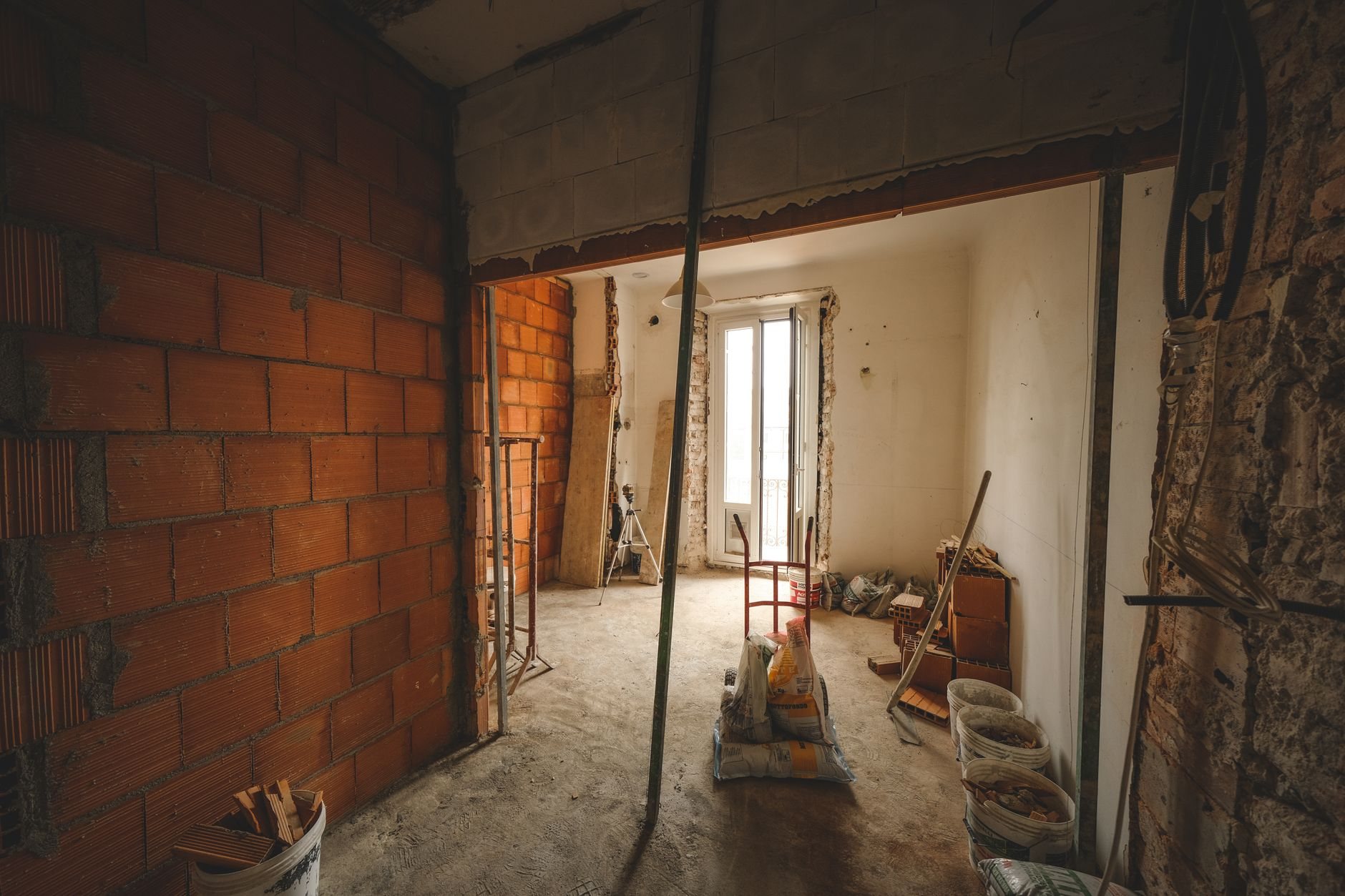
- Cut clean and square. On walls, a flood cut at 2 or 4 feet lets the replacement sheet land on a factory edge; on ceilings, we cut to joist centerlines so the new piece bears on framing all around. Wet batt insulation comes out too — soaked fiberglass never recovers its R-value and holds water against the studs.
- Verify the cavity is dry. Framing is metered before anything closes. Interior framing in Utah’s dry climate normally sits at a low moisture content, and we want readings back near that baseline — not just “drier than yesterday.”
- Deal with what we find. Visible mold over roughly ten square feet calls for professional remediation under EPA mold guidance before our crew continues. Rusted nail plates or a rotted bottom plate get replaced while the wall is open.
- Rebuild and blend. New insulation, new board, three coats with real drying time, matched texture, then stain-blocking primer so the old water mark never ghosts through the paint.
Which board goes back in
Half-inch on most walls and five-eighths on ceilings, so the new piece doesn’t belly between joists. In bathrooms, laundry rooms, and around water heaters we use moisture-resistant board, which tolerates humidity better than standard gypsum — though it is no substitute for fixing the leak. When the damaged wall is a garage-to-house separation or furnace room enclosure, the replacement goes back as Type X to keep the assembly compliant under current Utah-adopted code; see our fire-rated drywall assemblies page. Where a frozen pipe caused the damage, we talk through relocating that line before the cavity closes.
Texture is the part most people worry about. Knockdown and orange peel — standard in Utah County subdivisions from Lehi to Spanish Fork — can be matched closely enough to disappear under paint; see texture matching. Smooth walls are harder — any ridge at the patch perimeter shows under raking light — so a replaced ceiling section in a smooth room is often better finished as a full-ceiling skim. Either way, the room then hands to interior painting once the texture is on.
What does water-damaged drywall replacement cost in Utah?
As ballpark planning numbers, not a quote: replacing one wall or ceiling section after a contained leak — cut-out, insulation, board, finish, and texture match — is usually a one-to-two-day labor scope landing from a few hundred dollars to around $1,500, plus return trips for coats to dry. A full-room flood cut in a finished basement scales with linear footage and the base trim that comes off and goes back.
What moves the number: ceilings cost more than walls (overhead work, heavier board, staging); texture type; drying days before the cavity can close; whether a plumber is on the same ticket; and trim or flooring pulled to reach the bottom plate. Replacement prices above new drywall per square foot because demolition, disposal, and verification ride on top of the hang-and-finish. You get a written scope with each line visible — useful if an adjuster is reading it too — and you can confirm our license at dopl.utah.gov before we start. This is one scope within our drywall services, part of the wider renovation and build-outs family.
Questions we actually get
Can wet drywall dry out and be saved?
Sometimes. Board that took a brief splash and dried within a day or two with no swelling or soft spots often survives with a stain-blocking primer. Board that stayed wet longer, gives under pressure, has swollen seams, or sags off a ceiling has lost its structure and should come out — and paper-faced gypsum feeds mold once it’s been damp more than a couple of days.
How much drywall do you actually cut out?
To the moisture meter, not the stain. We cut to the nearest framing member at least a foot past the last wet reading — on walls, usually a flood cut at 2 or 4 feet so the new sheet uses a factory edge; on ceilings, to joist centerlines. Wet insulation behind it comes out at the same time.
How long before the room is usable again?
Drying verification sets the clock. Once the cavity reads dry, a small replacement needs about a day to insulate and hang, then three to five days of coat-and-dry cycles before texture and primer. Utah’s low humidity shortens drying but doesn’t erase it; we won’t stack coats on wet mud to shave a day.
Will you work with my insurance adjuster?
On documentation, yes. We photograph what came out, record meter readings, note anything found in the cavity, and write the scope so every line item is plain. Coverage decisions are between you and your carrier — we don’t interpret policies — but an itemized scope makes that conversation shorter.
Tell us what you’re working on
We reply within a couple of hours during business hours — a day at most. You’ll get a straight read on scope, sequence, and budget before anyone commits to anything.