
Slabjacking & Mudjacking in Utah County
Mudjacking, also called slabjacking, lifts a sunken concrete slab back to grade by pumping a cement-based slurry through small holes drilled in the slab, filling the void underneath and raising the concrete as the material fills. It is the right fix for settled driveways, walks, garage floors, and patios still in one piece, and Grandview performs it under a Utah B100 general contractor license as part of our foundation repair work.
When mudjacking is the right call, and when it isn’t
Mudjacking belongs on a slab that sank but didn’t break apart: a driveway panel that dropped an inch at the garage apron, a sidewalk section that now trips people, a patio pitched toward the house, a garage floor with a hollow-sounding corner. The slab is sound; the soil under it is gone. Slurry puts the support back.
Its nearest sibling is polyurethane foam leveling, the same job done with expanding foam. Foam is lighter, uses smaller holes, and cures in minutes, so it suits slabs over soft or wet soil that can’t carry added weight and interior floors where the finish matters. Mudjacking wins on cost per square foot and on large voids that would eat a lot of foam. We’ll tell you which one your slab is asking for.
Two situations send the job elsewhere. A slab broken into several pieces needs replacement. And a slab carrying wall load, or moving with the house footings, is structural settlement — slab piers or push piers carry the load down to soil that will hold it.
What slabjacking actually involves
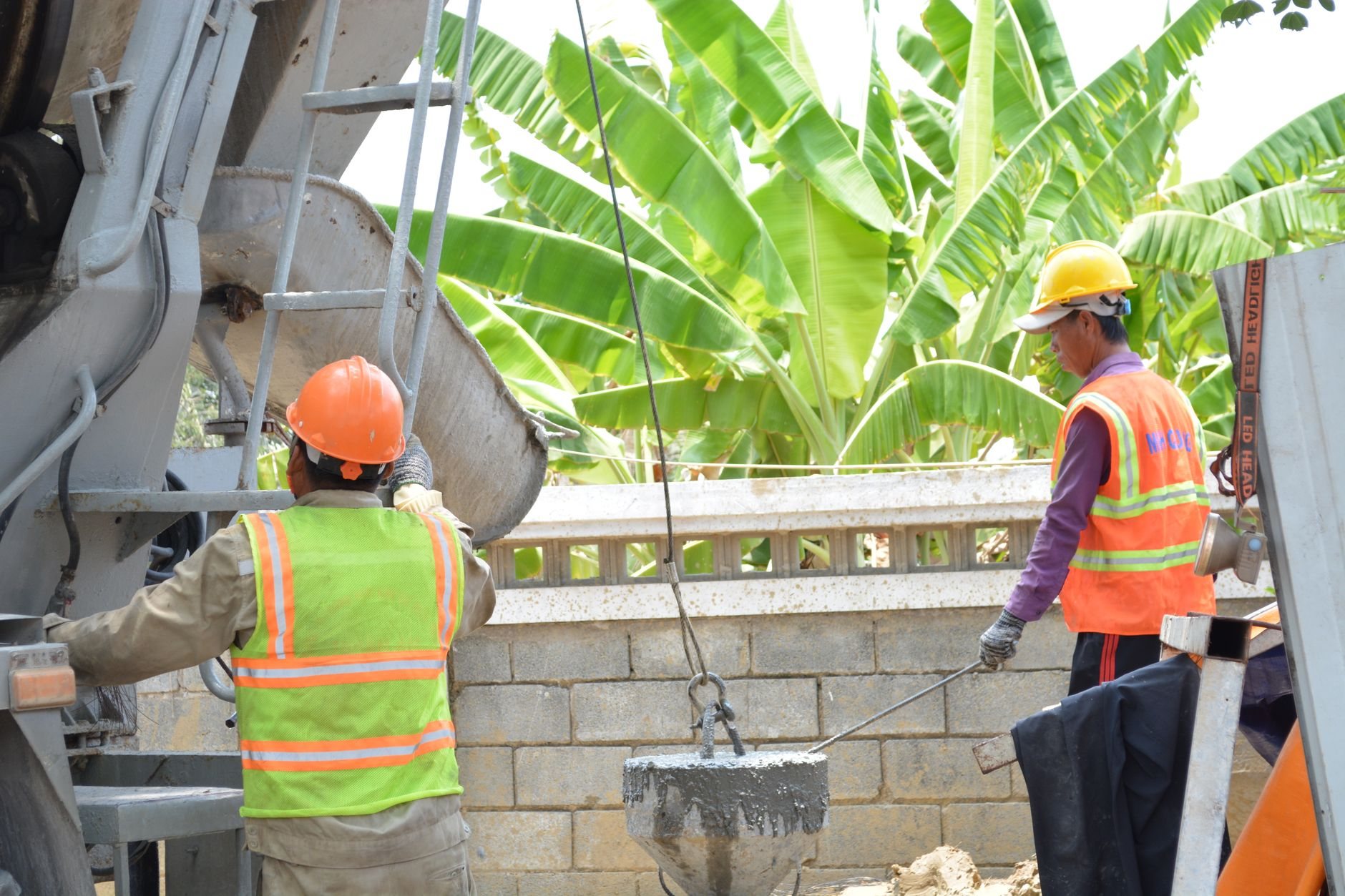
We drill 1⅝-inch holes through the slab in a pattern that follows the void — typically every three to six feet, closer at the low corner. A grout pump pushes slurry through each hole at low pressure. The mix is sand, Portland cement, and water, sometimes with fly ash or native soil depending on the lift and strength needed. It fills the void from the low spots up; once the void is full, the pressure starts raising the slab. We work hole to hole in fractions of an inch against a string line, because a slab raised too fast at one hole cracks across the others.
Cured slurry weighs roughly 100 pounds per cubic foot. That weight is why mudjacking holds a driveway so well, and why we’re careful about soil. Much of the bench ground in Utah County is collapsible — soil that holds up dry and compresses sharply the first time it’s thoroughly wet, as the Utah Geological Survey documents across the Wasatch Front. A slab that sank because a downspout saturated collapsible fill will sink again if the water keeps coming. So the estimate includes the downspout extension, regrade, or drain the slab needs to stay up.
Once the slab is at grade, each hole is packed with non-shrink grout finished flush and the joints get resealed — on the Wasatch Front, roughly a hundred freeze–thaw days a year will find any open joint and start the next void. Walk on it the same day; park on it after about 24 hours.
How a mudjacking job runs
- Look at the slab, then under it. We measure the drop, sound the slab for hollow areas, and work out why the soil left: washed-out base, uncompacted backfill along a foundation trench, a leaking hose bib, a downspout aimed at the corner.
- Decide slurry or foam. Void size, soil, slab location, and budget pick the material. Sometimes the honest answer is that the slab is past lifting.
- Drill, pump, lift. Holes on a layout that matches the void, slurry pumped in sequence, lift checked continuously against the neighboring panels.
- Patch, seal, drain. Holes grouted, joints and the slab-to-foundation gap resealed, drainage correction finished so the base stays dry. You get a note of what caused the settlement and what we did about it.
What does mudjacking cost in Utah?
Mudjacking in Utah County typically runs about $3 to $8 per square foot of slab lifted, with a minimum of a few hundred dollars for a single sidewalk panel or a set of steps. A two-car driveway apron that has dropped an inch usually lands between $600 and $1,800. Those are ballpark planning numbers; the on-site measurement sets the estimate. Replacing the same slab generally costs two to three times as much.
- Void volume. Price tracks slurry, and slurry tracks the void. A quarter-inch drop over a big patio can cost less than a three-inch drop at one corner.
- Slab thickness and condition. Thin or crumbling slabs take slower lifting and more holes; some aren’t candidates at all.
- Water correction. Downspout extensions and regrading are cheap and belong in the number. Skipping them is how the same slab gets lifted twice.
Questions we actually get
Mudjacking or polyurethane foam: which is better for a Utah driveway?
For a plain exterior driveway or walk over firm soil, mudjacking usually costs less and holds up fine. Foam earns its higher price over wet or weak soil, where slurry weight could cause more settlement, on interior floors, and where lift must be precise and immediate. We quote whichever the slab needs, not the one with the higher ticket.
How long does a mudjacking repair last?
Lifted slabs commonly stay put for many years when the reason the soil left has been corrected. The slurry doesn’t degrade; what undoes the repair is water returning to wash out the base or saturate collapsible soil. That’s why drainage correction is part of the job, not an upsell.
Can you mudjack a slab in winter?
With limits. The ground under the slab has to be unfrozen and daytime temperatures warm enough for the slurry to cure; a slab lifted over frost can drop when it thaws. Along the Wasatch Front that typically means March through November, with mild-winter exceptions.
Will the drilled holes show afterward?
On close inspection, yes — grey grout patches about the size of a half-dollar, usually six to ten on a driveway, weathering toward the slab color over a season or two. On stamped or colored concrete we place holes along pattern lines or joints where they’re least noticeable.
Tell us what your slab is doing
Send a photo of the drop and a rough measurement and we’ll tell you whether it’s a lift, a foam job, or a replacement — part of our site, structure and envelope work. We reply within a couple of hours in business hours, a day at most.