
Helical pier foundation repair in Utah County
A helical pier is a steel shaft with welded helix plates, screwed into the ground beside a settled footing until the installation torque confirms it has reached soil that can carry the load. It is the right repair for lighter structures and tight-access sites where a push pier can’t be driven, and Grandview installs them under a Utah B100 general contractor license, verifiable at dopl.utah.gov.
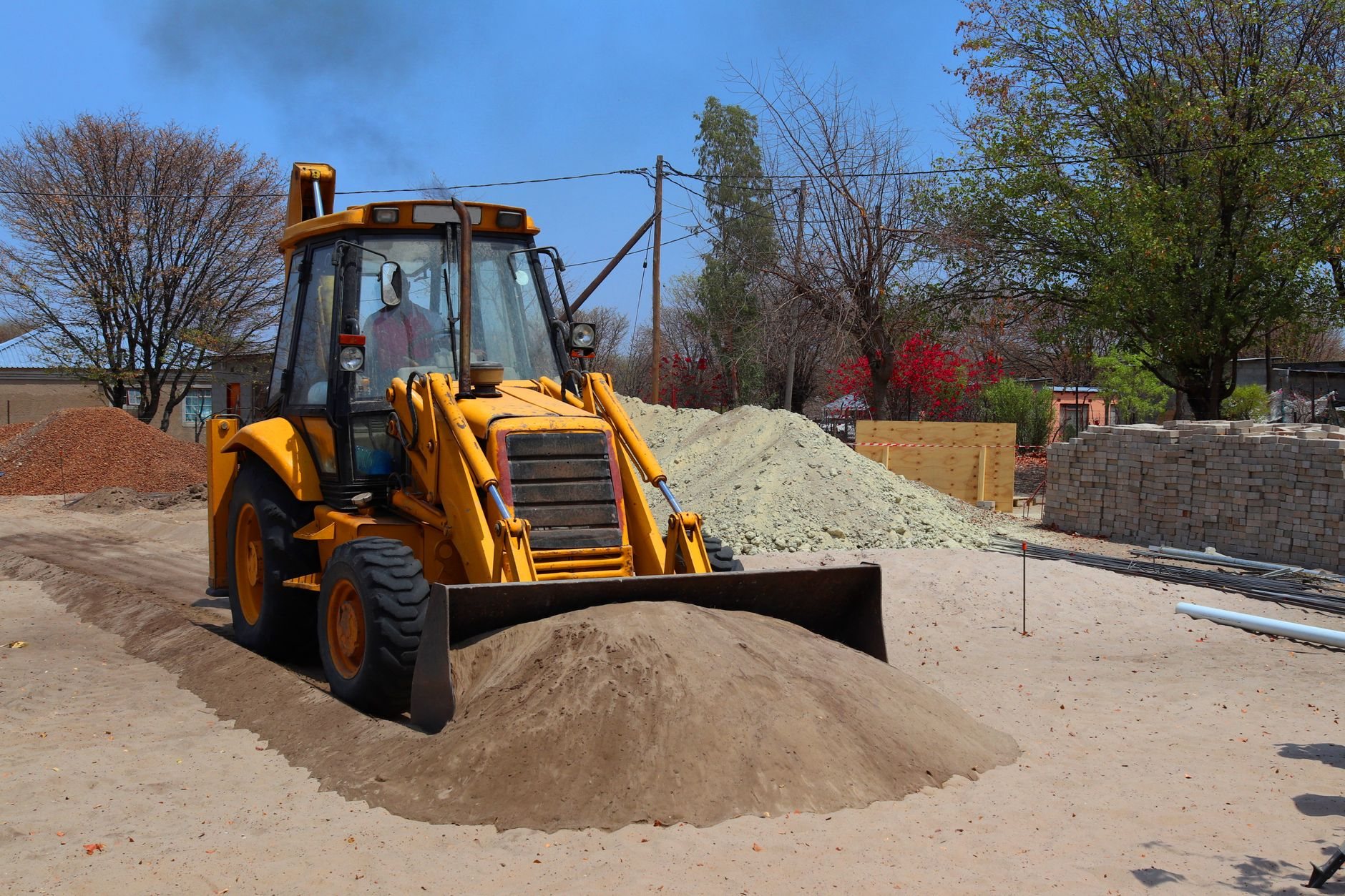
When a helical pier beats a push pier
A push pier is driven down using the weight of the house as the reaction force — ideal under a heavy two-story home, useless under a single-story addition or detached garage, because the pier lifts the light structure instead of advancing.
A helical pier doesn’t borrow the building’s weight. A hydraulic drive head rotates the shaft and the helix plates pull it into the soil like a wood screw, so it reaches capacity regardless of what sits on top. It is the default for:
- Light structures. Additions, porches, decks, garages, and crawl-space homes with sagging perimeter walls.
- Tight access. The drive head mounts on a mini-excavator and fits a side yard; hand-portable units handle crawl-space piers.
If the settled element is an interior slab, slab piers are the narrower answer. If the footing must be deepened for a new load, that is foundation underpinning, which may still use helicals as the element.
What goes in the ground
A helical pier is three parts. The lead section carries one to three helix plates — typically 8, 10, and 12 inches in diameter, welded at a set pitch so each plate follows the path cut by the one ahead. Extensions bolt on in 3-, 5-, or 7-foot lengths until the lead reaches competent soil. A foundation bracket at the top transfers the footing’s load onto the shaft. Residential repair usually runs on 1.5-inch solid square shaft, which penetrates cobbly layers well; round shaft is specified where buckling resistance in soft upper soils matters.
Everything below grade is hot-dip galvanized — bare steel in Utah’s variably corrosive bench soils is a repair with an expiry date. The engineer’s design calls out shaft, helix configuration, bracket, minimum embedment, and the number that matters most: the target installation torque, derived from required capacity with a safety factor of two.
How a helical pier gets installed
- Engineering. A licensed structural engineer, coordinated by Grandview under the project contract, sets pier count, spacing, shaft and helix spec, and target torque. On the Wasatch Front that includes checking for collapsible soils, which the Utah Geological Survey maps across much of the bench — a helix bearing in a collapsible layer can lose capacity the first time it saturates, so the plates go below it.
- Pits. A pit about two by three feet exposes the footing at each location; a notch is cut so the bracket seats squarely under it.
- Driving. The lead advances at one revolution per helix pitch — screwing in, not augering the soil loose. Torque is logged every foot.
- Termination. The pier stops when it has held target torque through its last three feet, at or below the engineer’s minimum depth. The helix plates also sit well below the roughly 30-inch frost depth — with 100-plus freeze–thaw days a year here, a shallow helix gets jacked by frost; a deep one never notices.
- Bracketing and lift. The bracket is pinned and a hydraulic ram loads the pier. If the engineer has approved recovery, the footing is lifted in small measured increments while we watch crack widths, then locked off.
- Backfill and records. Pits are backfilled in compacted lifts and graded away from the wall. You get every pier’s torque log, the engineer’s letter, and the inspection sign-off.
What do helical piers cost in Utah?
Installed helical piers in Utah County typically run about $1,800 to $3,500 per pier, and most residential settlement repairs need four to eight. That is a ballpark planning range, not a price. What moves it:
- Depth to torque. Extensions add cost. A footing over thick collapsible bench soil may take 25 feet of shaft where a valley-floor lot in Provo takes 12.
- Cobbles. Alluvial fans along the mountain front are full of rock. A pier that refuses early on a cobble may need relocating — the proposal carries that as a unit price, not a surprise.
- Interior versus exterior. Exterior pits with machine access are fastest; hand-driven crawl-space piers cost more each.
- Lift. Stabilization is the baseline. A controlled lift adds time at each pier and is scoped as its own line.
Helical pier repair is one method within our foundation repair work in the site, structure and envelope family. The same hardware also goes under new construction: on a lot with a poor soil report, a helical pile foundation solves the problem before it starts.
Questions we actually get
How deep do helical piers go in Utah soil?
As deep as it takes to hold target torque, below frost depth and below any collapsible layer. On valley-floor lots in Provo or Orem that is often 10 to 20 feet; on bench lots over deep alluvium it can be 25 feet or more. The torque log tells us when we’re there — depth is the result, not the goal.
Can helical piers be used on a heavy house, or only light structures?
Both. Helicals carry heavy loads; the engineer specifies larger shafts, more helix plates, or closer spacing. Push piers are usually chosen for heavy houses because the building’s weight makes them efficient to drive, not because helicals can’t do the job. Where access is tight, helicals win on heavy structures too.
Will installing helical piers crack my walls or shake the house?
Installation is quiet and low-vibration — rotation, not hammering — which is one reason it suits occupied homes. A lift is the only step that moves the structure, and it is done in small increments while we watch finishes.
Do helical piers need a permit and inspection in Utah County?
Yes. Nearly every city treats pier installation as structural work requiring a permit with a stamped engineering design, and an inspector typically verifies torque logs and bracket installation before backfill. We pull the permit and schedule inspections as part of the project; verify city-specific requirements with your building department.
Tell us what has settled
Send photos of the cracks and a note on what moved. We’ll give you a straight read on whether helical piers are the right fix. We reply within a couple of hours during business hours — a day at most.