
Engraved & etched concrete in Utah County
Engraved concrete is a pattern cut into an existing, cured slab — brick, tile, flagstone, or a custom design — after the surface has been stained, so the grooves read as grout lines and the fields read as stone. It’s the one decorative finish that gives a plain, sound patio or entry a stamped look without tearing it out, and Grandview stains, engraves, and seals it under a Utah B100 license.
When engraving is the right call, and when it isn’t
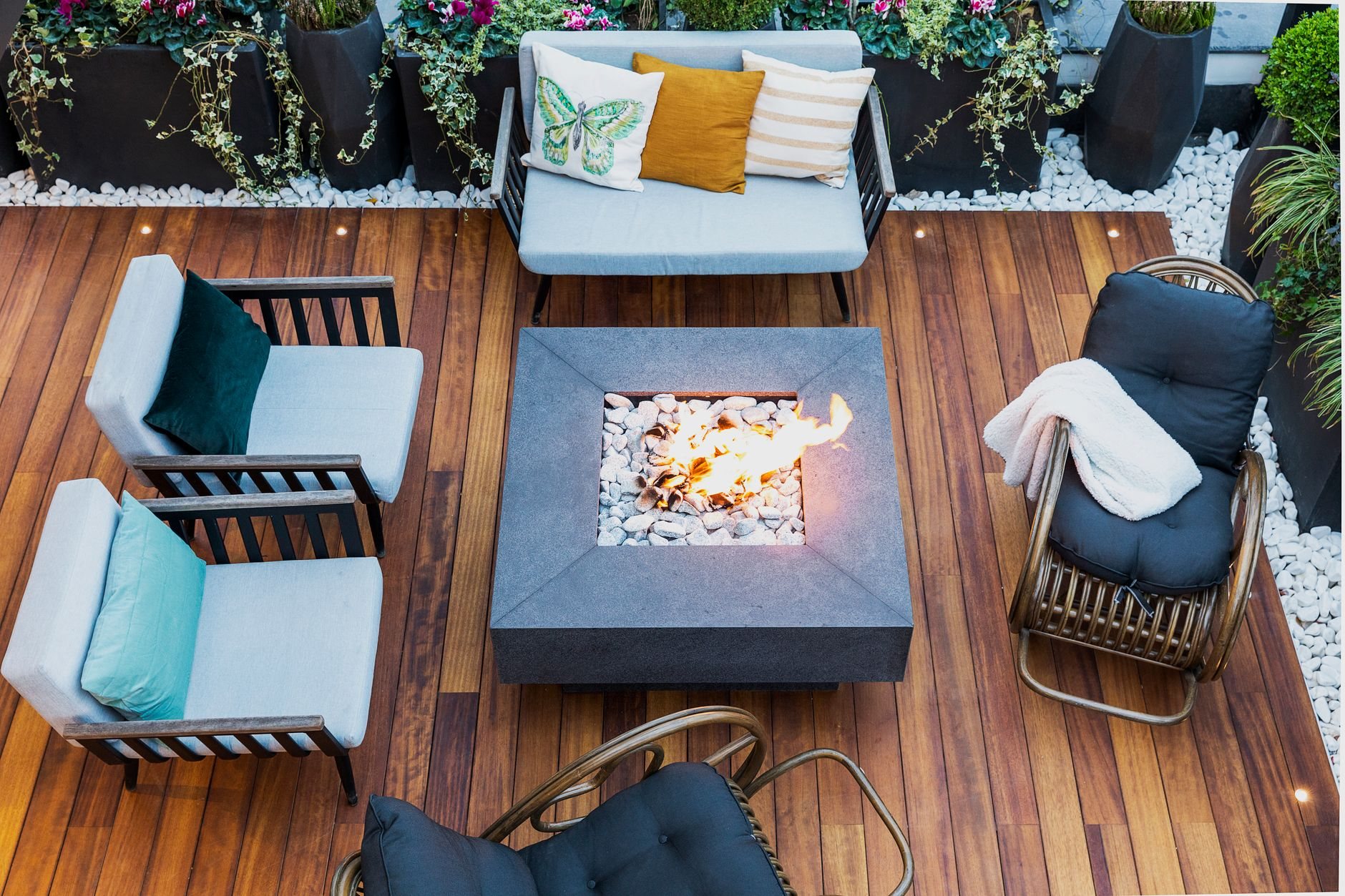
Engraving earns its place when the concrete you already own is structurally fine and visually dull. A ten-year-old broom-finished patio, a builder-grade front walk, a garage apron that has never heaved — those are candidates. The slab stays; the look changes.
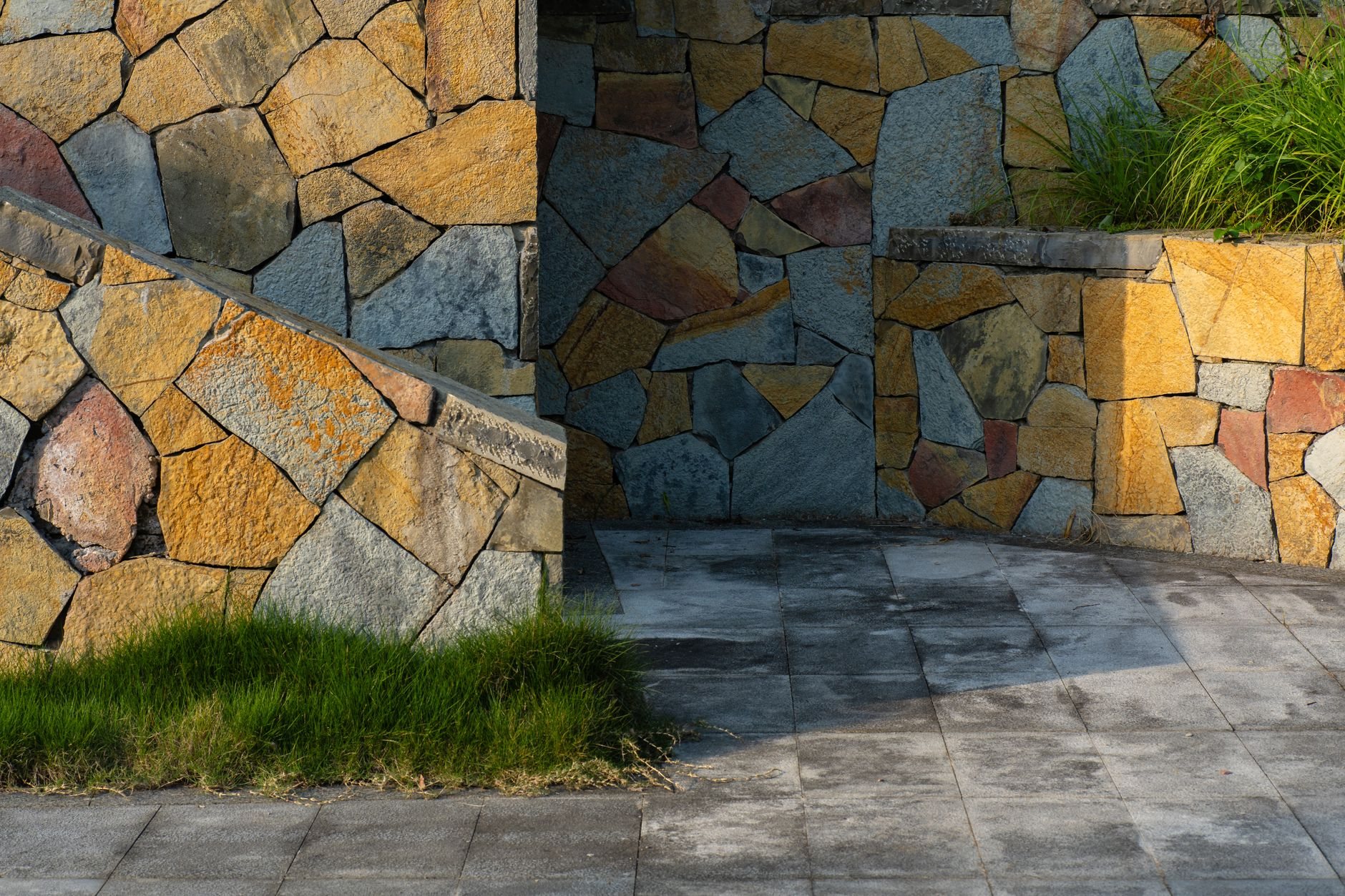
Against its nearest siblings on our decorative concrete page: stamped concrete needs a new pour — if you’re replacing the slab anyway, stamp it. Stenciled concrete masks a pattern onto fresh concrete or an overlay; engraving cuts it into cured concrete, so the lines are permanent, not a coating. Stained concrete is the same color process without the cut — pick it if you want tone but no pattern. If the surface is spalled or patched, a concrete overlay comes first; engraving a bad surface gives you a bad surface with lines in it.
Engraving can’t do two things. It can’t hide cracks — a groove cut across a crack will not make it disappear, though a free-form flagstone layout can route a joint line along it so the eye reads the crack as design. And it can’t fix a slab that’s moving. A crack with vertical offset is a base or soil problem, common on the Wasatch Front’s expansive and collapsible soils, and no finish addresses it.
What the work involves
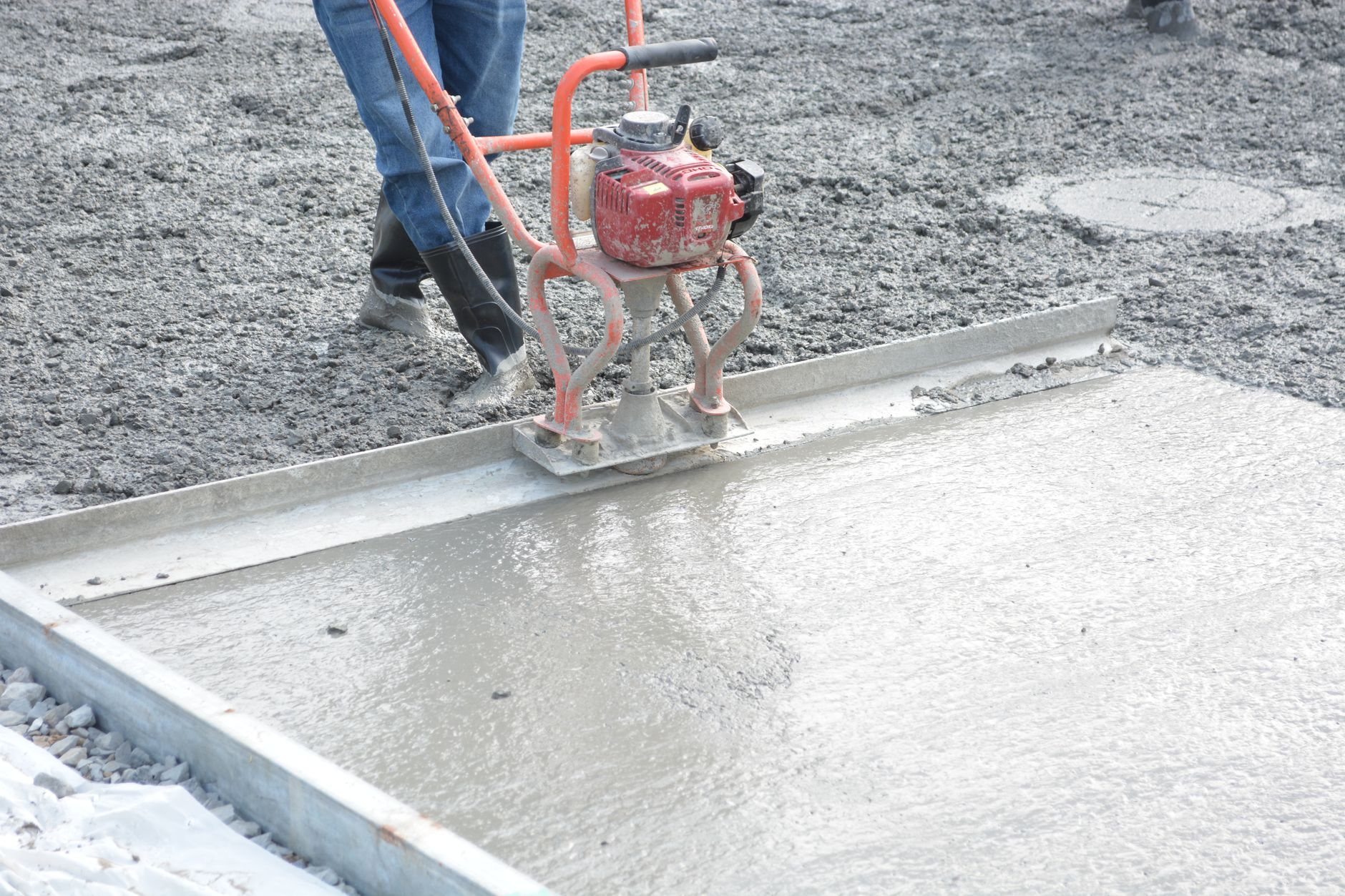
The order matters: color first, cut second. Stain goes on the whole slab, then the engraving tool removes about an eighth of an inch of surface along each line, cutting through the colored paste to the uncolored concrete beneath. That’s what makes the grooves look like grout — the contrast is the slab’s own gray, not a second coat.
- Inspect and test. Water-drop test for old sealers or curing compounds, a check for offset at every crack, and a stain test patch in a corner.
- Clean and profile. Pressure wash, degrease, and a light etch or grind so the pores are open. Patches get feathered now; they take color differently.
- Stain the field. Acid stain for earth tones and mottling, water-based for grays, blues, or uniform color. Neutralize, rinse, dry.
- Lay out and cut. Lines are chalked, then cut with a guided engraving machine for brick and tile grids or a handheld router for random flagstone and curves. Borders and medallions are cut last.
- Second color and seal. Individual stones or borders can take a second stain tone. Then a UV-resistant acrylic sealer with fine anti-slip grit — cut grooves and a glossy sealer are a bad pairing on a wet surface.
Etched designs: logos, compass roses, and sandblast work
Etching is engraving’s cousin for single images rather than repeating patterns. A design — a brand on a shop apron, a compass rose at an entry, a logo at a storefront threshold — is cut through an adhesive stencil with a sandblaster or a fine engraving bit, then stained a contrasting tone inside the mask. Depth is about a sixteenth of an inch: enough to catch light and hold color, not enough to collect ice. We tape the full-size design in place and have you walk on it before anything gets cut. There’s no undo on this one.
What does engraved concrete cost in Utah?
As a ballpark planning number — not a quote — staining and engraving a sound existing slab in Utah County typically runs about $6 to $12 per square foot, with simple brick or tile grids at the low end and multi-color random flagstone with borders at the top. That’s roughly half of what tearing out the slab and pouring new stamped concrete costs — the honest reason engraving exists. What moves the number:
- Pattern density. Cost scales with linear feet of cut, not square feet of slab. A 12-by-12 tile grid has far less cut line than running-bond brick over the same area.
- Surface condition. Stripping an old sealer or grinding off a curing compound before stain will take is the biggest swing on older patios.
- Color count. One stain tone is the base case. Hand-staining stones in two or three tones roughly doubles finishing labor.
- Winter exposure. Grooves hold meltwater, and the Wasatch Front sees a hundred-plus freeze–thaw days a year. A breathable sealer recoated every two to three years is part of owning it; keep deicing salts off it.
Engraved concrete is one scope in our site, structure and envelope family, performed under our Utah DOPL B100 license, verifiable at dopl.utah.gov. You’ll get a budget range after a site walk and a firm written proposal before anything is scheduled.
Questions we actually get
Can my existing patio be engraved, or does it need to be replaced?
If the slab is sound, drains away from the house, and its cracks are hairline with no vertical offset, it can be engraved. If it’s spalling, heaving, or sitting on soil that’s moving, replacement or an overlay comes first. A site walk settles it, and we’ll say which it is plainly.
Will the engraved pattern wear off like paint or a coating?
No. The grooves are cut into the concrete and last as long as the slab does. The stain is in the surface, not on it; the sealer is the only sacrificial layer, and it fades under Utah’s high-elevation UV, so it needs recoating every two to three years. Lines stay; sheen and color depth are what maintenance protects.
Do the grooves trap water and ice in winter?
A little, which is why depth stays near an eighth of an inch and the slab’s pitch is checked before we cut. On a surface that drains, meltwater clears the grooves. Skip deicing salts, which multiply freeze cycles in the cut lines; use sand for traction.
What drives one engraving bid higher than another?
Usually prep and sealer. A bid that skips stripping old sealer gets blotchy stain; a cheap glossy topcoat without grit gets a slippery patio. Ask every bidder what happens to the surface before stain goes on, and whether the sealer is breathable and UV-rated for exterior use.
Tell us what you’re working on
Send a few photos of the slab and rough dimensions. We reply within a couple of hours during business hours — a day at most — with a straight read on whether it’s a candidate, which pattern fits, and a realistic budget range before anyone commits to anything.