
Custom Built-Ins & Shelving in Utah County
Custom built-ins are cabinetry and shelving built to a specific wall — fireplace bookcases, a media wall, a window seat, a mudroom bench, office storage — so the piece fits the room instead of the room tolerating the piece. Grandview Contractors designs and installs them across Utah County and Salt Lake County under a Utah DOPL B100 general contractor license.
When a built-in beats a bought bookcase — or a closet system
A freestanding bookcase leaves a gap at the wall, a gap at the ceiling, and a baseboard it can’t sit flush against. A built-in closes all three. It’s the right choice when the wall has an obvious job — the alcoves beside a fireplace, the dead wall under a stair, the family-room wall that has to hold a television and everything that goes with it — and you want the piece to read as part of the house.
If the storage lives behind a door and the goal is rod and drawer capacity, you want custom closet systems, organized around garment math rather than display. If the fireplace is the real subject, start with mantels and surrounds, because firebox clearance sets the geometry everything else respects. A kitchen run belongs with cabinetry and countertops.
Built-ins come up constantly in newer Lehi, Saratoga Springs, and Eagle Mountain homes, where great rooms were drywalled flat and left to the owner. A pair of fireplace bookcases is often the first thing that makes one of those rooms look designed.
What separates a built-in that lasts from one that sags
Shelf span is the number that matters most. A ¾-inch MDF shelf loaded with books bows visibly past about 30 inches of unsupported span. Cabinet-grade plywood with a solid hardwood edge holds flat to roughly 36 inches; beyond that we add a mid-support or go to 1-inch stock. Bookcase bays are laid out around those limits first, then made to look even.
Carcasses are ¾-inch plywood or MDF, dadoed for fixed shelves and bored on a 32-millimeter pattern for adjustable ones. Paint-grade doors and face frames are poplar or MDF; stain-grade work goes to alder, maple, or oak, and that stock sits in the room for several days before we cut it. Wasatch Front interiors swing between a swamp-cooled July and a furnace-dried January, and a face frame that didn’t acclimate shows a gap at every stile by February.
The install details are where built-ins earn the word “custom.” We scribe end panels to walls that are never truly plumb, run a filler so doors clear the casing beside them, and carry the room’s baseboard across the toe kick so the unit looks framed in, not pushed in. Crown returns into the ceiling line, and tall units are screwed through the back into studs — along the Wasatch fault, an unanchored 7-foot bookcase is a seismic question before it’s a design one.
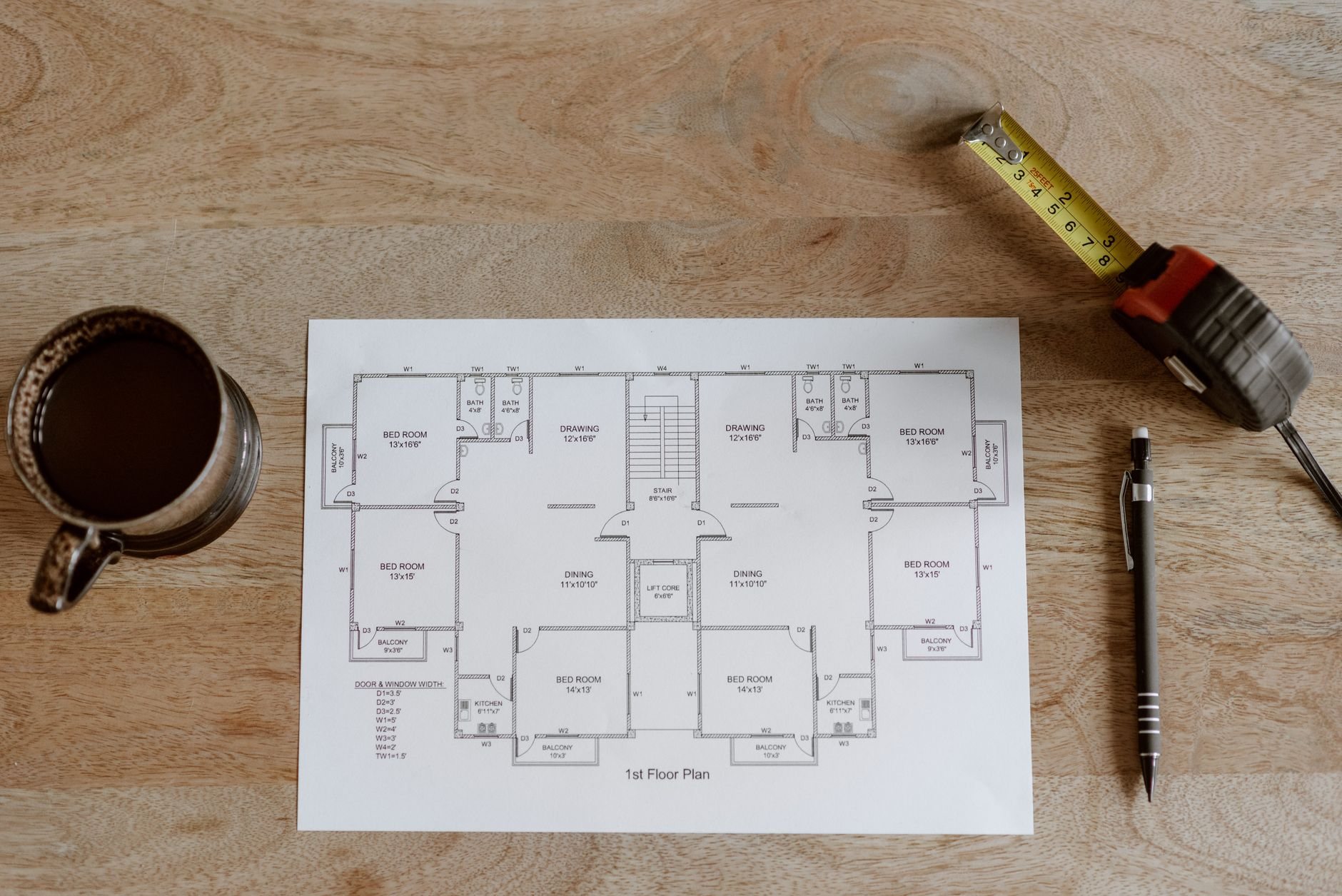
- Measure the wall, not the room. Floor, ceiling, and wall readings at several points; studs, outlets, vents, and window heights located; out-of-square noted.
- Draw it. A dimensioned elevation with bay widths, shelf heights, door style, and how the unit meets baseboard, casing, and crown. You approve it before any sheet goods are cut.
- Build the boxes. Carcasses, face frames, and doors are built square off the wall, then fitted to it with scribes and fillers.
- Power and light. A media wall usually needs outlets relocated behind the unit and a cable chase. Grandview holds the contract and manages licensed electricians for that work — we coordinate, sequence, and quality-check it within your project.
- Finish handoff. Filled, caulked, and sanded, then sprayed on site or handed to cabinet painting for a factory-smooth coat.
What custom built-ins cost in Utah
Built-ins are priced like furniture, by the piece, not by the foot like running trim. As a planning ballpark — not a quote — paint-grade floor-to-ceiling bookcases or a media wall in Utah County commonly land in the $350–$800 per linear foot range installed and finished, open shelving at the low end and doors, drawers, and lighting at the high end.
What moves the number: doors and drawers, stain-grade over paint-grade, integrated LED lighting, electrical relocation, and ceiling height — a 10-foot wall needs a two-piece unit. A wall with a window, a return-air grille, and an out-of-level floor costs more than a plain one because each gets scribed around. We define a budget range at consultation before it becomes an estimate and then a fixed proposal, and our license is verifiable at dopl.utah.gov.
Questions we actually get
Can you build a media wall around a TV that isn’t bought yet?
Yes, but pick the size first. We frame the opening to the actual screen plus a reveal, locate the outlet and cable chase behind it, and leave ventilation for components below. Changing screen size after the build means rebuilding the center bay, so decide before the drawing is approved.
Do built-ins need a permit in Utah County cities?
The cabinetry itself doesn’t. Relocating outlets behind a media wall or adding a lighting circuit does, and the licensed electricians we manage pull it. If the built-in alters a fireplace’s clearance zone, that’s a separate conversation — we flag it in the scope and verify requirements with your city building department.
Should built-ins be painted or stained?
Paint-grade MDF and poplar give the smoothest, most stable result and match existing trim — the usual answer for fireplace bookcases and media walls. Stain-grade alder or oak suits an office or library where grain is the point. Mixed is common: a painted carcass with a stained hardwood top on a window seat or desk.
What’s the biggest cost driver on a built-in?
Doors and drawers. Open shelving is boxes and faces; every door adds hinges, fitting, and finish time, and every drawer adds a box and slides. After that, electrical work and ceiling height. On a tight budget, open shelving above a short run of doors gets most of the look for a fraction of the hardware.
Related services
Built-ins are one piece of our trim and millwork work and usually sit inside a larger renovation. A media wall often pairs with a slat accent wall; a window seat reads best with wainscoting at the same height.
Tell us what you’re working on
We reply within a couple of hours during business hours — a day at most. You’ll get a straight read on scope, sequence, and budget before anyone commits to anything.