
Level 5 Drywall Finish in Utah County
A Level 5 drywall finish is a standard Level 4 tape-and-coat job plus a thin skim of compound over the entire wall, so paper and joints read as one surface under paint. It’s the finish for smooth modern walls, dark or sheen colors, and rooms lit by big windows — and Grandview Contractors delivers it across Utah County and Salt Lake County under a Utah DOPL B100 general contractor license.
When Level 5 is worth it — and when Level 4 is enough
Most walls in Utah homes stop at Level 4: taped, three coats on joints and fasteners, sanded, then textured. Under knockdown or orange peel, Level 4 is the correct stopping point and paying for more is wasted money. Level 5 exists for walls that get no texture at all.
You want Level 5 when the paint will show everything: smooth untextured walls, eggshell or satin sheens, deep charcoal and navy, and any wall that takes raking light. Along the Wasatch Front, high-elevation sun comes through a 10-foot window wall at a low angle for hours, and every fastener dimple and joint shoulder casts a shadow. Level 5 is how a wall stays flat in that light instead of “flat until 4 p.m.”
Two near neighbors in our drywall work are worth separating. On new board, Level 5 is the finish spec on top of a drywall installation. On existing walls where the goal is erasing old texture or wallpaper scars, that’s skim coating — related technique, different starting point, different price. We are fond of straight lines and straight answers, and the straight answer is that not every room needs this.
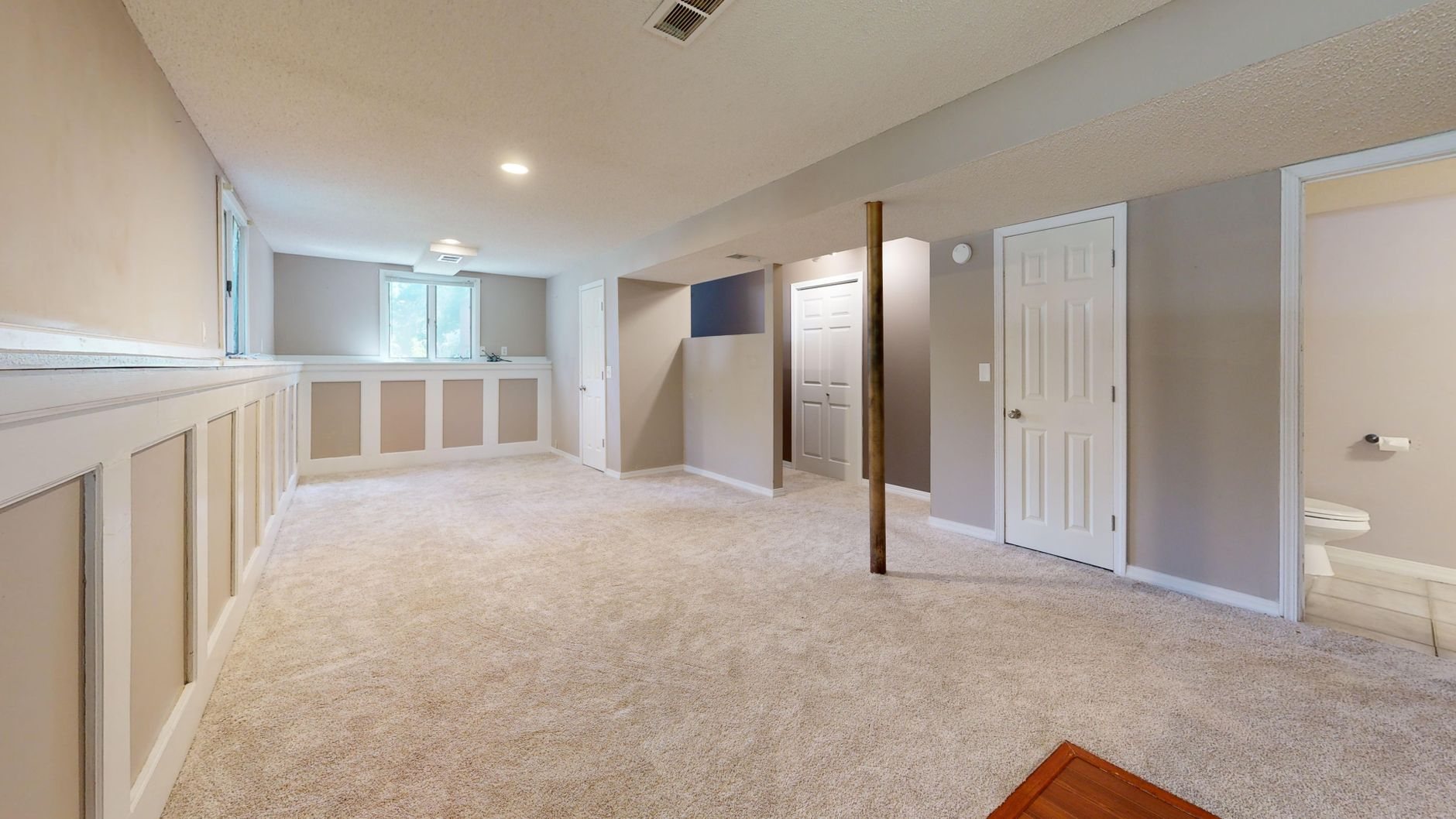
Wall-wash lighting is the usual reason a basement finish gets specified at Level 5 — the fixtures rake straight down the wall.
What a Level 5 skim actually adds to the wall
Finish levels are defined in the Gypsum Association’s GA-214 standard at gypsum.org. Level 5 is Level 4 plus one thing: a skim coat of joint compound, or an approved high-build primer-surfacer, over the whole face of the board. The purpose is porosity. Bare paper and dried compound absorb paint differently, and that difference shows as “flashing” or joints “photographing” through the finish coat.
- Finish to a true Level 4 first. Tape embedded, two fill coats on joints and bead, fasteners spotted three times, everything sanded. A skim hides porosity, not bad joints — ridges come straight through it.
- Skim the full surface. We roll thinned compound onto the wall and immediately trowel it to a near-zero film, or spray a high-build primer-surfacer where the spec allows. Utah’s dry air is the main variable: compound skins fast at 15–20% humidity, so we work in sections a finisher can trowel out before it sets, and we don’t skim a sun-facing wall at 2 p.m. in July with the windows open.
- Sand with fine grit and vacuum. A light pass with 220-grit and dust extraction — a coarse screen leaves scratches that satin paint will find.
- Raking-light inspection. Before primer, a work light goes against the wall at a hard angle and we mark and touch every shadow. This step separates a wall that’s “been skimmed” from one that’s Level 5.
- Prime with a quality PVA or high-build primer. Then it hands off to interior painting.
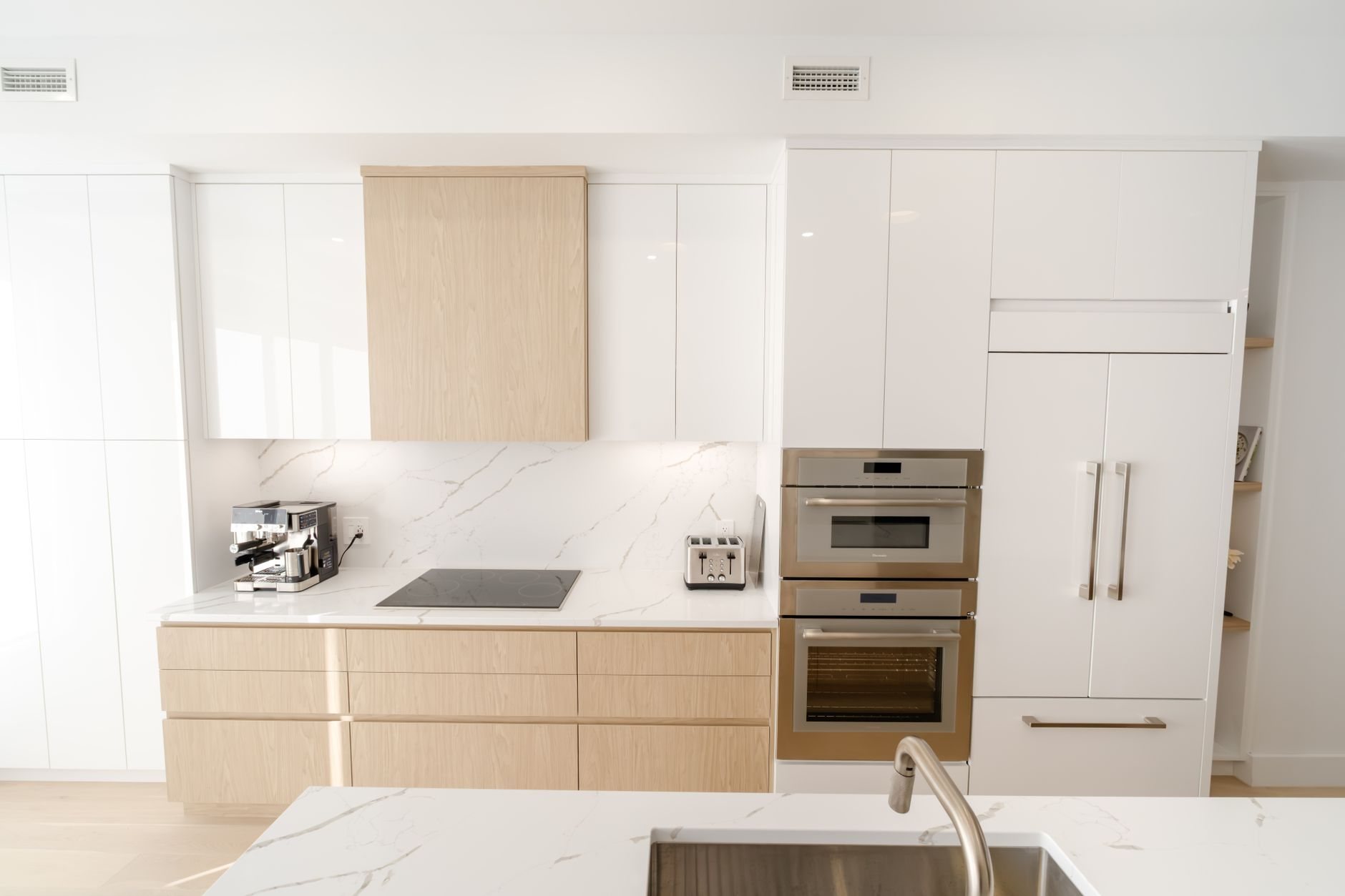
Smooth-wall kitchens and great rooms are where Level 5 earns its keep: long uninterrupted walls, big windows, and wipeable sheen paint that is merciless about flaws.
What a Level 5 finish costs in Utah, and why
A Level 5 skim adds a full coat of labor over every square foot of wall and ceiling, not just the joints. As a ballpark planning number — not a quote — expect it to add roughly $0.75–$1.50 per square foot of board over a standard finish, so hang-and-finish at Level 5 often lands in the $3.00–$5.00 per square foot range in Utah County. The drivers: ceiling height and staging (a 12-foot smooth ceiling needs scaffold), whether ceilings are included or only walls, and whether we’re spraying primer-surfacer in an empty house or hand-troweling in an occupied one with furniture under plastic.
Schedule is the other cost. Level 5 is one more wet coat and one more full dry cycle — usually one added day on a room-sized job, two to three on a whole floor. We don’t compress that by turning up the heat; skinned compound cracks later. You can verify our license at dopl.utah.gov, and if the walls belong to a wider remodel, the renovation and build-outs sequence is where we’ll scope them.
Questions we actually get about Level 5
Do I really need Level 5 for smooth walls, or can a good painter hide it?
For flat paint in a softly lit bedroom, a careful Level 4 can pass. For satin or eggshell, dark colors, or a wall with a window at one end, no — sheen magnifies porosity differences rather than hiding them. Smooth walls plus a sheen finish means Level 5 is the honest spec; less is a gamble you’ll notice on sunny afternoons.
Is Level 5 the same thing as skim coating my old walls?
Same hand motion, different job. Level 5 is a finish level applied to new, properly finished board. Skim coating existing walls starts with burying or removing old texture, repairing the substrate, and often two or more passes before the surface is flat enough to call Level 4. We price and schedule those separately.
Can you Level 5 the ceiling too, or just the walls?
Both, but a smooth Level 5 ceiling is the most demanding surface in the house. Light rakes across it at the flattest angle of all, and it’s finished overhead on stilts or staging. Many owners pair Level 5 walls with a lightly textured ceiling to hold cost; we’ll show you both under a work light before you decide.
Does Utah’s dry climate make Level 5 easier or harder?
Faster, and slightly harder. Low humidity shortens drying between coats, which helps the schedule, but a skim can set before it’s fully troweled in a hot, ventilated room. We work in sections, limit airflow during the skim, and never rush the dry cycle. Fast drying is a help; forced drying is where cracks come from.
Tell us what you’re working on
We reply within a couple of hours during business hours — a day at most. You’ll get a straight read on scope, sequence, and budget before anyone commits to anything.