
Faux beams & beam wraps in Utah County
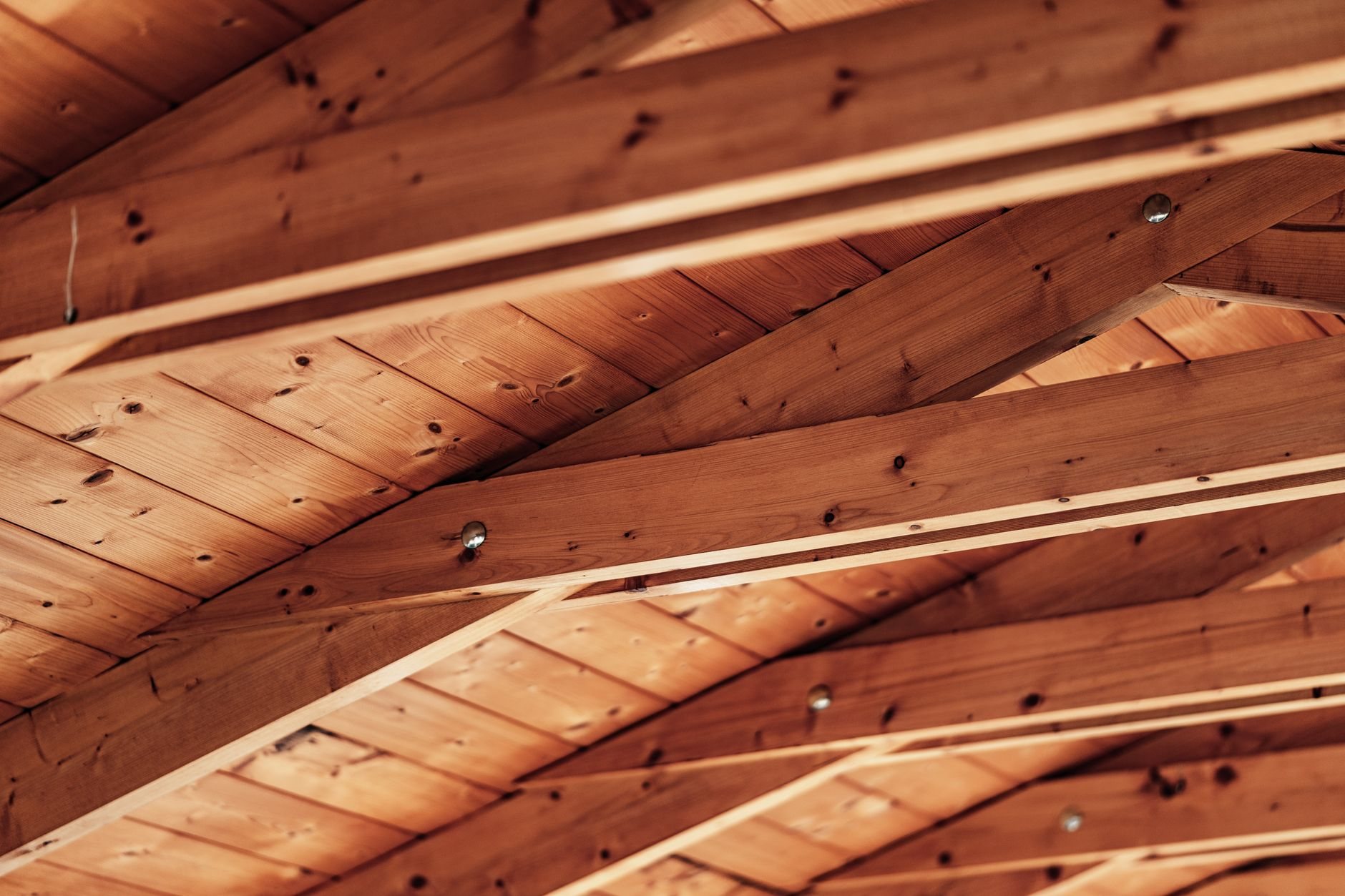
Faux wood beams are hollow three-sided boxes fastened to a ceiling for the look of exposed timber without the weight or the engineering; a beam wrap is the same box fitted over a real steel, LVL, or glulam beam already doing the work. Grandview Contractors builds and installs both across Utah County and Salt Lake County under a Utah DOPL B100 license.
Faux beams versus the other ceiling treatments
Choose faux beams when you want the ceiling to read as timber — a few heavy, widely spaced members running one direction — on a ceiling never framed for it. A vaulted great room in a Lehi or Saratoga Springs build with nothing overhead but texture is the classic case.
If you want a grid of boxes with recessed panels between them, that’s a coffered ceiling, laid out and built differently. If the goal is a wall of wood rather than a ceiling, see wood accent and slat walls. And if a real structural beam is exposed after a wall came out, you don’t want a faux beam — you want a wrap.
Wraps are a more common request than people expect. Removing a load-bearing wall between a 1990s Orem kitchen and family room leaves a dropped header that gets drywalled into a plain soffit by default. Wrapping it in stain-grade wood turns a compromise into the feature of the room. Both sit inside our broader trim and millwork work.
Two ways to build a beam that isn’t holding anything up
Site-built box beams. Two sides and a bottom joined along their long edges into a U-shaped channel, built from stain-grade alder, white oak, knotty pine, or hemlock, or from paint-grade poplar and MDF. The edge joint is the whole craft: a lock-miter or a glued and splined miter hides the end grain so the beam reads as solid timber, not three boards. Hand-hewn texture and stain go on in the shop, before assembly, so color is even into every corner.
Cast polyurethane beams. Molded from real timber so grain and checking are already there, and light enough that one person can hold a 16-foot length overhead. The right pick for long spans and high vaults. Convincing from the floor; up close, wood still wins.
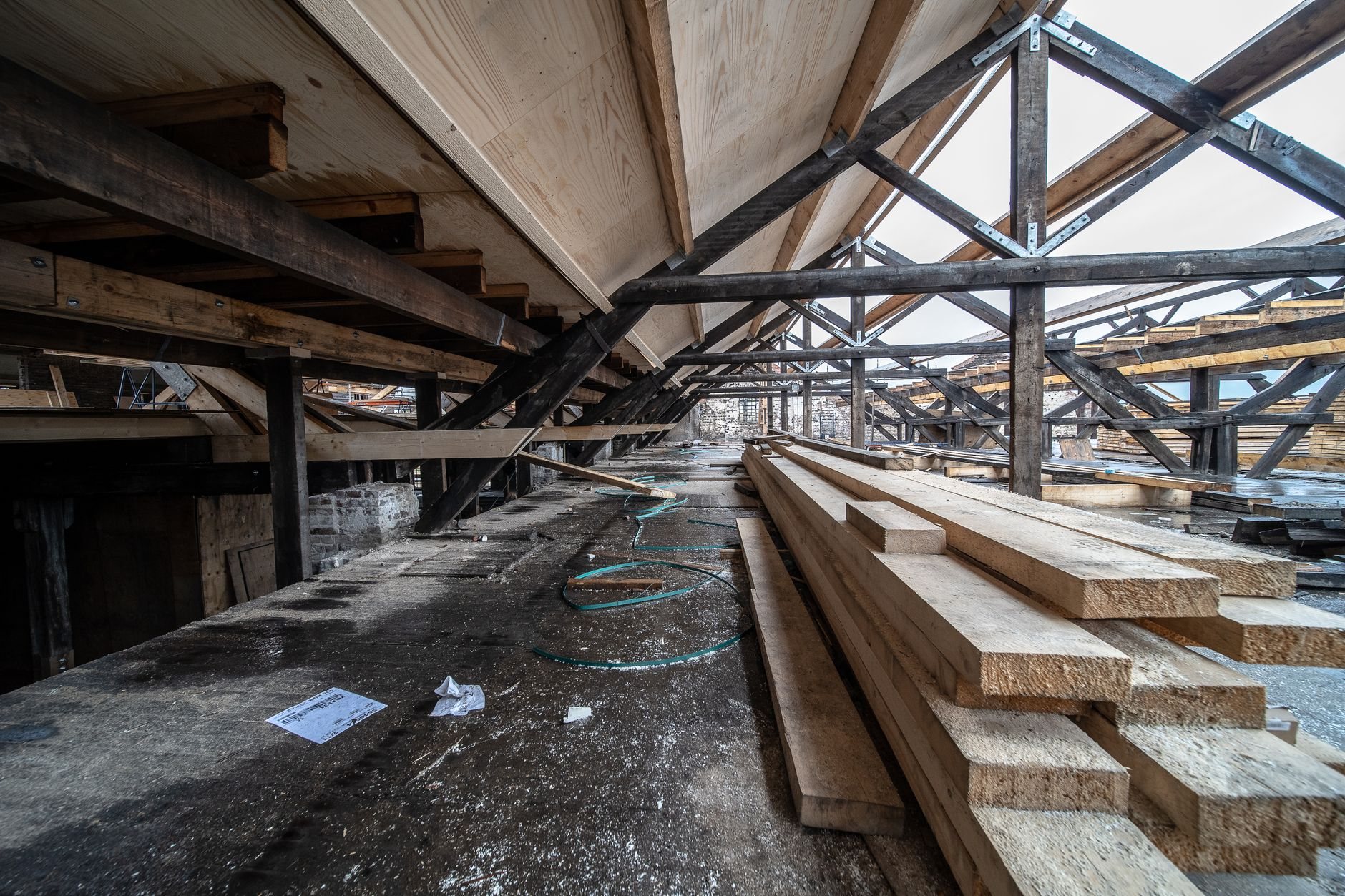
Sizing matters more than species: a 3½-inch beam on a 10-foot ceiling looks like trim; a 7-by-9 looks like structure. Spacing should land evenly on the room, not on wherever the can lights were drilled. Wasatch Front winters are furnace-dry, and a hollow beam of solid wood shrinks across its width between July and January, so edge joints are glued rather than caulked, and stain-grade stock sits in the room for a week before any cut.
How we install faux beams and wraps
- Layout. We snap beam lines on the ceiling, check them against lights, vents, and smoke detectors, and move the plan or the fixture before anything is cut.
- Find the framing. Beams are never hung from drywall. We locate every joist or truss chord the beam crosses; where it runs parallel to the joists, we open the ceiling and add blocking first.
- Mounting cleats. A 2x cleat ripped to the beam’s inside width is lagged into framing along the full run. The hollow beam slips over it and is fastened through the sides, so fasteners sit in the shadow line, not the face.
- Wraps. For a steel or LVL beam, we build the box to measured dimensions plus clearance, scribe the sides to the ceiling, and fasten into blocking on the beam — never drilling a flange an engineer sized.
- Ends and finish. Beams terminate into the wall with a scribed fit, or into a corbel when the design calls for it. Touch-up stain, filled fasteners, and a handoff to painting if the ceiling is getting a new coat.
The Wasatch Front sits on an active fault system, documented by the Utah Geological Survey, and anything overhead needs positive attachment to framing — which is why we spend a morning on cleats and blocking instead of trusting adhesive and trim nails.
What do faux beams cost in Utah County?
As a planning ballpark, not a quote: site-built stain-grade box beams on an accessible flat ceiling typically run $35–$75 per linear foot installed in Utah County, with species, beam size, and texturing moving the number inside that band. Cast polyurethane beams often land in a similar installed range; lower material cost is offset by freight and the cleats, blocking, and finishing they still need.
Up: vaults above 12 feet (lift time), beams parallel to joists (ceiling repair after blocking), white oak, and tight-tolerance wraps around steel. Down: paint-grade material, fewer and longer beams, and bundling into a larger renovation where the ceiling is already open. If the beam you’re wrapping came from a wall removal, the structural steel and permit work are scoped separately; the wrap is the easy part. Beams pair naturally with a mantel in the same species. Our B100 license is verifiable at dopl.utah.gov.
Questions we actually get
Can faux beams be installed on a vaulted or sloped ceiling?
Yes, and vaults are where they look best. Beam tops are cut to the ceiling pitch so they sit flat against the slope, and a ridge beam at the peak gets a mitered top to meet both planes. The constraint is access: ceilings above about 12 feet need a lift, which adds a day and shows up in the price.
Do I need a permit for faux beams or a beam wrap?
Not for the beams themselves — they’re decorative in the code’s eyes. If the beam you’re wrapping is a new structural member from a wall removal, that work carries its own permit and inspection, and the wrap goes on after sign-off; we’d rather an inspector see the steel before we hide it. Verify specifics with your city building department.
Will hollow beams crack or open up at the corners?
They can if the long edges are only nailed and caulked. Utah’s dry winter air shrinks wood across the grain, and a butt-jointed box shows the line by February. We glue and spline or lock-miter the edges, acclimate stock on site, and finish in the shop so no raw edge telegraphs movement.
Can you run wiring or hide a duct inside a faux beam?
Wiring, yes — a hollow beam is a convenient chase for a pendant or a run of cans along its underside; Grandview holds the contract and manages licensed electricians for that work. Ducts are harder: a 6-inch round duct needs a beam big enough to swallow it, and we’ll tell you if that beam would look out of scale.
Tell us what you’re working on
We reply within a couple of hours during business hours — a day at most. You’ll get a straight read on scope, sequence, and budget before anyone commits to anything.