
Commercial Interior Painting in Salt Lake City
Commercial interior painting is the repaint of an occupied business space — offices, retail floors, restaurants, clinics, and multifamily common areas — scheduled around the hours the building operates. Grandview Contractors runs these repaints for owners, tenants, and property managers across Salt Lake City and Utah County under a Utah DOPL B100 general contractor license, licensed and insured.
When a commercial repaint is the right scope
This page is for a building that is already in business: the walls, doors, and frames need new paint, and the company inside can’t close to get it. That rules out the two scopes it’s most often confused with. If the space is still a construction site with no tenant, you want new-construction painting, which is sequenced by the build schedule rather than by anyone’s operating hours. If the space is a house, our whole-home repaint and single-room painting pages cover the residential version.
Typical triggers: a lease renewal with a landlord repaint attached, a rebrand that changes every accent color in a store, a clinic that needs scrubbable walls after years of cart traffic, or an apartment community refreshing corridors and the leasing office. When paint is one line inside a larger remodel, it belongs to a tenant improvement or an occupied-space renovation and we price it there. When paint is the whole job, this is the page.
Painting a building that never closes
Most of what separates a commercial repaint from a residential one happens before a roller touches the wall. The work is planned by zone and by clock: a floor of offices gets broken into areas that can be masked, painted, and returned to use overnight, so staff arrive to dry walls and no smell. Retail floors are painted after close and cured before open. Restaurants get the dining room on dark days and the back of house between lunch and dinner service.
Product selection follows the use of each surface. Corridors, break rooms, and exam rooms get a scuff-resistant, scrubbable eggshell or satin that survives cart bumps and sanitizing wipes. Hollow-metal door frames and steel doors get a direct-to-metal enamel rather than wall paint. Exposed open ceilings — joists, ductwork, conduit, deck — are sprayed with a dry-fall coating that turns to dust before it hits the floor, the only practical way to paint a 16-foot ceiling over a sales floor. Low-odor, low-VOC lines are the default in every occupied building; the EPA’s guidance on VOCs and indoor air is the reason, and it matters more in a Salt Lake winter, when inversion season keeps buildings sealed and ventilation rates low.
Two building-specific details most bids skip: smoke detectors are bagged with building management’s sign-off during spray work so a sensitive head doesn’t trip the alarm at 2am, and HVAC zones are set to bring in outside air while coatings off-gas. Both get settled with the property’s engineer before the first night shift.
How a commercial repaint runs
- Walk the building with the manager. Zones, the hours each can be out of service, brand color standards, and the building’s rules on access, insurance certificates, and freight elevators all get confirmed here.
- Sample under the building’s own light. Utah’s high-elevation daylight is intense near the windows and the LED troffers in the core are another color entirely, so brand colors get sampled in both before gallons are ordered.
- Phase and protect. Each shift covers a defined zone: furniture shifted and draped, floors and fixtures masked, signage and data cabling protected, detectors bagged with sign-off.
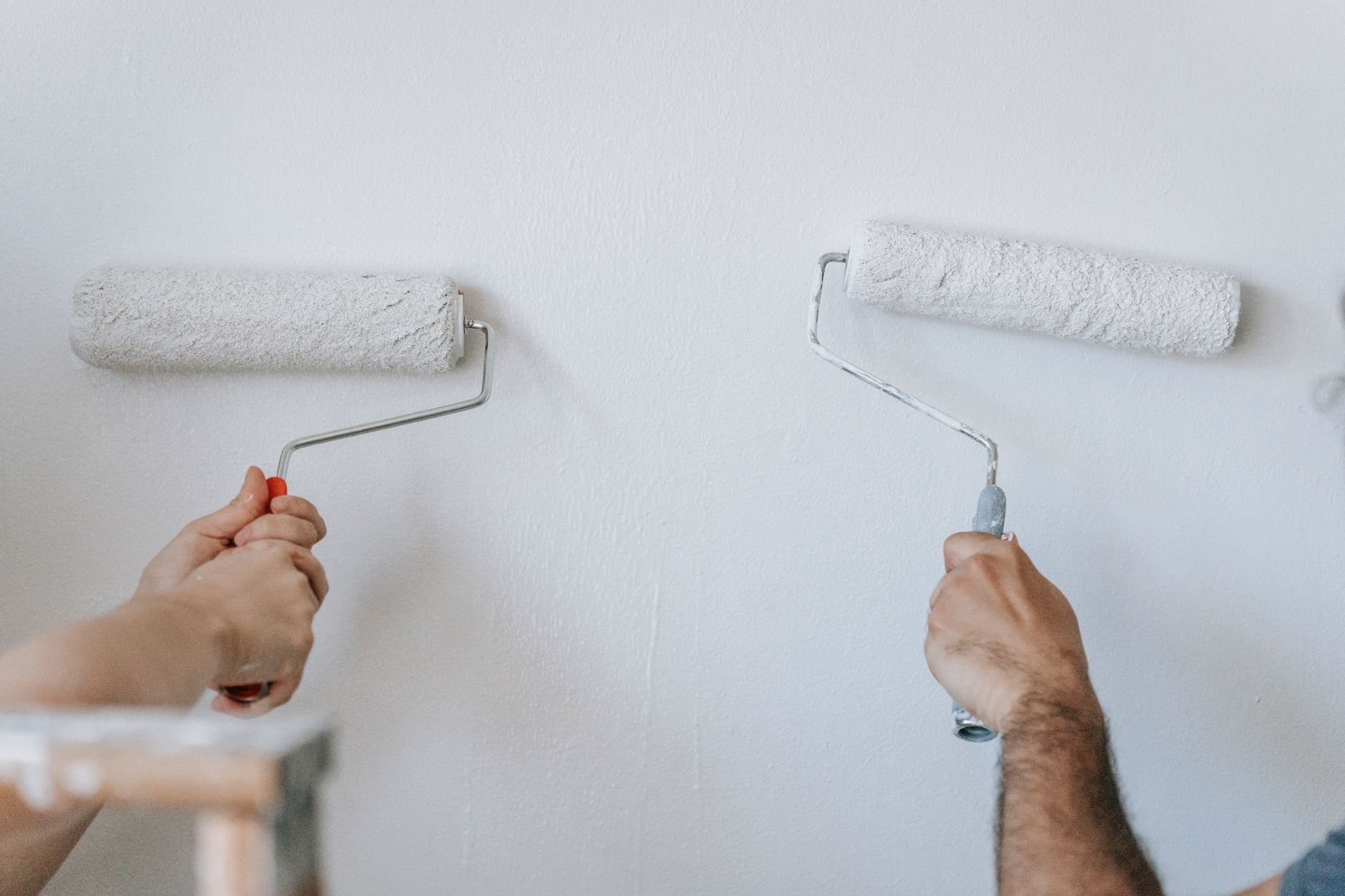
- Prep, prime, two coats. Scuffs sanded, anchor holes patched, stains and marker bleed sealed with primer. Dry Wasatch Front air flashes paint fast, so long corridor walls are rolled wet-edge to wet-edge by a crew working together, not one painter at a time — that’s how lap marks are avoided.
- Return the zone before open. Furniture back, trash gone, touch-ups done under a work light, and a short punch list for the manager.
What does commercial interior painting cost in Salt Lake City?
Most commercial repaints along the Wasatch Front land roughly between $1.50 and $3.50 per square foot of floor area for walls and trim in a typical office or retail layout, with exposed-ceiling dry-fall and after-hours shifts pushing toward the top of that range or past it. Those are ballpark planning numbers; a written estimate follows a walk-through.
What moves the number: night and weekend labor, how many zones the building has to be split into, ceiling height and whether lifts are needed, the number of brand colors and sheens, the condition of the walls, and the paint line the owner specifies. Interior painting is cosmetic and needs no permit on its own; inside a permitted tenant improvement, confirm scope with Salt Lake City’s building services so the finish schedule lands ahead of the final inspection.
Questions we actually get
Can you paint our office without us closing?
Yes. Nearly every commercial repaint we run is in an occupied building: we split the floor into zones, paint each one after hours, and return it dry and clean before staff arrive. A typical office floor is repainted over a string of night shifts with no lost business days.
Will the paint smell bother tenants or customers?
Not with the right product. Low-odor, low-VOC paints are our default in occupied buildings, and HVAC is set to bring in outside air while coatings dry. Walls painted at night are odor-free by morning; spray work on exposed ceilings is scheduled for the longest closures available.
Do you need anything from building management before you start?
Usually three things: a certificate of insurance naming the building, after-hours access and freight-elevator arrangements, and written sign-off to bag smoke detectors in the zone being sprayed. We ask for all three in the first meeting.
What pushes a commercial painting bid up?
Night work, lift work, and ceiling work. After-hours shifts cost more per hour, tall atriums and open ceilings need lifts and dry-fall coatings, and each extra zone adds a round of masking and setup. Heavy patching from old shelving anchors or signage adds prep time too.
Related services
Commercial repaints are one scope in our interior painting service, which lives in the renovation and build-out family. Apartment communities refreshing corridors and leasing offices often pair this work with a unit-turn program, and stained or open-structure ceilings are handled under ceiling painting. Our license is verifiable at dopl.utah.gov.
Tell us what you’re working on
We reply within a couple of hours during business hours — a day at most. You’ll get a straight read on scope, sequence, and budget before anyone commits to anything.