
Small remodels & honey-do lists
A small remodel is the project that outgrew the repair list but doesn’t justify a design contract — one room, same layout, new surfaces and fixtures, done in days. Grandview scopes and builds these under a licensed, insured B100 general contractor, with a written price before anyone lifts a pry bar.
When a honey-do list becomes a small remodel
Our handyman services family has a few close neighbors, and it helps to know which one you’re actually calling about. Punch list repairs fix what’s broken. Drywall and paint patch repair restores a damaged surface to match what’s around it. Fixture and hardware installation swaps one item for a newer version of itself.
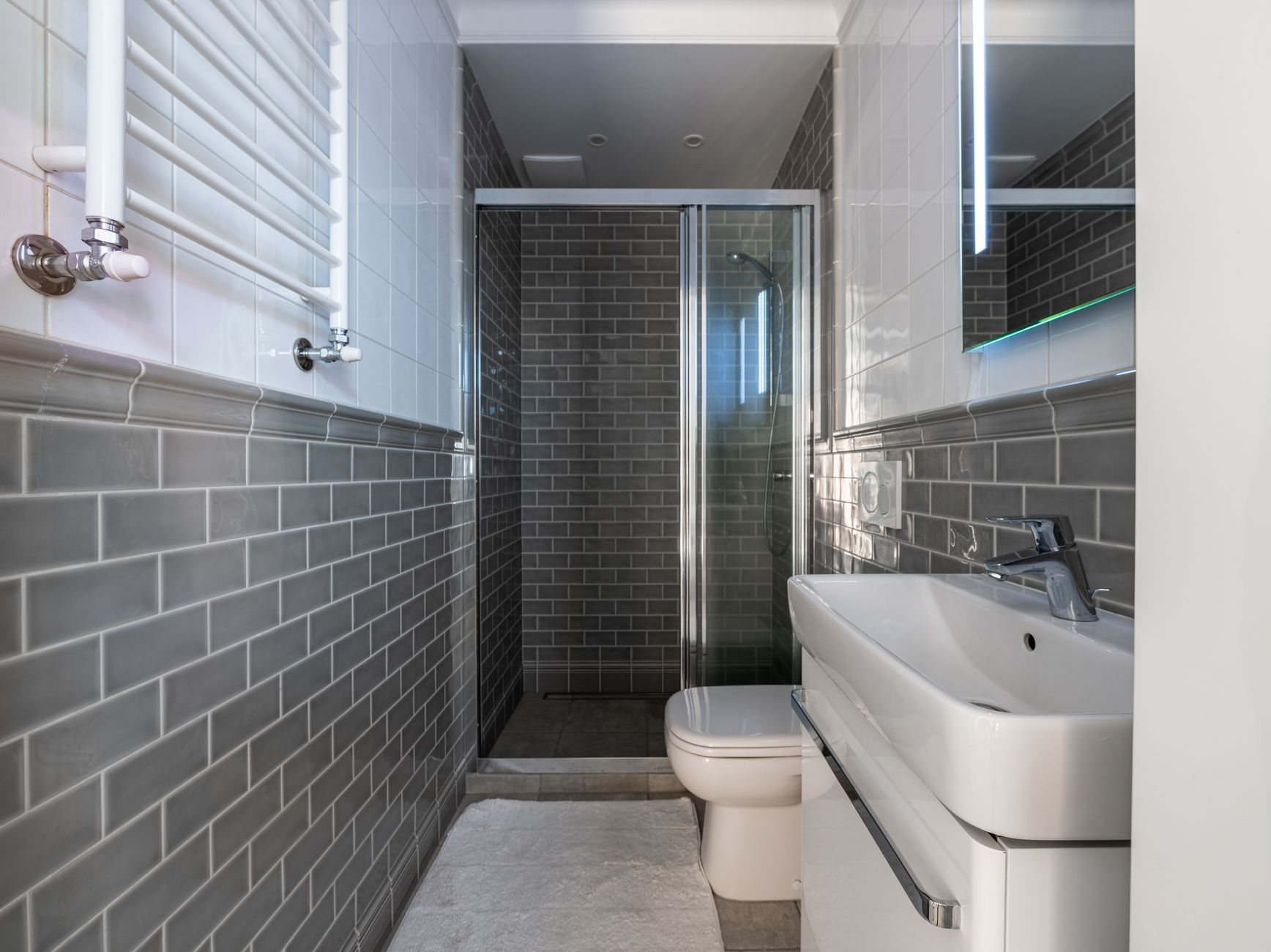
A small remodel is different in kind: nothing is broken, but the room is done. The rule of thumb we use when scoping: if the walls stay where they are but almost nothing on them survives, it’s a small remodel. New vanity, toilet, floor, mirror, and light in a powder room. Cabinets, a counter, and a utility sink in a bare laundry room. A reach-in closet converted to a working pantry with real shelving. One room, transformed, without touching the floor plan.
And when the plan does move — a wall comes out, a shower relocates, the layout changes — you’ve crossed into a full bathroom remodel or kitchen remodel, and you’ll get a better result pricing it as one. Part of our first conversation is telling you which side of that line your project sits on.
How we sequence a one-room remodel
Small remodels fail when they’re treated as a stack of unrelated swaps. Install the new floor before correcting the toilet flange height and you’ve built a problem into the room. So we run even a three-day powder room in proper construction order: protect and demo everything at once, correct the substrate, rough in any trade work, then finish from the top of the room down — paint, flooring, fixtures, trim, caulk.
The substrate step is where a small remodel earns its price. Much of Utah County’s housing stock went up fast in the 2000s boom — Lehi, Saratoga Springs, and Eagle Mountain especially — and those builder-grade rooms usually hide out-of-flat floors, orange-peel texture that’s hard to match, and no blocking behind the drywall where a floating vanity or grab bar wants to anchor. We flatten, block, and skim before anything pretty goes in, because level cabinets on a crooked floor announce themselves forever.
One honest note on trades: replacing a faucet head-to-head is one thing, but moving a supply line, adding a circuit for better lighting, or relocating an outlet is licensed electrical or plumbing work. Grandview holds the contract and manages licensed electricians and plumbers for those items — we sequence them into the demo-to-finish schedule and quality-check the result, so you still get one scope, one schedule, and one invoice.

Why a small remodel usually isn’t a handyman job
Utah’s handyman exemption lets unlicensed workers take genuinely small jobs — capped at a few thousand dollars in combined labor and materials, and only where no permit is required. A single repair fits under that cap. A one-room remodel, with materials, almost never does, and anything that moves plumbing or adds circuits triggers a permit under current Utah-adopted code. At that point the law requires a licensed contractor, which you can verify for any bidder at dopl.utah.gov.
Like-for-like swaps in the same room generally don’t need a permit — but “generally” is doing work in that sentence, so for anything borderline we confirm with your city’s building department during scoping rather than guessing on your behalf.
What does a small remodel cost in Utah County?
As ballpark planning numbers only: most one-room, keep-the-layout remodels along the Wasatch Front land between roughly $3,000 and $20,000. A powder room refresh with mid-grade fixtures sits near the low end; a laundry room with new cabinets, counters, tile, and a relocated sink pushes toward the high end. You’ll get a fixed, itemized price after scoping — these ranges are for planning, not promising.
What moves the number:
- Fixture and finish selections. The spread between a big-box vanity and a custom one is wider than the labor difference on the whole room.
- Whether anything moves. Keeping supply, drain, and electrical locations where they are is the single biggest cost control in this scope.
- Substrate condition. Wavy floors, failed texture, and missing blocking add prep days that a photo estimate can’t always see — which is why we flag discovery risk in writing.
- Hard-water casualties. Wasatch Front water is hard on valves, seals, and anything chrome; many powder-room remodels here start as one corroded faucet. Budget for new shutoff valves while the wall is open — the cheapest insurance in the project.
- Batching. Pairing the remodel with the rest of your honey-do list shares the mobilization cost. The crew is already there; the second scope prices better than the first.

Questions we actually get
How long does a one-room small remodel take?
Most run two to five working days on site: a powder room refresh in two or three, a laundry room with cabinets and tile closer to five. The schedule driver is usually material lead time, not labor — we don’t start demo until your fixtures and finishes are in hand, so the room is never open longer than it has to be.
Can you mix a small remodel with the rest of my honey-do list?
Yes, and it’s the most economical way to do it. We scope the remodel as its own line and batch the loose repairs — doors, caulk, drywall dings — into the same mobilization. One crew, one schedule, one itemized invoice, and you can drop any line item that doesn’t fit the budget.
What happens if you find water damage behind the old vanity?
We stop, photograph it, and call you before continuing. Hidden leaks under vanities and behind toilets are the most common surprise in this scope. You’ll get a plain read on what it is, whether it changes the plan, and a separate written price for the fix — never an invoice that quietly grew while you were at work.
Why does a small remodel cost more per square foot than a big one?
Because the fixed costs don’t shrink with the room. Mobilization, protection, demo, disposal, and licensed-trade minimums cost nearly the same for forty square feet as for four hundred. That’s also why batching helps: spreading those fixed costs across a remodel plus a repair list is the best per-item pricing this work ever gets.
Send us the room and the list
A few photos and a paragraph are enough to start — we’ll tell you whether it’s a repair visit, a small remodel, or something from our broader property services lineup. We reply within a couple of hours during business hours, a day at most, with a straight read on scope, schedule, and budget.