
Self-Perform + Subcontract Hybrid Delivery
Hybrid delivery means our own crews build some scopes of your project while licensed trade partners build the rest — all under one contract, one schedule, and one standard. Grandview Contractors runs projects this way across Utah County and Salt Lake County under a Utah DOPL B100 license (#14282236-5501).

When hybrid delivery is the right structure
Most general contractors are pure brokers: every scope goes to a subcontractor, and the GC’s job is coordination. That’s a legitimate model — it’s essentially what our subcontractor management page describes — but it means every hour of work on your site is performed by a firm one contract removed from you. The hybrid model changes that ratio. Scopes we can staff directly get built by our crews; specialty trades go to licensed partners we procure and supervise. Same single contract with Grandview either way.
Hybrid delivery earns its keep on projects with lots of scope interfaces — renovations where demolition, carpentry, concrete, and finish work weave between trade rough-ins, or additions where a two-day framing correction shouldn’t wait two weeks for a sub’s next opening. If your project is one clean scope, a single-trade prime contract is simpler. If it’s a complete permit-ready set you mainly want priced and executed, build-to-plan contracting is the straighter path. Hybrid is for the jobs in between — mixed scopes and tight sequencing.
How scopes get divided — and why it’s in writing
The scope split is a pricing decision, not a slogan, and we make it project by project. Scopes like demolition, rough and finish carpentry, concrete flatwork, and steel are candidates for our crews when the schedule and workload line up. Electrical, plumbing, and HVAC are always performed by licensed trade partners — Grandview holds the contract and manages those electricians, plumbers, and mechanical contractors: we procure them, sequence them, and quality-check their work inside your project. Every contractor on site, us included, holds a Utah DOPL license you can verify at dopl.utah.gov.
Your proposal states which scopes are self-performed and which are subcontracted, because the split has real consequences. Self-performed scopes carry labor and materials pricing instead of a sub’s quote plus markup, and they can flex — when a framing inspection slips, our carpenters shift to blocking and backing instead of leaving the site dark. Subcontracted scopes carry each partner’s lead time, which matters along the Wasatch Front: trade calendars in fast-growth cities like Lehi, Saratoga Springs, and Eagle Mountain stay crowded, and a hybrid structure means fewer line items exposed to that queue.
What changes on the schedule
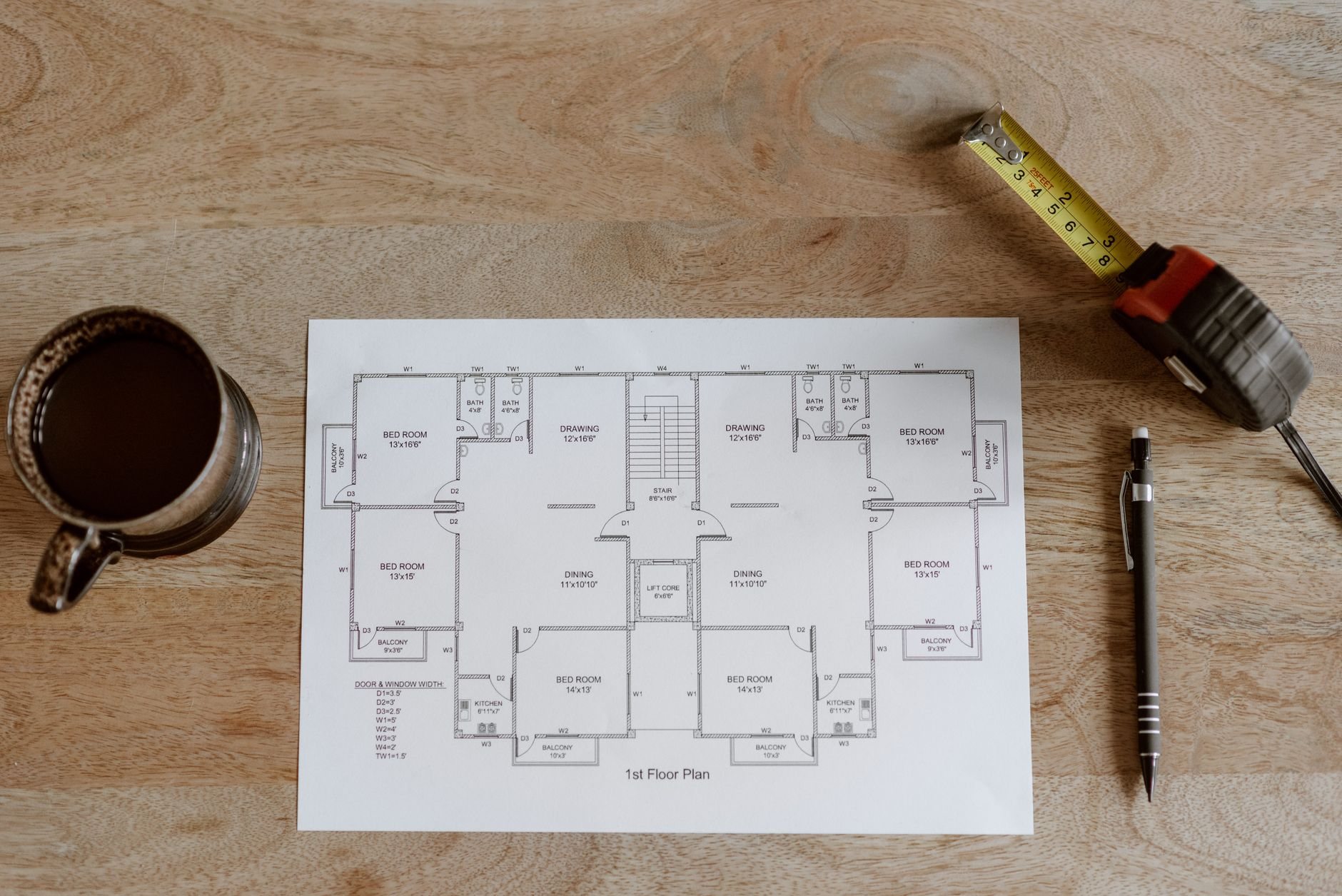
- Split the scope. During pricing we assign every line item to a crew or a trade partner, and the proposal shows the split. Gray-area scopes — blocking, patching, protection, cleanup — get an owner on paper, because unassigned scopes are where jobs stall.
- Sequence around the fixed points. Trade partner dates and city inspections are the hard constraints; self-performed work is the flexible material we schedule around them. We see dependencies before they become delays.
- Use crew flex for weather. Exterior concrete here has to respect curing windows — the Wasatch Front sees 100-plus freeze–thaw days a year, so flatwork needs air-entrained mixes and the right pour dates. Our crews can move a pour without renegotiating a sub’s calendar.
- Hold one standard. The same supervisor walks self-performed and subcontracted work against the same drawings. Nobody grades their own homework quietly; deficiencies get written up and corrected regardless of whose crew built it.
- Close it out together. One punch list, one set of lien waivers and warranty documents, one contractor answering for the whole building.
What moves the price of a hybrid project
The scope split itself is the first driver. Self-performed line items are priced from labor hours and materials; subcontracted items carry a partner’s quote plus our coordination. Neither is automatically cheaper — a specialty sub with the right equipment beats a generalist crew on their home turf — so we assign scopes to whoever delivers the best value, and show you the split. Beyond that, the usual drivers apply with a hybrid twist: the number of trade interfaces (each handoff costs coordination time), schedule compression (crew flex absorbs some of it, trade lead times set the floor), and how much gray-area scope the drawings leave unassigned. As a ballpark planning number, general-contractor markup on subcontracted work in Utah typically runs 10–20 percent; self-performed scopes fold that into the labor rate instead. Either way, we price to current Utah-adopted code, and the proposal says exactly who is building what.
Questions we actually get
Which scopes do you self-perform?
It varies by project and workload — demolition, carpentry, concrete flatwork, and steel are common candidates. Electrical, plumbing, and HVAC always go to licensed trade partners we contract and supervise. Your proposal lists the split for your specific job, so you know before signing who builds what.
Is hybrid delivery cheaper than a fully subcontracted job?
Sometimes, not automatically. Self-performed scopes avoid stacking a subcontractor’s overhead under GC markup, and crew flexibility reduces schedule-slip costs. But an efficient specialty sub can still be the better value on their scope. We assign each line item to whoever prices and performs it best, and show the split.
Who’s responsible when something goes wrong on a subcontracted scope?
Grandview. You hold one contract with us, and we answer for every scope in it — self-performed or subcontracted. We write up and correct deficiencies the same way regardless of whose crew did the work, and closeout runs through one punch list and one warranty package.
Does the self-perform/subcontract split ever change mid-project?
Occasionally, and only in writing. If a trade partner’s lead time threatens the schedule, or a scope grows past what a crew should carry, we may propose reassigning it. Any change to who performs a scope — and any cost effect — goes through the change-order procedure in your contract.
Where hybrid delivery fits
Hybrid delivery is one of five ways to structure a general contract with Grandview, inside our broader planning and project management family. If you’re comparing structures — hard bid, build-to-plan, single-trade prime — the general contracting page lays them side by side, and we’ll tell you plainly which one your project actually needs.
Tell us what you’re working on
We reply within a couple of hours during business hours — a day at most. You’ll get a straight read on scope, sequence, and budget before anyone commits to anything.